Brewing methods
Techniques and systems for producing beer, varying by style and region.

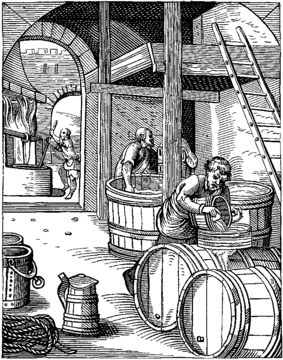
Brewing methods encompass the various techniques and systems used in the production of beer, often unique to a beer style, geographic region, or company. Notable methods include barrel aging, Burtonisation, the Burton Union system, double dropping, and the Yorkshire Square vessel, each contributing distinct characteristics to the final product.
- Earliest evidence
- 6th millennium BC
- Ancient egypt evidence
- archeological evidence suggests technique used in ancient Egypt
- Sumerian recipes
- descriptions of various beer recipes in Sumerian writings
- Burton union invented
- 1830s
- Burton breweries in 1888
- 31
- Marston pedigree production ended
- February 2024
- Thornbridge save announced
- May 2024
Lore & Background
Brewing has taken place since around the 6th millennium BC, with archeological evidence suggesting its use in ancient Egypt and descriptions of recipes in Sumerian writings. In 19th century Britain, technological discoveries such as Burtonisation and the Burton Union system significantly changed beer brewing. Burtonisation, the addition of sulphate to water to accent hop flavour, originated from the sulphate-rich local water of Burton upon Trent, where brewer Samuel Allsopp produced a more hoppy pale ale in 1822. The Burton Union, a recirculating fermentation system invented in the 1830s, used a row of wood casks connected to a common trough to expel excess yeast while returning expelled beer to the casks, maintaining yeast strains in a stable state until the mid-20th century.
Double dropping, also known as the dropping system, was the most popular method for clearing trub during fermentation for English ales in the early 20th century. It involves transferring fermenting wort from an upper to a lower vessel, leaving trub behind and aerating the wort, which can produce butterscotch flavours from diacetyl. The Yorkshire Square vessel, a two-storey fermentation system developed in Huddersfield by Timothy Bentley, features a shallow chamber with a walled deck above; cooled wort ferments in the lower chamber while yeast settles on the deck, and the process takes at least six days, followed by conditioning.
Barrel aging is a process used to add maturity, character, and additional flavour to beer by aging it in wooden barrels that once housed wine, rum, whiskey, bourbon, or other spirits. Sour beers like lambics are fully fermented in wood barrels with microflora other than Saccharomyces cerevisiae. Other beers, such as stouts, are aged in barrels previously used for maturing spirits; Goose Island's Bourbon County Stout was one of the first bourbon barrel-aged beers in the U.S. By the early twenty-first century, aging in used wine barrels expanded beyond lambics to include saison, barleywine, and blonde ale.
Reader's Guide
The significance of these brewing methods lies in their historical and ongoing impact on beer production. Burtonisation allowed brewers to accent hop bitterness in pale beers, such as pale ale and Czech Pilsener, and is not used for dark beers like stout. The Burton Union system, credited with maintaining stable yeast strains, was used commercially until February 2024 when Carlsberg Marston's closed the last original sets, though Thornbridge Brewery and Springbanks Brewery later acquired some equipment. Double dropping, once the most popular method for English ales, is less common today but still used by breweries like Wychwood and Flack Manor, with Brakspear attributing its beer's flavour to the combination of a complex multi-strain yeast and the dropping method. The Yorkshire Square vessel produces beer that requires conditioning after the initial six-day process to mellow harsh flavours. Barrel aging has become widespread, with some breweries producing exclusively barrel-aged beers, such as Cantillon and The Rare Barrel. By 2016, barrel-aged beers were described as trendy, and by 2018 the process was considered mainstream and ubiquitous. However, a 2017 attempt by Innis & Gunn to redefine barrel aging to include a forced wood flavouring process was met with backlash from other brewers, and the outcome remains unresolved.
Did You Know?
- Burtonisation is named after Burton upon Trent, where local water's sulphate content accented hop bitterness.
- The Burton Union system was invented in the 1830s and used a row of wood casks connected to a common trough.
More in Brewing Processes 1-24
Spotted an error? Know more?
Reader corrections go straight into our review queue. Suggest an edit · How this site is sourced