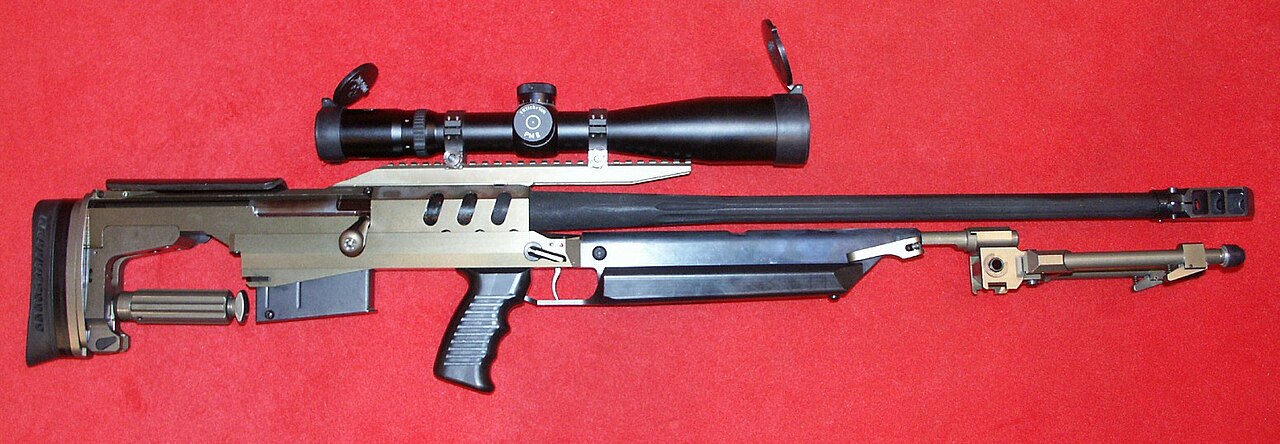
Bor rifle
Polish bullpup sniper rifle developed for NATO-standard calibers.

Oleg Bor · CC BY-SA 4.0
The Bor is a Polish bolt-action sniper rifle chambered in 7.62×51mm NATO and .338 Lapua Magnum. Developed under the code name Alex, it was designed by Aleksander Leżucha, creator of the Wilk anti-materiel rifle, and produced by the Mechanical Equipment Research and Developing Centre (OBR SM) in Tarnów. The rifle entered Polish military service after 2005 and is intended to replace older precision rifles in Polish inventories.
Quick Facts
- Origin
- Poland
- Is Ranged
- yes
- Service
- 2007–present
- Used By
- Polish Army, Nigeria
- Designer
- Aleksander Leżucha
- Design Date
- 2005
- Manufacturer
- OBR SM Tarnów
- Production Date
- 2006–
- Variants
- Alex Tactical Sport / Alex-338
- Weight
- 6.1 kg
- Length
- 1038 mm
- Part Length
- 680 mm / 560 mm
Facts from the source article.
Lore & Background
After Poland joined NATO in 1999, the need arose for firearms compatible with NATO standards. In the early 2000s, engineer Aleksander Leżucha began work on a new sniper rifle at OBR SM Tarnów, with financial backing from the Polish Science Research and Information Technology Ministry. The weapon, code-named Alex after the lead designer, was first tested in summer 2005 and publicly shown at the MSPO exhibition in September 2005. Production began in 2006, and by spring 2007 the 7.62 mm Bor passed all tests for Polish military adoption. Initial orders included 36 rifles in 2007 and 81 by 2010, followed by an order for 55 modified rifles in 2011. Experience from missions in Iraq and Afghanistan led to improvements such as a 15 MOA forward-canted rail system, a tri-rail for night vision, and a more durable barrel.
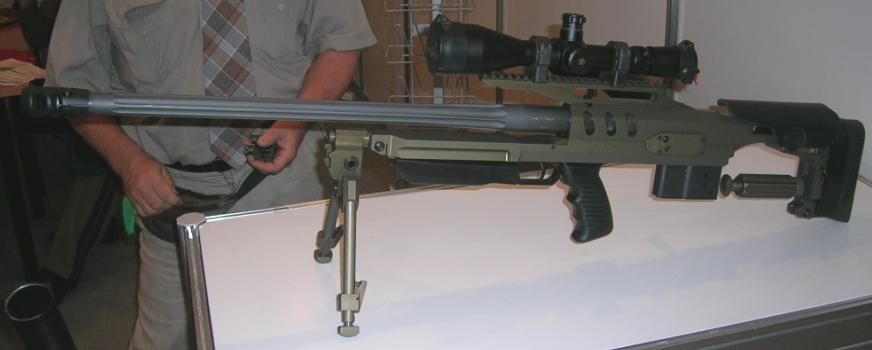
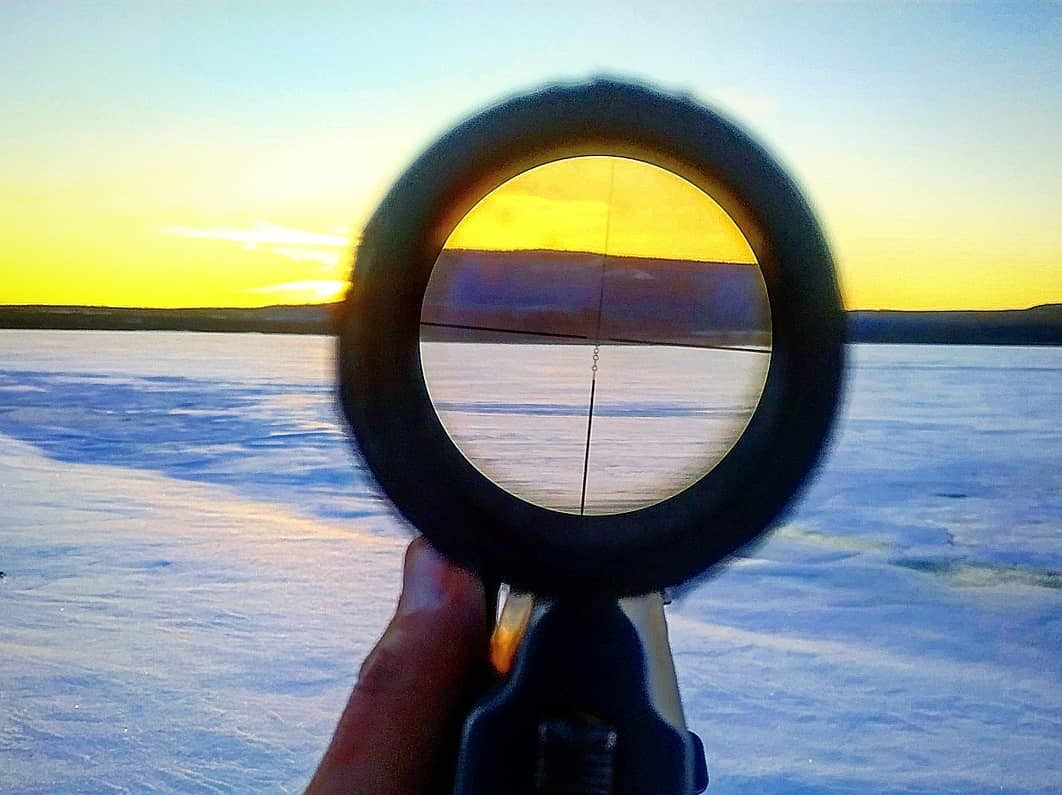
The Bor uses a bullpup configuration with a free-floating fluted barrel and a double-baffle muzzle brake that reduces recoil by up to 30%. The in-line barrel-receiver group minimizes muzzle flip. It has a fully adjustable buttstock and cheek riser, a folding monopod, and a Picatinny rail for optics. Standard sight is a Leupold 4.5–14×50 with mil-dot reticle. No iron sights are provided. The Alex-338 variant, chambered in .338 Lapua Magnum, was developed around 2007, with a prototype assembled in June 2008 and shown at MSPO in September 2008. It uses 5-round magazines compatible with the Sako TRG-42. A civilian variant, the Alex Tactical Sport .308 Winchester, was presented in March 2013 at IWA & OutdoorClassics in Nuremberg.
Reader's Guide
The Bor rifle represents Poland's transition to NATO-standard sniper systems after joining the alliance. Its bullpup design provides a long barrel in a compact overall length, contributing to accuracy while maintaining portability. The rifle's development under the Alex code name and its designer's prior work on the Wilk anti-materiel rifle highlight a lineage of Polish precision firearms engineering. The Bor has been fielded in combat zones such as Iraq and Afghanistan, where user feedback drove modifications to optics mounts, bipod, trigger, and barrel durability. The introduction of the Alex-338 variant in .338 Lapua Magnum marked a new capability for the Polish Armed Forces, offering extended range over the 7.62 mm version. The civilian Alex Tactical Sport variant broadened the design's reach to sports shooters and law enforcement. As of the available information, 196 Alex rifles were in use with 657 ordered, and an unknown number of Alex-338 rifles were in service. The Bor's adoption and continued orders indicate its role as a standard precision rifle for Poland.
Did You Know?
- The Bor was developed under the code name Alex, after lead designer Aleksander Leżucha.
- The rifle uses a bullpup configuration with a 680 mm barrel in a 1038 mm overall length.
- The Alex-338 variant uses the same 5-round magazines as the Finnish Sako TRG-42.
- A civilian variant called the Alex Tactical Sport .308 Winchester was introduced in 2013.
Mechanical Architecture & the Stockless Concept
The bullpup layout reorganizes the fundamental geometry of a long gun by relocating the action mechanism and magazine to a position behind the trigger group. In this arrangement, the receiver effectively doubles as the buttstock, typically reduced to nothing more than a thin endplate, which technically renders the weapon a stockless design. The defining criterion for classification is relatively simple: the magazine's feeding slot must sit behind the trigger. However, the configuration is not entirely rigid—certain models like the Heckler & Koch G11, FN P90, and Neostead allow the magazine to extend forward past the trigger while still qualifying as bullpups. This rearward placement of the firing grip relative to the breech is what compresses the overall length of the weapon. The result is a firearm that packs a full-length barrel into a shorter frame, preserving muzzle velocity, effective range, and ballistic performance while delivering a more compact, lighter, and more concealable package than a conventionally configured rifle with the same barrel.
Ergonomic & Ballistic Advantages
The compact geometry of a bullpup delivers several tangible handling benefits that conventional layouts cannot match. Because the center of mass sits further back, closer to the shooter's torso, the weapon generates less rotational torque during movement. This makes tracking and repositioning feel more natural, particularly during sustained running or rapid transitions between positions. The reduced distance between the action and the butt plate also means recoil energy is delivered more directly into the shoulder, minimizing the lever arm that typically drives muzzle climb in longer-stocked rifles. In certain designs, the elimination of a full-length stock further trims overall weight compared to a conventional rifle sharing the same action. Most importantly, the configuration allows military forces to issue a shorter, more maneuverable weapon—ideal for tight indoor or vehicle environments—without sacrificing barrel length, and therefore without compromising muzzle velocity, effective range, or terminal ballistics.
Operational Drawbacks & Practical Limitations
Despite their compact appeal, bullpup weapons carry a suite of ergonomic and safety trade-offs. The shooter's face sits considerably closer to the action, amplifying perceived noise and exposing the eyes and nose to exhaust gases. Left-handed users face the additional hazard of spent casings ejecting directly toward their face, and reciprocating charging handles can strike them during cycling. Switching the ejection side is generally a complex procedure requiring at least partial disassembly, and on some platforms like the British SA80 it is simply not possible at all. This limitation has pushed designers toward unconventional ejection paths—downward in the FN P90 and Kel-Tec RDB, or forward in the FN F2000 and Kel-Tec RFB. Iron-sight accuracy suffers because the sight radius is shorter than on a conventional rifle of equivalent barrel length. The forward trigger position necessitates a longer sear linkage, producing stiffer, less crisp trigger pulls that remain a persistent criticism. Magazine changes are less intuitive, drop-free swaps are difficult, and a sling anchored near the magazine well can physically block insertion.
Historical Trajectory & Global Adoption
The bullpup concept has deep roots. The earliest known example is a heavy bench-rest target rifle crafted around 1860 by Riviere of London for Richard Potter, weighing over six kilograms with an octagonal 20-bore barrel and two-groove Brunswick rifling, now preserved in the British NRA collection. William Joseph Curtis patented a repeating bullpup in 1866, and the concept appeared in the 1901 Thorneycroft carbine, the first military test of the layout. Semi-automatic bullpups followed in 1918 with the French Faucon-Meunier rifle, and Henri Delacre patented a bullpup machine pistol in 1936. The PzB M.SS.41 anti-tank rifle, a Czech weapon fielded by the SS under German occupation, became the first bullpup used in actual combat during World War II. Post-war, the German StG 44 inspired new thinking, and in 1977 the Austrian Army made history by adopting the Steyr AUG as its principal combat rifle—the first nation to do so. Since then, the Chinese QBZ-95, Israeli IWI Tavor, French FAMAS, and British SA80 have all entered service, cementing the bullpup's place in modern arsenals worldwide.
Gallery
Frequently Asked Questions
What is the Bor rifle?
The Bor is a Polish bullpup bolt-action sniper rifle manufactured by OBR SM in Tarnów. It was developed under the project code 'Alex' and is built around a 680 mm barrel.
What calibers is the Bor rifle chambered in?
It is available in two NATO-standard cartridges: 7.62×51mm NATO and .338 Lapua Magnum.
Who designed the Bor rifle?
Aleksander Leżucha led its design; he is the same engineer behind Poland's Wilk anti-materiel rifle.
When was the Bor rifle first unveiled and when did it enter service?
It debuted at the MSPO defense exhibition in Kielce in September 2005, with production beginning the following year. It entered Polish military service shortly after 2005.
Why is the Bor rifle significant for the Polish armed forces?
It was purpose-built to replace older precision rifles already in Polish inventories, giving the military a modern, NATO-caliber bolt-action platform for long-range engagement.
More in Bolt-Action Rifles, Part 4 1-24
Spotted an error? Know more?
Reader corrections go straight into our review queue. Suggest an edit · How this site is sourced