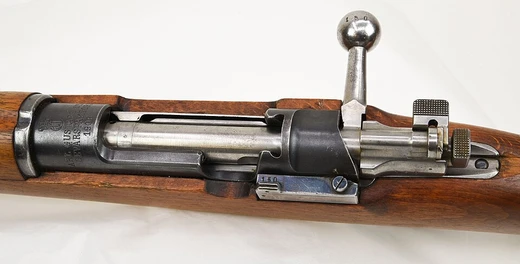
Berdan rifle
Single-shot rifle that armed Imperial Russia for two decades.

Bouterolle · CC BY-SA 3.0
The Berdan rifle is a single-shot firearm designed by American inventor Hiram Berdan in 1868. It became the standard infantry weapon of the Imperial Russian Army in 1870, succeeding the Krnka, and remained in service until the Mosin–Nagant replaced it in 1891. In Russia, it saw extensive civilian use as a hunting arm, with sporting models and shotguns produced into the mid-1930s. The Russian models—the Berdan I (M1868) and Berdan II (M1870), both in .42 caliber—are not to be confused with the Spanish M1857/67 Berdan, a 15 mm conversion of older rifles.
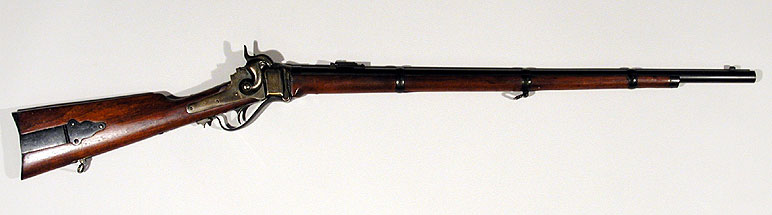
Hiram Berdan patented a trapdoor breech mechanism in February 1866, and a Berdan-type gun entered U.S. Army trials in 1865–66, but the Springfield Model 1866 was chosen instead. In March 1869, Berdan patented a hammerless action with a straight-line striker. Working with Russian officers Colonel A. P. Gorlov and Lieutenant K. I. Gunius—who had come to the U.S. in 1866 to study breechloaders—Berdan developed the Berdan No. 1 rifle and its 10.6 mm (.42 caliber) cartridge. In 1869, Russia ordered 30,000 rifles and 7.5 million cartridges from Colt. Meanwhile, Spain adopted a modified Berdan trapdoor in 1867 to convert its cap-lock rifles to metallic cartridges.
According to E. C. Ezell, Russian plans to manufacture the Berdan No. 1 locally ended when Berdan arrived in Saint Petersburg in spring 1869 to promote his bolt-action No. 2 rifle. After testing by the Artillery Commission, War Minister Dmitry Milyutin recommended halting No. 1 production—only 16,575 of a planned 60,000 rifles were made by Russian arsenals—in favor of the No. 2. Gorlov objected, arguing the new design was inferior, but further tests led Milyutin to approve the Model 1870 Berdan (No. 2) for production.
The Berdan I, or Model 1868, was a hammerless trapdoor design made by Colt in the U.S. under a contract for 30,000 infantry rifles. Colt also built a few half-stock cavalry carbine prototypes, which Russia never adopted, and some target rifles. The Berdan II, or Model 1870, is a single-shot bolt-action with a short, pear-shaped bolt handle that serves as the only locking lug; when closed, the handle points upward at a 30-degree angle. It came in four variants: an infantry rifle, a lighter Dragoon rifle, a Cossack rifle with a button trigger and no trigger guard, and a cavalry carbine.
Quick Facts
- Origin
- United States / Russia
- Is Ranged
- yes
- Service
- 1870–1895, later as reserve issue
- Designer
- Hiram Berdan
- Design Date
- 1868 (Berdan I) / 1870 (Berdan II)
- Production Date
- 1868–1891
- Number
- 3,000,000
- Variants
- Berdan I: infantry rifle / Berdan II: infantry rifle, dragoon rifle, cossack rifle, cavalry carbine
- Weight
- 4.6 kg with bayonet / 4.2 kg without bayonet / 3.58 kg (Dragoon) / 3.38 kg (Cossack) / 2.8 kg (Carbine)
- Length
- 130 cm (Infantry rifle)
- Part Length
- 83 cm (Infantry rifle) / 72 cm (Dragoon) / 71.8 cm (Cossack) / 47.5 cm (Carbine)
- Cartridge
- 10.75×58mmR / 7.62×54mmR
Facts from the source article.
Lore & Background
In February 1866, General Hiram Berdan patented a trapdoor mechanism for firearms, and a Berdan-type gun was submitted to the United States Army trials of 1865–6, but it was rejected in favor of the Springfield Model 1866. Berdan also developed a hammerless action using a straight-line striker instead of an external hammer, patented in the United States in March 1869. He worked closely with Russian officers Colonel A. P. Gorlov and Lieutenant K. I. Gunius on a new design that eventually became the Berdan No. 1 rifle and its 10.6 mm cartridge. In 1869, the Russian Empire ordered 30,000 rifles and 7.5 million cartridges from Colt, while a slightly modified Berdan trapdoor-action was adopted by Spain in 1867 to convert old caplock rifles.
Russian plans for local manufacture of Berdan No. 1 rifles halted when Berdan arrived in Saint Petersburg in spring 1869 to promote his bolt-action No. 2 rifle. After testing by the Artillery Commission and recommendation by Minister of War Dmitry Milyutin, production of No. 1 rifles was terminated in favor of the No. 2. The Berdan II featured a distinctive short, pear-shaped bolt handle that served as the only locking lug, pointing upward at a 30-degree angle when closed. It was produced in four variants: infantry rifle, Dragoon rifle, Cossack rifle with button trigger and no trigger guard, and cavalry carbine. Initial production was at Birmingham Small Arms in England, then later at Russian factories in Tula, Izhevsk, and Sestroretsk.
Reader's Guide
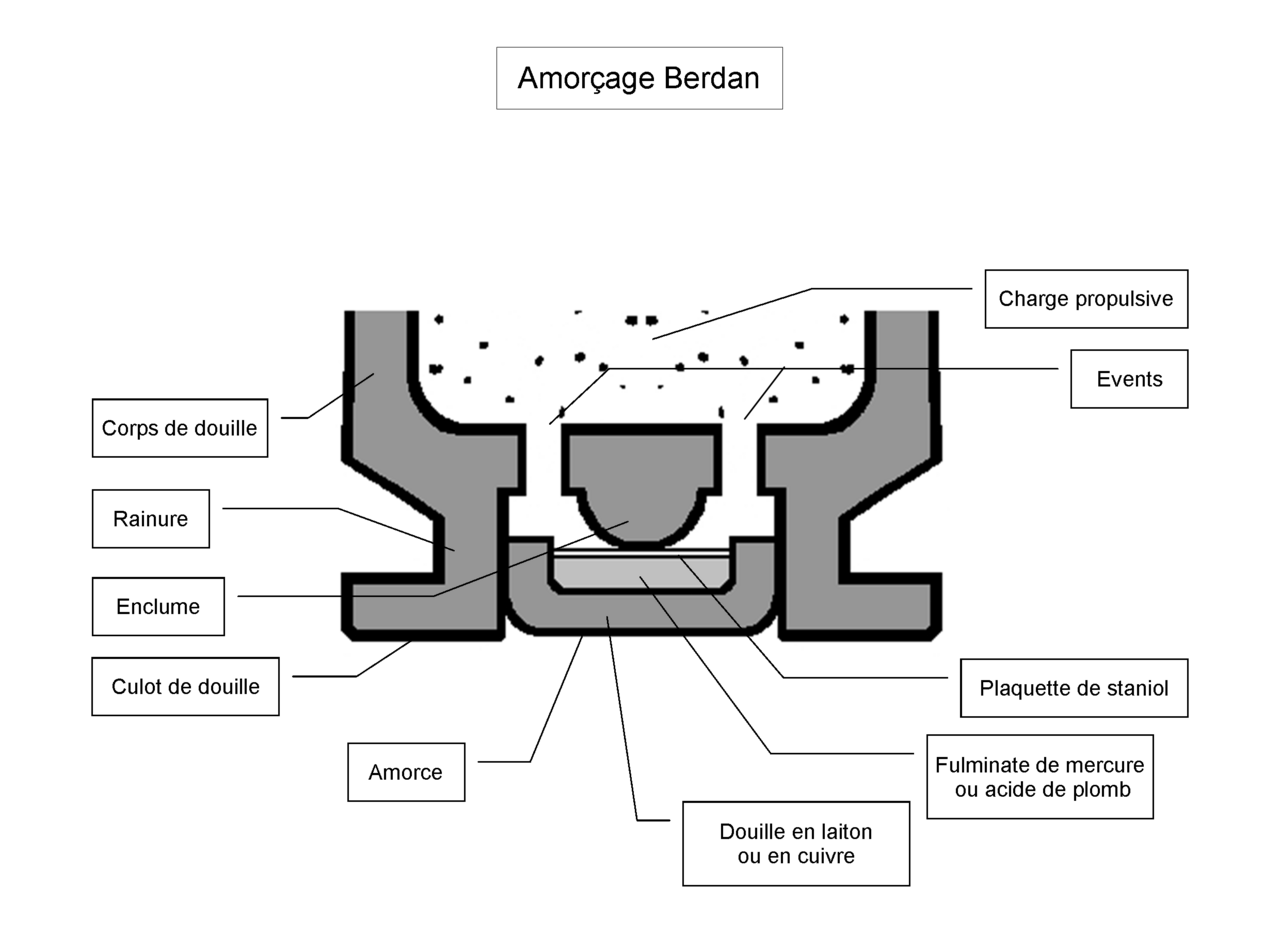
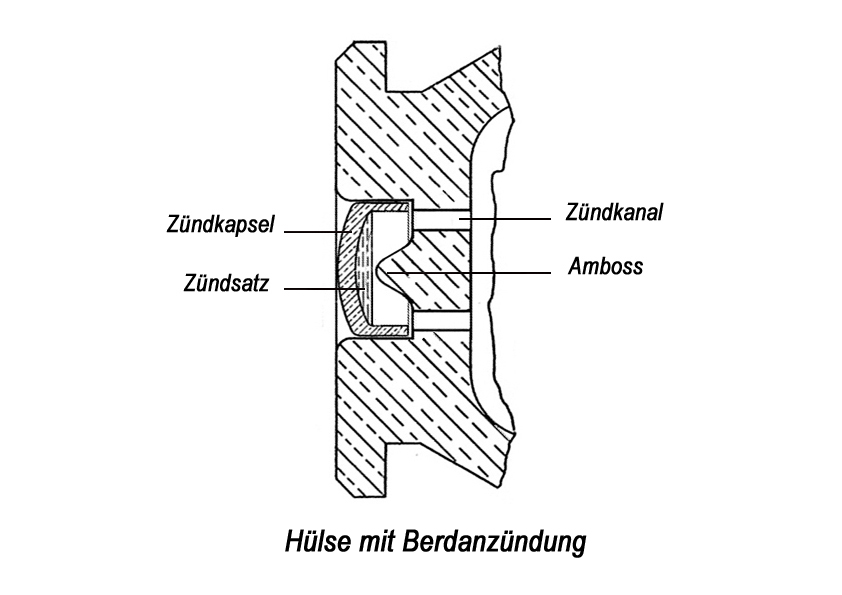
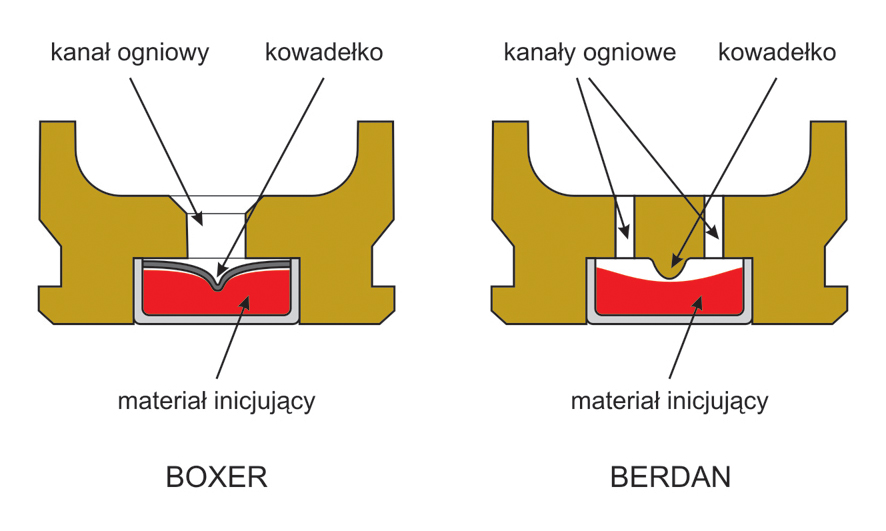
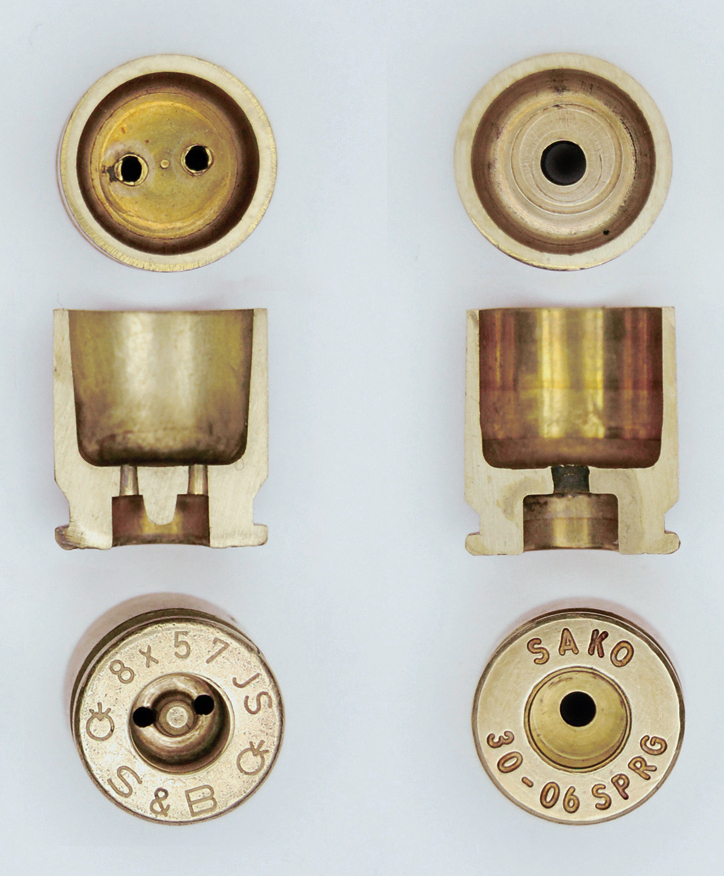
The Berdan rifle's significance lies in its role as the standard-issue firearm of the Imperial Russian Army during a period of major military modernization. Its adoption replaced the Krnka and it remained in service until superseded by the Mosin–Nagant in 1891. The rifle was known for its accuracy, simplicity, and reliability. The 10.7×58mmR cartridge it used introduced the Berdan primer, the first use of such a primer in a small arms cartridge. Although magazine-fed versions never progressed beyond prototype, the Berdan saw extensive combat use in the Russo-Turkish War of 1877–78, the Russo-Japanese War of 1905, and World War I, as well as in the hands of reserve and rear echelon units after the Mosin–Nagant became plentiful. It was also widely exported, with at least 30,000 supplied to Bulgaria, 30,000 to Ethiopia before the First Italo-Ethiopian War, 76,000 to Serbia, and thousands to Montenegro, Bukhara, and other states. After its military service, surplus rifles were converted into sporting rifles and shotguns in Russia, often referred to as 'Frovlovka'. The Berdan's legacy is that of a robust, widely distributed single-shot military rifle that bridged the gap between early breechloaders and the magazine-fed rifles of the late 19th century.
Did You Know?
- The Berdan rifle introduced the Berdan primer, the first use of this primer in a small arms cartridge.
- Total production of all Berdan models is estimated at over 3 million.
- A batch of 3,004 Berdan II rifles were converted to 7.62×54mmR in 1892, but the conversion was not deemed fit for service.
- The Berdan II bolt handle points upward at a 30-degree angle when closed, serving as the only locking lug.
Pioneering the Breech: Dreyse, Beringer, and the Berdan Primer
The story of the bolt-action rifle begins in 1824, when Johann Nikolaus von Dreyse produced what is recognized as the first such weapon, building on breechloading experiments that stretched back to the eighteenth century. His Nadelgewehr, refined by 1836, entered Prussian service in 1841 and saw limited action during the 1848 German Revolutions before being deployed more broadly in the 1864 campaign against Denmark. The 1850s and 1860s brought a wave of innovation: Béatus Beringer patented a metallic centerfire bolt-action in 1850, Joseph Needham followed with his own design in 1852 and improved it in 1862, and two competing primer systems—the Berdan and the Boxer—were devised to ignite metallic cartridge powder charges. In the United States, the Greene rifle of 1857 fought at Antietam in 1862 but proved too complex for widespread issue, while the Palmer carbine, patented in 1863, reached Union cavalry units only after the war had ended.
Adoption Across the World's Armies
Throughout the latter half of the nineteenth century, European and American armies raced to equip their infantry with reliable bolt-action breechloaders. France adopted the Chassepot in 1866, firing an 11-millimetre paper cartridge, and followed it with the metallic-cartridge Gras rifle in 1874. Britain saw the first bolt-action repeating rifle patented in 1855 through the agent Auguste Edouard Loradoux Bellford, using a gravity-fed tubular magazine in the stock; the Vetterli of 1867 and Ferdinand Fruwirth's 1871 design extended the concept to centerfire ammunition. The military eventually gravitated toward box magazines, with the M1885 Remington–Lee as the first and the British 1888 Lee–Metford as the first broadly adopted. The United States' path was more circuitous: the Ward-Burton Model 1871, chambered in .50-70 Government, was purchased in a batch of 316 for evaluation but lost to the Springfield Model 1870 trapdoor. The Springfield Model 1892, derived from the Norwegian Krag–Jørgensen and chambered in .30-40 Krag, finally became the first standard-issue bolt-action for the U.S. Army, serving from 1892 through 1907 and seeing action in the Spanish-American War of 1898.
Engineering the Turn-Bolt
Most centerfire bolt-action rifles rely on a rotating turn-bolt mechanism, a choice driven by the high pressures these cartridges generate. The operator first rotates the bolt handle—typically on the right side to accommodate the majority of right-handed shooters—upward, disengaging the locking lugs that anchor the bolt head in the receiver. Drawing the handle rearward opens the breech, permitting a spent case to be extracted and ejected, while simultaneously cocking the striker against the sear. Whether the striker is set on the opening or closing stroke varies by design. Pushing the bolt forward seats a fresh cartridge from the magazine into the chamber, and a final downward rotation of the handle relocks the bolt head, sealing the breech for the next round. A less common alternative, the straight-pull bolt, eliminates the upward rotation: the bolt unlocks automatically as the handle is drawn rearward. This arrangement is rare in centerfire service rifles because elevated chamber pressures risk premature unlocking during firing, but it suits low-pressure rimfire platforms like .22 Long Rifle and .22 Magnum, where it also offers a manufacturing cost advantage.
From Standard Issue to Sniper's Tool
From the late nineteenth century through both World Wars, bolt-action rifles served as the standard infantry weapon for the vast majority of the world's armed forces, and World War I represented the absolute peak of their battlefield ubiquity, with every combatant nation fielding troops armed in some bolt-action configuration. The United States stood as a notable exception to the long dominance of the bolt: while the M1903 Springfield saw service in the Great War, by the Second World War the Army had transitioned to the semi-automatic M1 Garand. In the decades following 1945, semi-automatic and selective-fire platforms largely supplanted bolt-actions in military and law-enforcement roles. Yet the design endures in a specialized niche. Its inherent potential for superior accuracy and precision, combined with ruggedness and reliability that self-loading mechanisms struggle to match, has kept the bolt-action as the preferred platform for sniper rifles. In the competitive shooting world, single-shot bolt-actions remain mandated in most Olympic and ISSF rifle disciplines, preserving a tradition that stretches back to the earliest breechloading experiments of the eighteenth century.
Gallery

Frequently Asked Questions
What is the Berdan rifle?
It is a single-shot infantry rifle created by American inventor Hiram Berdan in 1868 and adopted as the standard arm of the Imperial Russian Army in 1870. It served for roughly two decades before the Mosin–Nagant superseded it in 1891.
What's the difference between Berdan I and Berdan II?
The Berdan I (M1868) used a hammerless trapdoor breech mechanism, while the Berdan II (M1870) switched to a bolt-action design. Both were chambered in .42 (10.6 mm) caliber.
Why did Russia retire the Berdan rifle?
By the late 1880s, single-shot rifles were outclassed by magazine-fed weapons that let a soldier deliver rapid follow-up shots. The Mosin–Nagant, adopted in 1891, closed that gap and ended the Berdan's military career.
How many Berdan rifles were produced in total?
Over three million units across all variants were manufactured, making it one of the most numerous infantry rifles of the nineteenth century.
Were Berdan rifles used for hunting after military service?
Yes—sporting models and even shotguns based on the Berdan action continued to be made in Russia for civilian hunters well into the mid-1930s.
More in Bolt-Action Rifles, Part 4 1-24
Spotted an error? Know more?
Reader corrections go straight into our review queue. Suggest an edit · How this site is sourced