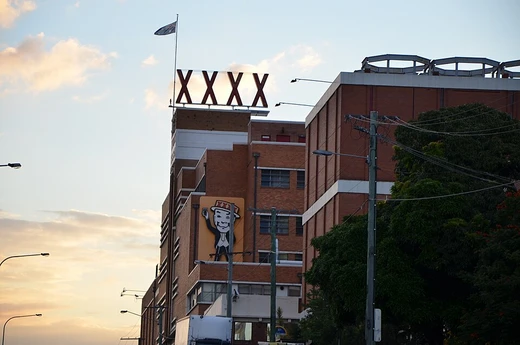
Tooth and Co.
A historic New South Wales brewer with a white horse trademark.

Tooth and Co was a major brewer of beer in New South Wales, Australia, and one of the country's oldest companies, established as a partnership in 1835. It was formerly listed on the Australian Securities Exchange and became the dominant maker of beer in the region into the 20th century.
Quick Facts
- Traded As
- TTH
- Industry
- Brewing
- Founded
- 1835
- Founder
- John Tooth / Charles Newnham
- Hq Location City
- Sydney
- Hq Location Country
- Australia
- Products
- Beer
Facts from the source article.
Lore & Background
Tooth and Co began in 1835 when John Tooth, who had emigrated from Kent, England, opened the Kent Brewery in Sydney with his brother-in-law Charles Newnham. The Tooth family's wealth from banking, agriculture and real estate supported the brewery through the late 19th century, allowing it to dominate the market. The company's logo was based on the white horse Invicta, the emblem of Kent, adopted because John Tooth was born in that English county. In the early 1970s, the horse symbol was secretly gelded in an attempt to modernise the image, a change noticed by staff and seen as a portent of things to come.
Tooth owned numerous assets beyond brewing, including Blue Bow Cordials, maltings at Mittagong and Carlton Street, Resch's Limited and its Waverley Brewery, many hotels, and the New South Wales franchise of Hungry Jack's. It also owned Penfolds winery for a period, the d'Albora Marina, and a brewery at Lismore. The company relied heavily on tied hotels and a handshake agreement with interstate rivals not to enter each other's territories, both practices outlawed by the Trade Practices Act in 1974. Following a review by McKinsey & Company, Tooth made structural changes and acquisitions, but a controlling interest was acquired by David Jones in 1981, and the brewing interests were sold to Carlton & United Breweries in 1983.
Reader's Guide
Tooth and Co was a dominant force in New South Wales brewing for over a century, its longevity enabled by the Tooth family's diversified wealth. The company's decline accelerated after the Trade Practices Act of 1974 dismantled its tied-house system and territorial agreements. A review by McKinsey & Company led to acquisitions and restructuring, but the company became a takeover target. Acquired by David Jones (a division of Adelaide Steamship Company) in 1981, its brewing operations were sold to Carlton & United Breweries in 1983. The parent company's high debt levels and the early-1990s recession forced a liquidation of assets, concluding in 1999. Only two of Tooth's many beers—KB Lager and Kent Old Brown—remain on the market. The company's unusual staff benefits, including generous beer rations and a 'honeypot' cask that operators could tap, were eventually curtailed after an accident and a successful appeal to the Industrial Relations Commission. The trademark white horse, originally a symbol of Kent, was controversially gelded in the 1970s, a change that staff interpreted as an omen of the company's eventual fate.
Did You Know?
- Tooth and Co's logo was based on the white horse Invicta, the emblem of the English county of Kent.
- In the early 1970s, the company secretly gelded the horse in its trademark to modernise its image.
- Employees received a generous ration of beer at morning tea, lunch, afternoon tea, and when clocking off.
- Tooth owned the New South Wales franchise of Hungry Jack's but failed to exploit it.
Frequently Asked Questions
Who is Tooth and Co.?
Tooth and Co. was a Sydney-based brewing partnership established in 1835 by John Tooth and Charles Newnham, making it one of the oldest enterprises in New South Wales.
What beers did Tooth and Co. produce?
The brewery's best-known labels were KB Lager and Kent Old Brown, both of which became widely recognized staples across the region.
Why is Tooth and Co. significant in Australian history?
As a founding-era company dating to 1835, it shaped the state's brewing industry for generations and even swallowed rival Resch's Limited in 1929, cementing its regional dominance.
What is Tooth and Co.'s trademark?
The brewery was identified by a distinctive white horse logo that became one of the most recognizable symbols of Australian beer for generations.
More in Beer Brands, Part 6 1-24
Spotted an error? Know more?
Reader corrections go straight into our review queue. Suggest an edit · How this site is sourced