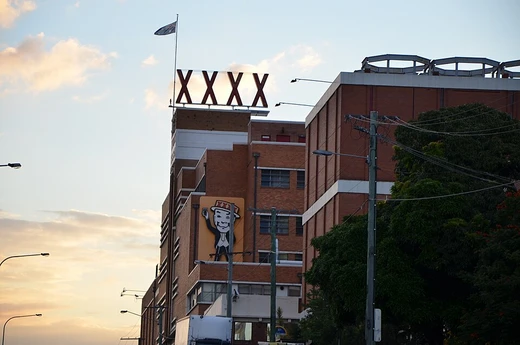
Crown Lager
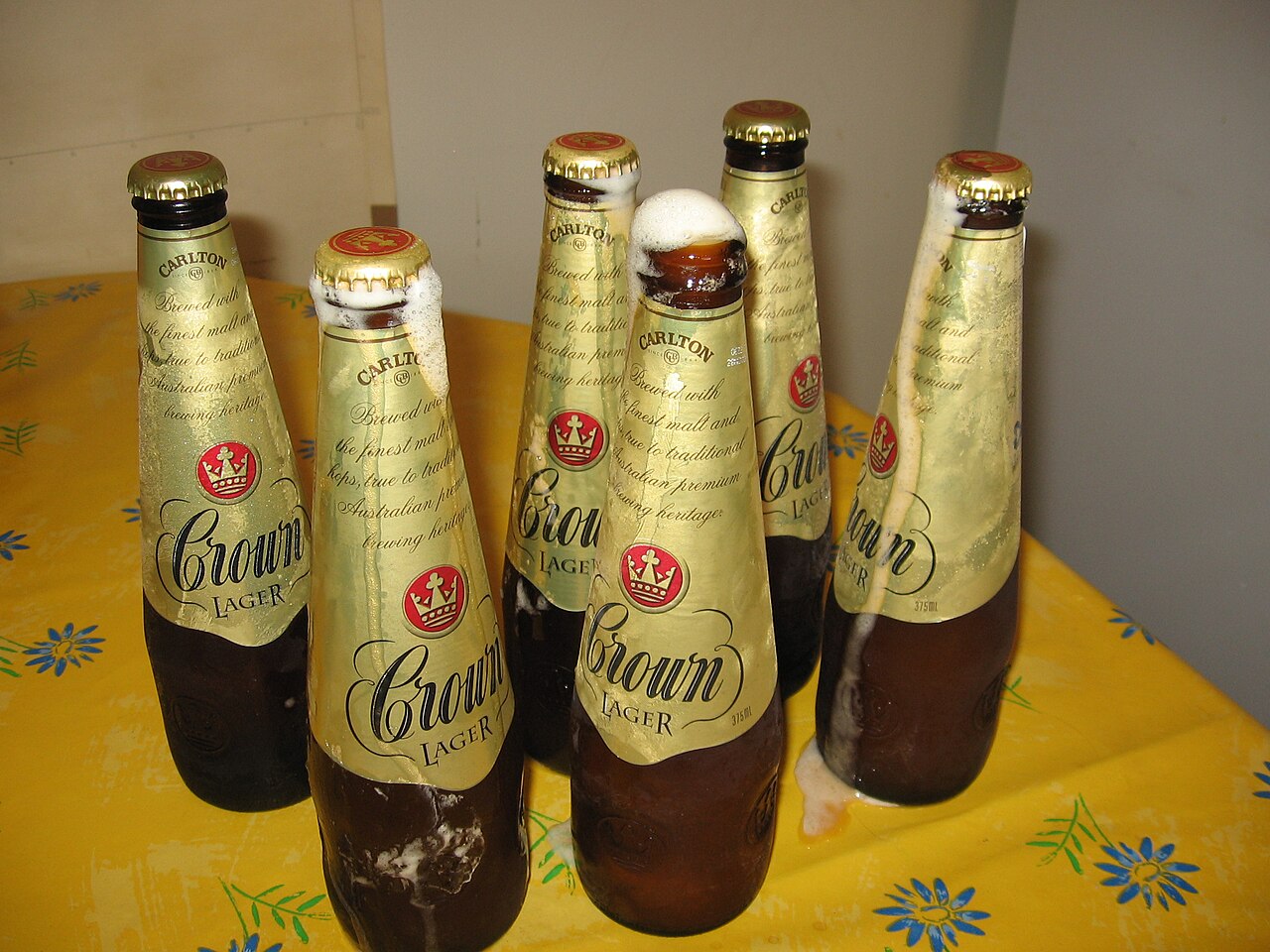
A premium Australian lager with a distinctive bottle and logo.

Uttamstef12 · CC BY-SA 3.0
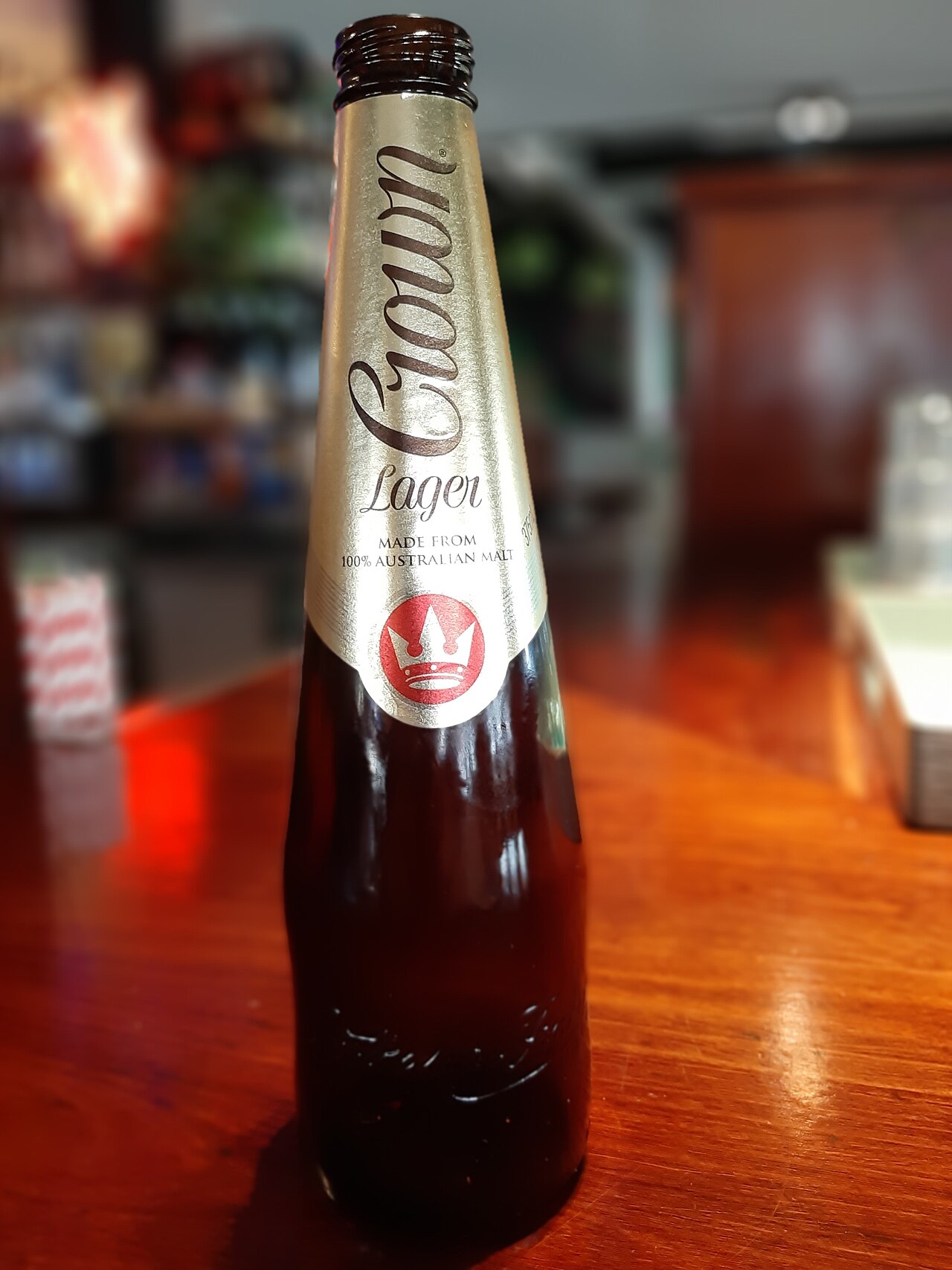
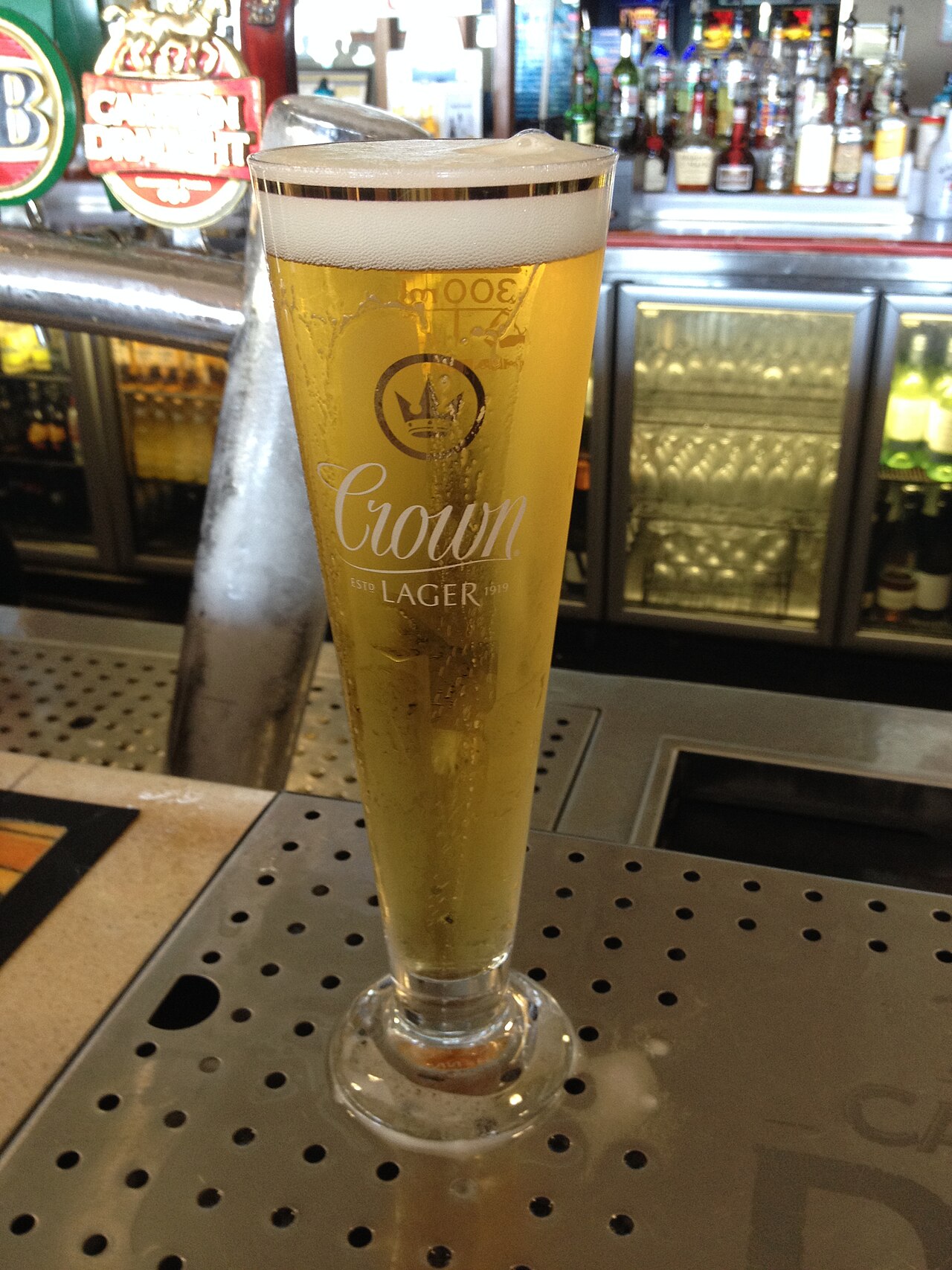
Crown Lager is a 4.9% ABV premium Australian beer first brewed in 1919 as "Foster's Crown Lager" by Carlton & United Breweries, a Foster's Group subsidiary. Often called a "crownie," the beer is known for its unique bottle shape and trademarked logo, which has been updated only four times since 1954. The bottle and label were designed by Melbourne commercial artist Eveline Annie Harvey, who also created labels for Monbulk Jam and, during World War II, drew highly secretive maps for General Douglas MacArthur. Harvey produced the Crown Lager artwork at print size using a single-hair paintbrush.
Carlton & United Breweries has long promoted Crown Lager with the story that it was originally brewed in 1919 for visiting dignitaries, and that it was released to mark Queen Elizabeth II's first royal visit to Australia in 1954. However, the company is currently reinvestigating this history after claims that Foster's Crown Lager existed before 1919 and was widely available to the public before 1954. Originally an export beer, the current bottle and label remain mostly identical to Harvey's original design, except the word "Export" has been removed. Crown Lager markets itself as a premium beer and has partnered with Golf Australia to create the Crown Lager Social Golf Club.
In 2003, former Foster's president and CEO Ted Kunkel declared that year the beer's 50th anniversary, also noting its continued high growth and status as Australia's leading premium beer. By March 2014, however, Crown Lager sales had declined. In response, CUB released several variations: "Crown Gold" (a mid-strength beer available only in Queensland, Western Australia, and the Northern Territory, launched in 2014 to hold market share); "Crown Pilsner" (a limited-release European-style beer at selected venues); "Crown Golden Ale" (an Australian-style ale with citrus, floral aromas, and sweet maltiness); and "Crown Ambassador Reserve."
Quick Facts
- Style
- Australian lager
- Abv
- 4.9%
- Manufacturer
- Carlton & United Beverages (Foster's Group)
- Origin
- Australia
- Introduced
- 1919
Facts from the source article.
Lore & Background
Carlton & United Breweries has promoted Crown Lager with the story that it was originally brewed in 1919 as 'Foster's Crown Lager' and was initially only available to visiting dignitaries in Australia. During the first royal visit of Queen Elizabeth II to Australia in 1954, the brewery marked the occasion by releasing Crown Lager. However, the company is currently re-investigating this history following claims that Foster's Crown Lager was brewed prior to 1919 and that it was widely available to the public before 1954.
The beer's unique bottle shape and label were designed by Eveline Annie Harvey, a commercial artist working in Melbourne. Harvey produced the artwork at print size using only a single-haired paintbrush. She was also responsible for many other well-known labels of the period, such as Monbulk Jam, and was chosen by General Douglas MacArthur to draw critical and highly secretive maps during the war.
Crown Lager was originally produced as an export beer. The current bottle shape and label remain mostly identical to Harvey's original artwork, except that the word 'Export' has been removed. The beer has formed an affiliation with Golf Australia to create the Crown Lager Social Golf Club.
Reader's Guide
Crown Lager remains one of Australia's most popular premium lagers. In 2003, former Foster's president and CEO Ted Kunkel declared that year would be the 50th anniversary for Crown Lager, and noted that the beer continued to show high growth, concluding it was still Australia's leading premium beer. The beer's logo has only changed four times in its history. In 2006, Carlton & United Breweries released two alternative types under the crown banner: Crown Gold, a mid-strength beer available only in Queensland, Western Australia and the Northern Territory; and Crown Pilsner, a limited release European-style beer available at selected venues. Crown Gold was launched in 2014 to hold market share in an increasingly competitive beer market, following a decline in Crown Lager sales in the March 2014 results. Additional varieties include Crown Golden Ale, described as an Australian-style ale with citrus and floral aromas and a sweet maltiness, and Crown Ambassador Reserve.
Did You Know?
- Crown Lager was first brewed in 1919 under the name 'Foster's Crown Lager'.
- The bottle and label were designed by Eveline Annie Harvey, who also drew secret maps for General Douglas MacArthur.
- The logo has only changed four times in the beer's history.
- Crown Lager is colloquially known as a 'crownie'.
Origins & the Birth of a Brew
Corona's story begins in the production halls of Cerveceria Modelo Sociedad Anónima, where German-born brewmaster Adolph H. Schmedtje took charge of operations in the summer of 1922. Tasked with overseeing the brewery's output, Schmedtje developed a new pale lager that would become the foundation of the brand. The beer was formally launched to the public in 1925, and within a decade the parent company had undergone ownership changes that eventually consolidated it into Grupo Modelo. What sets Corona's recipe apart from many traditional lagers is the inclusion of corn alongside the standard barley malt and hops; the full ingredient list also calls for yeast, ascorbic acid as an antioxidant, and propylene glycol alginate as a stabilizer. The visual identity that made the brand instantly recognizable came a few years later, around 1935, when designer Eduardo Cataño, working through the Mexican advertising agency Galas de México, crafted the now-iconic label and crown logo for Grupo Modelo.
A Global Distribution Machine
The commercial architecture behind Corona is as layered as its global reach. The beer is brewed in Mexico by Grupo Modelo, but its worldwide distribution flows through the parent company AB InBev, which handles export and international logistics. In the United States and Guam, a separate arrangement applies: Constellation Brands holds the exclusive licensing and sole importer-distributor rights, a structure formalized in 2013 when AB InBev completed its full acquisition of Grupo Modelo. The transfer of U.S. distribution to Constellation was a condition imposed by the U.S. Department of Justice to address antitrust concerns. For the Australasia market, production is localized in China. The brand's American trajectory accelerated dramatically after NAFTA took effect in 1994, when reduced import tariffs on Mexican beer coincided with growing immigration between the two countries. Since 1998, Corona Extra has held the position of the top-selling imported beverage in the United States, a title it has maintained for over two decades.
Sponsorship & the Sports World
Few beer brands have woven themselves into the fabric of professional sport the way Corona has. In Mexico, the brand was a longtime fixture of boxing, sponsoring Saturday-night card events broadcast on Televisa, and that tradition carried into the cable-television era in the United States. After AB InBev assumed full control, Constellation Brands continued the boxing partnership, most prominently backing undefeated featherweight champion Floyd Mayweather Jr. Beyond the ring, Corona served as title sponsor of the LPGA Tour's Corona Championship, later renamed the Tres Marias Championship, from 2005 through 2009, and anchored the NASCAR Mexico Corona Series, the country's most-watched stock-car racing circuit, from 2004 to 2011. In football, the brand is a secondary sponsor of four Liga MX clubs: Santos Laguna, América, Toluca, and Mazatlán, while also backing the Mexico national team in a deal running through 2026. Corona's reach extended into tennis as the ATP's premier worldwide sponsor for a five-and-a-half-year stint, and it held the title sponsorship of the SBK Superbike World Championship from 1998 to 2007.
The Pandemic Name Paradox
In early 2020, an unlikely coincidence turned a beer brand into a talking point in public-health discourse. Because Corona shares its name with the coronavirus behind the pandemic, several outlets reported that 38 percent of American consumers would avoid buying the beer. That figure came from a telephone poll of 737 U.S. beer drinkers run by 5W Public Relations, a firm whose clients included direct competitors of Corona's maker. Notably, the survey question never explicitly mentioned the virus, leaving open the chance that respondents were simply voicing brand preference. The actual market data told a different story. Nielsen retail figures showed Corona sales climbed 8.9 percent across the first quarter of 2020, with a 24 percent year-over-year jump in the first three weeks of March, a period when Americans were increasingly staying home. A subsequent academic study treating the pandemic as a natural experiment found each confirmed case of COVID-19 was associated with a $5.30 weekly sales increase for Corona relative to other major brands, suggesting the name overlap may have paradoxically boosted visibility rather than suppressed demand.
Gallery
Frequently Asked Questions
What is Crown Lager and where does it come from?
Crown Lager is a premium Australian lager at 4.9% ABV, first brewed in 1919 under the name Foster's Crown Lager by Carlton & United Breweries, a Foster's Group subsidiary. It is widely nicknamed a "crownie" by its drinkers.
Who designed the Crown Lager logo and bottle?
Melbourne commercial artist Eveline Annie Harvey created both the distinctive bottle shape and the trademarked logo. She painted the entire artwork at full print size using a single-hair paintbrush.
How often has the Crown Lager logo been updated?
Since the logo was introduced in 1954, it has been refreshed only four times, making it one of the most visually consistent beer identities in Australia.
What else is Eveline Annie Harvey known for besides Crown Lager?
Harvey also designed labels for Monbulk Jam and, during World War II, drew highly classified military maps for General Douglas MacArthur. Her Crown Lager work remains her most widely recognized piece to this day.
Why is Crown Lager considered iconic in Australian beer culture?
Its uniquely shaped bottle and long-running logo make it instantly recognizable on any shelf, and the beer has been a staple of Australian pubs and backyards since 1919. The nickname "crownie" has become so embedded in everyday language that it often replaces the full brand name entirely.
More in Beer Brands, Part 6 1-24
Spotted an error? Know more?
Reader corrections go straight into our review queue. Suggest an edit · How this site is sourced