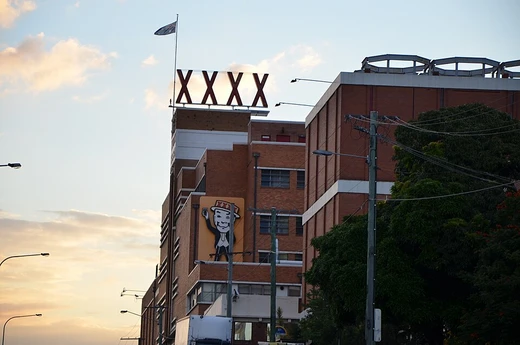
Matilda Bay Brewing Company
Australia's first craft brewery, born in Western Australia.

Kgbo · CC BY-SA 4.0
Matilda Bay Brewing Company, founded in Western Australia, holds the titles of Australia’s first craft brewery and the first new brewery to open in the country after World War II. Its origins trace back to 1984, when small batches were brewed for the Sail and Anchor Hotel. The company’s main brewery later opened in 1989, housed in a former Ford building on Stirling Highway. By the early 1990s, Carlton & United Breweries had purchased the company.
Quick Facts
- Location
- Healesville, Victoria, Australia
- Owner
- Carlton & United Breweries / Phil Sexton
- Opened
- 1983
Facts from the source article.
Lore & Background
In 1983, Phil Sexton, a former brewer for the Swan Brewery, together with Garry Gosatti, John Tollis and Ron Groves, formed Brewtech Pty Ltd to brew commercial boutique beers. Due to lack of support from Perth hotels, the company purchased and renovated the Freemasons Hotel on South Terrace in Fremantle, installing a microbrewery and renaming it the Sail and Anchor under the banner of Anchor Brewing Company. The first beer, Anchor Ale, a dark, copper-coloured traditional ale, was produced in late 1984.
In 1985, Brewtech opened a second venue, The Brewery Alehouse on Stirling Highway in Nedlands, and established a second microbrewery at 31 Carrington Street in Nedlands, which housed the Matilda Bay Brewing Company. The company launched its first wheat beer, Redback, in 1986, which became one of its best commercial successes. In 1987, Brewtech changed its name to Brewtech Limited and consolidated its business under the Matilda Bay banner, purchasing three more outlets in Perth.
In 1988, Carlton & United Breweries purchased a 20% shareholding, leading to the purchase of larger premises in 1989—the former Ford Motor Company building on Stirling Highway in North Fremantle. In 1990, Elders IXL (renamed Foster's Group) purchased the company. The original brewers later opened the Little Creatures microbrewery in Fremantle in 2000. In 2005, the Matilda Bay Garage Brewery began operating in Dandenong South for experimental beers. In 2012, the company opened the Matilda Bay Brewery Bar in Port Melbourne, which closed in 2014. In 2019, Carlton & United Breweries and founder Phil Sexton partnered to re-establish the brand with a new brewery in the Yarra Valley.
Reader's Guide
Matilda Bay Brewing Company holds a foundational place in Australian brewing history as the nation's first craft brewery and the first new brewery to open since World War II. Its early beers, particularly Redback and Dogbolter, helped introduce Australian drinkers to styles such as German wheat beer and Munich dark lager, winning major awards including grand champion at the Australian International Beer Awards. The company's trajectory—from small hotel microbrewery to acquisition by major conglomerates—reflects the broader story of craft brewing's rise and consolidation. The closure of its Perth brewery in 2007 and the later relocation of production to the Cascade Brewery in Hobart marked a shift away from its Western Australian roots. However, the 2019 partnership between Carlton & United and original founder Phil Sexton to re-establish the brand with a new Yarra Valley brewery represents a return to craft-focused brewing, while the Yak beers were disconnected from the Matilda Bay brand. The brand's legacy includes pioneering beers like Alpha Pale Ale, which won more awards than any other beer at the Australian International Beer Awards in 2003, and the elusive MB21, a strong dark unfiltered wheat beer never sold to the public.
Did You Know?
- Matilda Bay was Australia's first craft brewery and the first new brewery opened in the country since World War II.
- The first beer produced was Anchor Ale, a dark, copper-coloured traditional ale, in late 1984.
- Redback, a German-style wheat beer named after the Australian spider, was originally released in 1986 as a seasonal beer called Summer Wheat.
- MB21 is a strong, dark, unfiltered wheat beer that has never been available for sale; all production units are accounted for.
From a German Immigrant to a Milwaukee Institution
Frederick Miller arrived in America in 1854 from Hohenzollern, Germany, carrying with him a distinctive strain of brewer's yeast that would become the foundation of an enduring brewing enterprise. The following year, he invested $2,300—roughly $82,000 in today's dollars—to acquire the modest Plank Road Brewery in Milwaukee. The site's position in what would later be called Miller Valley proved strategically advantageous, granting straightforward access to agricultural raw materials from surrounding farms. Miller rebranded the operation as Miller Brewing Company, Inc., and under his stewardship it grew into a significant player in the city's brewing landscape. What made the enterprise particularly remarkable was its longevity under family control. For over a century, the Miller name remained synonymous with ownership, passing through generations until 1966, when Lorraine John Mulberger—Frederick's granddaughter, who personally objected to alcohol—sold the company to the conglomerate W. R. Grace and Company. That sale marked the end of an era in which a single family's vision had shaped one of Milwaukee's most recognizable industrial identities.
A Chameleon of Corporate Ownership
After leaving family hands in 1966, Miller Brewing Company became one of the most frequently traded assets in American brewing history. W. R. Grace held the company briefly before Philip Morris acquired it in 1969 for $130 million, winning a competitive bid against PepsiCo. Under Philip Morris ownership, Miller expanded its portfolio, notably acquiring the Hamm's brand from Pabst in 1999. The next major shift came in 2002, when South African Breweries purchased Miller for $3.6 billion in stock plus $2 billion in debt, creating the SABMiller entity while Philip Morris retained a 36% ownership stake. In 2006, SABMiller added the Sparks and Steel Reserve brands for $215 million. The most consequential restructuring arrived in 2008, when SABMiller and rival Molson Coors merged their U.S. operations into the MillerCoors joint venture. Then, in 2015, Anheuser-Busch InBev agreed to buy SABMiller for $107 billion, triggering a divestiture that saw Molson Coors purchase Miller's U.S. interests for approximately $12 billion in October 2016.
A Portfolio That Defined American Beer
Miller's brand lineup spans multiple decades and price points, reflecting shifting consumer tastes. Miller High Life, introduced in 1903, remains the company's oldest label and earned the nickname "The Champagne of Beers" due to its notably high carbonation. Its distinctive gold label, clear tapered-neck bottle, and the whimsical "Girl in the Moon" logo made it instantly recognizable, and the brand helped popularize the 7-ounce pony bottle in 1972. Miller Lite, launched in 1972, made history as the first light lager to achieve mass popularity. In 1985, Miller Genuine Draft arrived, offering the same recipe as High Life but cold-filtered rather than pasteurized to mimic draft freshness. At the economy end, Milwaukee's Best and its Light and Ice variants served budget-conscious drinkers, while malt liquors like Mickey's and Olde English 800—reaching 8% ABV in Canada—occupied the higher-alcohol segment. Seasonal offerings such as Frederick Miller Classic Chocolate Lager, brewed with six malts including chocolate varieties, added regional flavor to the lineup.
Beyond the Brewery: Sponsorship and Lasting Footprint
Miller's influence extended well beyond its brewing operations into the world of motorsport and cultural visibility. In the late 1970s, while under Philip Morris ownership, the company secured the license to produce Löwenbräu in its U.S. breweries, and the McLaren Formula One team raced in a special Löwenbräu livery at the 1978 U.S. and Canadian Grands Prix and the 1979 Long Beach race. Miller became a prominent motorsport sponsor beginning in the 1980s, with involvement in CART racing. The company also played a role in Milwaukee's industrial history, being one of six breweries affected by the 1953 brewery strike, and in 1961 it absorbed A. Gettelman, the smallest of the city's "Big Five" brewers. Today, Molson Coors continues to operate the Miller Brewery on the original Milwaukee site, preserving the physical footprint of a company founded in 1855. The brand portfolio, including Miller Lite, Miller High Life, and Milwaukee's Best, remains a familiar presence in American markets, a testament to more than a century and a half of continuous brewing heritage.
Gallery
Frequently Asked Questions
What is Matilda Bay Brewing Company?
Matilda Bay Brewing Company is a Western Australian brewery widely recognized as Australia's first craft brewery. It was established in 1984 by a founding group operating under Brewtech Pty Ltd, initially brewing small batches for the Sail and Anchor Hotel.
Which beers did Matilda Bay Brewing Company make famous?
The brewery is best known for creating Redback, a wheat beer first released in 1986, along with Dogbolter, a dark lager introduced in 1987, and Alpha Pale Ale. These labels helped shape the early identity of Australian craft beer.
Where was Matilda Bay Brewing Company's original brewery located?
The main production facility opened in 1989 inside a former Ford building on Stirling Highway in Western Australia. The brand was later re-established in 2019 in the Yarra Valley region of Victoria.
What happened to Matilda Bay Brewing Company after its early years?
By the early 1990s, Carlton & United Breweries purchased the company, folding it into what would become part of Foster's Group. This acquisition ended Matilda Bay's run as an independent craft operation.
Why is Matilda Bay Brewing Company considered a landmark in Australian brewing history?
It was the first new brewery to open in Australia after World War II, breaking decades of dominance by large industrial brewers. Its 1984 founding is generally credited with launching the modern craft beer movement in the country.
More in Beer Brands, Part 6 1-24
Spotted an error? Know more?
Reader corrections go straight into our review queue. Suggest an edit · How this site is sourced