Emu Brewery
A Perth brewery tracing its origins to 1837.

Thompson and Everts · Public domain
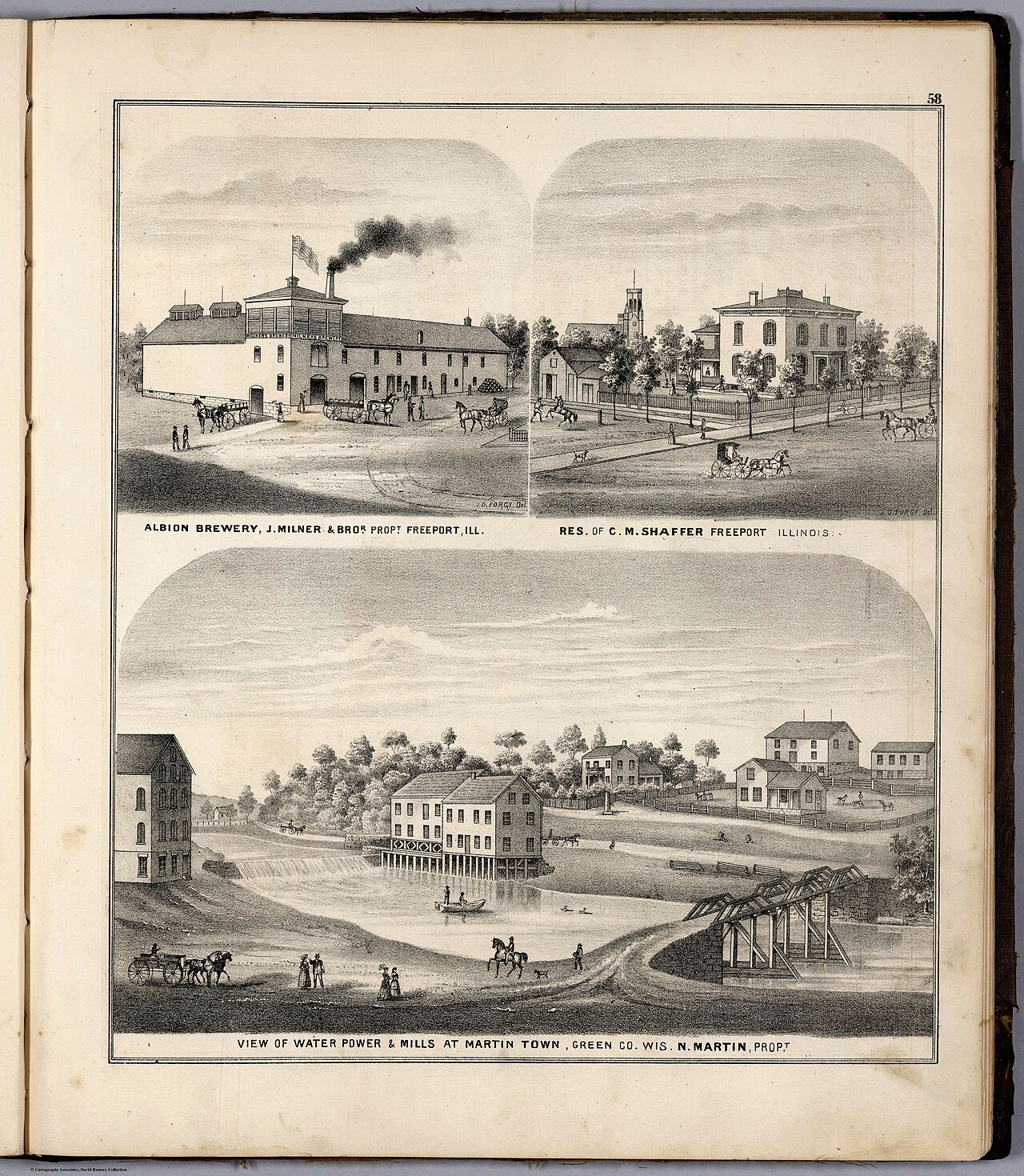
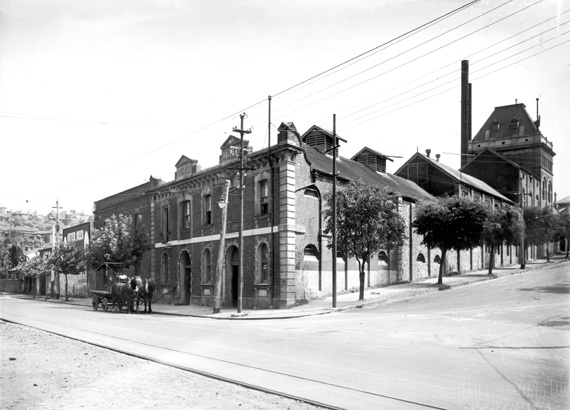
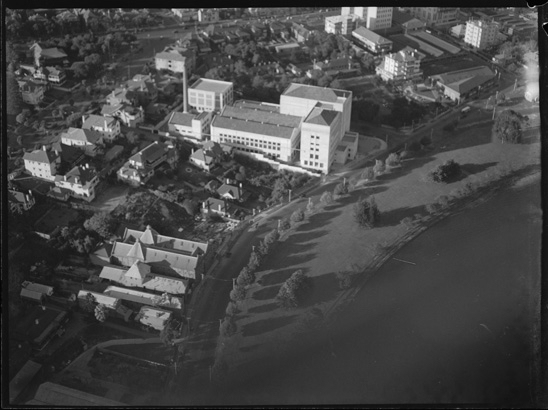
The Emu Brewery in Perth, Western Australia, had its origins in the early days of the Swan River Colony. It began in 1837 as the Albion Brewery, founded by James Stokes on a riverside block near Mounts Bay Road, Spring Street, and Mount Street. Over the years, the business changed ownership and names multiple times—from Albion to Stanley, and finally to Emu—before being bought out by its rival, the Swan Brewery, in 1927. New buildings were added over time, the most striking being an Art Deco structure built between 1936 and 1938. That building continued to produce Emu-brand beer until the late 1970s, when production moved to a new factory in Canning Vale. Today, Emu beer is still made as a brand under Lion Nathan, which owns the Swan Brewery.
When the Swan River Colony was young, in the early 1830s, there was little local beer production. Temperance preachers campaigned against widespread drunkenness but focused on spirits drinkers, since local beer was scarce. Governor James Stirling hoped a brewery might reduce drunkenness by giving men an alternative to spirits. Scotsman James Stokes arrived in Western Australia in 1834 at age 24 and saw a market opportunity. Surveyor-General John Septimus Roe had set aside a small triangular lot for a brewery, but Stokes preferred a larger block across Spring Street that stretched nearly to the riverfront (later reclamation moved the river south). The site had a natural spring and enough elevation for gravity-fed brewing without a tall tower, and river transport was convenient. Stokes bought the land from George Leake and had his brewery running by 1837. Though officially named the Albion Brewery after Britain’s ancient name, it was commonly called Stokes’ Brewery. It was the colony’s first major stand-alone brewery.
At that time, darker beers were popular in Britain, but Stokes believed pale ales—like those exported to India—would catch on locally. Contrary to Stirling’s hopes, Stokes began distilling spirits at the brewery in 1838. In 1839, he mortgaged the site back to Leake to buy the adjacent block, where he built a house. He also bought a small strip of riverfront in front of the brewery from the government for £13/5s. That same year, he formed a partnership with Dubois Aggett, but Aggett injured himself in a suicide attempt in 1840, and Stokes ended the partnership.
Quick Facts
- Former Name
- Albion Brewery · Stanley Brewery
- Founder
- James Stokes
- Fate
- Acquired in 1927
- Successor
- Swan Brewery · Lion Nathan
- Hq Location
- Mounts Bay Road
- Hq Location City
- Perth, Western Australia
- Hq Location Country
- Australia
- Key People
- James Stokes · Henry Saw · William Meloy · John Maxwell Ferguson · William Mumme · George Hamersley · Hugh Hamersley · D. · W. Harwood · John Jones · Robert Hall · Michael O'Connor
- Brands
- Emu
Facts from the source article.
Lore & Background
James Stokes arrived in Western Australia in 1834 at age 24 and saw an opportunity in the market for a brewery. He purchased land from George Leake that featured a natural spring and sufficient elevation for gravity in brewing, and was operating his brewery by 1837. Named the Albion Brewery after the ancient name for Great Britain, it was more popularly known as Stokes' Brewery and was the colony's first major stand-alone brewery. Stokes began distilling spirits at the brewery in 1838, but after the government imposed a tax on locally produced spirits, he stopped distilling. In 1848 he opened a new brewery on the site called the Stanley Brewery. After Stokes died in 1861, the brewery continued under various operators, including Henry Saw, William Meloy, John Maxwell Ferguson, and the Hamersley brothers. In 1905 the business re-formed as the Stanley Co-operative Brewery Ltd, and on 6 March 1908 it was renamed the Emu Co-operative Brewery Ltd after its most popular brand, Emu ale. The recruitment of Ernest Terry in 1909 led to a turnaround, making the brewery profitable and winning awards at the Royal Agricultural Show. Emu introduced Emu Bitter, a bottom-fermentation beer, to compete with Swan's bitter beer introduced in 1923.
Reader's Guide
The Emu Brewery's significance lies in its long history as one of Western Australia's earliest breweries and its role in the competitive brewing landscape of Perth. Founded in 1837, it was the colony's first major stand-alone brewery, predating the rival Swan Brewery. The brewery changed names and ownership multiple times, reflecting the volatile nature of the colonial brewing industry. Its most notable physical legacy is the Art Deco building constructed between 1936 and 1938, designed by the architectural firm Oldham, Boas and Ednie-Brown. This building featured a border frieze depicting stages in the brewing process, designed by John Oldham and executed by sculptor Edward F. Kohler, and its image appeared on Emu beer labels for over fifty years. After acquisition by Swan Brewery in 1927, Emu continued as a separate business until production shifted to a new factory in Canning Vale in the late 1970s. The Emu brand survives today under Lion Nathan, maintaining a link to the early colonial brewing heritage of Western Australia.
Did You Know?
- James Stokes began distilling spirits at the brewery in 1838, contrary to Governor James Stirling's hope that a brewery would reduce drunkenness.
- The brewery's site was chosen partly because it featured a natural spring and sufficient elevation for gravity in the brewing process.
- The Emu Brewery's Art Deco building, erected between 1936 and 1938, featured a border frieze depicting different stages in the brewing process.
- The brewery was renamed Emu Co-operative Brewery Ltd on 6 March 1908 after its most popular brand, Emu ale.
Origins & the X-Grading Tradition
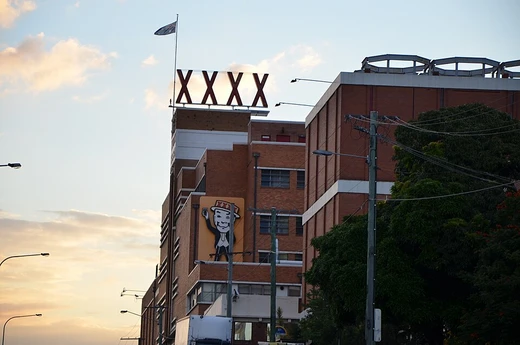
The story of XXXX begins in 1878, when two brothers, Nicholas and Edward Fitzgerald, left Castlemaine in Victoria and settled in Brisbane. They acquired an old distillery on 13 September of that year and rechristened it Castlemaine Brewing. Their first product was XXX Sparkling Ale, a name that drew on the long-standing convention of using X marks to denote the strength of an ale. Thirteen years later, in 1893, the brewery introduced a new beer they simply called XXXX, extending that same grading convention by one additional mark. The brand as it is recognised today was formally launched in 1924 with the release of XXXX Bitter, a move that also brought the world a cartoon mascot. The X-based naming system thus connects the modern Queensland favourite to a Victorian-era brewing practice, giving the label a lineage stretching back nearly 150 years and anchoring it firmly in the history of Australian ale-strength classification.
Mr Fourex & the Visual Identity
No Australian beer brand is quite as visually anchored to a single cartoon character as XXXX is to Mr Fourex. Conceived in 1924 alongside the launch of XXXX Bitter, Mr Fourex is a jovial man in a suit and boater hat who has graced the brewery's facade in Milton, Brisbane, ever since. The official story holds that he was modelled on Paddy Fitzgerald, a former director of the company who began his tenure around 1933, though a competing theory points to a well-known dwarf who sold newspapers in the Fortitude Valley in the late 1920s. The true inspiration remains unresolved. In 1988, a seven-metre neon version of the character was mounted on the side of the brewery, cementing his place in Brisbane's skyline. Beyond the mascot, the brand has been reinforced by memorable campaigns, including the 1980s-and-90s tagline 'Australians wouldn't give a XXXX for anything else,' and a short-lived early-1980s North Queensland campaign inspired by a road worker's extraordinary drinking feat, which was pulled within days under government pressure.
Product Range & Evolution
The XXXX portfolio has shifted considerably since the original Bitter first hit Queensland pubs. Today's core lineup includes XXXX Bitter at 4.4% ABV (locally nicknamed 'XXXX Heavy'), the mid-strength and lower-carb XXXX Gold at 3.5%, the full-strength Summer Bright Lager at 4.0% with lime or mango variants, the zero-carb XXXX Ultra at 3.8%, and the 3.5% alcoholic ginger beer known as XXXX Ginger. In March 2016, Bitter's alcohol content was trimmed from 4.6% to 4.4%. The range has also seen departures: XXXX Light at 2.3%, XXXX DL Lager, XXXX Gold Australian Pale Ale, XXXX Dry at 4.2%, and the alcohol-free XXXX Zero have all been discontinued. Limited small-batch releases at the on-site Alehouse have revived older names such as the 1990s wheat beer Thirsty Dog, the 1970s low-carbonation XXXX Draught, the Carbine Stout brewed from 1915 to 2008, and the Castlemaine Best IPA first produced in 1918. In December 2019, the original XXX Sparkling Ale made a brief comeback in select Brisbane CBD bars.
Corporate Journey & Cultural Footprint
The corporate path of XXXX mirrors the consolidation of Australia's brewing industry. After Castlemaine Brewing absorbed the Perkins company in 1928 to become Castlemaine Perkins, the entity merged with Tooheys in 1980, was purchased by Alan Bond's Bond Corp in 1985, and was fully acquired by Lion Nathan in 1992. Lion Nathan itself fell under Japanese conglomerate Kirin in 2009, making the Queensland icon part of a global beverage group. The brand's cultural reach extended beyond Australia's borders: InBev Ltd brewed XXXX under licence in the United Kingdom until the agreement lapsed in June 2009, offering a 3.7% ABV canned version in British off-licences. Domestically, the brand shaped everyday life in the 1950s when the company introduced the smaller one-hand bottle now called the 'stubby,' which in turn spawned the ubiquitous stubby holder. The XXXX sign atop the Milton brewery tower dates to the 1950s, and the brand even crossed into fiction when Terry Pratchett named an Australian-like continent 'XXXX' in his Discworld novels.
Gallery
Frequently Asked Questions
What is Emu Brewery?
Emu Brewery is a historic Perth, Western Australia brewing operation whose roots stretch back to 1837. It was originally established as the Albion Brewery by James Stokes on a riverside plot near Mounts Bay Road. The business passed through several ownership changes and name shifts before settling on the Emu brand.
Where was Emu Brewery located?
The brewery sat beside the Swan River in Perth, Western Australia, on a block bounded by Mounts Bay Road, Spring Street, and Mount Street. Its riverside position made it a prominent fixture in the early Swan River Colony.
Who founded Emu Brewery and under what original name?
James Stokes opened the brewery in 1837 as the Albion Brewery. Over the decades the name changed from Albion to Stanley and eventually to Emu before the business was absorbed by its rival, the Swan Brewery, in 1927.
What happened to Emu Brewery in 1927?
In 1927 the Swan Brewery purchased Emu Brewery, ending its existence as an independent operation. Despite the acquisition, the Emu brand continued to be produced at the site for years afterward.
What is the most notable building associated with Emu Brewery?
The standout structure is an Art Deco building constructed between 1936 and 1938. It remained in use for Emu-brand beer production well into the late twentieth century, making it one of the brewery's most recognizable landmarks.
More in Beer Brands, Part 6 1-24
Spotted an error? Know more?
Reader corrections go straight into our review queue. Suggest an edit · How this site is sourced