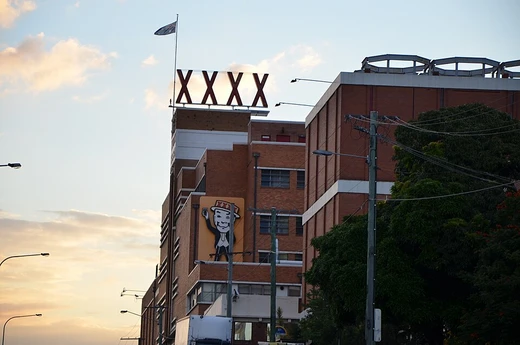
Boddingtons Brewery
The Cream of Manchester, a straw-golden bitter with a widget.

Boddingtons Brewery was a regional brewery in Manchester, England, best known for Boddingtons Bitter (Boddies), a straw-golden, hoppy bitter. It was one of the first beers to be packaged in cans containing a widget, giving it a creamy draught-style head. The brand became one of Manchester's most famous products after Manchester United and Coronation Street, promoted as 'The Cream of Manchester' in a popular advertising campaign credited with raising the city's profile.
Quick Facts
- Predecessor
- Hole, Potter and Harrison
- Founded
- 1778
- Founder
- Henry Boddington
- Defunct
- 2005 (brewery closure)
- Hq Location City
- Manchester
- Hq Location Country
- England
- Industry
- Brewing
- Products
- Beer
- Production
- 250,000 Hectolitres / 6,604,301 Gallons (2012)
- Owner
- AB InBev
Facts from the source article.
Lore & Background
Strangeways Brewery was founded in 1778 by two grain merchants, Thomas Caister and Thomas Fry, just north of what is now Manchester city centre. Henry Boddington joined the brewery in 1832 as a travelling salesman and became sole owner in 1853. Under his ownership, output increased from 10,000 to 100,000 barrels a year, making it Manchester's largest brewery. The company went public in 1888 as Boddingtons Breweries Ltd. In 1900, the brewery was implicated in the English beer poisoning epidemic, in which 6,000 people were poisoned by arsenic and 70 died. During the Manchester Blitz in 1940, the brewery water tanks were hit by bombs, forcing closure for several months with production moved temporarily to Hydes Brewery. The brewery was rebuilt and became the first in Europe to install stainless steel brewing vats. Whitbread took a 13 per cent stake in 1961. In 1969, Allied Breweries initiated a hostile takeover bid, but Whitbread acted as a white knight, raising its stake to 23 per cent, and the company remained independent. Charles Boddington issued a spirited defence, arguing against the elimination of individuality in consumer goods. Boddingtons remained independent until 1989, when Ewart Boddington sold Strangeways Brewery and the brand to Whitbread for £50.7 million. Whitbread increased marketing and distribution nationwide, and Boddingtons achieved its peak market share in 1997, exported to over forty countries. The brand is now owned by Anheuser–Busch InBev, which acquired the Whitbread Beer Company in 2000. Strangeways Brewery closed in 2004; production of pasteurised Boddingtons moved to Samlesbury, and cask production moved to Hydes Brewery until discontinued in 2012. As of September 2025, J.W. Lees Brewery brews Boddingtons Cask Ale under licence from AB InBev.
Reader's Guide
Boddingtons Brewery holds a significant place in British brewing history as a regional brewery that achieved national and international recognition. Its bitter, known as Boddies, became a cult brew in the North-West, noted for its distinctive flavour and cheap pricing. The brand's association with Manchester was cemented by the 'Cream of Manchester' advertising campaign, which raised the city's profile. The brewery's independence was famously defended in 1969 against a hostile takeover by Allied Breweries, a rare instance of a regional brewery successfully maintaining its independence through emotional appeal to shareholders. After acquisition by Whitbread, Boddingtons Bitter became a nationally distributed brand, reaching its peak market share in 1997. The brand's legacy includes pioneering the widget can technology for a creamy draught-style head. Despite the closure of Strangeways Brewery in 2004 and the discontinuation of cask ale in 2012, the brand's connection to Manchester was revived in 2025 when J.W. Lees Brewery began brewing Boddingtons Cask Ale, ensuring the continuation of a beer that was once one of Manchester's most famous products.
Did You Know?
- Boddingtons Bitter was one of the first beers packaged in cans with a widget, creating a creamy draught-style head.
- The brewery was implicated in the 1900 English beer poisoning epidemic, which poisoned 6,000 people and killed 70.
- During the Manchester Blitz in 1940, the brewery's water tanks were bombed, forcing production to move temporarily to Hydes Brewery.
- As of September 2025, J.W. Lees Brewery, Manchester's oldest brewer, brews Boddingtons Cask Ale under licence from AB InBev.
More in Beer Brands, Part 6 1-24
Spotted an error? Know more?
Reader corrections go straight into our review queue. Suggest an edit · How this site is sourced