Boddingtons Bitter
A straw-golden bitter known for its creamy widget head.

Boddingtons Bitter is a straw-golden bitter that started life at Boddington & Co’s Strangeways Brewery in Manchester. It was among the first beers to be sold in cans fitted with a widget, which produces a creamy head similar to draught beer. During the 1990s, it was marketed heavily as “The Cream of Manchester,” a campaign that is often credited with boosting the city’s image.
The beer in its present form was launched in 1971 at Strangeways. Its popularity pushed the company’s growth through the 1970s. In 1974, The Observer noted that its low price and distinctive taste gave it an unusually devoted following. Beer writer Michael Jackson called it “one of Britain’s outstanding bitters” in 1978. By 1981, The Observer described Boddingtons as a “cult brew” in the North-West, thanks to its highly distinctive flavour. Quality concerns had long kept the brewery from expanding distribution beyond its home region, but in 1983 it reached the Home Counties for the first time. Some drinkers complained that the beer had lost some of its original character after the expansion, yet by 1986 it accounted for 90% of Strangeways’ output. A keg version appeared in 1987, initially sold only to free-trade outlets like social clubs, while the tied estate continued to serve the cask version.
Whitbread bought the company in 1989, wanting a credible cask ale brand with a national reputation. Before the takeover, Boddingtons had been in decline, with only 5% of sales outside the North West, though it still had an almost cult following in Manchester. Whitbread’s capital and distribution network turned it into a national brand. Production jumped from 200,000 to 850,000 barrels a year between 1989 and 1995. By 1993, the cask version was outsold only by Tetley and John Smith’s, and most sales now came from outside the North West. In 1994, it was the fourth-best-selling bitter in the country. The canned version went nationwide in 1990 and became the UK’s top-selling canned bitter from 1992 to 2000. Exports began in 1993, starting with Canada. The beer’s rise coincided with Manchester’s transformation from a city of dark mills into a cultural hub. Whitbread chief executive Peter Jarvis said in 1995 that success came from a strong marketing campaign and being the first canned ale with a widget after Guinness. Sales peaked in 1997, then dropped 10% the following year.
Quick Facts
- Abv
- 3.5 %
- Manufacturer
- AB InBev
- Origin
- Manchester, England
- Introduced
- 1971
- Variants
- Boddingtons Pub Ale
Facts from the source article.
Lore & Background
Boddingtons Bitter in its current form was introduced in 1971, brewed at Boddingtons' Strangeways Brewery. The product's increasing popularity drove the growth of the company throughout the 1970s. Michael Jackson described the beer as 'one of Britain's outstanding bitters' in 1978. Concerns regarding quality control meant the brewery had been reluctant to extend distribution outside its heartland, but Boddingtons Bitter was distributed in the Home Counties for the first time in 1983. By 1986, it accounted for 90 per cent of production at Strangeways Brewery.
Whitbread acquired Boddingtons in 1989 and transformed the brand from regional to national, expanding production from 200,000 to 850,000 barrels a year between 1989 and 1995. By 1993 the cask version was outsold only by Tetley and John Smith's, and by 1994 it was the fourth-highest selling bitter brand in the country. The canned variant was distributed nationwide from 1990 and was the highest-selling canned bitter in the UK from 1992 until 2000. The beer was officially exported overseas from 1993, initially to Canada. In 1997 Boddingtons sales peaked, and 1998 saw a drop of 10 per cent.
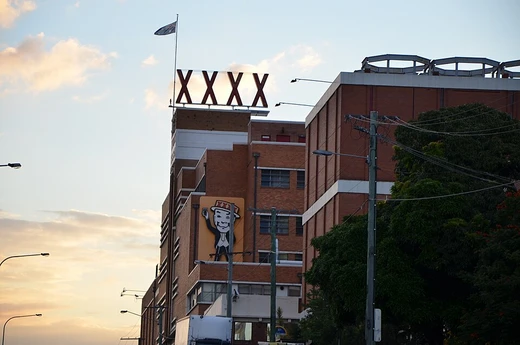
Interbrew (now AB-InBev) acquired the Whitbread Beer Company in 2000. Strangeways Brewery was closed in 2004 and production of pasteurised (keg and can) Boddingtons was moved to Samlesbury. Production of the cask conditioned beer moved to Hydes Brewery in Moss Side, Manchester until it was discontinued in 2012. The cask-conditioned variant was reintroduced in 2025, brewed under licence by JW Lees.
Reader's Guide
Boddingtons Bitter's significance lies in its trajectory from a regional cult brew to a nationally marketed brand and its role in the canned-beer revolution. Its introduction of the widget in cans, following Guinness, set a standard for delivering a creamy draught-style head in packaged beer. The brand's 1990s advertising campaign, featuring Melanie Sykes and the tagline 'The Cream of Manchester', is credited with raising Manchester's profile during the city's cultural renaissance. Under Whitbread, Boddingtons achieved its peak market share in 1997 and was exported to over forty countries. However, after acquisition by Interbrew (later AB-InBev), the brand experienced a significant decline, with sales dropping by almost three-quarters by 2010. The closure of the historic Strangeways Brewery in 2005 and the discontinuation of the cask version in 2012 marked a low point. Despite this, the brand retained a presence in the UK market and export channels, and the reintroduction of cask-conditioned Boddingtons in 2025 under licence by JW Lees suggests a renewed interest in its traditional form. The beer's straw-golden colour and creamy white head, achieved through nitrogenation, remain its defining visual and textural characteristics.
Did You Know?
- Boddingtons Bitter was one of the first beers to be packaged in cans containing a widget, giving it a creamy draught-style head.
- The beer was heavily marketed as 'The Cream of Manchester' in the 1990s, a campaign credited with raising the city's profile.
- Adverts from 1996 to 1999 featured Melanie Sykes, who returned to the adverts in 2017 to mark 21 years since her first advert.
More in Beer Brands, Part 6 1-24
Spotted an error? Know more?
Reader corrections go straight into our review queue. Suggest an edit · How this site is sourced