Bevo (drink)
Bevo was a popular near beer during Prohibition.

Bevo was a non-alcoholic malt beverage, often called a near beer, produced by the Anheuser-Busch company in the United States starting in the early 1900s. It became most popular during Prohibition, the thirteen-year period when beer, wine, and distilled spirits were banned.
Prohibition began for the U.S. armed forces in 1916, prompting Anheuser-Busch to start brewing Bevo. When nationwide Prohibition took effect in 1919, production soared, and Bevo became the most popular of the many "cereal beverages" or "near beers" on the market. At its peak in the early 1920s, annual sales exceeded five million cases.
Bottle labels promoted it as "Bevo the Beverage." The name combined the word "beverage" with the Slavic word for beer, *pivo*, and was pronounced "Bee-vo."
By the late 1920s, bootleg beer and liquor—both smuggled and homemade—cut into Bevo’s sales. With annual sales dropping to 100,000 cases by 1929, Anheuser-Busch halted production.
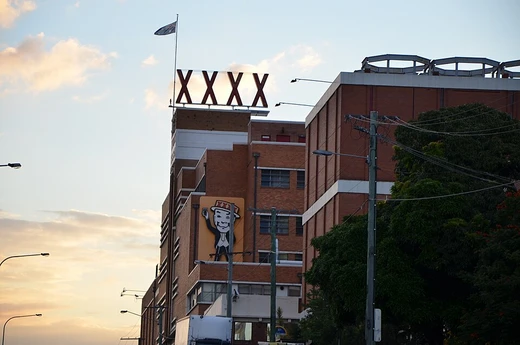
The Bevo building, featuring the Renard the Fox character at its corners, still operates as a bottling facility at the company’s main brewery in St. Louis, Missouri. The Bevo Mill, built by August Anheuser Busch, Sr. in 1917, closed in 2009 but reopened later that year under new owners.
Advertising for Bevo often used Renard the Fox, based on a medieval French folk tale, and promotional mugs bearing his image were produced. In 1930, Anheuser-Busch built a series of boat-bodied cars called "Bevo Boats" for promotion; seven were likely built on Pierce-Arrow 8-cylinder chassis, and one surviving example used a 1930 Cadillac 353 V8.
One contemporary ad read: "Cooling and invigorating, Bevo the Beverage. Order by the case from your grocer, druggist, or dealer." The bottle’s back label stated: "The All-Year-Round Soft Drink. Appetizing - Healthful - Nutritious - Refreshing. Milk or water may contain bacteria. BEVO never does."
Bevo entered popular culture, appearing in songs and vaudeville skits of the era. The word also gained secondary slang uses; for instance, in American military slang, a young and inexperienced officer was called a "Bevo." The University of Texas named its mascot "Bevo," a name that remains today.
Irving Berlin included the song "You Can't Stay Up on Bevo" in his 1917 army revue *Yip Yip Yaphank*. His song "The Near Future," which features the lyric "How Dry I Am," also prominently mentions Bevo.
- Type
- Non-alcoholic malt beverage (near beer)
- Brewer
- Anheuser-Busch
- Peak annual sales
- More than five million cases (early 1920s)
- Sales in 1929
- 100,000 cases
- Production started
- Early 20th century
- Production stopped
- Late 1920s
Lore & Background
The Anheuser-Busch company started brewing Bevo when alcoholic beverages were prohibited in 1916 by the United States armed forces. Production rose greatly with national prohibition in 1919, and Bevo was by far the most popular of the many 'cereal beverages' or 'near beers' of the time. At the peak of its popularity in the early 1920s, more than five million cases of Bevo were sold annually.
Labels on the bottles billed it as 'Bevo the Beverage'. The name 'Bevo' was coined from the word 'beverage' and the Slavic language word for beer, pivo, and was pronounced 'Bee-vo'. In the late 1920s, bootleg beer and liquor, both smuggled and 'homebrew', cut into Bevo's marketshare. With sales flattening to 100,000 cases by 1929, Anheuser-Busch stopped production.
Some Bevo advertising featured the character 'Renard the Fox' (based on the protagonist of a medieval French folk tale), and promotional mugs with this character were manufactured. In 1930, Anheuser-Busch built a series of boat-bodied cars in its St. Louis shops called the 'Bevo Boats' which were used for promotion. Seven are believed to have been built on Pierce-Arrow 8-cylinder chassis while one surviving example was based upon 1930 Cadillac 353 V8.
Reader's Guide
Bevo became part of the popular culture of the time, and is mentioned in various popular songs and vaudeville skits of the era. This led to secondary slang uses of the word; for example, in American military slang a young and inexperienced officer was called a 'Bevo'. The University of Texas named its mascot 'Bevo', a name which has stuck to this day. Irving Berlin included a paean to the drink, 'You Can't Stay Up on Bevo', in his 1917 army revue, Yip Yip Yaphank. In addition, in his song 'The Near Future', which includes the ubiquitous lyric 'How Dry I Am', Bevo is featured prominently. As the Prohibition Era was starting, 'On the Streets of Cairo' by Jesse G. M. Gluck & Geo. P. Hulten assured people that in Cairo, 'you won't have to drink pale Bevo, Booze there has a kick.' Bevo is mentioned in Ernest Hemingway's short story 'The Killers' (1927), John O'Hara's short story 'The Bucket of Blood' (1962), Sinclair Lewis's novel Babbitt (1922), and Thornton Wilder's novel Theophilus North (1973). Decades later, Bevo was mentioned in the song 'Ya Got Trouble' in the musical The Music Man as a reference to an objectionable aspect of the culture of young people during the time in which the musical was set (although The Music Man was set in 1912, four years prior to Bevo's introduction). In 2009 the beverage was mentioned briefly in the 1927 set webcomic Lackadaisy by Tracy Butler. The Bevo building, with the Renard character prominently displayed at the corners, still operates as a bottling facility at their main brewery in St. Louis, Missouri. The landmark Bevo Mill, constructed by August Anheuser Busch, Sr. in 1917, was closed in 2009, but reopened in October 2009 under new owners.
Did You Know?
- Bevo's name was coined from 'beverage' and the Slavic word for beer, pivo.
- The University of Texas mascot 'Bevo' is named after the drink.
More in Beer Brands, Part 6 1-24
Spotted an error? Know more?
Reader corrections go straight into our review queue. Suggest an edit · How this site is sourced