Newington Butts
A former hamlet with an Elizabethan theatre and archery origins.

Newington Butts is a former hamlet, now an area of the London Borough of Southwark, London, England. It gives its name to a segment of the A3 road running south-west from the Elephant and Castle junction. The area is notable for its association with an Elizabethan theatre that saw the earliest recorded performances of some Shakespearean plays, and as the birthplace of the scientist Michael Faraday.
- Location
- London Borough of Southwark, London, England
- Road segment
- A3 road running south-west from the Elephant and Castle junction
- Notable resident
- Michael Faraday (born 1791)
- Theatre
- Newington Butts Theatre, one of the earliest Elizabethan theatres
Lore & Background
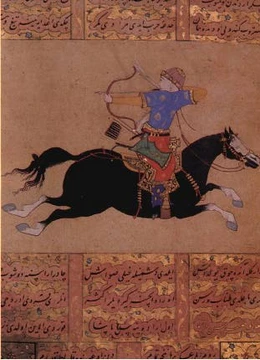
The name Newington Butts is believed to derive from an archery butts, or practice field, though the 1955 Survey of London published by London County Council could find no historical reference to archery butts in Newington. The connection is mentioned elsewhere, for example in 1792. Alternatively, the name may have come from the triangle of land between the roads, as the word 'butts' is used elsewhere in Surrey to refer to odd corners or ends of land. Newington was a rural village that grew up on the Walworth Road at its junction with the Portsmouth Road, about a mile south of London Bridge. Being outside the jurisdiction of the City of London, it became home to activities such as plays that were banned near London during hot weather for fear of spreading infection. In the 17th and 18th centuries, the triangle of ground between the roads was known as the Three Falcons and was copyhold of the manor of Walworth. In 1802, Thomas Hardwick reported that the estate consisted of a number of small tenements in bad condition. In the spring of 2008, St Mary's Churchyard was given a face lift; the largely grassy area now contains a children's playground with concrete mounds with rubber surfaces that might recall archery butts, though this has been denied by the Elephant and Castle Regeneration Team.
Reader's Guide
Newington Butts holds significance as the site of one of the earliest Elizabethan theatres, possibly predating even The Theatre of 1576 and the Curtain Theatre, which are usually regarded as the first dedicated playhouses in London. This theatre saw the earliest recorded performances of some Shakespearean plays, marking it as a key location in the development of English Renaissance theatre. The area also produced the leading scientist Michael Faraday, born there in 1791. The toponymy of Newington Butts remains a subject of uncertainty: while commonly linked to archery butts, historical records from the 1955 Survey of London found no direct evidence of such a practice field, and alternative explanations point to the word 'butts' meaning odd corners of land. The legacy of the name persists in the A3 road segment and in Cockney rhyming slang, where 'Newington Butts' means 'guts'. The modern playground in St Mary's Churchyard includes mounds that some interpret as a nod to archery butts, though the regeneration team denies this intention.
Did You Know?
- Michael Faraday was born in Newington Butts in 1791.
- The Newington Butts Theatre may predate The Theatre of 1576 and the Curtain Theatre.
- In Cockney rhyming slang, 'Newington Butts' means 'guts'.
A Name from the Early Middle Ages
Newington Butts carries a name that has nearly faded from everyday use, yet it encodes some of the oldest layers of south London's landscape. The word Newington reaches back to the early Middle Ages, when it simply denoted a new village or farmstead — a modest settlement that would eventually become what we now call the Elephant and Castle district. The second element, Butts, is more ambiguous: it may refer to archery butts, the targets used in medieval marksmanship, or it may simply mean small parcels of land. Either reading captures a moment when this stretch of the riverbank was still rural, a patchwork of fields rather than the dense urban fabric that exists today. What makes the name particularly striking is its near-obsolete status. Newington is no longer the primary identifier for the area; it has been largely superseded by the Elephant and Castle label. Yet Newington Butts persists as a boundary marker, defining the eastern edge of the Kennington and Lambeth districts in the same way that Westminster Bridge Road and St George's Circus mark the northern limit. The name is a fossil of a landscape that no longer exists, preserved in a single street designation.
The Elephant and Castle: A Coaching Inn's Legacy
The area now known as Newington Butts is, in the words of the etymological record, the almost obsolete name for the Elephant and Castle area. That single phrase captures a remarkable shift in identity. The Elephant and Castle name itself derives from a coaching inn that once stood there — a stop for travellers on the road to London, where the road literally led to the city centre. The inn's name became so firmly attached to the place that it displaced the older, more rural Newington identity entirely. The coaching inn era was a transitional period: the area was no longer the new village of the early Middle Ages, but it had not yet become the dense, multi-layered urban district it is today. The road that connected it to the city, London Road, named simply for the fact that it led to London, was the lifeline of this coaching trade. The shift from Newington to Elephant and Castle represents a broader pattern in south London: as the city expanded southward across the Thames, the old rural identities were gradually absorbed, renamed, or forgotten, leaving only fragments like Newington Butts to remind us that this was once open countryside.
A Streetscape of Layers
The streets surrounding Newington Butts form a palimpsest of London's history, each name a fragment of a different era. There are medieval and early modern echoes: Bedlam Mews recalls the notorious Bethlem Royal Hospital that once stood nearby, while Old Paradise Street preserves the memory of a former burial ground. The 17th and 18th centuries leave their mark through Cottington Street, named for a diplomat and politician who leased local land, and through Beaufoy Walk, honouring local businessmen and philanthropists. The 19th century adds its own layer: Cosser Street commemorates a family timber business, Oakey Lane remembers a Victorian emery paper manufacturer, and Albert Embankment was built in the 1860s over former marshlands and named for Prince Albert, husband of Queen Victoria. Even the more whimsical names — Centaur Street paired with Hercules Road, Dante Place, Hamlet Court, Othello Close — reveal a Victorian appetite for literary and mythological references. Together, these streets encode a continuous narrative of development, from marshland to coaching stop to industrial district to modern neighbourhood, all within a few hundred yards of the Thames.
Royal and Ecclesiastical Threads
Beneath the commercial and residential names, a web of royal and ecclesiastical connections runs through the Kennington and Lambeth streetscape. The Duchy of Cornwall, which belongs to the Prince of Wales, once owned much of the land in this area, and its influence is visible in Chester Way (the Prince also holding the title Earl of Chester), in Stannary Place and Street (reflecting the Duchy's holdings around the tin-mining towns of Cornwall and Devon), and in Polperro Mews, likely named after the Cornish town. The Lambeth Palace connection threads through Fitzalan Street, Juxon Street, and Morton Place, each named for an Archbishop of Canterbury who held office in the early 15th century, the 1660s, and the late 15th century respectively. Royal grants appear in King Edward Walk, commemorating Edward VI's donation of land to the City of London, and in Black Prince Road, named for Edward the Black Prince, son of Edward III, who owned this land. These names remind us that the area was never merely a working-class suburb; it was woven into the administrative and spiritual fabric of the nation for centuries.
Frequently Asked Questions
What is Newington Butts?
Newington Butts is a former hamlet that now forms part of the London Borough of Southwark in south London, England. It retains its name as a recognized local area within the borough.
Which road segment is named after Newington Butts?
The stretch of the A3 that runs south-westward from the Elephant and Castle junction carries the Newington Butts name. It serves as a key arterial route out of central London into the surrounding south-western suburbs.
What Elizabethan theatre connection does Newington Butts have?
The area was home to the Newington Butts Theatre, one of the earliest Elizabethan playhouses in London. It is where some of the earliest recorded performances of Shakespearean plays took place, making it a significant site in early theatrical history.
Who was born in Newington Butts?
The scientist Michael Faraday was born in Newington Butts in 1791. His birthplace in this Southwark hamlet is one of the area's most well-known historical associations.
Why is Newington Butts historically significant?
The area is notable for two major reasons: it hosted an Elizabethan theatre linked to the earliest recorded stagings of Shakespeare's works, and it is the birthplace of the pioneering physicist and chemist Michael Faraday. Together these connections give the small Southwark hamlet a disproportionate place in both cultural and scientific history.
More in Archery, Part 2 1-24
Spotted an error? Know more?
Reader corrections go straight into our review queue. Suggest an edit · How this site is sourced