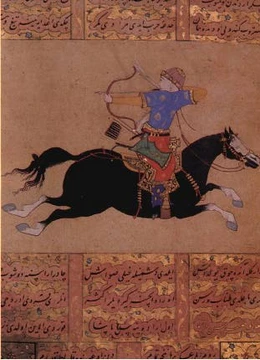
E.T. Seton Park
One of only two public archery ranges in Canada.

E.T. Seton Park is a public park in Toronto, Ontario, Canada, named after the British-born author and naturalist Ernest Thompson Seton. It is notable for containing one of only two public archery ranges in Canada.
Quick Facts
- Location
- Toronto, Ontario
- Operator
- Toronto Parks
Facts from the source article.
Lore & Background
E.T. Seton Park is located in the Don Valley, an area where Ernest Thompson Seton spent much of his childhood from 1860 to the 1870s. The Don River runs through the park, making it a popular spot for various activities. The park adjoins Thorncliffe Park, Flemingdon Park, and the Ontario Science Centre. Its archery range was listed in Toronto's bid book for the 2015 Pan American Games, but was not used for that competition because vehicular access to the range was not possible; the archery event was instead held at Varsity Stadium on Bloor Street in downtown Toronto. The park also features an 18-hole disc golf course installed in 2011, with the ET Seton disc golf league meeting on Tuesdays at 6:00 p.m. at the tee pad for the 14th hole.
Reader's Guide
E.T. Seton Park holds significance as one of only two public archery ranges in Canada, offering a rare opportunity for public access to the sport. Its inclusion in Toronto's bid book for the 2015 Pan American Games underscores its recognition as a suitable venue, though logistical limitations—specifically the lack of vehicular access—prevented its use for the actual competition. The park's archery range thus remains a community resource rather than a major competition site. Beyond archery, the park serves multiple recreational purposes, including disc golf, jogging, cycling, nordic skiing, and equestrian trails, reflecting its role as a multi-use green space in the Don Valley. The park's naming after Ernest Thompson Seton, a naturalist who spent his childhood in the area, ties it to local heritage. Its location adjoining other parks and the Ontario Science Centre makes it part of a larger recreational and educational corridor in Toronto.
Did You Know?
- The park is named after Ernest Thompson Seton, a British-born author and naturalist who spent much of his childhood in the Don Valley near the park.
- The archery range is one of only two public ranges in Canada.
- The disc golf course was installed in 2011, and the ET Seton disc golf league meets on Tuesdays at 6:00 p.m. at the tee pad for the 14th hole.
From Dairy Farm to National Celebration
The land that would become Centennial Park carried a distinctly agricultural past before it was transformed into one of Toronto's most prominent public green spaces. In 1967, the Borough of Etobicoke opened the park to mark Canada's centennial, a fitting gesture for a nation celebrating its first hundred years. The site had been part of the Hirons family dairy farm, and the transition from working farmland to civic recreation area was swift — the portion of the property not incorporated into the park was sold just a year later in 1968 to make way for residential development. This rapid shift from pastoral to urban use set the tone for decades of evolving public programming. Today, the park falls under the stewardship of the city of Toronto's Parks, Forestry and Recreation Division, a department that inherited the grounds when six former municipalities merged into a single city in 1998. The park's origins as a centennial gift from Etobicoke remain a point of local pride, even as its identity has broadened to serve all of metropolitan Toronto.
A Stage for International Competition
Centennial Park has repeatedly put itself on the map as a host for major sporting events, a trajectory that began in earnest during the mid-1970s. The park served as one of two venue sites for the 1976 Summer Paralympics, a landmark moment that elevated its athletic infrastructure to international standards. That same decade saw a motocross track operate within the grounds, with the Motorcycle Racing Association of Canada, led by Mike Austin, staging Sunday races for enthusiasts. Decades later, in 2015, the park hosted the BMX cycling events at the Pan American Games, and the purpose-built track was retained afterward as a public-use legacy facility, now known as the Centennial Park Pan Am BMX Centre. The park's role in global sport continued into 2026, when it was selected as a training site for teams competing at the FIFA World Cup. Between these headline events, the grounds support a wide array of regular competition: an eight-lane polytan track and field facility, Rob Ford Stadium with its 3,500-seat capacity for athletics and soccer, and numerous fields and courts that keep local leagues in constant rotation.
Adapting to a Changing City
The park's story is as much about what it has lost as what it has gained. When the six municipalities of Metropolitan Toronto amalgamated in 1998, Centennial Park passed from the former City of Etobicoke Parks Department into the unified Toronto Parks and Recreation system — a transition that should not be confused with a small, identically named park on Centennial Road in Scarborough. More recently, the city has made difficult decisions to shed certain operations. In November 2022, skiing and snowboarding were shut down, with the city citing reduced attendance during the pandemic and mechanical problems with the lifts; shifting winter snowfall patterns may have played a role, though the city did not explicitly name that factor. This left Earl Bales Park as Toronto's sole ski and snowboard destination. The following year, the 2023 Centennial Park Master Plan called for the closure of the go-karting facilities. Yet the park has not simply contracted: ahead of the 2026 FIFA World Cup, a wave of new and upgraded amenities was unveiled, including four baseball diamonds, eight beach volleyball courts, twelve pickleball courts, three soccer pitches, and a brand-new multi-use field.
A Landscape of Contrasts
What makes Centennial Park remarkable is the sheer density and variety of its physical features, many of which carry surprising histories. Centennial Hill, for instance, was once the site of a municipal dump, with its southern end functioning as a waste transfer station — a stark contrast to the 120-acre golf course and seven acres of marshland and wetlands that now define parts of the grounds. An eleven-acre man-made pond adds a contemplative water element, while the Etobicoke Olympium, a large athletic centre completed in 1975, and the Centennial Park Conservatory anchor the built environment. Recreational offerings span an astonishing range: ten soccer fields, five baseball diamonds, five softball diamonds, twelve pickleball courts, eight beach volleyball courts, two cricket pitches, a disc golf course, a splash pad, playground equipment, flying circles, a designated toboggan hill, and the Kiwanis Exercise Course. Picnic areas are scattered throughout, and the two-pad Centennial Park Arena provides indoor activity. Together, these elements create a park that functions as a self-contained world of outdoor life for the surrounding community.
Frequently Asked Questions
What is E.T. Seton Park?
E.T. Seton Park is a public park in Toronto, Ontario, Canada, named for the British-born author and naturalist Ernest Thompson Seton. It is best known among archery enthusiasts for housing one of just two publicly accessible archery ranges in all of Canada.
Where is the archery range at E.T. Seton Park located?
The park's main entrance sits at 73 Thorncliffe Park Drive in Toronto, Ontario. The archery range is one of the park's headline features, shared alongside an 18-hole disc golf course, jogging and cycling paths, and various trails.
Why is the E.T. Seton Park archery range considered so notable?
It holds the distinction of being one of only two public archery ranges in the entire country of Canada, making it a rare and highly sought-after venue for archers. That extreme scarcity means it draws enthusiasts from across the region who cannot easily find similar public facilities elsewhere.
Who is E.T. Seton Park named after?
The park honors Ernest Thompson Seton, a British-born author and naturalist who made lasting contributions to literature and the study of wildlife. His legacy is preserved through the park's name in Toronto's Thorncliffe Park area.
What other recreational features does E.T. Seton Park offer besides archery?
In addition to the archery range, the park includes an 18-hole disc golf course, nordic skiing and equestrian trails, jogging and cycling paths, and three fire pits. These amenities make it a multi-use outdoor space catering to a wide variety of activities.
More in Archery, Part 2 1-24
Spotted an error? Know more?
Reader corrections go straight into our review queue. Suggest an edit · How this site is sourced