Boethius
Last updated

Boethius · Public domain
He was a central figure in translating Greek classics into Latin and a precursor to the Scholastic movement.[1] His best known work is the Consolation of Philosophy, written while awaiting execution in prison.[2]
Life and work
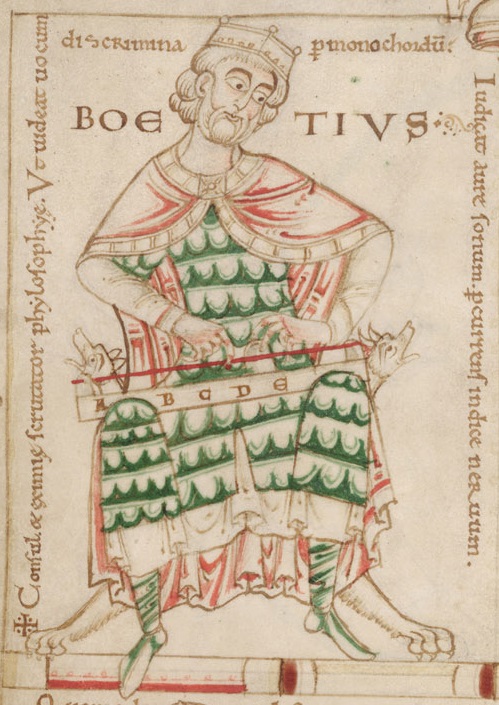
Boethius was born in Rome around 480 to a patrician family, but his exact birth date is unknown.[3] His father, Manlius Boethius, died when he was young, and he was adopted by Quintus Aurelius Memmius Symmachus.[4] He entered the service of Theodoric the Great, inspired by Plato's Republic.[5] In 522, both his sons were selected by Theodoric to be consuls, and Boethius was elevated to magister officiorum.[6]
He became deeply unpopular among the Ostrogothic court for denouncing corruption.[7] Within a few years, Boethius moved up quickly through governmental positions; he became a senator when he was 25 years old and held the consulship in 510.[8] Theodoric had Boethius imprisoned around 523 after Boethius spoke out in defense of Caecina Albinus, a fellow former consul who had been accused of conspiracy.[7] By tradition, Boethius is considered a Christian martyr; he was put to death in 524 after being tortured.[7]
What the cited sources add
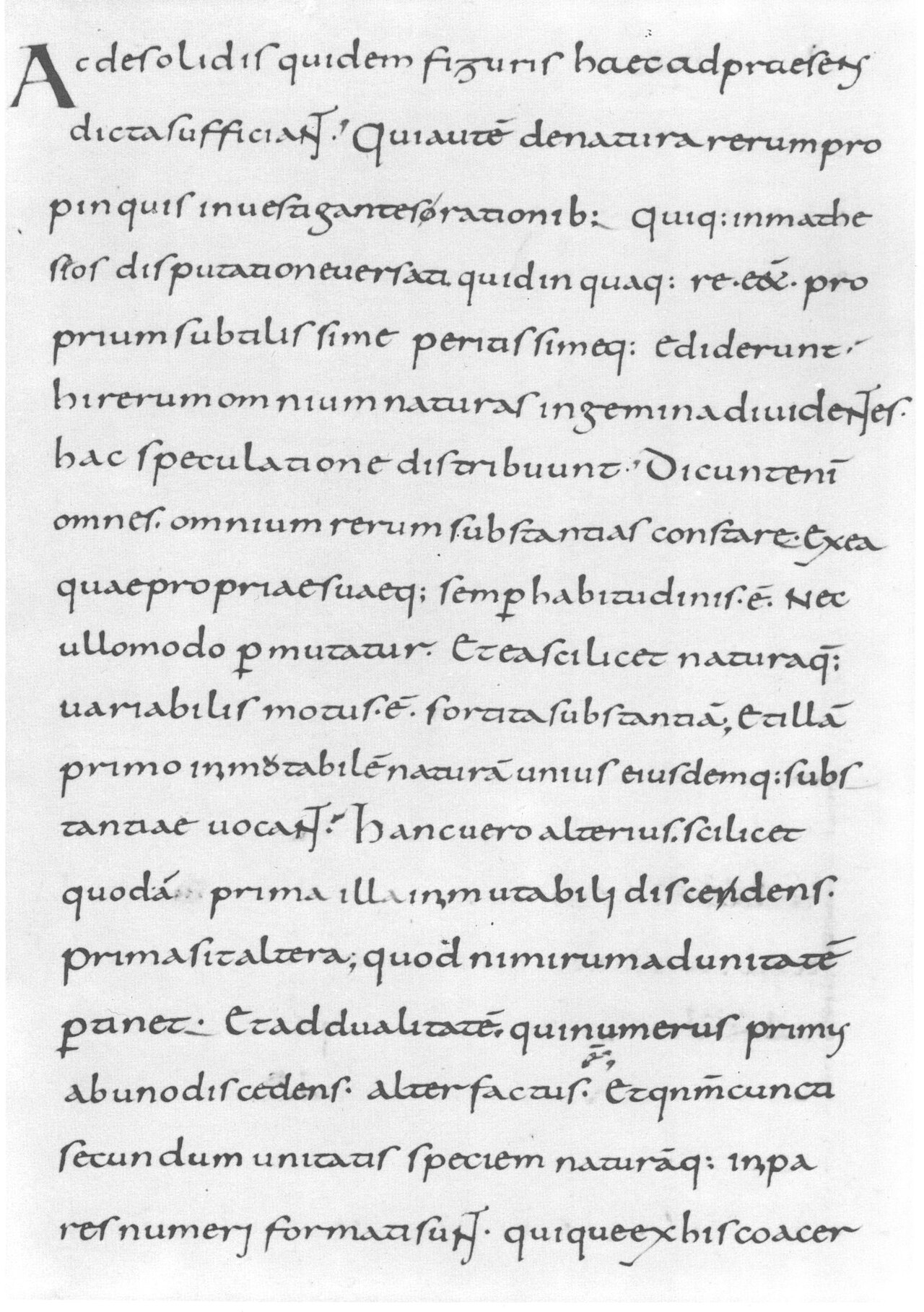
The scholar Christopher de Hamel argues that a copy of De Musica held at the Alexander Turnbull Library was originally commissioned and owned by Thomas Becket after his appointment as Archbishop of Canterbury in 1162.[9] Oscar Paul's major work was a German translation of De Musica that he published in 1872.[10]
References
- Wikipedia, "Boethius" (CC BY-SA 4.0), which cites: Matthews 1981, p. 16; Turner 1907 (original not read by us) en.wikipedia.org
- Wikipedia, "Boethius" (CC BY-SA 4.0), which cites: OLL (original not read by us) en.wikipedia.org
- Wikipedia, "Boethius" (CC BY-SA 4.0), which cites: Kaylor Philips 2012, p. 1; Barrett 1940, p. 33; Hodgkin 1880, p. 617 (original not read by us) en.wikipedia.org
- Wikipedia, "Boethius" (CC BY-SA 4.0), which cites: Heather 2005, p. 244–245; Hodgkin 1880, p. 617; Kaylor Philips 2012, p. 1; Boethius 1969, p. 59; Barrett 1940, p. 33 (original not read by us) en.wikipedia.org
- Wikipedia, "Boethius" (CC BY-SA 4.0), which cites: Barrett 1940, p. 33; Barrett 1940, p. 33 (original not read by us) en.wikipedia.org
- Wikipedia, "Boethius" (CC BY-SA 4.0), which cites: Herman 2013, p. 187; Barrett 1940, p. 33; Barrett 1940, p. 33; Boethius 1969, p. 59 (original not read by us) en.wikipedia.org
- Wikipedia, "Boethius" (CC BY-SA 4.0), which cites: Matthews 1981, p. 16 (original not read by us) en.wikipedia.org
- Wikipedia, "Boethius" (CC BY-SA 4.0), which cites: Kaylor Philips 2012, p. 1; Barrett 1940, p. 33; Cassiodorus 1992, p. I.10, pp. 12–14; I.45, 20–23; II.40, 38–43 (original not read by us) en.wikipedia.org
- Wikipedia, "Boethius" (CC BY-SA 4.0), which cites: de Hamel, "The Migrants: A Memoir with Manuscripts", Allen Lane, 2026, p. 188-213 (we also read that source) en.wikipedia.org
- Wikipedia, "Boethius" (CC BY-SA 4.0), which cites: Paul 1872 (original not read by us) en.wikipedia.org
Each numbered sentence above was checked against the source it cites before publication. Sentences citing Wikipedia adapt text from the English Wikipedia article Boethius (contributors), used under CC BY-SA 4.0; this entry is available under the same licence. Other sources were used for facts only.
More in Ancient And Medieval Historians And Philosophers
Sources
Compiled from Wikipedia and the sources listed below. Text from Wikipedia is available under CC BY-SA 4.0; this entry is adapted from it.
- Wikipedia: Boethius (CC BY-SA 4.0).
Spotted an error? Know more?
Reader corrections go straight into our review queue. Suggest an edit · How this site is sourced