Antisthenes
Pupil of Socrates, founder of Cynic philosophy, advocate of ascetic virtue.
Last updated

Yair Haklai · CC BY-SA 4.0
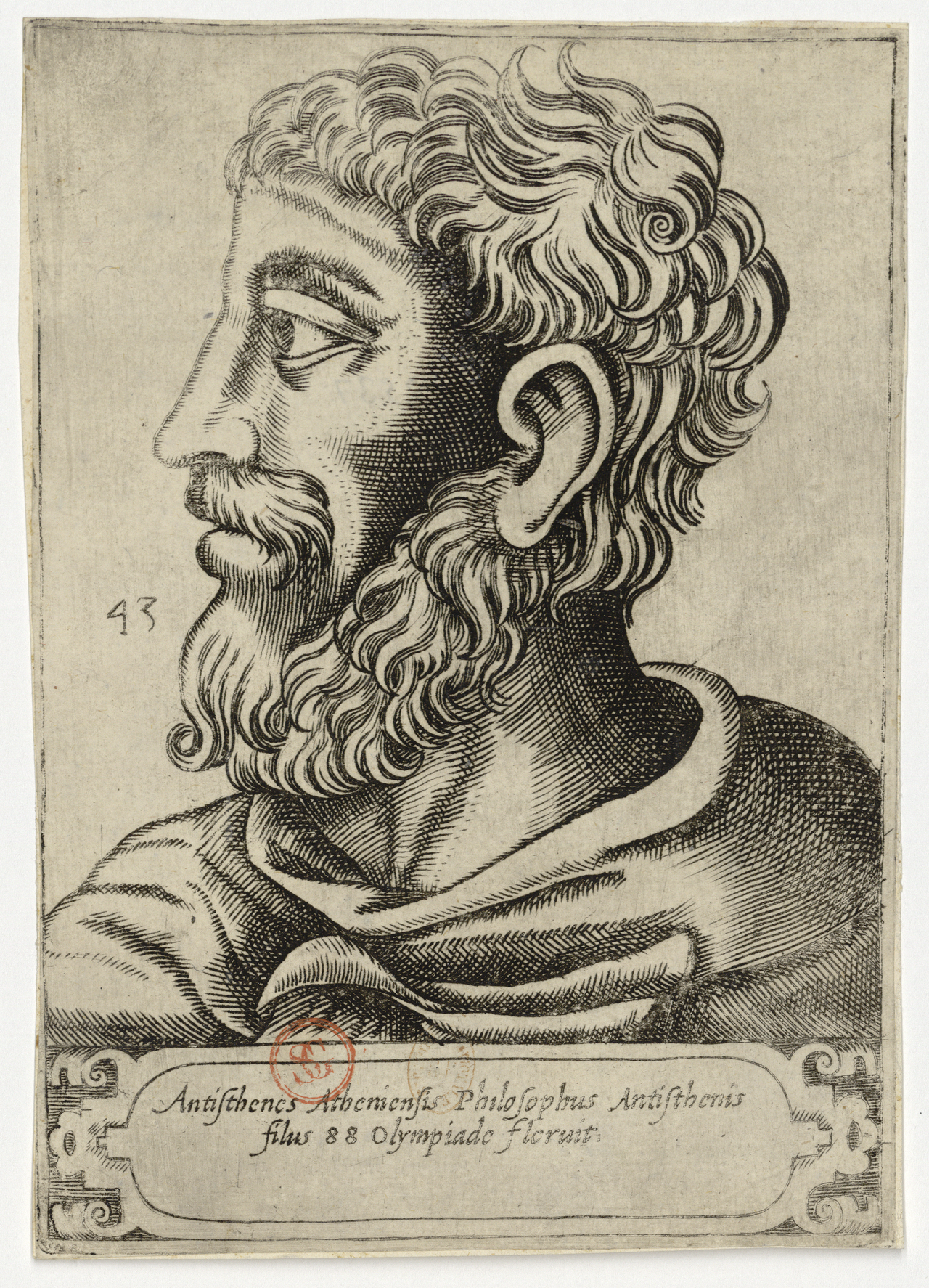
Antisthenes (c. 446–366 BCE) was a Greek philosopher who studied under Socrates. Before becoming a devoted follower of Socrates, he trained in rhetoric with Gorgias. He focused on the ethical side of Socratic thought, promoting a life of self-denial and virtue. Later writers considered him the founder of Cynic philosophy.
Life
Born around 446 BCE in Athens to a father also named Antisthenes, his mother was thought to be Thracian or Phrygian—a rumor possibly stemming from his retort to someone who insulted him as not a true Athenian: he said the mother of the gods was Phrygian. As a youth, he fought at the Battle of Tanagra in 426 BCE. He was so eager to hear Socrates that he walked daily from the port of Piraeus to Athens (about 9 kilometers), persuading friends to join him. He was present at Socrates’ death and never forgave his persecutors, reportedly helping to bring about their punishment.
He survived the Battle of Leuctra in 371 BCE, comparing the Theban victory to schoolboys beating their teacher. Though one source says he died at 70, he was still alive in 366 BCE and likely died in Athens around 365 BCE, nearing 80. He lectured at the Cynosarges, a gymnasium for Athenians born to foreign mothers, near the temple of Heracles.
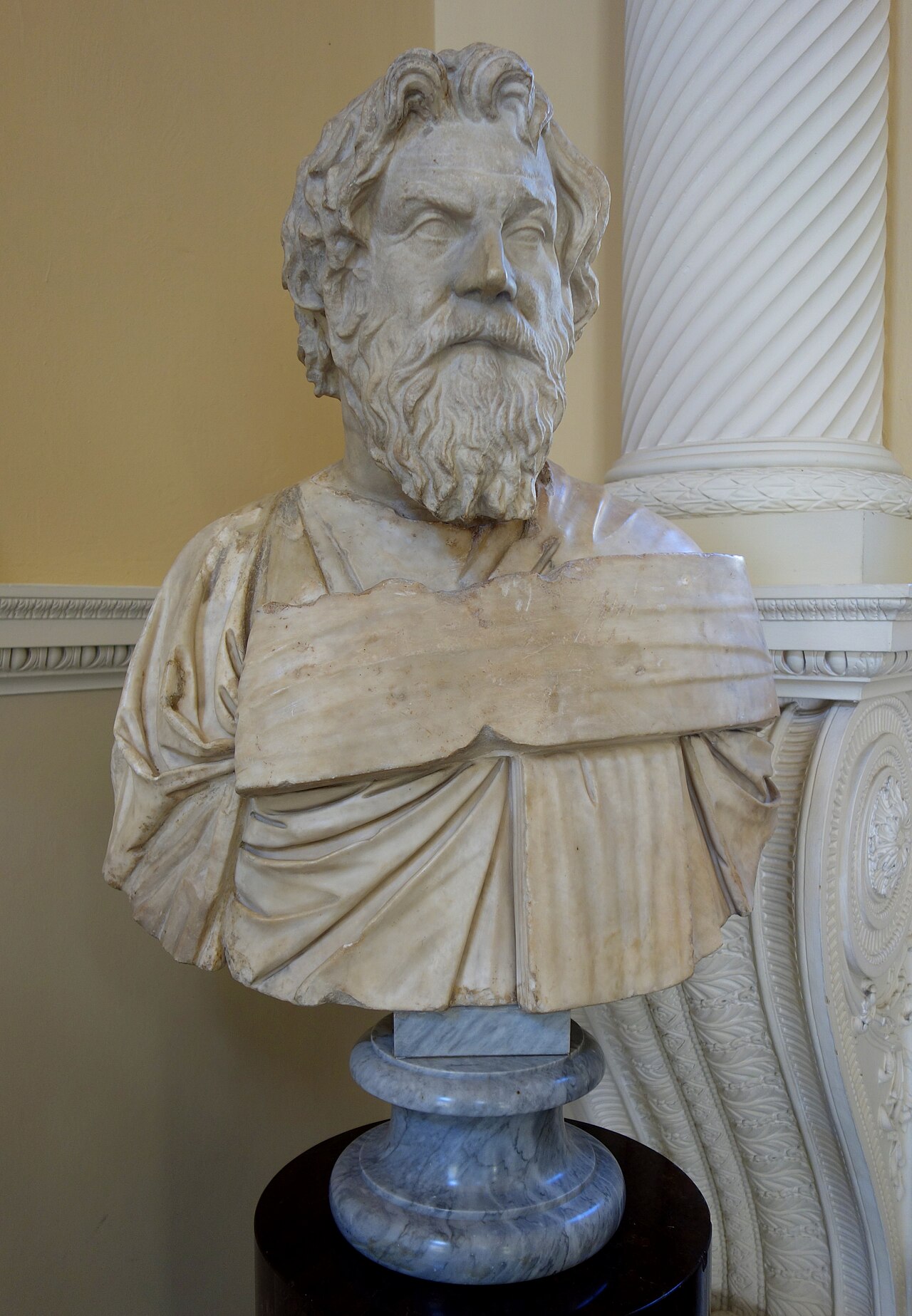
Inspired by Socrates’ idea of virtue, he founded his own school there, attracting poorer classes with his simple life and teaching. He wore a cloak, carried a staff and a wallet—a costume adopted by his followers. Diogenes Laërtius reports his works filled ten volumes, but only fragments survive. He favored dialogues, some attacking contemporaries—like Alcibiades in his Cyrus, Gorgias in Archelaus, and Plato in Satho.
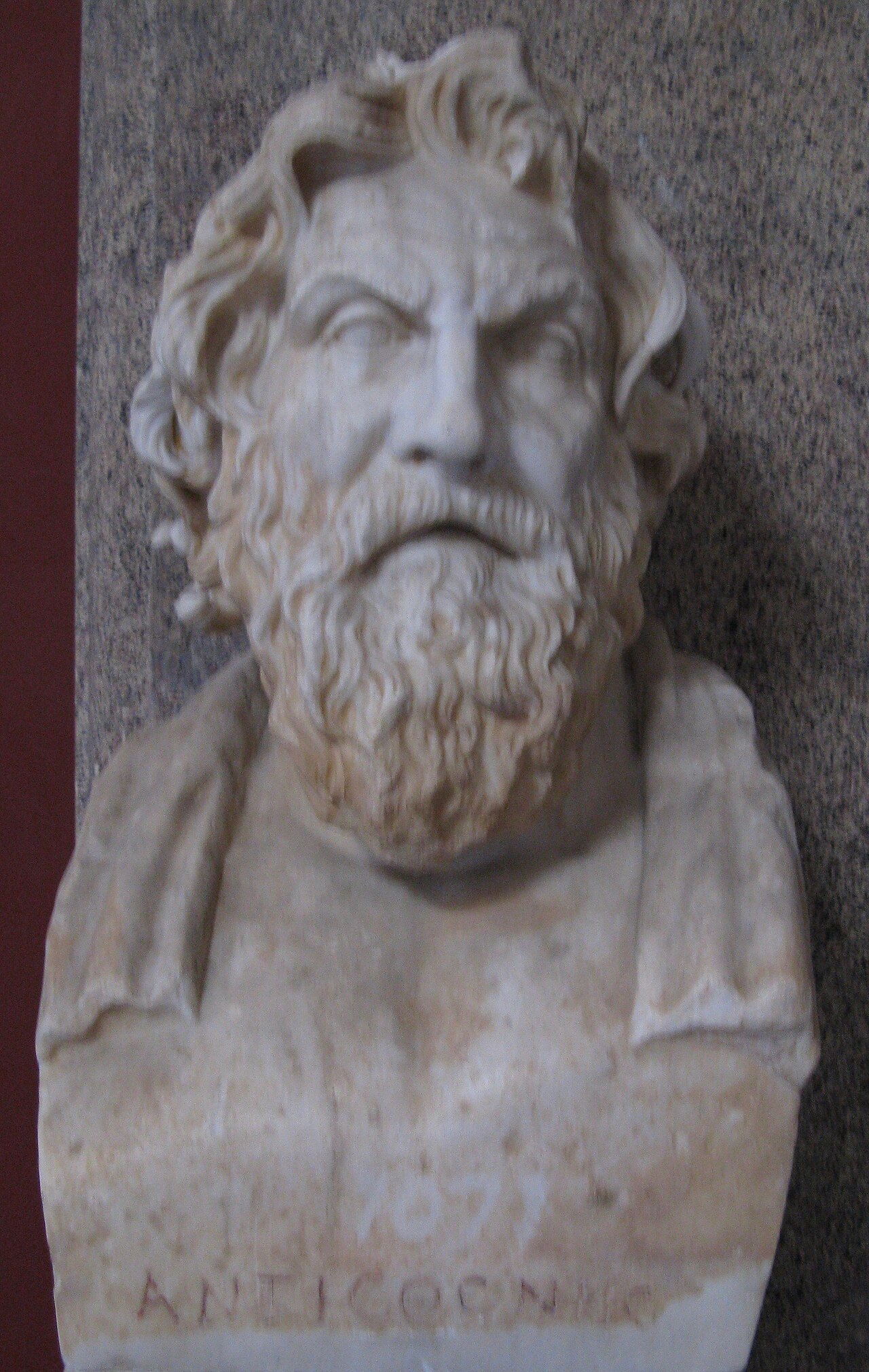
His style was pure and elegant; Theopompus claimed Plato stole many ideas from him. Cicero found his works pleasing, calling him “a man more intelligent than learned.” He was witty and sarcastic, fond of wordplay: he said he’d rather fall among crows than flatterers, since crows eat the dead, flatterers the living. Two rhetorical declamations, Ajax and Odysseus, survive. His nickname was “The (Absolute) Dog.”
According to Diogenes Laertius
According to Diogenes Laërtius, Antisthenes taught that virtue can be taught and that only the virtuous are noble. Virtue alone suffices for happiness, needing nothing but strength of spirit. It is a matter of deeds, not words or learning. The wise person is self-sufficient, owning all goods of others; ill repute and pain are good.
The wise act by the law of virtue, not established laws; they marry to have children with the handsomest women, and love only those worthy of it. Ethically, Antisthenes held that virtue, not pleasure, is life’s goal. Everything the wise do conforms to perfect virtue; pleasure is unnecessary and even evil.
Ethics
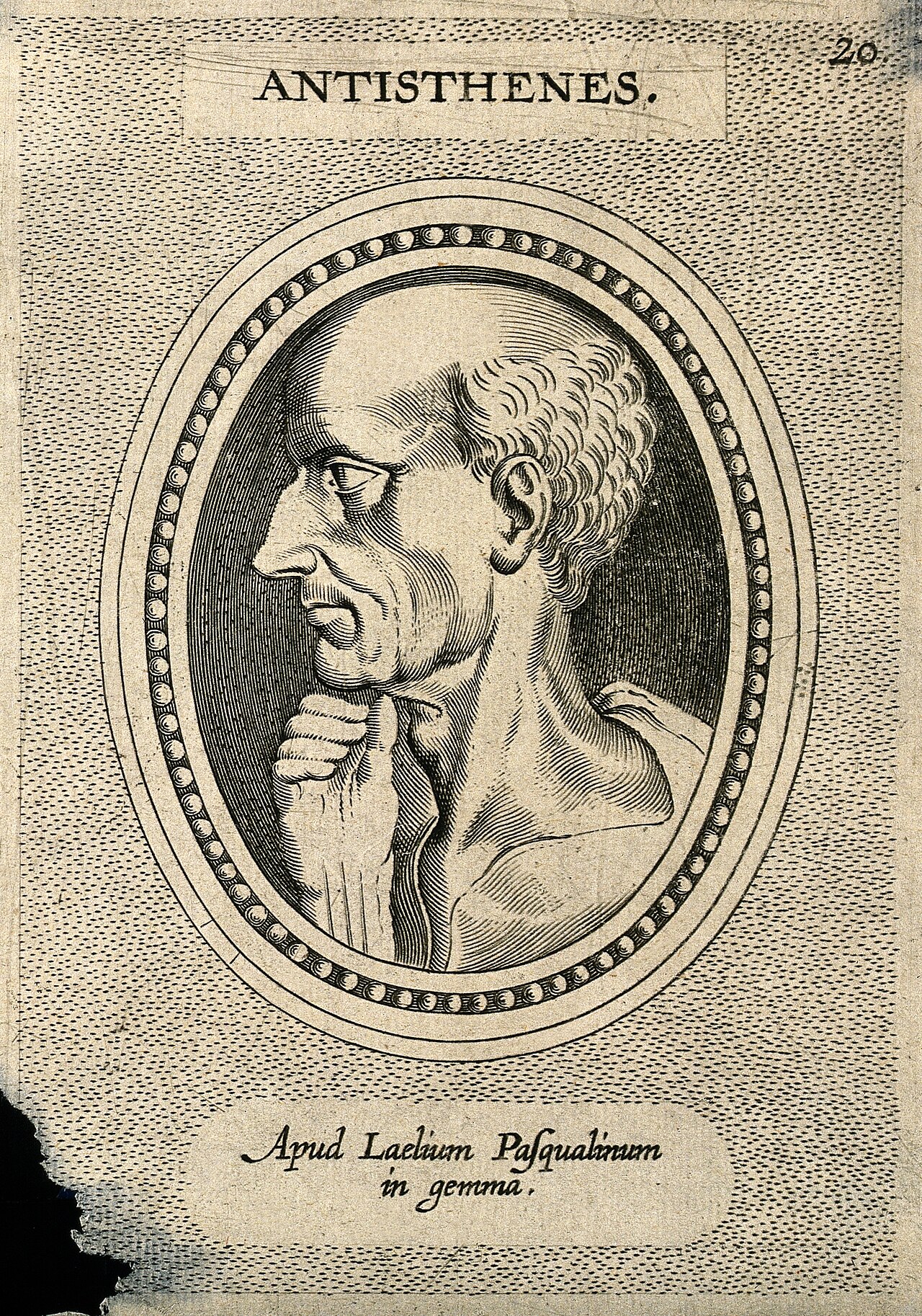
He reportedly said, “I’d rather be mad than feel pleasure,” though he likely condemned only sensual or artificial pleasures, praising those from the soul and wise friendship. The supreme good is a life of virtue, which consists in action, is never lost, and exempts the wise from error. It requires Socratic strength to develop in action and ensure happiness.
Logic
In physics, he argued that many gods are believed in by people, but only one natural God exists. God resembles nothing on earth and cannot be understood through any representation. In logic, Antisthenes was a nominalist troubled by universals. He held that definition and predication are false or tautological—we can only say each individual is what it is, describing qualities (e.g., silver is like tin in color).
Last updated 2026-09-28 from the source article.
Lore & Background
Antisthenes was born in 446 BCE, the son of Antisthenes, an Athenian. His mother was thought to have been a Thracian, though some say a Phrygian, an opinion probably derived from his sarcastic reply to a man who reviled him as not being a genuine Athenian citizen, that the mother of the gods was a Phrygian. In his youth he fought at Tanagra (426 BCE), and was a disciple first of Gorgias, and then of Socrates.
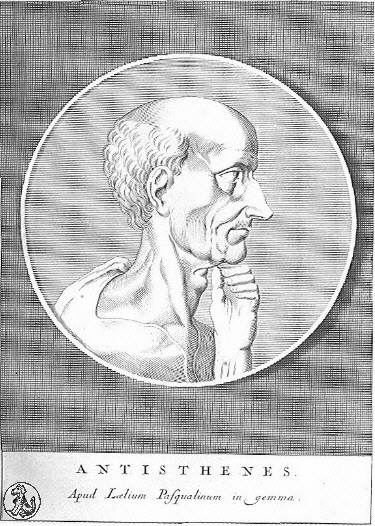
He used to walk daily from the port of Peiraeus to Athens (about 9 kilometres) to hear Socrates, and persuaded his friends to accompany him. He was present at Socrates' death. He never forgave his master's persecutors, and is said to have been instrumental in procuring their punishment. He survived the Battle of Leuctra (371 BCE).
He was apparently still alive in 366 BCE, and must have been nearer to 80 years old when he died at Athens, c. 365 BCE. He lectured at the Cynosarges, a gymnasium for the use of Athenians born of foreign mothers, near the temple of Heracles. He founded a school of his own in the Cynosarges, where he attracted the poorer classes by the simplicity of his life and teaching.
He wore a cloak and carried a staff and a wallet, and this costume became the uniform of his followers. Diogenes Laërtius says his works filled ten volumes, but only fragments remain. His favourite style seems to have been dialogues. His style was pure and elegant.
He possessed considerable powers of wit and sarcasm. Two declamations have survived, named Ajax and Odysseus. His nickname was The (Absolute) Dog.
Reader's Guide
Antisthenes was a pupil of Socrates, from whom he imbibed the fundamental ethical precept that virtue, not pleasure, is the end of existence. Everything that the wise person does conforms to perfect virtue, and pleasure is not only unnecessary, but a positive evil. He is reported to have held pain and even ill-repute to be blessings, and said, 'I'd rather be mad than feel pleasure.' However, it is probable that he did not consider all pleasure worthless, but only that which results from the gratification of sensual or artificial desires, for he praised the pleasures which spring 'from out of one's soul,' and the enjoyments of a wisely chosen friendship.
The supreme good he placed in a life lived according to virtue, virtue consisting in action, which when obtained is never lost, and exempts the wise person from error. It is closely connected with reason, but requires the aid of Socratic strength. In physics, his work contained a theory of the nature of the gods, in which he argued that there were many gods believed in by the people, but only one natural God.
He also said that God resembles nothing on earth, and therefore could not be understood from any representation. In logic, he was a proper nominalist, holding that definition and predication are either false or tautological, since we can only say that every individual is what it is, and can give no more than a description of its qualities. He disbelieved the Platonic system of Ideas. He apparently distinguished a general object that can be aligned with the meaning of the utterance from a particular object of extensional reference, suggesting a distinction between sense and reference.
Antisthenes and the Cynics
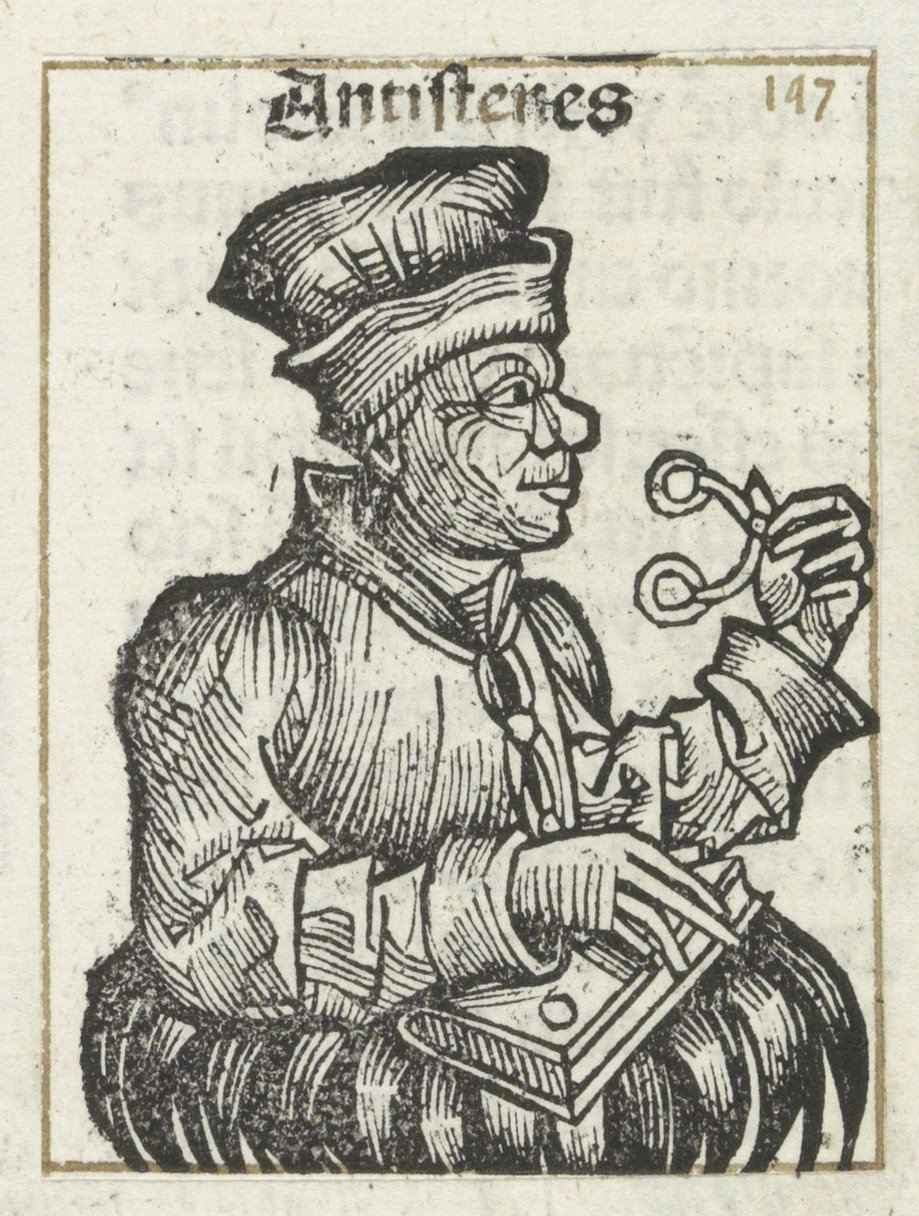
In later times he came to be seen as the founder of the Cynics, but it is by no means certain that he would have recognized the term. Aristotle refers to Antisthenes and his followers 'the Antistheneans,' but makes no reference to Cynicism. It is uncertain whether Diogenes of Sinope ever met Antisthenes.
More in Ancient And Medieval Historians And Philosophers
Sources
Compiled from Wikipedia and the sources listed below. Text from Wikipedia is available under CC BY-SA 4.0; this entry is adapted from it.
- Wikipedia: Antisthenes (CC BY-SA 4.0).
Spotted an error? Know more?
Reader corrections go straight into our review queue. Suggest an edit · How this site is sourced