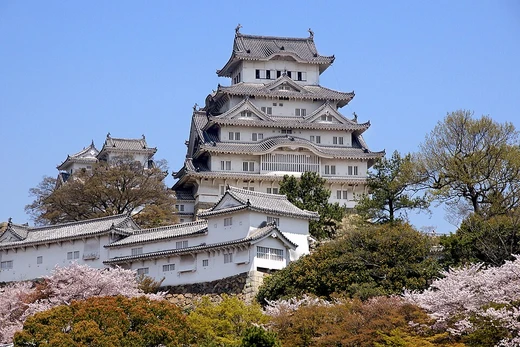
Nanao Castle
One of Japan's five largest medieval mountain castles.
Last updated

via Wikipedia: Nanao Castle · see source
Where it is
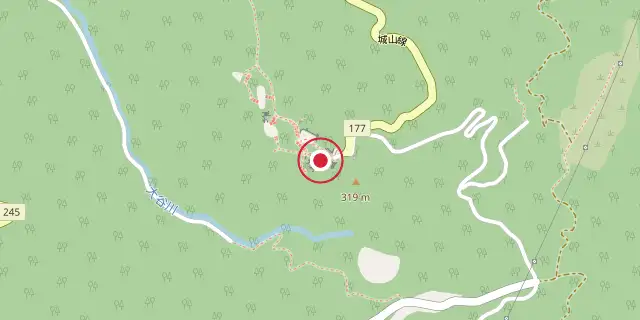
Coordinates: 37°00′32″N 136°59′02″E (37.0090, 136.9840) · Open in OpenStreetMap
Coordinates and connected clubs: the infobox of Wikipedia: Nanao Castle (CC BY-SA 4.0). Map: drawn by Codexery from OpenStreetMap tiles.
Perched on a mountainside, Nanao Castle was a yamajiro-style fortress from the Muromachi period. Its remains sit in present-day Nanao, Ishikawa Prefecture, within Japan’s Hokuriku region. Since 1934, these ruins have been safeguarded as a National Historic Site.
Background
Perched on the southeastern side of the Noto Peninsula with views of the Sea of Japan, this site has been strategically valuable since the Nara period, thanks to its excellent harbor and links to nearby provinces. Around 1408, Hatakeyama Mitsunori, a member of a Hatakeyama clan branch, became the governor of Noto Province and raised the first castle here.
While the main Hatakeyama line faded as the Ashikaga clan gained influence under the Muromachi shogunate, the Noto branch held their domain as a largely independent territory. Later, Hatakeyama Yoshifusa turned Nanao Castle into a massive stronghold. Following his death, the clan faced internal strife, growing trouble with their own powerful vassals, and the disruptive Ikkō-ikki movement.
History
Uesugi Kenshin invaded Noto Province in 1576 after conquering neighboring Etchū Province. He first reduced the branch castles around Nanao Castle to isolate the main fortress and protect his supply lines, but Nanao proved too difficult to capture, forcing him to retreat. He returned the following year and laid siege again. Hatakeyama Yoshitaka appealed to Oda Nobunaga for help, but before Nobunaga could respond, Yoshitaka died under mysterious circumstances, possibly from an epidemic or assassination by poison.
The defenders became demoralized, yet one chief retainer, Cho Tsunatsura, resisted intensely. Kenshin then subverted another chief vassal, Yusa Tsugumitsu, who betrayed the Hatakeyama and opened the gates.
After accepting Yusa's submission, Kenshin left Noto in his control and defeated an Oda relief force led by Shibata Katsuie at the Battle of Tedorigawa in 1577. Having incurred Nobunaga's displeasure, Yusa was murdered, and Maeda Toshiie was appointed Lord of Noto. He built a new castle at Komaruyama, and Nanao Castle was abandoned in 1589.
Situation
Nanao Castle is regarded as one of the five largest medieval mountain castles in Japan, alongside Kasugayama Castle, Odani Castle, Kannonji Castle, and Gassantoda Castle. It occupies the upper slopes of Shiroyama mountain, a 300-meter height on the southern edge of modern Nanao's city center.
The fortifications consisted of several enclosures with stone ramparts and dry moats. The central enclosure sat at the hilltop and could be reached only by passing through enclosures assigned to important vassals, which surrounded the central area on several concentric levels on the lower slopes. The total size exceeded one square kilometer.
More in 100 Fine Castles of Japan
Sources
Compiled from Wikipedia and the sources listed below. Text from Wikipedia is available under CC BY-SA 4.0; this entry is adapted from it.
- Wikipedia: Nanao Castle (CC BY-SA 4.0).
Spotted an error? Know more?
Reader corrections go straight into our review queue. Suggest an edit · How this site is sourced