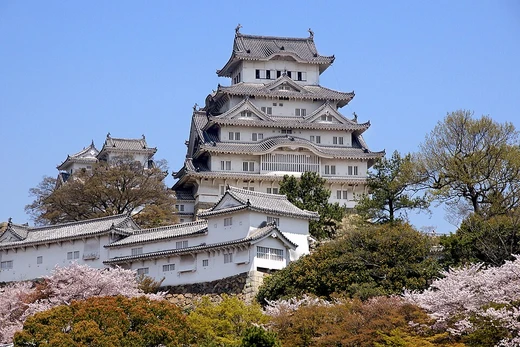
Nihonmatsu Castle
A historic castle in Fukushima, known for cherry blossoms.
Last updated

via Wikipedia: Nihonmatsu Castle · see source
Where it is
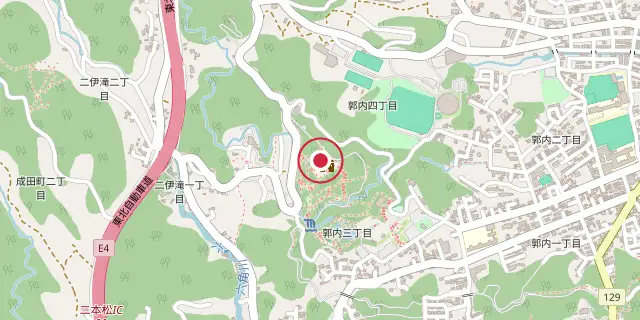
Coordinates: 37°36′00″N 140°25′41″E (37.6000, 140.4280) · Open in OpenStreetMap
Coordinates and connected clubs: the infobox of Wikipedia: Nihonmatsu Castle (CC BY-SA 4.0). Map: drawn by Codexery from OpenStreetMap tiles.
Nihonmatsu Castle, also called Kasumi-ga-jō or Shirahata-jō, stands in what is now Nihonmatsu City in northern Fukushima Prefecture. During most of the Edo period, the Niwa clan, lords of Nihonmatsu Domain, resided here. It is counted among Japan's 100 Fine Castles and became a National Historic Site in 2007. Its grounds are a popular spot for cherry blossom viewing in spring.
History
A fortification was erected on the site during the Muromachi period. In 1341, Hatakeyama Takakuni, appointed Ōshū tandai by the Ashikaga shogunate, established a fortified residence there and changed his name to Nihonmatsu. Despite his title, he was relatively powerless against the local Date and Ashina clans. Nihonmatsu Mitsuyasu rebuilt the castle in the early 15th century.
In 1568, Nihonmatsu Yoshitsugu was attacked by Date Terumune, father of Date Masamune. Outnumbered and defeated, Yoshitsugu pretended to surrender, but in 1585 instead took Terumune hostage. Masamune’s forces counterattacked, and in the ensuing battle both Yoshitsugu and Terumune were killed. The Date clan then fought the Battle of Hitotoribashi in 1586 against adventurers from the Satake, Ashina, Iwaki and Ishikawa clans from Hitachi province, who sought to seize the territory.
The following year, Date Masamune again attacked Nihonmatsu. The son of Hatakeyama Yoshitsugu set the castle on fire and fled to Aizu. Masamune rebuilt the castle as a key border fortification against the Ashina, assigning his general Katakura Kagetsuna as castellan, later replaced by Masamune’s cousin Date Shigezane. After the Ashina were defeated, the Date became the most powerful clan in the Tōhoku region.
With the rise of Toyotomi Hideyoshi, the clan submitted and the Nihonmatsu area was surrendered in 1589 to Hideyoshi’s favorite Gamō Ujisato, who ruled the 900,000 koku Aizu Domain. After Gamō Ujisato died, his territories were assigned to Uesugi Kagekatsu, who also ruled from Aizu. The Uesugi sided with the pro-Toyotomi faction at the Battle of Sekigahara, and their territories were substantially reduced by Tokugawa Ieyasu after the Tokugawa shogunate formed.
Edo period
Under the shogunate, the castle was briefly assigned to the Matsushita clan, a branch of the Gamō clan, until 1627. The territory was then assigned to Kato Yoshiakira, one of the heroes of the Battle of Shizugatake and builder of Matsuyama Castle in Iyo Province. In 1643, the Niwa clan was transferred to become daimyō of Nihonmatsu Domain. The Niwa abandoned the old hilltop fortifications and completely rebuilt the castle at its base, ruling from there until the Meiji restoration.
Situation
Nihonmatsu Castle sits on a spur of the Adatara mountains, roughly halfway between Fukushima and Kōriyama along the Abukuma River. The Ōshū Kaidō highway connecting Edo with northern Japan passes through a narrow valley beside the river in front of the castle, giving the location critical strategic importance. The main enclosure originally stood atop the hill, with secondary enclosures at the base; after the main enclosure was destroyed during late Sengoku period battles, the castle was rebuilt at the hill's base.
Did You Know?
- During the Boshin War, the castle fell after a single day to the Satchō Alliance, with 337 samurai from Nihonmatsu and 206 from allied domains killed.
- The Minowa gate and an attached yagura turret were reconstructed in 1982.
More in 100 Fine Castles of Japan
Sources
Compiled from Wikipedia and the sources listed below. Text from Wikipedia is available under CC BY-SA 4.0; this entry is adapted from it.
- Wikipedia: Nihonmatsu Castle (CC BY-SA 4.0).
Spotted an error? Know more?
Reader corrections go straight into our review queue. Suggest an edit · How this site is sourced