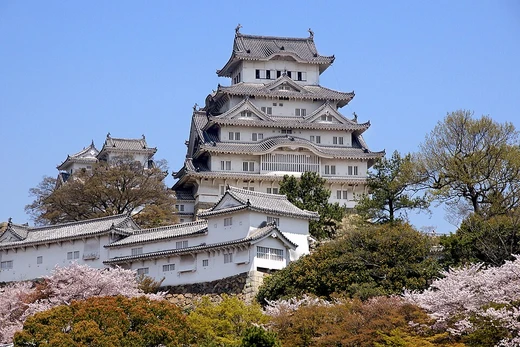
Bitchū Matsuyama Castle
Last updated

via Wikipedia: Bitchū Matsuyama Castle · see source
Where it is
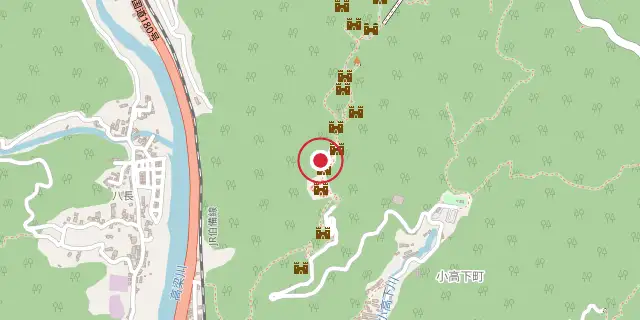
Coordinates: 34°48′32″N 133°37′19″E (34.8090, 133.6220) · Open in OpenStreetMap
Coordinates and connected clubs: the infobox of Wikipedia: Bitchū Matsuyama Castle (CC BY-SA 4.0). Map: drawn by Codexery from OpenStreetMap tiles.
Bitchū Matsuyama Castle is a Japanese castle in Takahashi, Okayama Prefecture, in the San'yō region of Japan.[1] It is the highest castle in Japan, at 430 meters above sea level, and has one of only twelve original tenshu remaining in the country.[1]
Geography and history
Takahashi Muneyasu constructed a new castle on Mount Gagyū in 1331, a ridge north of modern Takahashi overlooking the Takahashi River.[2] The location controlled north-south routes between the Seto Inland Sea and the San'in region, and east-west routes between Tsuyama and Miyoshi.[3] The Shō clan captured the castle in 1532, using it as a stronghold against the Amago clan.[4] Akiba Shigenobu constructed an initial fortification on Mount Omatsu in 1240, but the historical record of that structure remains uncertain.[2]
Mimura Motochika, Iechika's son, regained control of the castle in 1571 and expanded it significantly so that the fortifications occupied the whole mountain.[4] The Mōri clan held the castle from 1575, the year the Mimura clan was wiped out, until 1600.[5][6] During the Meiji period, partial demolition occurred at the castle, and the remaining structures were left neglected and deteriorated.[3] A local citizens' organization formed in 1929 and initiated repair efforts at the castle.[3]
What the cited sources add
The castle was partly destroyed in the Meiji period and abandoned.[3] The encyclopedia also records that restoration work was begun by a citizens' group in 1929.[3] According to the National Historic Site Encyclopedia, three elements remain from the original castle: a brief wall segment, the Nijū yagura, and the tenshu.[3]
References
- Wikipedia, "Bitchū Matsuyama Castle" (CC BY-SA 4.0), which cites: Mitchelhill, "Castles of the Samurai: Power and Beauty", Kodansha USA Inc, 2013, p. 98; "備中松山城跡", Cultural Heritage Online (we also read that source) en.wikipedia.org
- Wikipedia, "Bitchū Matsuyama Castle" (CC BY-SA 4.0), which cites: Bitchu-Matsuyama Castle (original not read by us) en.wikipedia.org
- Wikipedia, "Bitchū Matsuyama Castle" (CC BY-SA 4.0), which cites: Isomura, "(国指定史跡事典) National Historic Site Encyclopedia", 学生社, 2012 (we also read that source) en.wikipedia.org
- Wikipedia, "Bitchū Matsuyama Castle" (CC BY-SA 4.0), which cites: "備中松山城略史 - 高梁市公式ホームページ", www.city.takahashi.lg.jp; "備中松山城略史 - 高梁市公式ホームページ", www.city.takahashi.lg.jp (original not read by us) en.wikipedia.org
- Wikipedia, "Bitchū Matsuyama Castle" (CC BY-SA 4.0), which cites: "備中松山城略史 - 高梁市公式ホームページ", www.city.takahashi.lg.jp; "備中松山城略史 - 高梁市公式ホームページ", www.city.takahashi.lg.jp; Samurai-Archives (original not read by us) en.wikipedia.org
- Wikipedia, "Bitchū Matsuyama Castle" (CC BY-SA 4.0), which cites: "JCastle – Bitchu Matsuyama Castle" (original not read by us) en.wikipedia.org
Each numbered sentence above was checked against the source it cites before publication. Sentences citing Wikipedia adapt text from the English Wikipedia article Bitchū Matsuyama Castle (contributors), used under CC BY-SA 4.0; this entry is available under the same licence. Other sources were used for facts only; no text or images are copied from them.
More in 100 Fine Castles of Japan
Sources
Compiled from Wikipedia and the sources listed below. Text from Wikipedia is available under CC BY-SA 4.0; this entry is adapted from it.
- Wikipedia: Bitchū Matsuyama Castle (CC BY-SA 4.0).
Spotted an error? Know more?
Reader corrections go straight into our review queue. Suggest an edit · How this site is sourced