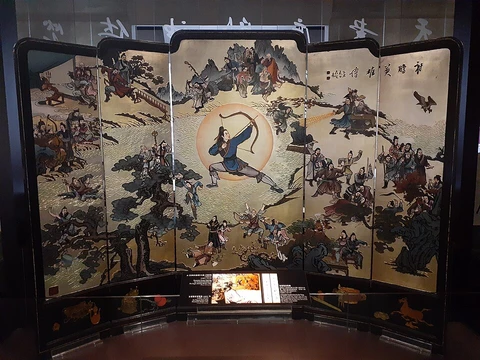
Demon Sword
A 1988 platformer where Victar must recover the shattered Demon Sword to defeat an evil demon.

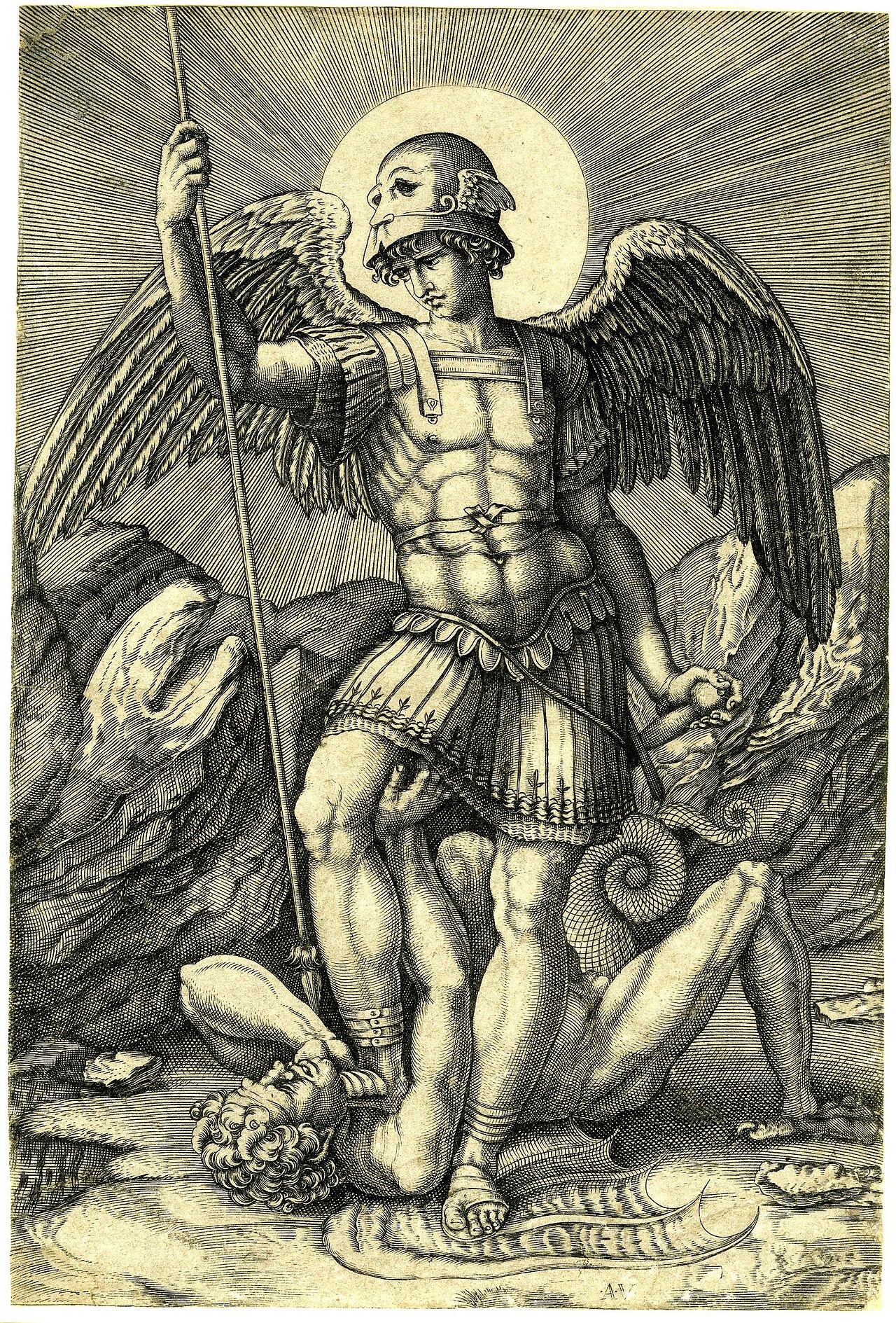
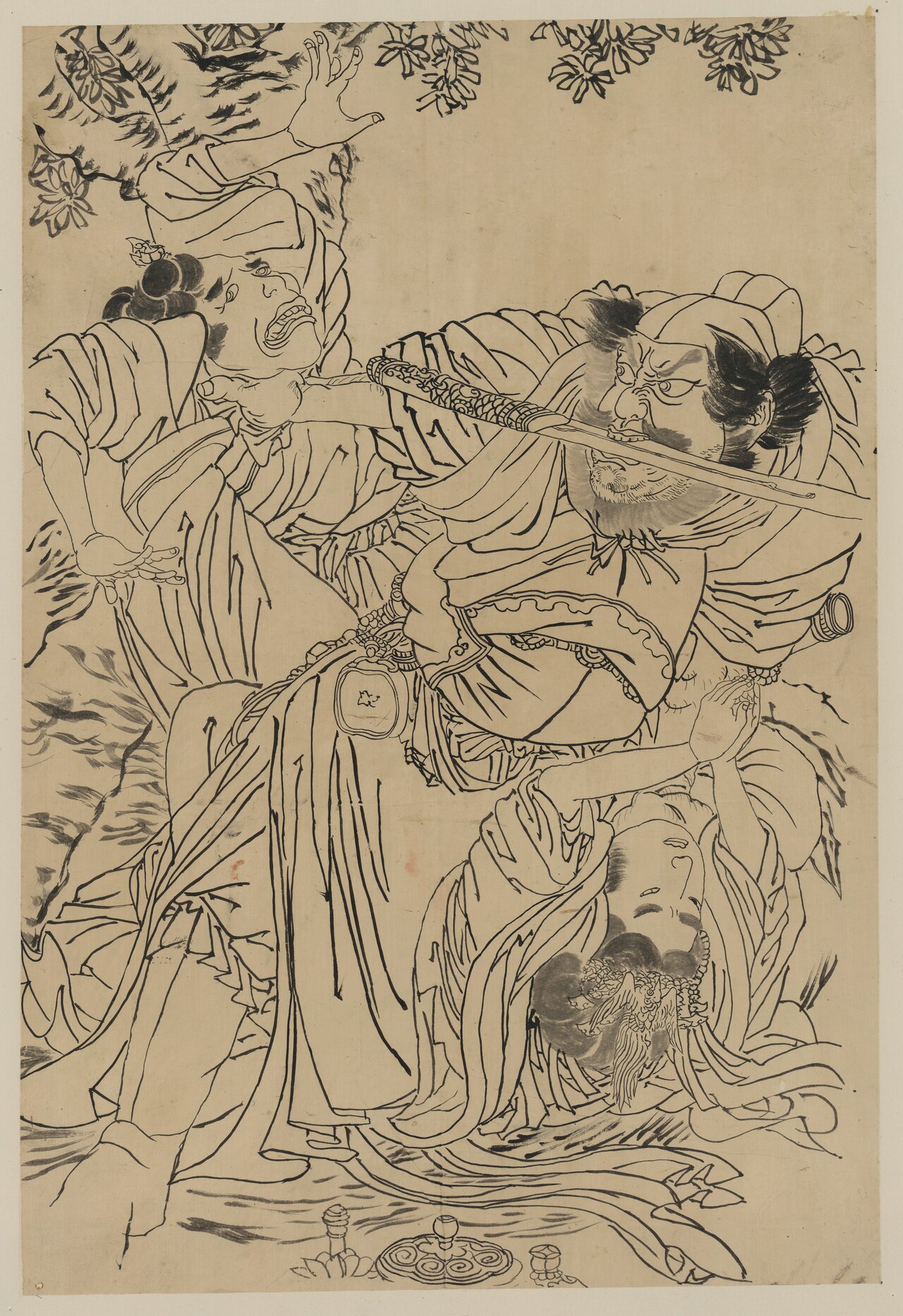
Agostino Veneziano · Public domain
Demon Sword is a 1988 platform game developed by TOSE and published by Taito for the Nintendo Entertainment System.
Quick Facts
- Title
- Demon Sword
- Developer
- TOSE
- Publisher
- Taito
- Platforms
- Nintendo Entertainment System
- Released
- JP · March 29, 1988 · NA · January 1990
- Genre
- Platform
- Modes
- Single-player
Facts from the source article.
Lore & Background
The game starts out with an evil demon ruling over the world and its inhabitants, who live in fear of it. However, a man named Victar, who comes from a small village, has a sword that can destroy the demon. The blade had previously been split up into pieces, though, and Victar must travel through three worlds to get back the three broken pieces in order to restore the sword to defeat the demon.
Reader's Guide
The game contains three worlds, with two stages in each of them plus a final stage making 7 stages total. In order to regain the pieces of the shattered sword and advance in the game, the player must defeat a boss at the end of every stage. As more pieces of the sword are recovered, the sword itself grows in length and power. The player will also encounter enemies on the way to the boss, which must be defeated with a variety of weapons and magic spells, such as the character's Demon Sword (which he begins the game with), arrow darts, and power beams. The player can also jump over enemies and change direction in midair, as well as land in and run on top of trees. However, the player must be careful when jumping, as there are various traps, such as holes, that the player can land in. Gameplay physics and action are overall similar to a previous Taito game, The Legend of Kage (1985).
Did You Know?
- There are six more stages and several bosses in the Japanese version that are unavailable in the North American version.
- Some stages are different and some enemies are missing in the North American version.
- The player in the North American version has a vitality gauge for each life remaining, while the player in the Japanese has only life count.
- There are more items and magic spells available in the Japanese version.
- The players can upgrade the power of shurikens in the North American version.
Plot & Narrative
The story centers on a world dominated by a fearsome demon whose tyranny keeps all inhabitants in a state of perpetual dread. Into this oppressive setting steps Victar, a young man hailing from a humble small village, who possesses a legendary blade capable of ending the demon's reign. The complication that drives the entire narrative is that this sword is not whole—it has been shattered into three separate pieces scattered across three distinct worlds. Victar's quest is therefore one of restoration: he must journey through each of these three realms, reclaiming one fragment at a time, until the blade is once again complete and powerful enough to deliver the final blow against the evil overlord. The title itself, Fudō Myōō Den, translates to "The Legend of Acala," anchoring the story in Buddhist iconography, as Acala (Fudō Myōō) is the wrathful protector deity associated with unwavering determination and the destruction of evil.
Gameplay & Combat Design
The game is structured around seven stages in total, organized into three worlds of two stages each, with a final stage capping off the experience. Progression is gated by boss encounters at the end of every stage—defeating each one is the only way to claim the next sword fragment and move forward. A satisfying mechanical reward system ties into the narrative: as Victar recovers additional pieces, his sword visibly grows longer and gains increased power, making the player feel tangible progress. Combat itself offers variety beyond the signature Demon Sword attack; players can deploy arrow darts and power beams, alongside magic spells, to dispatch the enemies populating each stage. Platforming mechanics allow midair direction changes, jumping over foes, and even landing on and running across treetops. However, the design punishes carelessness—holes and other traps are scattered throughout levels, demanding precise timing. The overall feel of the physics and action closely mirrors Taito's earlier 1985 title, The Legend of Kage.
Regional Variations
One of the most striking aspects of Demon Sword is the substantial gap between its Japanese and North American releases. The Japanese version contains six additional stages and several extra bosses that were entirely omitted from the Western cartridge. Beyond sheer content, the two versions diverge in design philosophy: the North American build introduces a vitality gauge that depletes per remaining life, whereas the Japanese version relies on a simple life count. The Japanese edition also grants access to more items and magic spells, while the North American version uniquely allows players to upgrade the power of their shurikens. Enemy damage profiles differ as well, with foes taking more damage in the Western release. Even the narrative conclusion was trimmed, with the Japanese ending featuring extra scenes and text that never made it to North America. Perhaps most jarringly, the English box art depicts a muscular, bare-chested bronzed warrior, while the actual in-game sprite shows a paler, lithe figure in a red kimono—a character design the Japanese cover art reflects far more accurately.
Development Lineage & Production Context
Demon Sword emerged from a specific lineage within Taito's NES catalog. Developed by TOSE and published by Taito in 1988, the game sits in a clear creative thread that connects it to the company's 1985 release, The Legend of Kage. The shared DNA is evident in the platforming physics, the side-scrolling action structure, and the overall feel of movement and combat, suggesting that the design team drew heavily on lessons learned from that earlier title. The partnership between TOSE as developer and Taito as publisher reflects the common industry arrangement of the era, where specialized development studios produced hardware-specific titles for larger publishers to distribute. The game's Japanese title, Fudō Myōō Den, literally translates to "The Legend of Acala," naming the Buddhist wrathful deity known for immovable resolve and the destruction of evil—a fitting thematic anchor for a game about a hero wielding a sacred blade against a world-devouring demon. The NES platform placed it squarely in the golden era of 8-bit action games, competing alongside other ambitious platformers of the late 1980s.
Gallery

Frequently Asked Questions
What is Demon Sword?
Demon Sword is a 1988 side-scrolling platformer for the NES, developed by TOSE and published by Taito. Its Japanese title is Fudō Myōō Den, which translates to "The Legend of Acala."
What is the story of Demon Sword?
A world-devouring demon has plunged all living things into terror, and a villager named Victar must cross three separate worlds to gather the three shattered shards of a legendary blade. Reassembling those fragments restores the sword's full demon-slaying power.
How many stages does Demon Sword have?
The North American release contains seven stages in total, distributed across the game's three distinct worlds.
Who made Demon Sword and where can I play it?
TOSE developed the title and Taito handled publishing. It is a Nintendo Entertainment System exclusive from 1988, so you'll need an NES, a compatible emulator, or a modern re-release to play it.
Who is the main character in Demon Sword?
The protagonist is Victar, a man from a small village who is destined to wield a sword powerful enough to destroy the ruling demon. His entire journey revolves around retrieving the three broken pieces of that blade scattered across three worlds.
More in Wuxia video games 1-24
Spotted an error? Know more?
Reader corrections go straight into our review queue. Suggest an edit · How this site is sourced