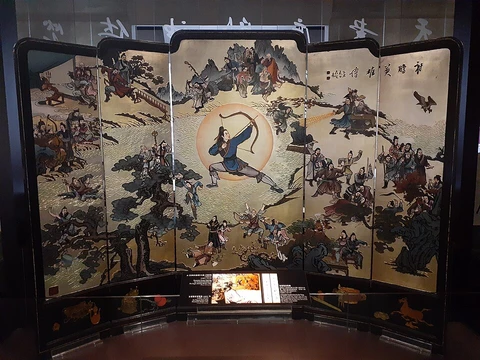
9 Monkeys of Shaolin
A beat 'em up set in Ming dynasty China with Wuxia fantasy elements.

Gusmilazzo · CC BY 4.0
9 Monkeys of Shaolin is a beat 'em up game from Russian studio Sobaka Studio, published by Buka Entertainment and Ravenscourt. It launched on 16 October 2020 for Nintendo Switch, PlayStation 4, Xbox One, and via Steam for Linux, macOS, and Windows. The story channels the feel of 1970s kung fu cinema: a fisherman sets out to become a Shaolin master, facing life’s trials, meeting allies and traitors, and learning about revenge and death. Despite hardships, he aims to leave his mark by saving his homeland and the world from evil. The game world tries to stay true to real historical events, places, weapons, and characters, but also includes magic, supernatural beings, and other fantasy elements—mixing real history with mysticism and fables in the Chinese Wuxia tradition.
The gameplay is a 3D side-scrolling brawler. There are five wokou enemy clans, one per chapter, each led by a figure wearing a mask from Japanese Noh theatre that reflects their personality; the leaders’ names are pseudonyms taken from the mask names. After each mission, the player earns improvement points to spend at the camp of a teaching monk. A conversation with him opens a single branched technique tree, focusing on combinations and techniques for each of three stances. Multiplayer offers a cooperative mode for the same story campaign as single-player, supporting two players online or locally.
Set in Imperial China during the Ming dynasty, in the Year of the Water Monkey (1572) in Zhejiang, the hero is a Chinese fisherman named Wei Cheng (voiced by an actor other than Daisuke Tsuji). His parents were killed by the Wokou when he was a child, and his grandfather raised him, teaching him fishing and staff fighting—knowledge passed down through generations. The game begins when bandits attack the village. The grandfather is killed, and Wei Cheng is badly wounded by their leader in a red mask. Buddhist monks find him and carry him to a fortified house. Regaining consciousness, he learns the village is destroyed, the attackers were Wokou, and the monks—sent from Shaolin to defend monasteries and people—arrived too late. Wei Cheng offers to help seven monks and one smuggler. In co-op mode, the second player is the youngest monk, Daoshan.
Development was announced at E3 2018 via the ID@Xbox Program. A new demo appeared at Gamescom 2018 in the Indie Arena Booth area and at IgroMir 2018.
Quick Facts
- Title
- 9 Monkeys of Shaolin
- Developer
- Sobaka Studio
- Publisher
- Buka Entertainment · Ravenscourt
- Producer
- Aleksandr Kuthekov
- Designer
- Stepan Shabanov
- Artist
- Mikhail Bushuev
- Composer
- Nadezda Gourskaya
- Engine
- Unreal Engine 4
- Platforms
- Linux · macOS · Nintendo Switch · PlayStation 4 · Windows · Xbox One
- Released
- 16 October 2020
- Genre
- Beat 'em up
- Modes
- Single-player, multiplayer
Facts from the source article.
Lore & Background
The game follows Wei Cheng, a Chinese fisherman whose parents were killed by the Wokou when he was a child. Raised by his grandfather, he learned fishing and staff fighting. The story begins when bandits attack his village, killing his grandfather and wounding Wei. Buddhist monks find him and reveal the attackers were Wokou. Wei joins seven monks and a smuggler to fight against evil. In cooperative mode, a second player controls the youngest monk, Daoshan.
Reader's Guide
9 Monkeys of Shaolin received 'generally favorable' reviews on Metacritic, with OpenCritic noting 48% of critics recommended it. The game features 3D side-scrolling progression across five chapters, each with a Wokou enemy clan led by a masked leader named after Noh theatre masks. Players earn improvement points to spend on a technique tree for three combat stances. Multiplayer supports two-player cooperative play online or locally. The game was announced at GDC 2018 via the ID@Xbox Program, shown at Gamescom 2018 and IgroMir 2018, and won the Critics' Choice award at Indie Cup Summer 2018, with multiple nominations at DevGAMM Awards.
Did You Know?
- Each of the five Wokou clan leaders wears a mask from Japanese Noh theatre reflecting their personality.
- The game was a finalist for the Critics' Choice award at Indie Cup Summer 2018.
A Wuxia Tale Rooted in Ming Dynasty China
The narrative of 9 Monkeys of Shaolin deliberately evokes the golden era of 1970s martial arts cinema while anchoring its story in the historical landscape of Ming dynasty Zhejiang, specifically the Year of the Water Monkey in 1572. The protagonist, a fisherman named Wei Cheng, carries the weight of a childhood trauma: his parents were slain by Wokou pirates, and his grandfather raised him in a small village, passing down both the fishing trade and a family tradition of staff combat. When a band of masked raiders destroys the village and kills his grandfather, Wei Cheng is rescued by Buddhist monks who had been dispatched from Shaolin to protect both monasteries and civilians but arrived too late. He pledges to stand alongside seven monks and a smuggler, embarking on a journey that weaves together themes of vengeance, mortality, loyalty, and betrayal. The setting deliberately fuses verifiable historical details—real locations, weapons, and periods—with supernatural beings and mystical elements, mirroring the conventions of the Chinese Wuxia fantasy tradition.
Combat Structure and Cooperative Play
The gameplay unfolds through a 3D side-scrolling progression system divided into five chapters, each dedicated to a distinct Wokou enemy clan. A striking design choice unifies these antagonists: every clan leader dons a mask drawn from Japanese Noh theatre, and the mask's identity directly mirrors the character's personality. Their in-game names are pseudonyms borrowed from the mask names themselves, adding a layer of cultural cross-pollination between Chinese and Japanese performance traditions. After completing each mission, the player earns improvement points that are spent during conversations with a teaching monk at camp. This interaction opens a single branched technique tree focused on unlocking new combinations and techniques across three distinct combat stances. The game also supports a two-player cooperative mode, allowing friends to tackle the full story campaign together either online or locally on the same console. In this co-op setup, the second player takes on the role of Daoshan, the youngest of the seven monks.
From Indie Showcase to Multi-Platform Release
Developed by the Russian studio Sobaka Studio and published jointly by Buka Entertainment and Ravenscourt, 9 Monkeys of Shaolin first caught industry attention at the 2018 Game Developers Conference through the ID@Xbox Program. Demonstrations followed at Gamescom 2018 in the Indie Arena Booth area and at IgroMir 2018, building momentum well before launch. The game's early visibility paid off with a Critics' Choice award at Indie Cup Summer 2018, and it earned a Grand Prize along with nominations for Best Desktop, Excellence in Game Design, Visual Art, and Audio at the DevGAMM Awards. After a development period spanning roughly two years, the title finally reached players on 16 October 2020. It launched simultaneously across a broad platform lineup: Nintendo Switch, PlayStation 4, Xbox One, and three PC operating systems—Linux, macOS, and Microsoft Windows—distributed through Steam. This wide availability reflected the publisher's intent to make the title accessible to a diverse global audience.
Critical Response and Market Position
Upon its October 2020 release, 9 Monkeys of Shaolin found a moderate but positive reception among professional reviewers. The review aggregator Metacritic classified the game as receiving generally favorable reviews, indicating that critics broadly appreciated its design choices and narrative ambition. A second aggregator, OpenCritic, offered a slightly more measured assessment, noting that the title earned fair approval with 48 percent of surveyed critics recommending it to their readers. This split suggests that while the game's Wuxia-inspired storytelling, Noh-mask antagonist design, and cooperative campaign resonated with a solid portion of the critical audience, it did not achieve universal acclaim. For an indie title from a Russian studio entering the beat 'em up space, these results represent a respectable showing. The game's listing on MobyGames and its official website further cement its place in the broader catalog of action titles from that period, serving as a reference point for fans of martial arts cinema translated into interactive form.
Gallery
Frequently Asked Questions
What is 9 Monkeys of Shaolin?
It is a beat 'em up video game created by the Russian developer Sobaka Studio and released by Buka Entertainment and Ravenscourt. The title hit Nintendo Switch, PlayStation 4, Xbox One, and PC (via Steam) on 16 October 2020.
What is the story of 9 Monkeys of Shaolin about?
You play as a humble fisherman who sets out to earn his place as a Shaolin master, confronting personal trials, loyal friends, and treacherous enemies along the road. The narrative is deliberately modeled on the tone of 1970s kung fu cinema, weaving together revenge, mortality, and a drive to protect his homeland from greater evil.
When and where does 9 Monkeys of Shaolin take place?
The action is set in Imperial China during the Ming dynasty, specifically in the Year of the Water Monkey (1572). The world mixes real historical locations and events with wuxia fantasy elements to ground the martial-arts spectacle.
What gameplay style does 9 Monkeys of Shaolin use?
It follows the classic beat 'em up formula: you brawl through successive waves of opponents in a side-scrolling arena. Wuxia fantasy flourishes layer on top of that core brawling loop, giving the combat a martial-arts-cinema feel.
Why is 9 Monkeys of Shaolin notable among wuxia games?
It is one of the few wuxia-adjacent titles developed outside East Asia, coming from a small Russian studio rather than a Japanese or Chinese publisher. Its deliberate homage to 1970s kung fu films and its Ming-dynasty backdrop give it a distinct identity in a genre often dominated by Japanese-inspired action.
More in Wuxia video games 1-24
Spotted an error? Know more?
Reader corrections go straight into our review queue. Suggest an edit · How this site is sourced