Thalassoma bifasciatum
A small, colorful cleaner wrasse of western Atlantic coral reefs.

no rights reserved · CC0
Thalassoma bifasciatum, commonly known as the bluehead, bluehead wrasse, or blue-headed wrasse, is a species of marine ray-finned fish in the family Labridae. It is native to the coral reefs of the tropical waters of the western Atlantic Ocean, where it forms large schools and serves as an important cleaner fish. Individuals are small, rarely exceeding 110 mm in standard length, and typically live less than two years.
Quick Facts
- Maximum standard length
- less than 110 mm
- Typical lifespan
- rarely longer than two years
- Terminal phase male size
- 70 to 80 mm
- Initial phase male size
- 60 mm
- Sex change duration
- around 8 days
- Conservation status
- Least Concern
Facts from the source article.
Lore & Background
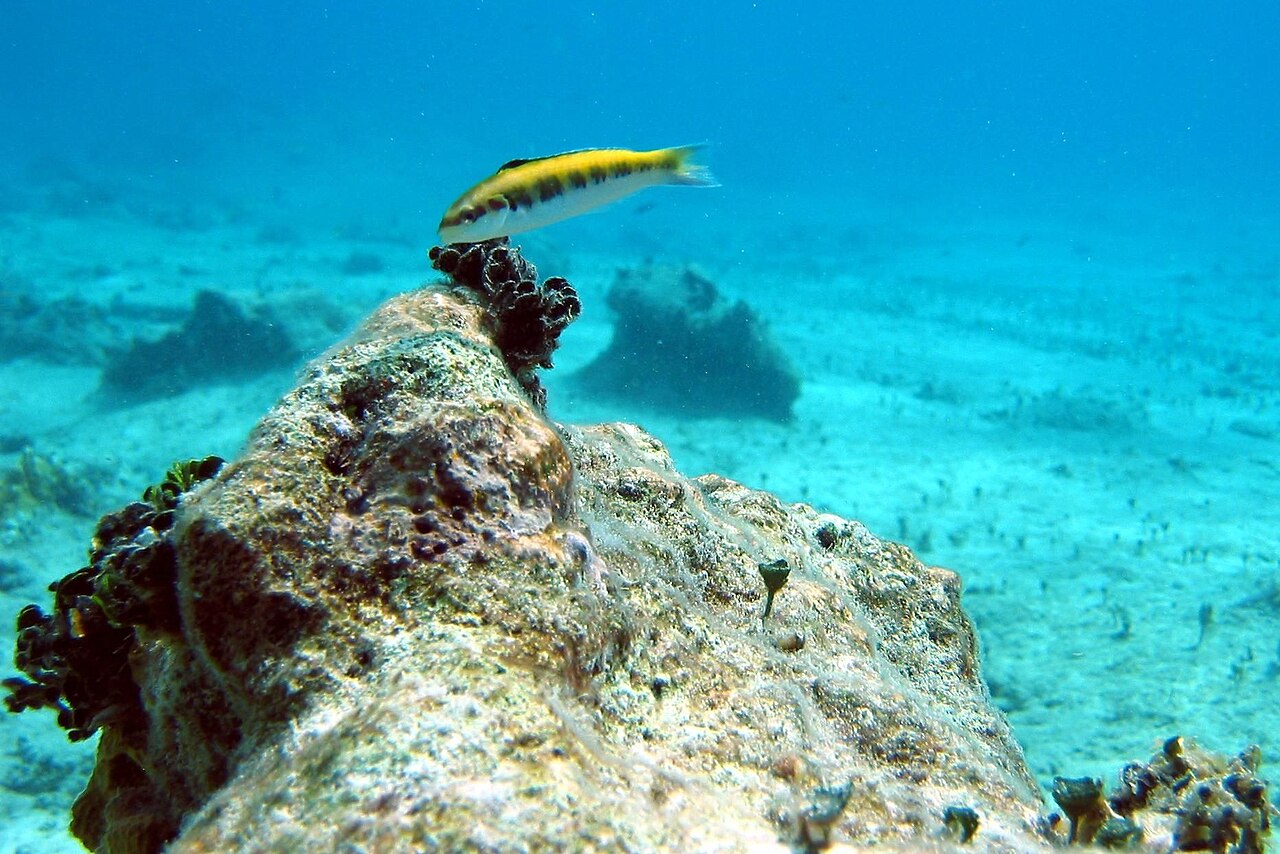
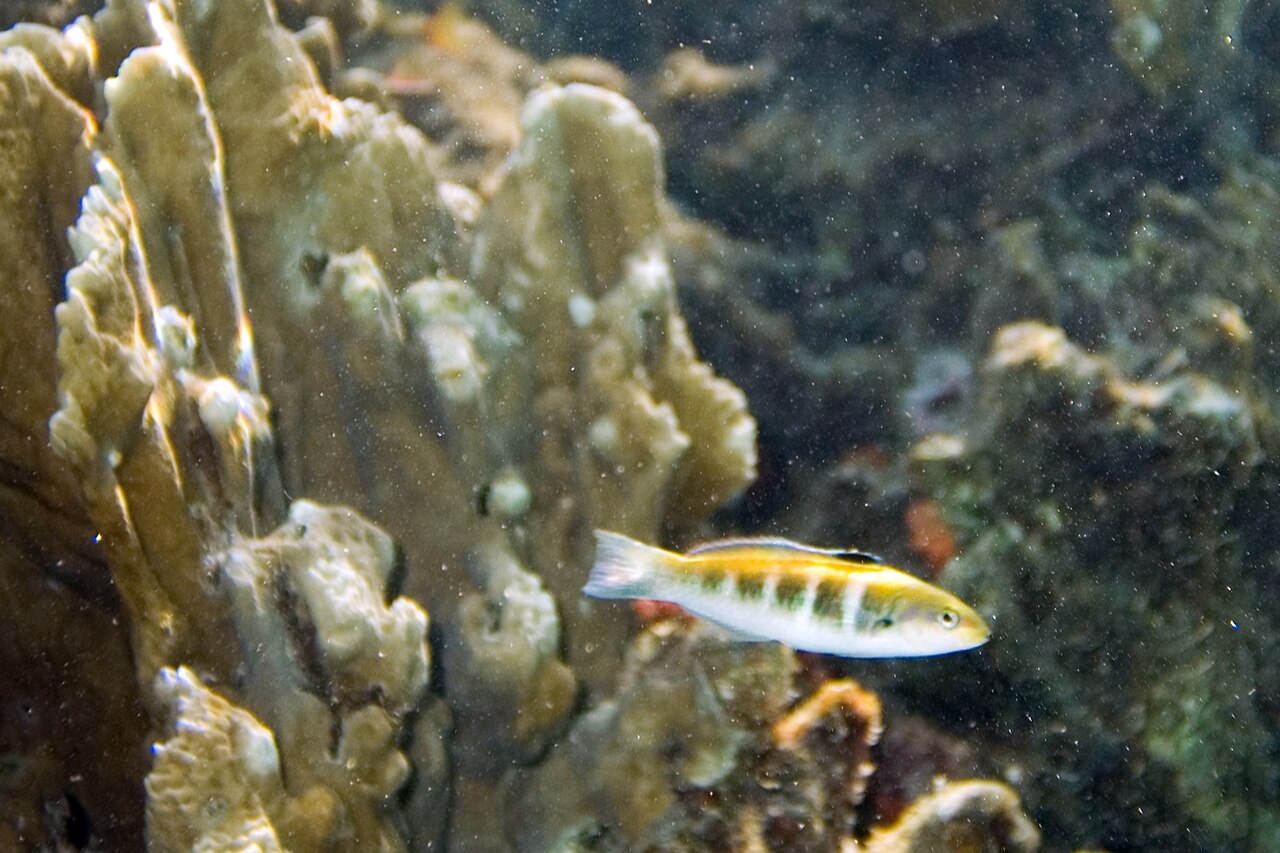
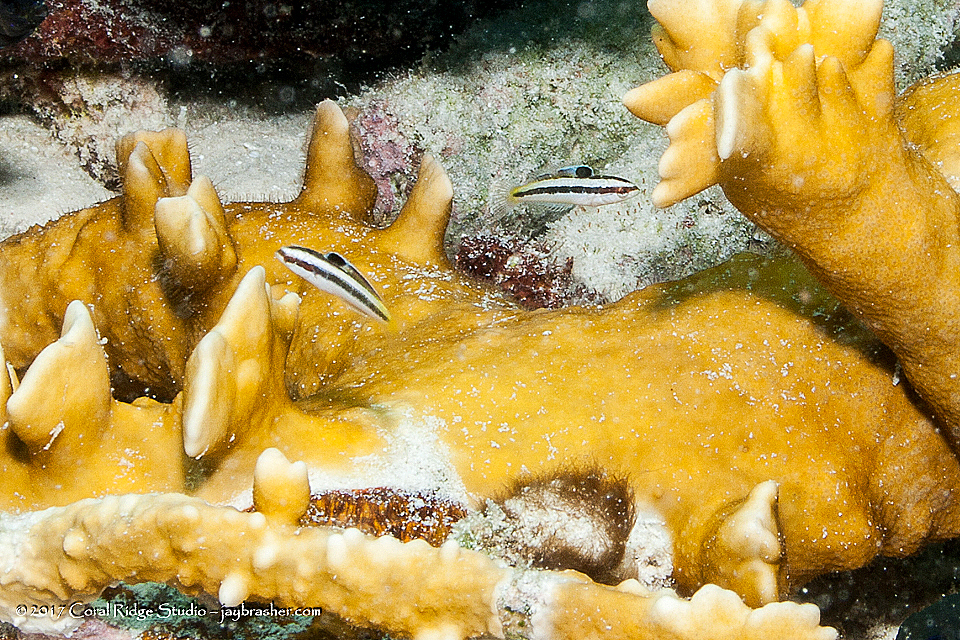
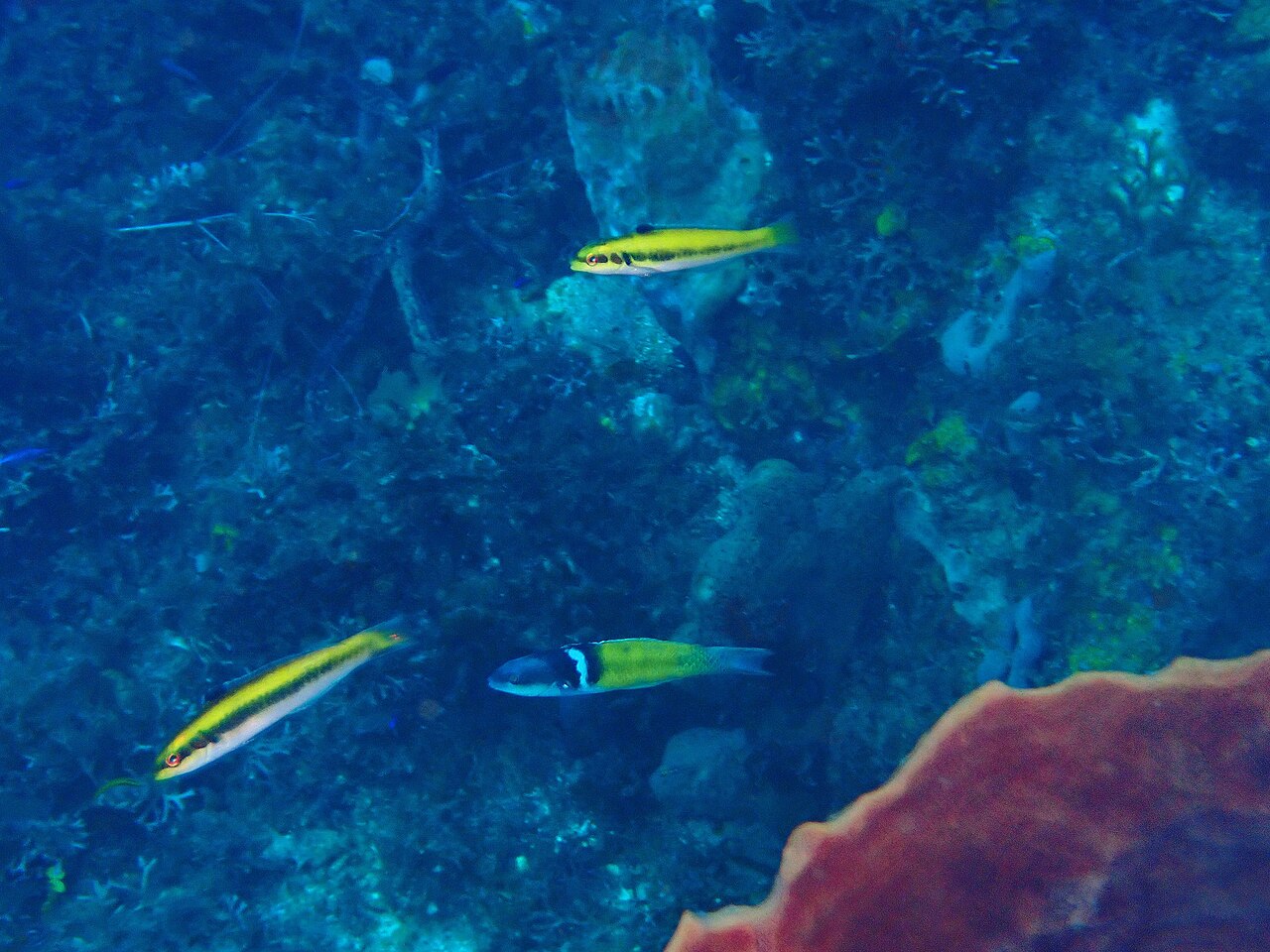
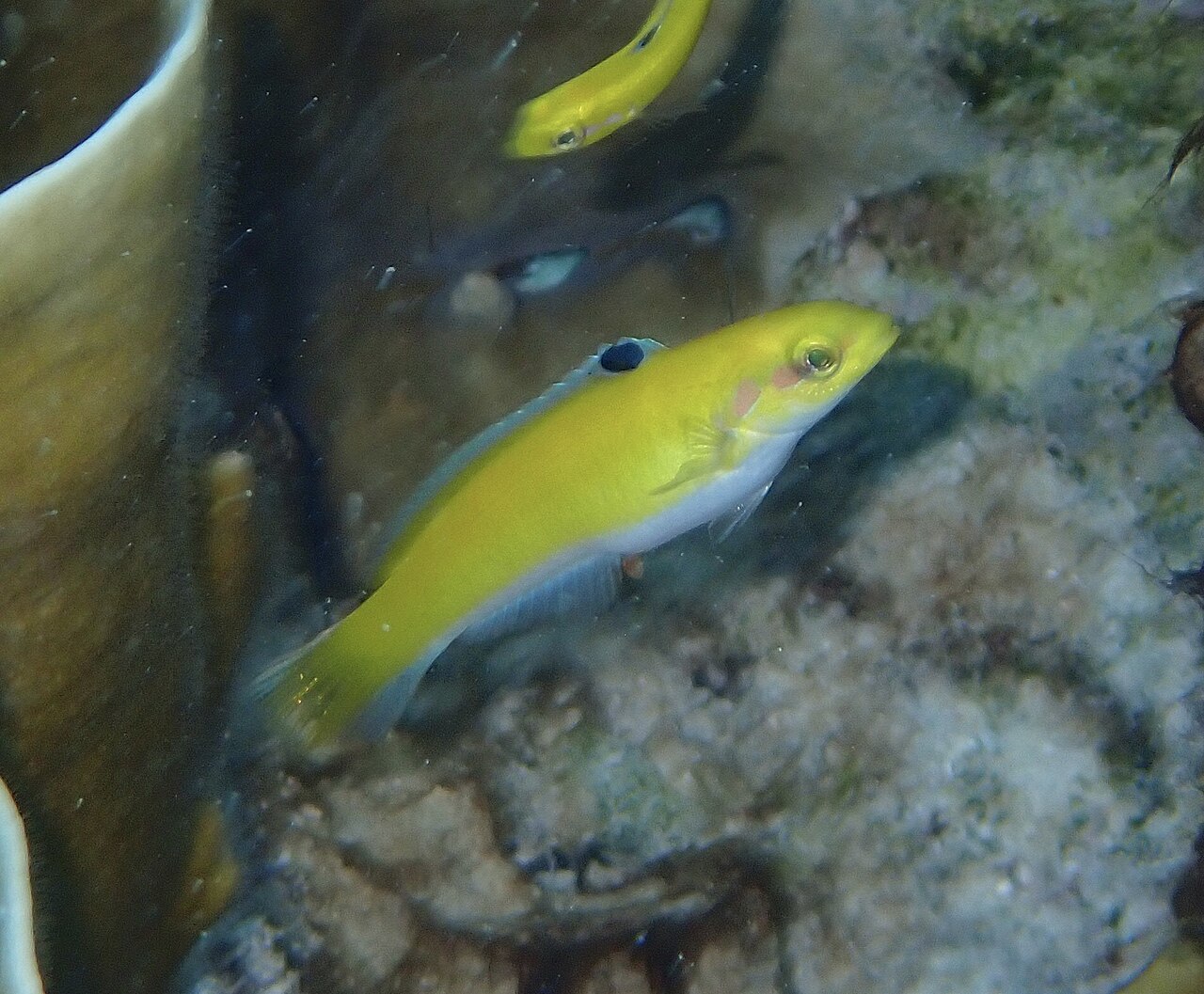
Thalassoma bifasciatum exhibits two distinct color phases. Young and small individuals—both females and males—display a yellow upper body and white lower body, often with green or black lateral stripes and occasional dark vertical bars; this is known as the initial phase. Large females and some males can permanently change coloration and sex to enter the terminal phase, characterized by a blue head, black and white bars behind the head, and a green body. This terminal phase gives the species its common name. Terminal phase males are larger (70 to 80 mm) than initial phase males (60 mm).
The species is a protogynous sequential hermaphrodite: individuals may begin life as either males or females, but females can change sex later in life to become males. Both initial phase females and initial phase males can transform into terminal phase males, a change that is permanent and can occur in about eight days. Social structure among males includes aggressive terminal phase males and initial phase males that mate opportunistically. On smaller reefs, terminal phase males dominate and guard small harems; on larger reefs, initial phase and terminal phase males occur in equal proportions.
Thalassoma bifasciatum forages on zooplankton, mollusks, small crustaceans, worms, other motile invertebrates, fish eggs, and ectoparasites on other fish. It is a common cleaner fish but avoids cleaning piscivorous species such as the spotted moray, graysby, and red hind. A significant parasite is the intracellular myxozoan Kudoa ovivora, which infects ovaries, rendering eggs sterile and causing infected females to change sex earlier than uninfected ones.
Reader's Guide
Thalassoma bifasciatum is notable as one of the most abundant fish species on coral reefs in the northwestern Atlantic, particularly around Puerto Rico, the Virgin Islands, and the Netherlands Antilles. Its role as a cleaner fish is ecologically significant, as it removes ectoparasites from other reef fish. The species has become an important model for understanding the physiological and neurobiological bases of sex change. Field experiments have shown that removing dominant terminal phase males from small reefs can induce large females to change sex, with male-typical behaviors appearing within minutes to hours. Behavioral sex change occurs even in females whose ovaries have been surgically removed, and it is associated with increased expression of the neuropeptide arginine vasotocin (AVT). Injections of AVT can induce sexual and aggressive behaviors in terminal phase males, while fluoxetine reduces aggression. The species also demonstrates the importance of female choice in mating systems: when females were replaced in local populations, half of the old breeding sites were abandoned and new sites established, indicating that males respond to female site preferences. Although listed as Least Concern, the species shows high site fidelity, making it vulnerable to local endangerment from coral reef destruction. It is occasionally collected for the aquarium trade, but this is not considered a threat.
Did You Know?
- Infected eggs of T. bifasciatum with the parasite Kudoa ovivora are sterile and larger than uninfected eggs.
- Sex change from female to terminal phase male can occur in about eight days and is permanent.
- Initial phase males have comparatively larger testes than terminal phase males, an adaptation for sperm competition.
Protogynous Sex Change and Its Triggers
The bluehead wrasse is a protogynous sequential hermaphrodite, meaning individuals may begin life as either sex, yet females retain the ability to transition into males later. This transformation takes roughly eight days and, once complete, is permanent—there is no path back to the female condition. Both initial-phase females and initial-phase males are capable of becoming terminal-phase males. In controlled experiments, removing terminal-phase males from a population prompted more females to shift sex, accompanied by heightened aggression and visible coloration changes that signaled the transition. Together with its close relative the saddle wrasse, this species has become a vital model for investigating the physiological and neurobiological underpinnings of sex change. In experimental pens, elevating large females to the top of the social hierarchy can trigger the transformation, which is accompanied by measurable drops in steroid hormones such as estradiol and 11-ketotestosterone, alongside substantial shifts in brain levels of serotonin, dopamine, and norepinephrine.
Color as a Dynamic Social Language
The bluehead wrasse uses its skin as a real-time communication channel. In the initial phase, both young males and females display a yellow upper body over a white lower half, often accented by green or black lateral stripes and occasionally dark vertical bars. These fish can rapidly alter the presence and intensity of their yellow, stripes, and bars, and such chromatic shifts appear to track changes in behavior. Terminal-phase individuals—large females and some males—permanently adopt the striking blue head, black-and-white bars behind the head, and green body that give the species its common name. Within the male hierarchy, color serves as an immediate signal of intent: terminal-phase males flash a metallic green when chasing initial-phase rivals, but shift to pink or grey with black circles on their fins when courting a female. This rapid chromatic flexibility makes the bluehead wrasse one of the most visually expressive reef fish in the Caribbean and Gulf of Mexico.
Cleaning Ecology, Predation Risk, and Parasite Pressure
As a common cleaner fish across Caribbean and Gulf of Mexico reefs, the bluehead wrasse forages on zooplankton, small crustaceans such as shrimp and krill, mollusks, worms, fish eggs, and ectoparasites removed from other fish. However, this cleaning role carries genuine danger: the species deliberately avoids servicing piscivorous clients like the spotted moray, graysby, and red hind, which would treat them as prey rather than partners. Other predators include the greater soapfish, roughtail stingray, and trumpetfish. Beyond predation, the intracellular myxozoan Kudoa ovivora poses a significant reproductive threat. Found in the ovaries of females, this parasite renders eggs sterile and causes them to grow larger with increased organic and inorganic content, effectively diverting the mother's resources away from viable offspring. Infected bluehead wrasses have been observed changing sex earlier than uninfected females, suggesting a behavioral response to the parasite's fitness cost.
Two-Tier Mating and Sperm Competition
The bluehead wrasse maintains a two-tiered male social system. Terminal-phase males, the largest at 70 to 80 mm, are the most aggressive and hold the highest rank, guarding harems of females. Initial-phase males, smaller at around 60 mm, must seize fleeting mating opportunities within larger groups. Their strategy centers on sperm competition: they possess comparatively larger testes, enabling them to produce vast quantities of sperm. During the daily spawning period on medium and larger reefs, groups of 20 to 50 or more initial-phase males gather at specific sites. Females arrive and release eggs in a rapid spawning rush, and each initial-phase male attempts to position himself directly beside a female at the moment of egg release to maximize fertilization odds. Releasing large sperm volumes further boosts their chances. This intense, crowded competition for a brief window of reproductive access defines the initial-phase male's entire reproductive strategy.
Gallery
More in Wrasses and Gobies 1-24
Spotted an error? Know more?
Reader corrections go straight into our review queue. Suggest an edit · How this site is sourced