Lythrypnus dalli
A small, colorful goby with bidirectional sex change and mild toxin.

Roban Kramer · CC BY-SA 2.0
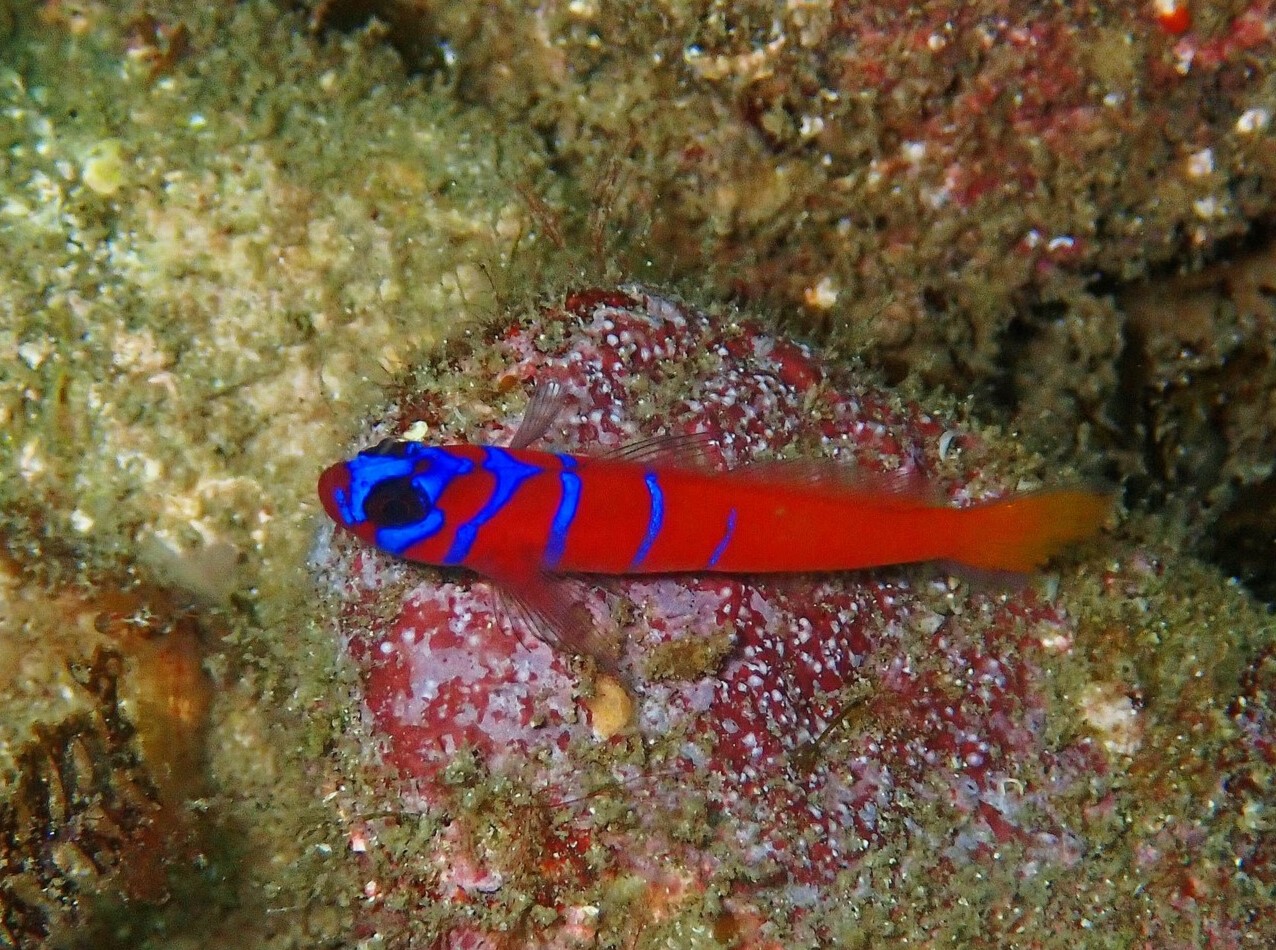
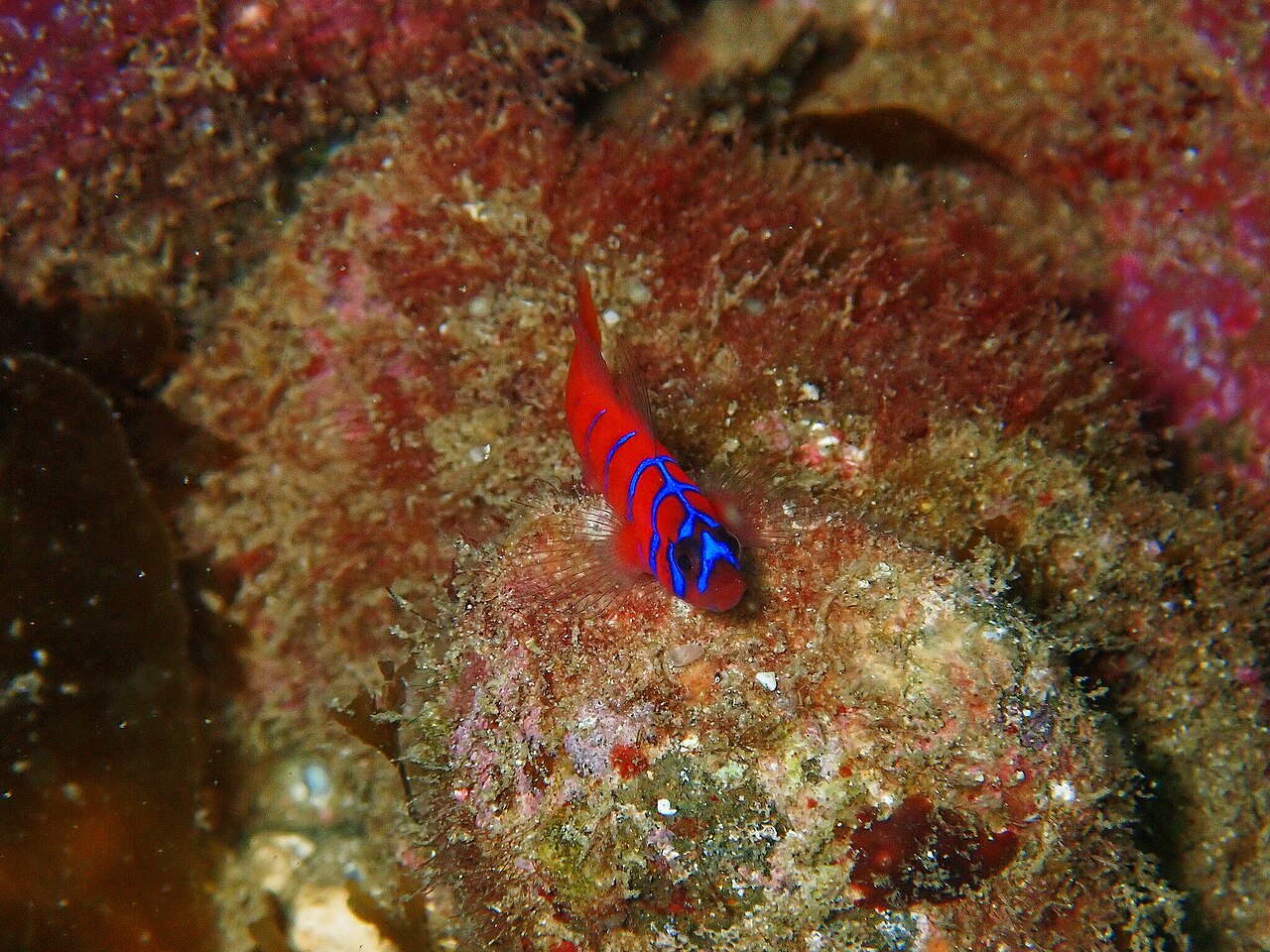
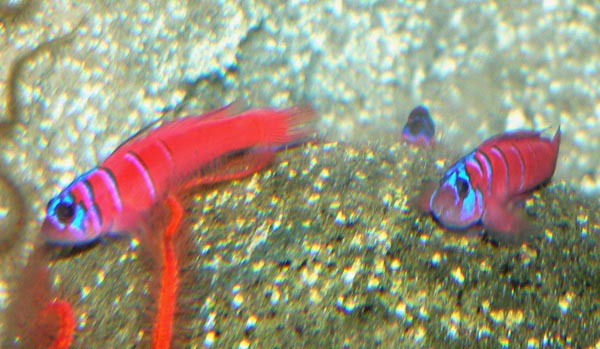
The blue-banded goby (*Lythrypnus dalli*) is a small fish from the Gobiidae family that lives in large numbers among rocky reefs in the Pacific Ocean, from Morro Bay, California, down to the Galápagos Islands off Ecuador. Adults reach a maximum length of about 64 mm (2.5 inches), though most are between 18 and 45 mm (0.7–1.8 inches). Their bodies are a vivid coral-red, marked with five to nine blue bands near the front. They have two dorsal fins: a tall, spiny one closer to the head and a longer, soft-rayed one running along the back. Like the round goby, they possess wide pelvic fins on each side that act like suction cups, letting them cling to rocks in strong currents.
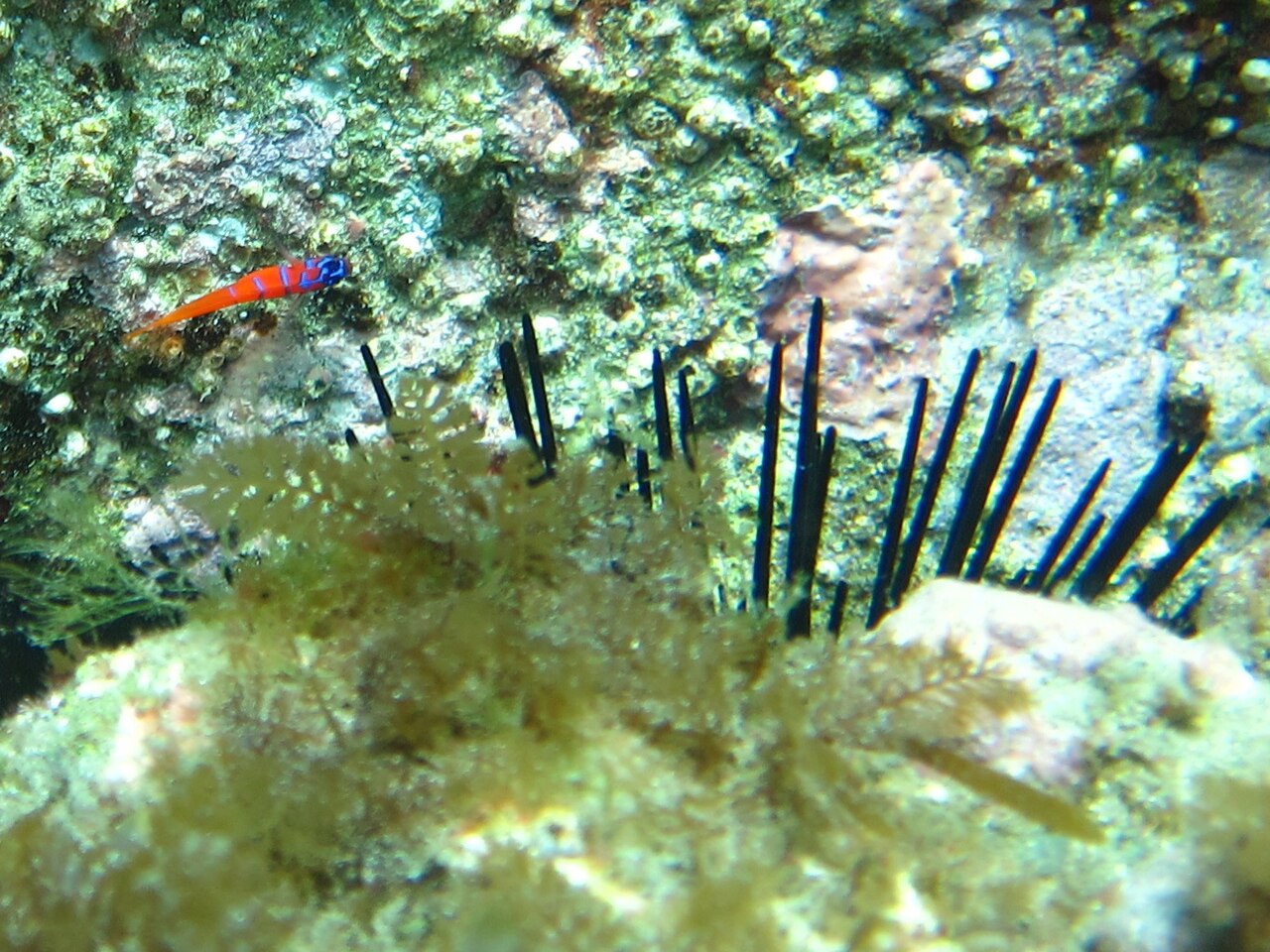
For defense, this goby secretes a mild toxin that makes it unpleasant to eat. Other goby species mimic its coloration and pattern to take advantage of this protection. The fish typically inhabits rocky reef environments, preferring hard surfaces and sloped areas, often in open rocky zones or caves near the seafloor. They live at depths from 0 to 76 meters (0–250 feet). When threatened, they dart into small crevices and sometimes hide among the spines of sea urchins.
Being small, the blue-banded goby feeds mainly on zooplankton and tiny crustaceans. It sometimes acts as a cleaner fish, eating ectoparasites off other organisms. Its feeding style involves swimming a short distance from the reef, grabbing prey, and quickly returning to cover; its diet includes amphipods and small crabs.
Reproduction in this species involves bidirectional sex change, meaning an individual can function as either female or male depending on the social setup. They usually form harems with one male and several females. If the male is lost to predation or disappears, the largest female changes sex to take over the male role. During courtship, a male rushes at a female, nips her genital area, and locks jaws with her. Eggs are laid along the walls of a brood chamber until a shell is found for them to be deposited into. Males guard the nests strictly, fanning the eggs with their pectoral fins to help them develop and chasing off intruders. Breeding season runs from about February to September. At around 21°C, eggs hatch in about four days, and the young mature after three months.
Embryos typically hatch within four to ten days, depending on temperature.
Quick Facts
- Taxon
- Lythrypnus dalli
Facts from the source article.
Lore & Background
The blue-banded goby reaches a maximum adult size of about 64 mm (2.5 inches), with typical sizes ranging from 18 to 45 mm (0.7–1.8 inches). It is brightly colored coral-red, with 5 to 9 blue bands toward the front of the body. It has two dorsal fins: a tall, spiny fin near the head and a longer soft-rayed fin extending down the back. Like the round goby, it possesses wide pelvic fins on either side, used as a suction cup to cling to rocks in fast-moving currents. As a defense mechanism, it secretes a mild toxin that makes it irritating to eat; other goby species mimic its coloration to gain this protection.
This species inhabits rocky reef environments, preferring hard substrates and sloped surfaces, often in open rocky areas and caves close to the ocean floor at depths of 0 to 76 meters (0–250 feet). When threatened, it retreats into small crevices, sometimes taking refuge within the spines of sea urchins. Its diet consists mainly of zooplankton and miniature crustaceans, and it occasionally serves as a cleaner fish by eating ectoparasites from other organisms. Feeding behavior involves swimming a short distance from the reef, grabbing items such as amphipods and small crabs, and quickly returning.
Reproduction involves bidirectional sex change: individuals can function as either female or male depending on the social environment. Blue-banded gobies typically form harems of one male and multiple females; if the male is lost to predation or absence, the largest female switches sex to assume the male role. Courtship includes the male rushing at a female, nipping her genital area, and locking jaws. Eggs are deposited along the walls of a brood chamber until a shell is found for them. Males guard the nests, fanning the eggs with their pectoral fins and warding off intruders. Breeding season runs from February to September; eggs hatch in about 4 days at 21°C, and juveniles mature after 3 months.
Reader's Guide
The blue-banded goby is significant as a common and colorful inhabitant of Pacific rocky reefs, ranging from California to the Galápagos. Its small size and bright coloration make it a recognizable species within its habitat. The secretion of a mild toxin as a defense mechanism is notable, as it provides protection that other goby species mimic through coloration and pattern. This mimicry highlights the ecological interactions within the reef community. The species' ability to undergo bidirectional sex change is a key reproductive adaptation, allowing harems to maintain a male even after predation or loss. This controlled reproductive system ensures breeding continuity in dynamic social environments. The goby's role as a cleaner fish, consuming ectoparasites from other organisms, contributes to the health of reef inhabitants. Its feeding behavior—quickly capturing small prey and returning to cover—reflects its adaptation to life in crevice-rich habitats. The species' preference for hard substrates and sloped surfaces, along with its use of pelvic fins as suction cups, demonstrates specialized morphological traits for living in fast-moving currents. Overall, Lythrypnus dalli exemplifies a small reef fish with complex social structure, chemical defense, and ecological roles that extend beyond simple predation.
Gallery
More in Wrasses and Gobies 1-24
Spotted an error? Know more?
Reader corrections go straight into our review queue. Suggest an edit · How this site is sourced