Mediterranean rainbow wrasse
A color-changing hermaphrodite of Mediterranean and Atlantic waters.

(c) Edoardo Razzetti, some rights reserved (CC BY) · CC BY 4.0
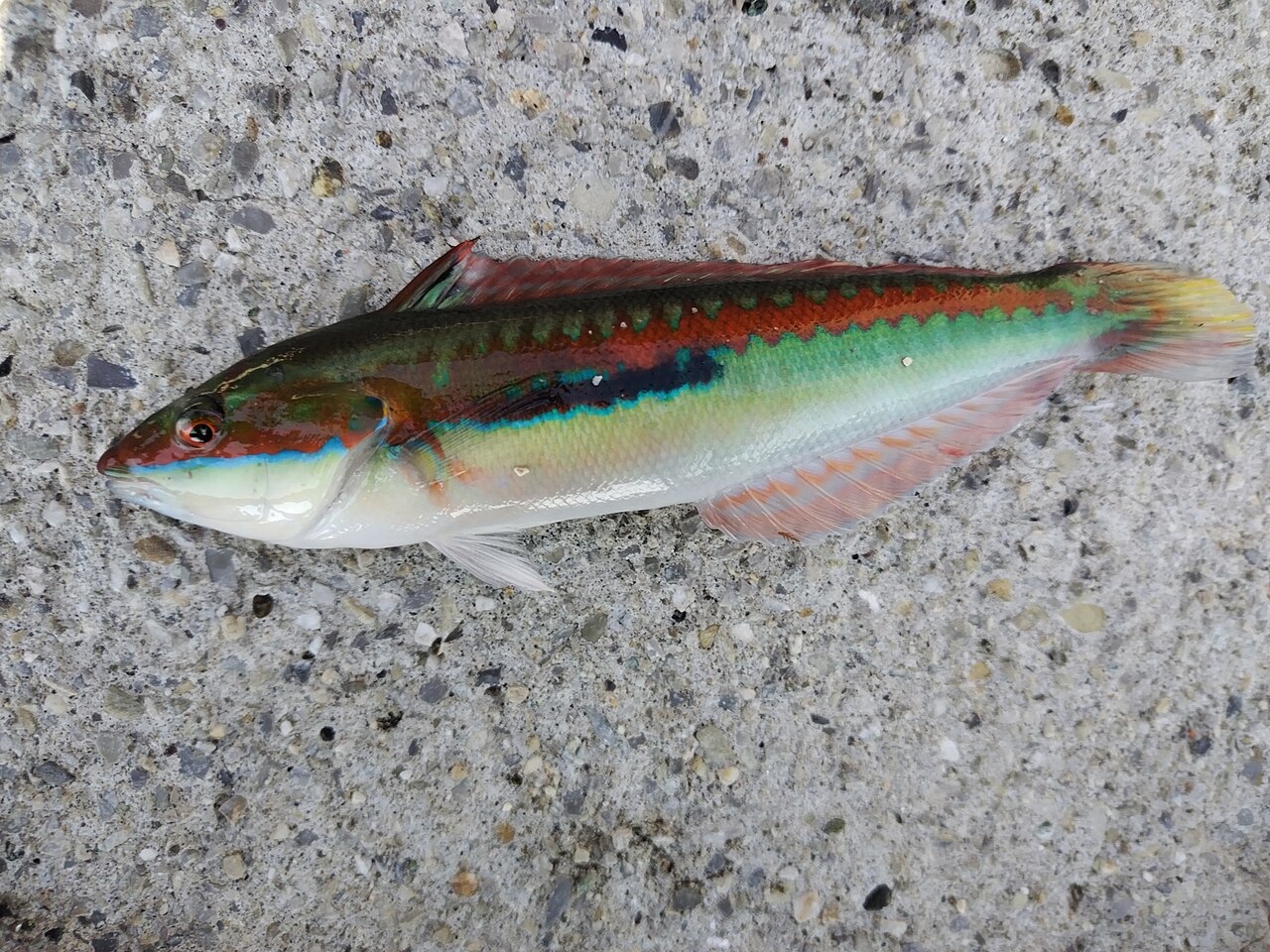
The Mediterranean rainbow wrasse (Coris julis) is a fish of the Labridae family found in the Mediterranean Sea and the Eastern Atlantic. It is notable for its multiple color phases, which once led to the mistaken belief that the brightly colored individuals were a separate species. The species is a diandric protogynous hermaphrodite, meaning it has two types of males and can change from female to male.
Quick Facts
- Family
- Labridae
- Genus species
- Coris julis
- Primary male/female length
- less than 18 cm
- Depth range
- 0–50 m (extremes 0–120 m)
- Iucn status
- Least Concern (stable, 2019 assessment)
- Geographic range
- Mediterranean Sea, Norway to Senegal
Facts from the source article.
Lore & Background
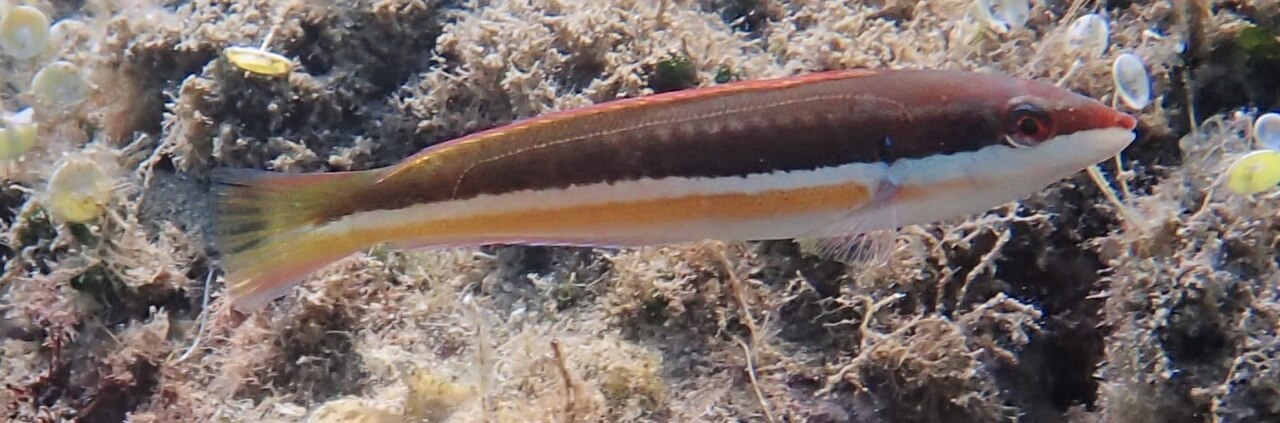
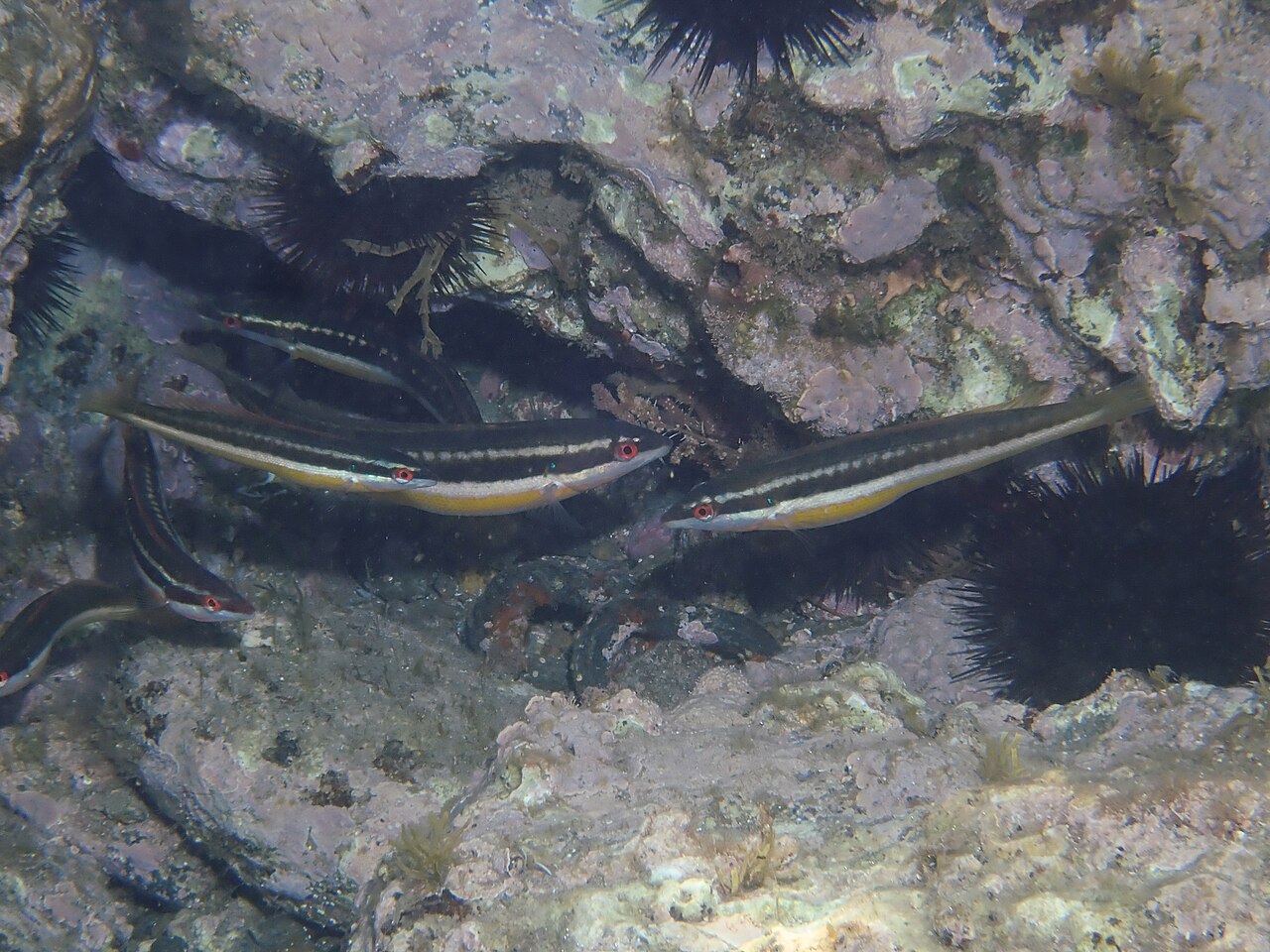
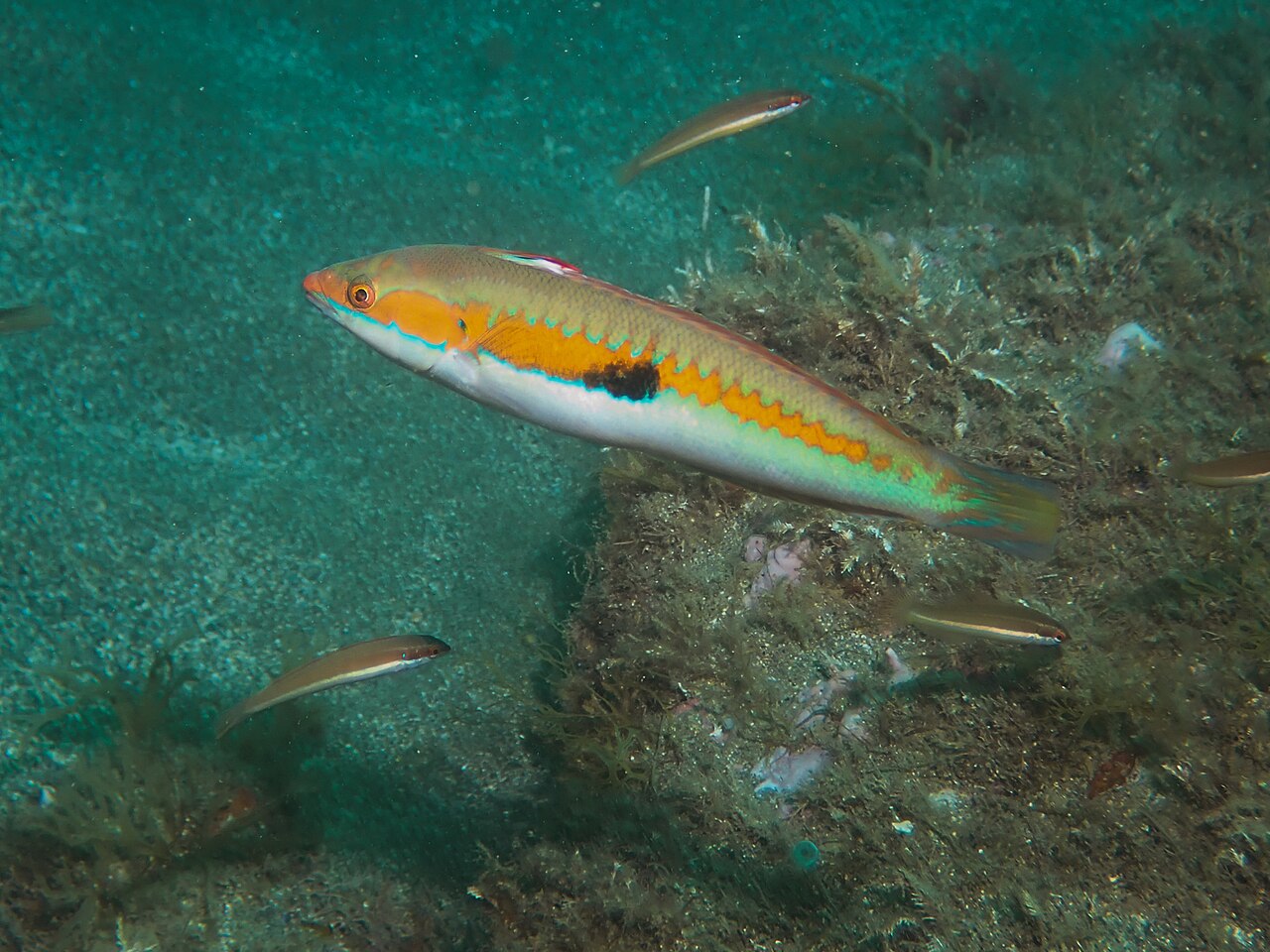
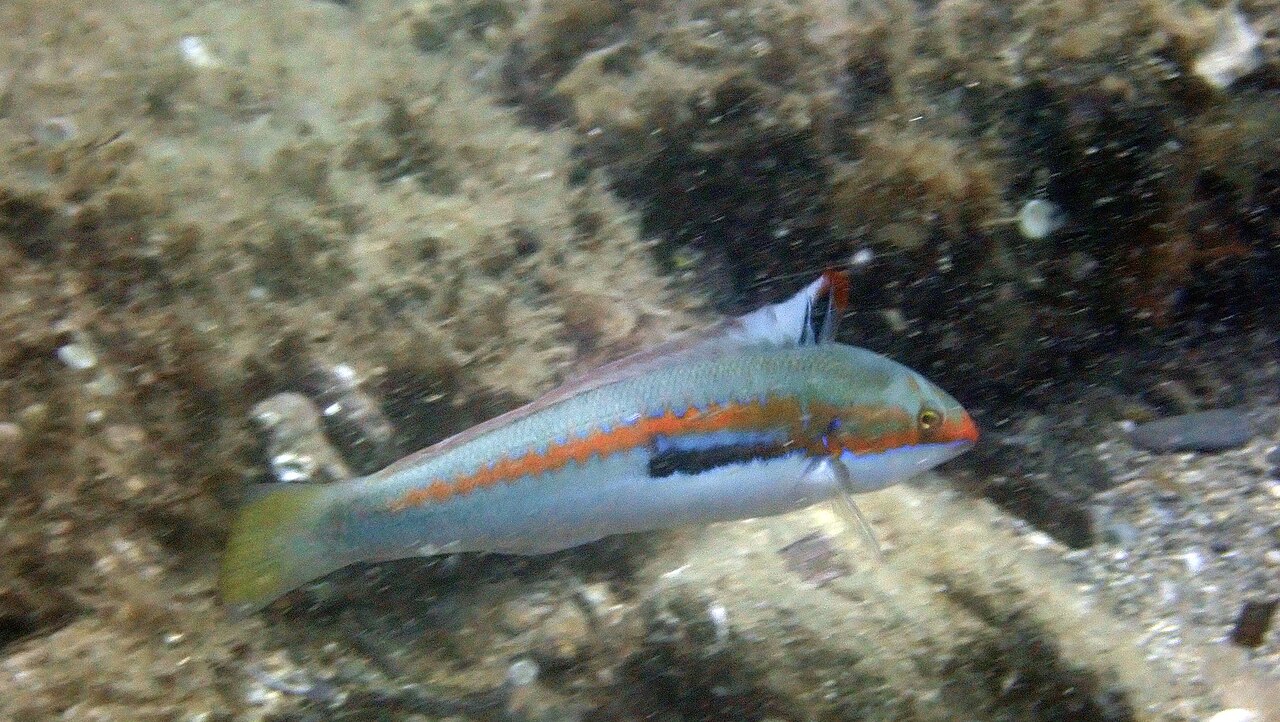
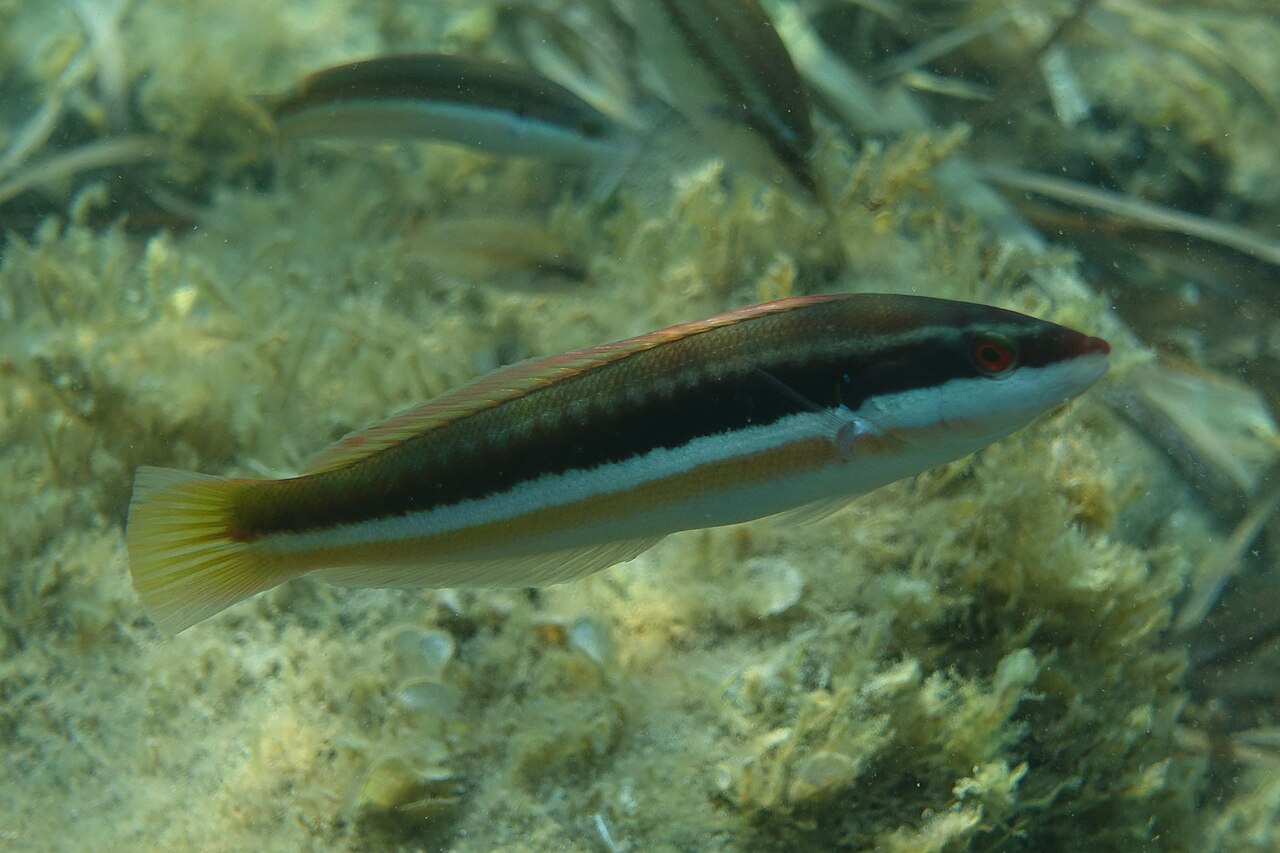
The Mediterranean rainbow wrasse was once thought to be two species: the brightly colored fish were called Coris julis, while the duller primary individuals were referred to as Coris giofredi. It is now understood that these color phases represent different life stages. Primary individuals have an orange-brown back, whiteish-yellow belly, and a black horizontal stripe. Secondary (terminal phase) males are bluish grey to greenish brown with a white belly, an orange zigzag, and an orange stripe from snout to caudal fin base. Intermediate males show a black or purple/brown body with an orange eye and a black band below an orange stripe.
The body is long, slender, slightly compressed, or fusiform, allowing sharp turns. The mouth is terminal and slightly oblique, with recurved canine teeth. Cycloid scales cover the chest and sides, growing smaller toward the belly and head. The dorsal fin begins at the 5th lateral line scale, and scales cover about one-fifth of the caudal fin. There are 8–10 dorsal spines, 12 soft dorsal rays, 3 anal spines, 11–12 soft anal rays, 12 pectoral rays, and 72–74 lateral line scales. The snout has 4–6 cephalic pores.
A 2021 study proposed splitting Coris julis into two sister species, the other being Coris melanura (Blacktail rainbow wrasse). Coris melanura has the same number of soft dorsal rays and lateral line scales but one more pectoral ray. Its primary individuals have a thin black line from behind the orbit to half the caudal fin, a small dark triangle between the second and third dorsal spines, and 6–8 red dots on the white belly. Secondary males have a black caudal fin and a series of black, yellow, or red spots along the sides.
Reader's Guide
The Mediterranean rainbow wrasse is a common inhabitant of rocky and sandy substrates and seagrass beds in shallow coastal waters, typically from 0 to 50 meters deep. It feeds on benthic mollusks and crustaceans, foraging in groups by day and burying itself in sand at night. Secondary males are territorial, especially when they can distinguish long- and short-wave colors, which is notable given that red and orange do not penetrate far underwater.
Reproduction occurs between May and July in the Balearic Islands. Terminal males perform a rapid swimming display with erect dorsal fins. Both primary and secondary males can mate, but secondary males have higher spawning success. Eggs hatch after about two days, and larvae live with zooplankton for roughly a month before settling to the bottom. Sex inversion from female to male occurs between August and December, accompanied by a color change. The species is listed as Least Concern by the IUCN, with no commercial fisheries targeting it, though it may be caught as bycatch and is sometimes kept in aquariums (recommended tank size at least 55 gallons, pH 8.1–8.4).
Did You Know?
- The species was once thought to be two separate species, with the brightly colored fish called Coris julis and the duller ones called Coris giofredi.
- Secondary males have an orange stripe extending from the snout to the base of the caudal fin.
- They bury themselves in sand between sunset and sunrise and are in a sleeplike state at night.
Gallery
More in Wrasses and Gobies 1-24
Spotted an error? Know more?
Reader corrections go straight into our review queue. Suggest an edit · How this site is sourced