
Basilica of San Vitale
Sixth-century Byzantine church famed for its mosaics.

_o0OKO0o_ · CC BY-SA 4.0
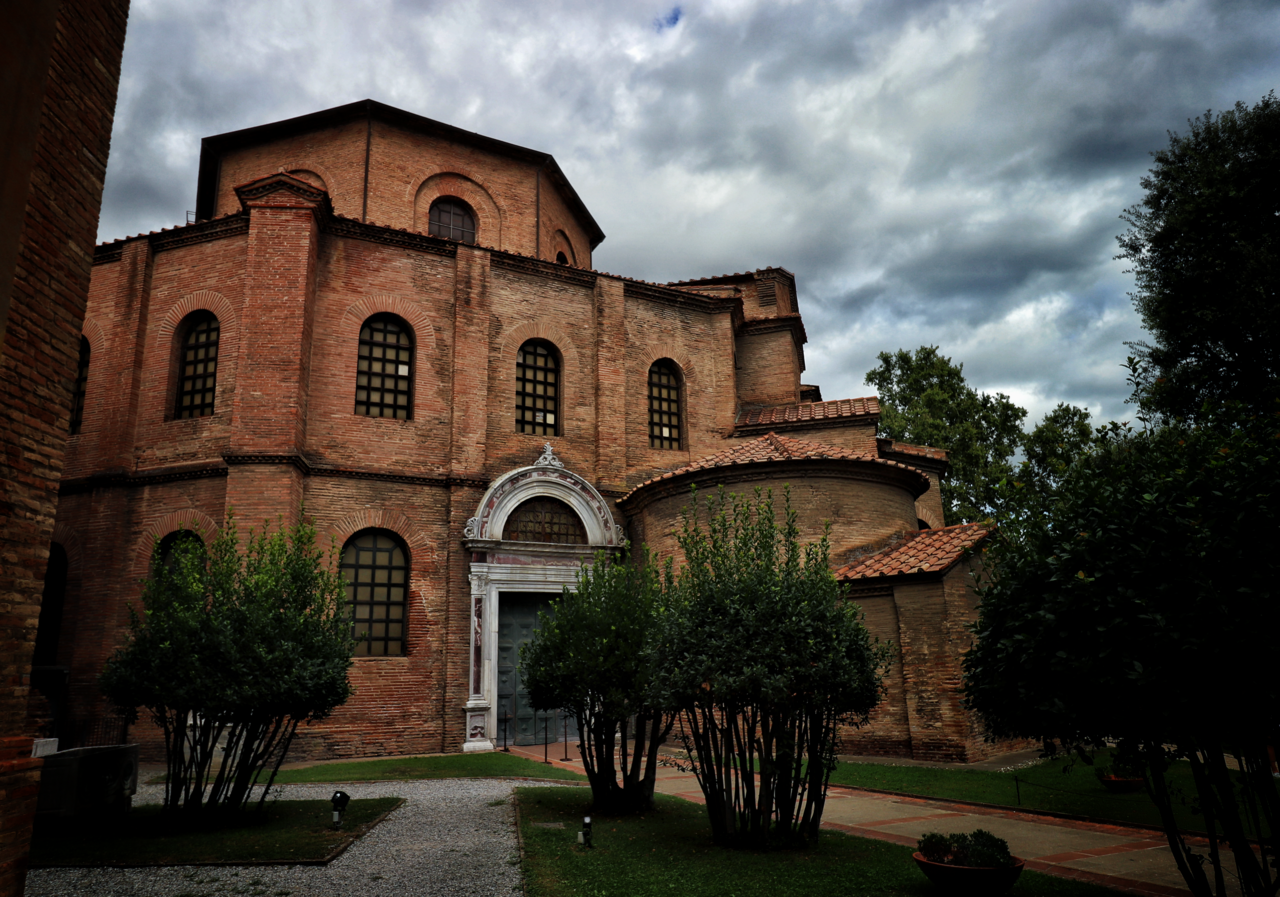
The Basilica of San Vitale in Ravenna, Italy, is a late antique church built in the sixth century. It stands as a key surviving example of early Byzantine art and architecture, with its mosaics ranking among the most studied works in Byzantine art. The church is one of eight Ravenna sites on the UNESCO World Heritage List. Although its foundational inscription calls it a basilica, its central plan is not typical of that architectural form. The Roman Catholic Church grants it the honorary title of basilica due to its historical and ecclesiastical significance.
Construction began in 526 under Bishop Ecclesius of Ravenna, when the Ostrogoths ruled the city. Bishop Maximian completed the church in 547, after Justinian I had conquered Italy. The project was funded by the financier Julius Argentarius, about whom little is known; he also financed the nearby Basilica of Sant'Apollinare in Classe around the same time. The final cost was 26,000 solidi, equal to 16.38 kilograms (36.11 pounds) of gold. Some suggest Julius came from the eastern Byzantine Empire, where public benefactions were a long tradition. The central vault used hollow terracotta tubes (tubi fittili) inserted into one another, rather than bricks—a technique already employed in earlier Roman and Byzantine structures. The ambulatory and gallery were vaulted only later, in the Middle Ages. Baroque frescoes on the dome were painted between 1778 and 1782 by Serafino Barozzi, Ubaldo Gandolfi, and Jacopo Guarana.
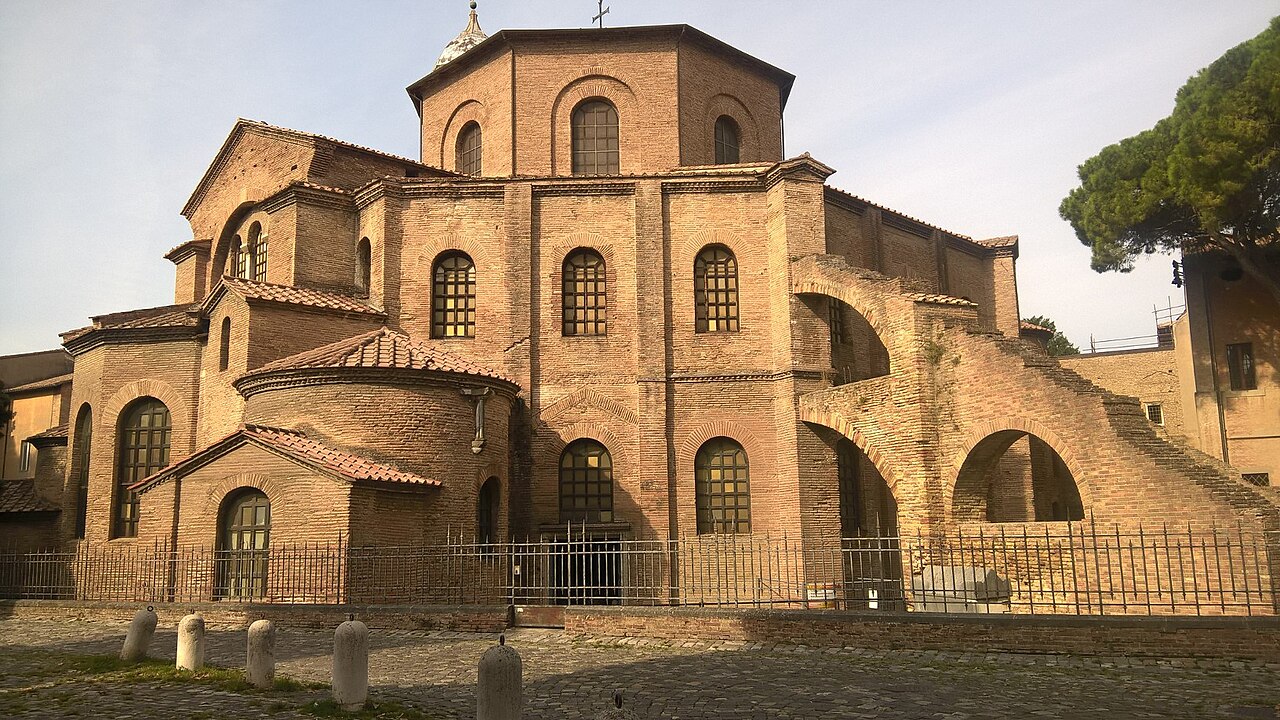
The main building is octagonal, combining Roman and Byzantine elements. Roman features include the dome, doorways, and stepped towers, while Byzantine traits appear in the polygonal apse, capitals, narrow bricks, and an early example of flying buttresses. The church is most famous for its extensive Byzantine mosaics, the largest and best-preserved outside Istanbul. San Vitale is extremely important in Byzantine art as the only major church from Justinian’s reign to survive nearly intact. Like the Church of Saints Sergios and Bacchos in Constantinople, its design is a “double-shelled octagon.” Some speculate it reflects the design of the Byzantine Imperial Palace Audience Chamber, of which nothing survives.
Quick Facts
- Location
- Ravenna, Italy
- Religious Affiliation
- Roman Catholic
- Region
- Emilia-Romagna
- Province
- Archdiocese of Ravenna-Cervia
- Consecration Year
- 547
- Heritage Designation
- UNESCO World Heritage site
- Architecture Style
- Byzantine
- Groundbreaking
- 527
- Construction Cost
- 26,000 solidi
Facts from the source article.
Lore & Background
The church's construction began in 526 on the orders of Bishop Ecclesius of Ravenna, when Ravenna was under Ostrogothic rule. Bishop Maximian completed it in 547, after Justinian I conquered Italy. The construction was sponsored by the financier Julius Argentarius, who also sponsored the nearby Basilica of Sant'Apollinare in Classe. The final cost was 26,000 solidi, equal to 16.38 kg of gold. The central vault used hollow terracotta tubes (tubi fittili) inserted into each other, a technique already employed in earlier Roman and Byzantine structures. The Baroque frescoes on the dome were painted between 1778 and 1782 by Serafino Barozzi, Ubaldo Gandolfi, and Jacopo Guarana.
Reader's Guide
The Basilica of San Vitale is of extreme importance in Byzantine art as the only major church from the period of Emperor Justinian I to survive virtually intact. Its mosaics, the largest and best-preserved specimens outside Istanbul, include the famous panels of Emperor Justinian and Empress Theodora. The building combines Roman and Byzantine elements: the dome, doorways, and stepped towers are Roman, while the polygonal apse, capitals, narrow bricks, and early flying buttresses are Byzantine. Its overall design is a 'double-shelled octagon,' similar to the Church of Saints Sergios and Bacchos in Constantinople. The mosaics in the presbytery depict Old Testament scenes, the Four Evangelists, and a theophany centered on Christ. The Justinian panel shows the emperor with a golden halo, flanked by soldiers and clergy, emphasizing his leadership of church and state. The Theodora panel is the only certain image of the empress. These works were executed in the Hellenistic-Roman tradition with rich colors and perspective, and are key to understanding Late Antique art and imperial iconography.
Did You Know?
- The church's foundational inscription describes it as a basilica, though its centrally-planned design is not typical of the basilica form.
- The central vault used hollow terracotta tubes inserted into each other, the first recorded structural use of such forms.
- The mosaic of Emperor Justinian includes a later insertion of Bishop Maximian's name, possibly replacing an earlier depiction of Bishop Victor.
Construction, Patronage, and a Shifting Political World
The Basilica of San Vitale rose over more than two decades of shifting political power in Ravenna. Construction commenced in 526 under the direction of Bishop Ecclesius, a period when the city still fell under Ostrogothic sovereignty. By the time Bishop Maximian saw the project through to completion in 547, the political landscape had transformed entirely, as Justinian I's forces had conquered Italy and brought the city under Byzantine control. The financial engine behind the build was a local banker and architect named Julius Argentarius, a figure shrouded in obscurity beyond his dual role as patron of both San Vitale and the nearby Basilica of Sant'Apollinare in Classe. Scholars have speculated that Julius may have hailed from the eastern reaches of the Byzantine Empire, a region with deep roots in civic benefaction. The total expenditure reached 26,000 solidi, equivalent to roughly 16.38 kilograms of gold. Some researchers even propose that a donor portrait of Julius is hidden among the courtiers in the Justinian mosaic panel.
Octagonal Form and a Pioneering Vault
San Vitale's structural identity is defined by its octagonal plan, a form that departs from the longitudinal basilica shape its own foundational inscription claims. The building fuses Roman and Byzantine architectural vocabularies into a single coherent whole: the dome, doorway profiles, and stepped towers speak to Roman tradition, while the polygonal apse, ornate capitals, narrow brickwork, and what appears to be an early instance of flying buttresses point toward Byzantine influence. The design has been compared to the double-shelled octagon of the Church of Saints Sergios and Bacchos in Constantinople, and some scholars have even suggested it mirrors the long-lost Audience Chamber of the Byzantine Imperial Palace. One of the most remarkable engineering achievements lies in the central vault, which employed a western technique of interlocking hollow terracotta tubes rather than conventional brickwork. This represents the earliest documented structural application of terracotta forms, a method that would eventually evolve into modern structural clay tile. The ambulatory and gallery vaults, by contrast, were not added until the Middle Ages.
A Treasury of Mosaics in the Hellenistic-Roman Tradition
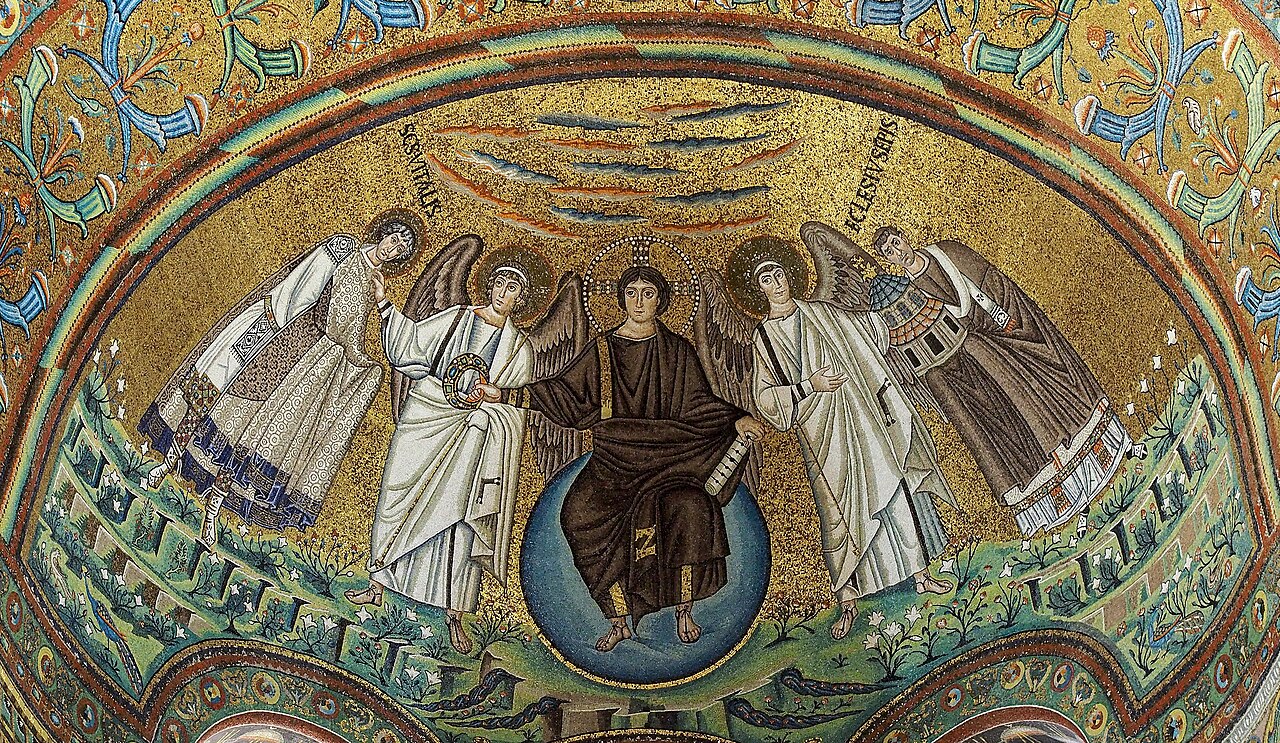
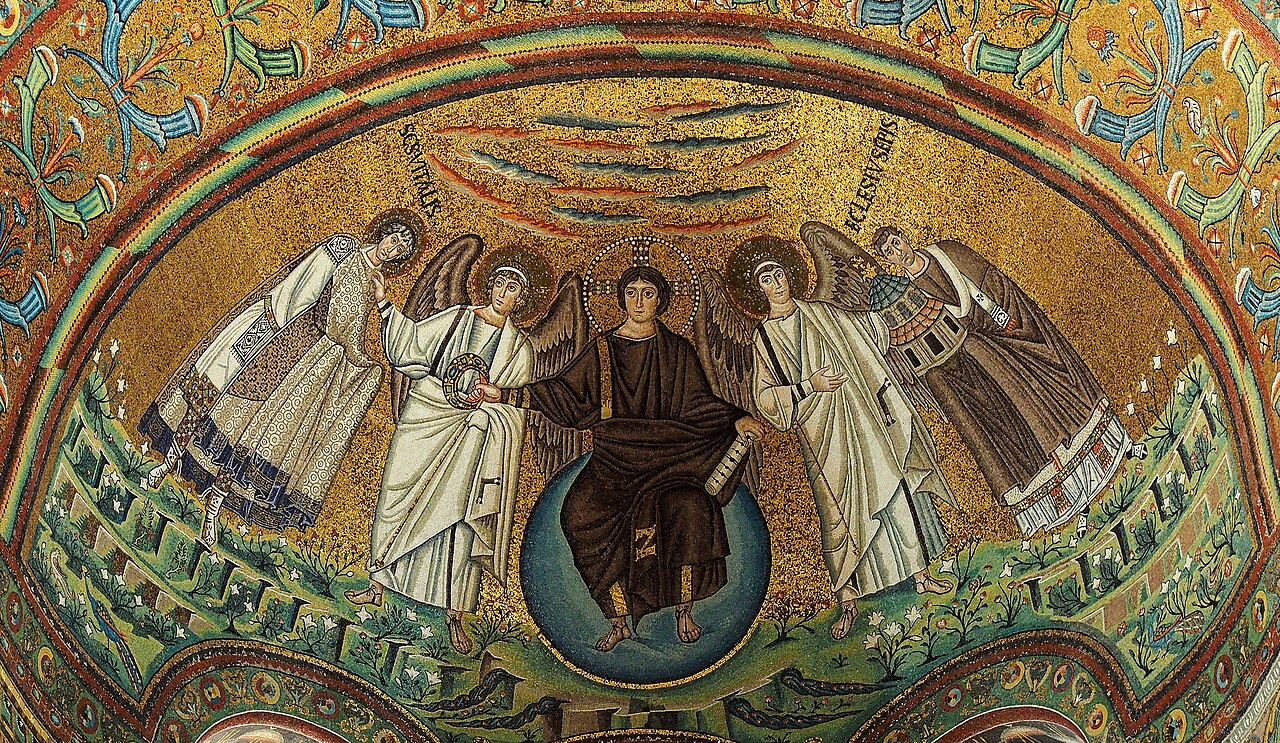
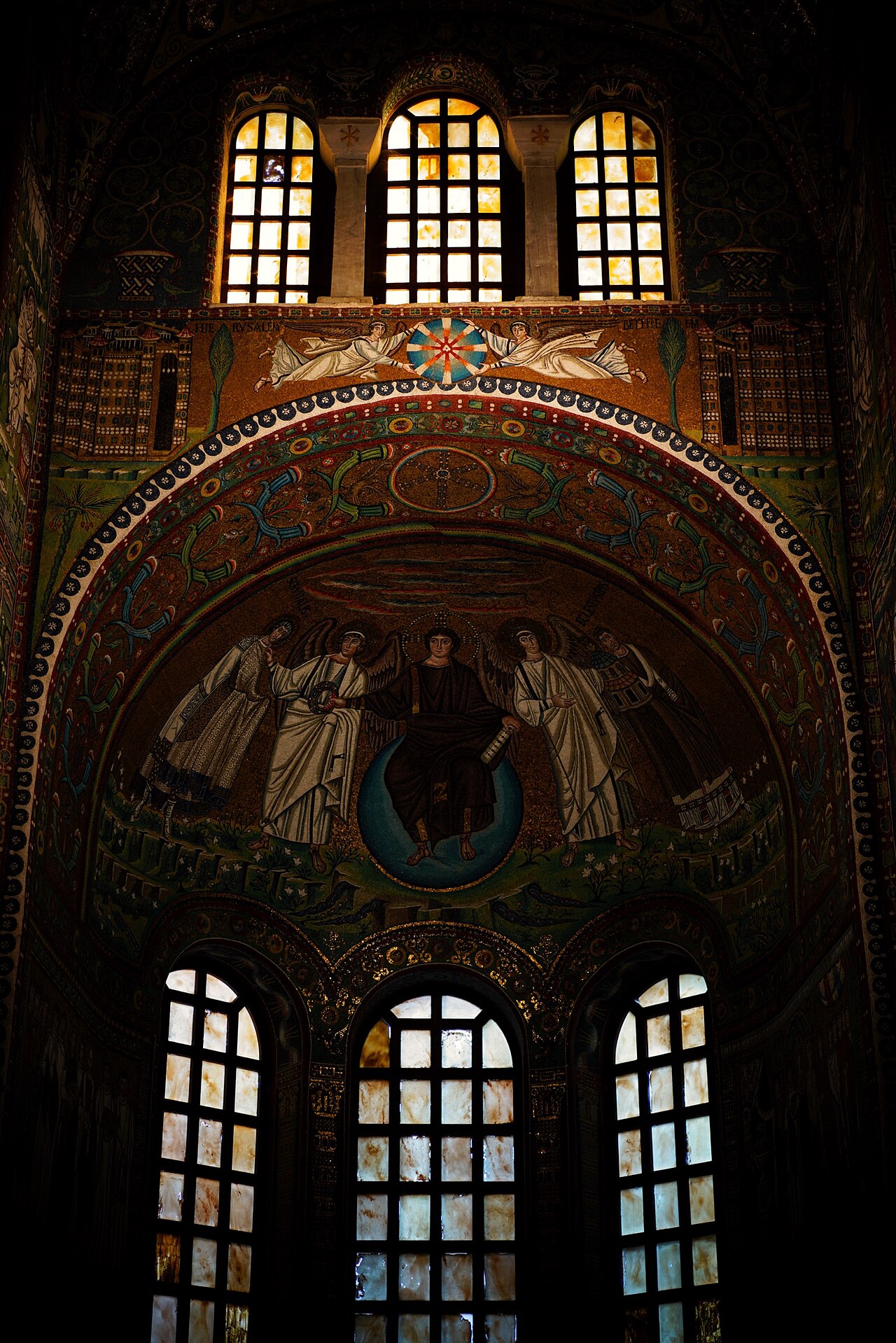
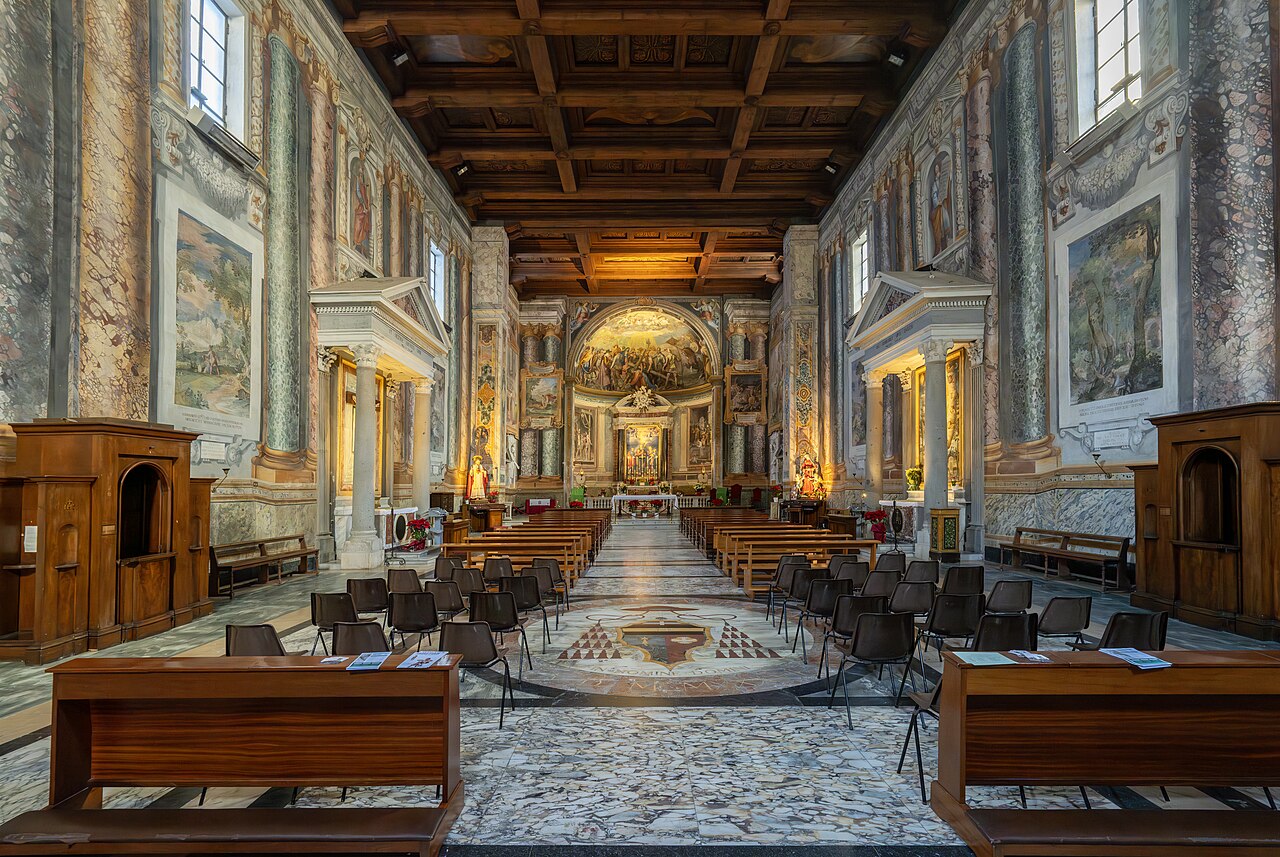
The interior of San Vitale is encrusted with mosaics that represent the largest and best-preserved collection of their kind outside Istanbul, executed in the Hellenistic-Roman tradition of vivid color, imaginative composition, and a sense of spatial depth. The lunettes above the triforia narrate Old Testament episodes—the Hospitality of Abraham, the Sacrifice of Isaac, Moses and the Burning Bush, Abel and Cain—each crowned by a pair of angels bearing a cross medallion. The side walls feature the Four Evangelists beneath their traditional symbols, with the lion rendered in particular ferocity. The presbytery vault bursts with mosaic festoons of leaves, fruit, and flowers converging on a crown around the Lamb of God, supported by four angels, while peacocks, birds, and stars cover every surface. The apse mosaic presents a youthful Christ on a blue globe, robed in purple, bestowing a martyr's crown on Saint Vitale while Bishop Ecclesius presents a model of the church. The triumphal arch carries fifteen medallions of Christ, the Apostles, and Saints Gervasius and Protasius. These works were finished while Ravenna still stood under Gothic rule.
The Justinian Panel: Empire Rendered in Gold and Purple
Completed in 547, the mosaic panel of Justinian I at the foot of the apse side wall is one of the most politically charged images in early Byzantine art. The emperor stands at the center, clad in Tyrian purple with a golden halo that mirrors the halo of Christ in the apse dome above—a visual equation rooted in the tradition Ernst Kantorowicz later termed the King's Two Bodies. His placement is deliberate: soldiers, including generals Belisarius and Narses, flank his right, while clergy, including Bishop Maximian and deacons, occupy his left, asserting his simultaneous authority over church and state. The palatinae guards and court officials complete the retinue. The inclusion of Bishop Maximian's name above his head suggests the panel was modified at the time of its 547 completion, possibly replacing an earlier figure. The panel's privileged position on the right side from Christ's perspective in the apse underscores its theological weight. Together with the companion Theodora panel, these images transform a church interior into a statement of imperial sovereignty and divine sanction.
Gallery
Frequently Asked Questions
What is the Basilica of San Vitale and where is it located?
It is a sixth-century church in Ravenna, Italy, that has survived from the late antique period and is widely regarded as one of the finest remaining examples of early Byzantine architecture and decorative art.
Who commissioned and completed the Basilica of San Vitale?
Bishop Ecclesius of Ravenna broke ground in 526, and the project was brought to completion in 547 under Bishop Maximian, with financial support from a local benefactor named Julius Argentarius.
Why is the Basilica of San Vitale on the UNESCO World Heritage List?
It is one of eight historic Ravenna sites inscribed on the list because its interior mosaics are among the most extensively studied and influential decorative programs in the entire history of Byzantine art.
Is the Basilica of San Vitale architecturally a true basilica?
Although its foundational inscription uses the word 'basilica' and the Roman Catholic Church has granted it the honorary basilica title, the building actually follows a central-plan layout rather than the traditional longitudinal basilica form.
What makes the mosaics inside the Basilica of San Vitale so significant to art history?
The 540s wall mosaics portraying Emperor Justinian, Empress Theodora, and accompanying figures established a visual vocabulary that became a defining reference for subsequent Byzantine decorative schemes, making them a cornerstone of art-historical research.
More in World Heritage Sites in Italy 1-24
Spotted an error? Know more?
Reader corrections go straight into our review queue. Suggest an edit · How this site is sourced