
Abbey of San Pietro al Monte
11th-century Lombard Romanesque abbey with intact frescoes and reliefs.

Polloscheggia · CC BY-SA 4.0
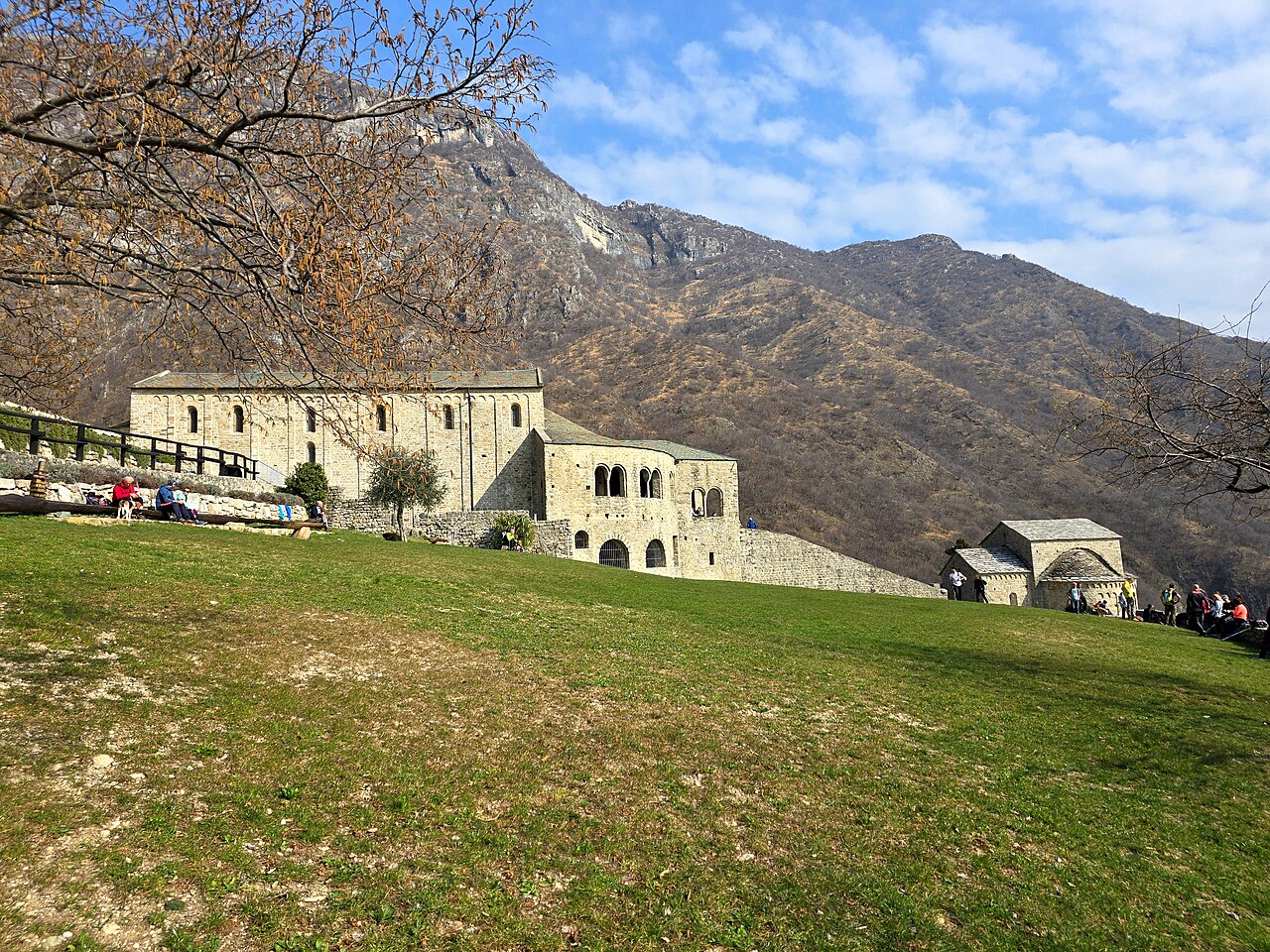
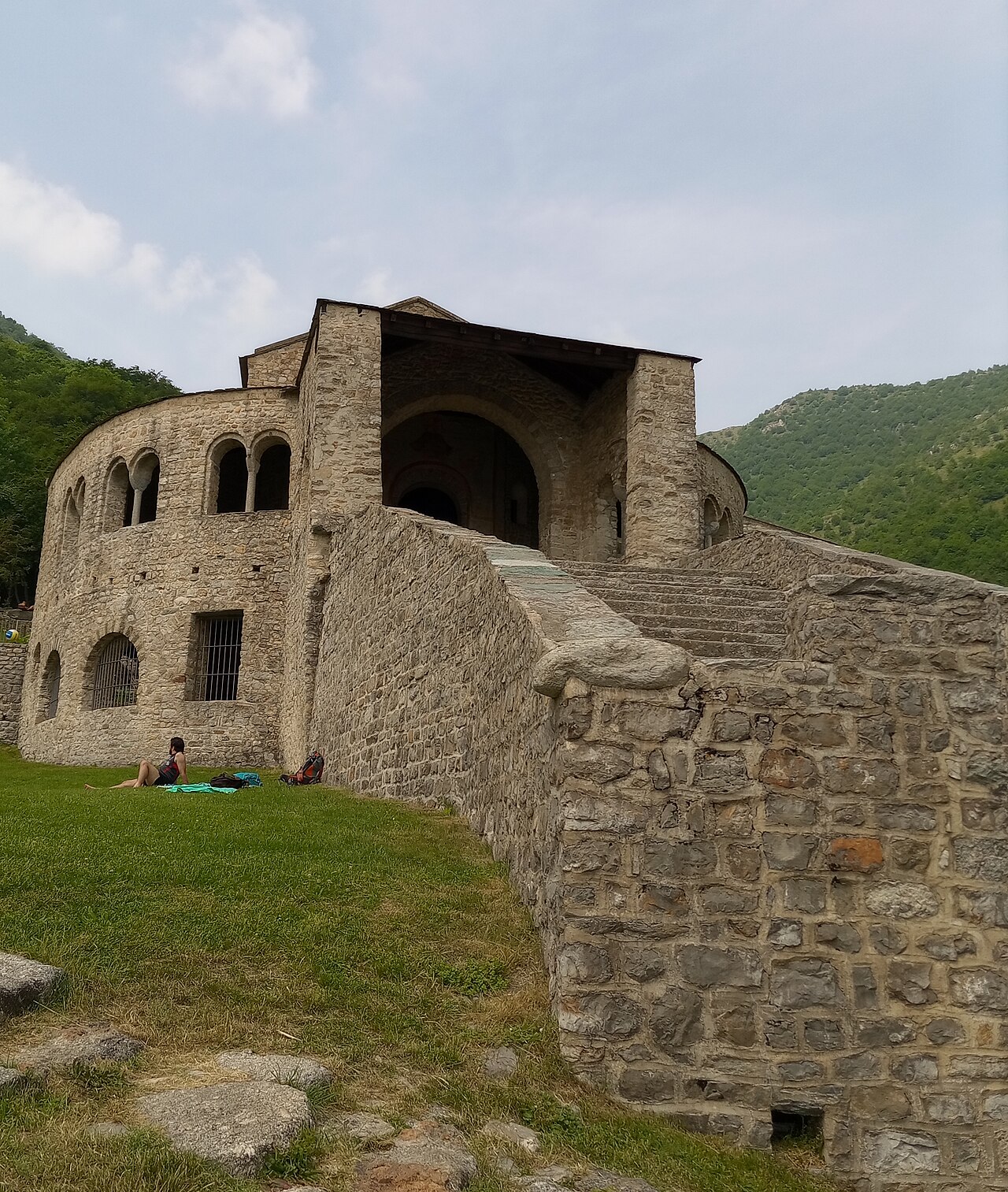
The Abbey of San Pietro al Monte is a small medieval monastic complex in Lombard Romanesque style, located on a hill outside Civate in the province of Lecco, northern Italy. Founded in 796 as a hermitage, traditionally attributed to a son or later figure of the deposed Lombard king Desiderius, it was considerably expanded in the 11th century and remains largely intact, with notable frescoes and carved reliefs. It was secularized after the French Revolution and in 2016 was added to the tentative list for UNESCO World Heritage status as part of a group of eight Italian Benedictine monasteries.
- Founded
- 796
- Location
- Civate, province of Lecco, northern Italy
- Style
- Lombard Romanesque
- Founder
- Traditionally attributed to a son or later figure of the deposed Lombard king Desiderius
- Notable features
- 11th-century frescoes and stucco reliefs
- Unesco status
- Added to tentative list in 2016
Lore & Background
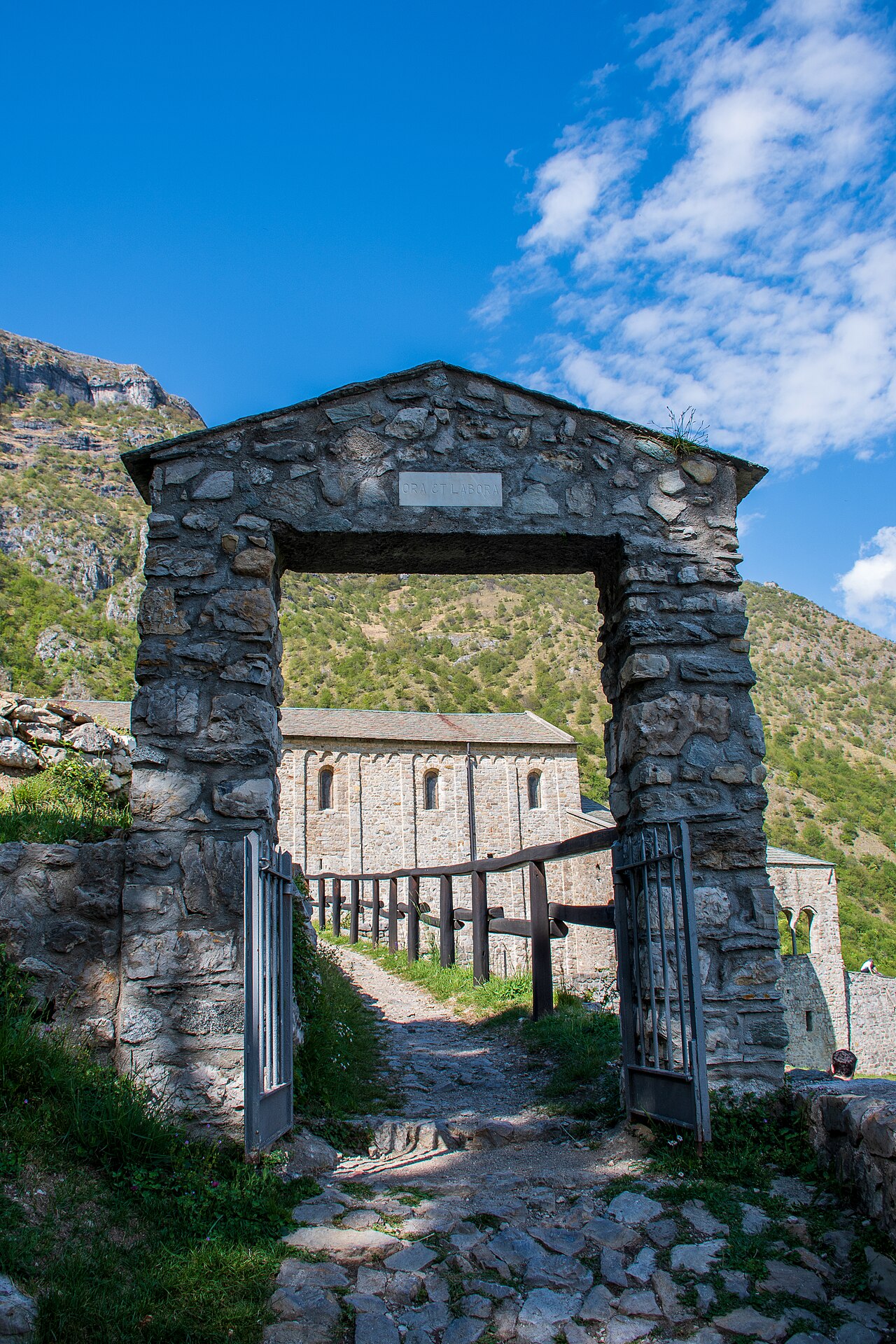
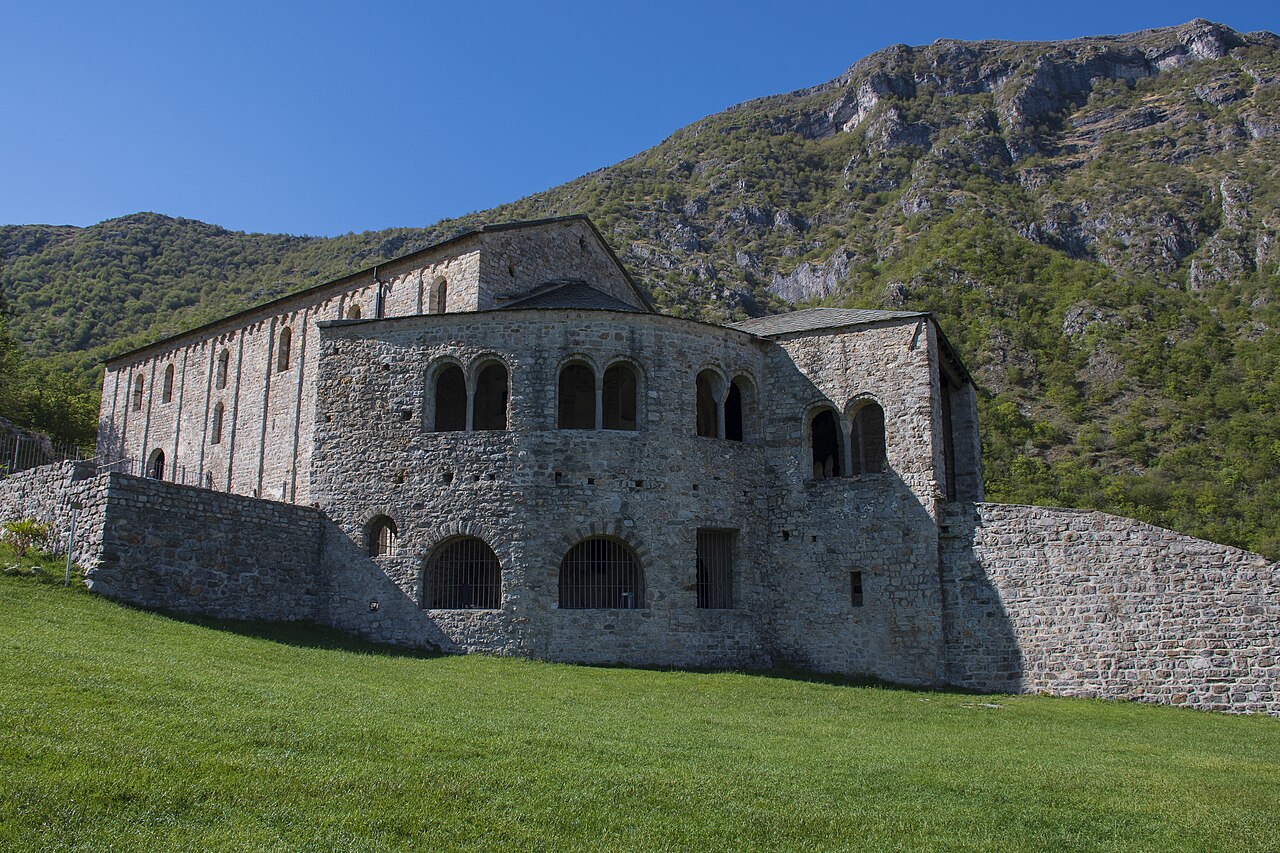
The abbey was originally a small hermitage established in 796, traditionally attributed to a son or later figure of the deposed Lombard king Desiderius. It underwent major expansion in the 11th century, after which no significant building or decorating occurred. The complex includes the Basilica of San Pietro, an oratory dedicated to St. Benedict, and the former monastery. Two stone portals feature carved reliefs above them.
Reader's Guide
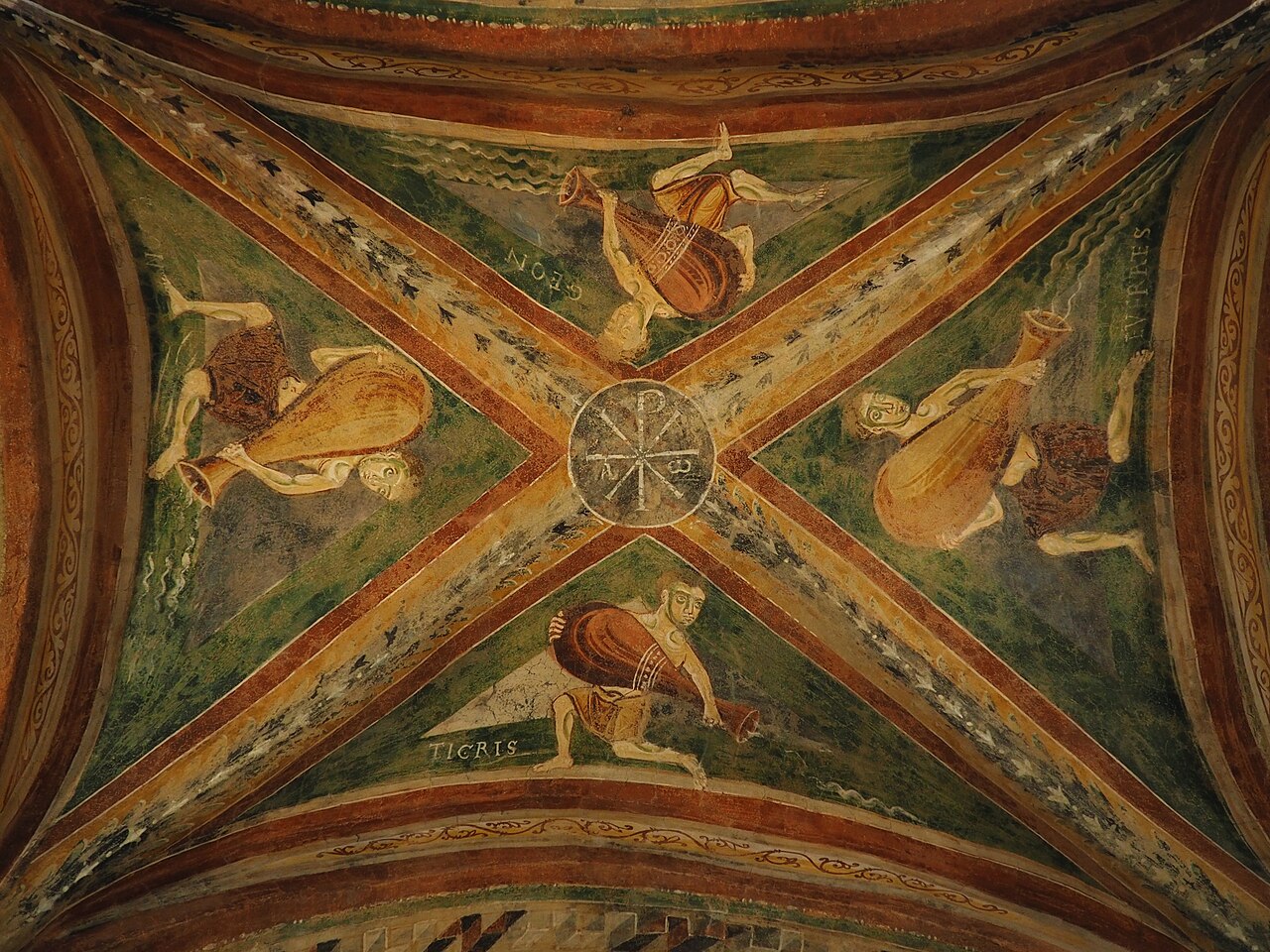
The Abbey of San Pietro al Monte is significant for its remarkably intact 11th-century features, including frescoes from the 1090s in the Basilica of San Pietro that depict the final apotheosis of Christ and the Triumph of the Righteous, based on the Book of Revelation. These frescoes make it one of the most important Lombard Romanesque sites. The ciborium in the basilica contains important stucco reliefs. The abbey also served as a refuge for two archbishops of Milan, Anselm III (1086–1093) and Arnulf III (died 1097), who lived there during the turbulent 1080s and 1090s; Arnulf III is buried there. Their presence likely contributed to the 11th-century expansion. In 2016, the abbey was added to the tentative list for UNESCO World Heritage status as part of a group of eight medieval Benedictine monasteries representing the cultural landscape of Benedictine settlements in medieval Italy.
Did You Know?
- The frescoes in the basilica, dating to the 1090s, depict the apotheosis of Christ and the Triumph of the Righteous from the Book of Revelation.
- Archbishop Arnulf III of Milan died in 1097 and was buried in Milan Cathedral, not at the Abbey of San Pietro al Monte.
- The complex was secularized after the French Revolution.
Origins and Centuries of Transformation
The story of San Pietro al Monte begins in 796, when the Lombard king Desiderius established a modest hermitage on a hill overlooking the town of Civate, in what is now the province of Lecco in northern Italy. What started as a small, contemplative retreat would grow over the following centuries into a full Benedictine monastic complex. The most significant phase of construction and decoration arrived in the 11th century, when the site was considerably expanded. Remarkably, after that burst of creative activity, the complex was left largely untouched in terms of major building or decorative work. This pause in development means that the 11th-century character of the site remains very largely intact to this day, preserving frescoes and carved reliefs that have survived nearly a millennium. The complex's institutional life as a religious house came to an end following the French Revolution, when it was secularized. Today the site stands unoccupied by any religious community, yet its medieval fabric endures as a remarkably complete snapshot of 11th-century monastic life in Lombardy.
A Masterpiece of Lombard Romanesque Art
The architectural and artistic ensemble at San Pietro al Monte is widely regarded as one of the most important examples of Lombard Romanesque in all of Italy. The complex comprises three principal buildings: the Basilica of San Pietro, a smaller oratory dedicated to Saint Benedict, and the structure that once housed the monastic community. Two stone portals feature elaborate carvings above their arches, while the basilica's ciborium carries important reliefs rendered in stucco. The crowning artistic achievement, however, is the cycle of frescoes painted in the 1090s within the Basilica of St. Peter. These wall paintings depict the final apotheosis of Christ and the Triumph of the Righteous, drawing their narrative directly from the Book of Revelation. The theological ambition and visual power of this programme set the site apart among Romanesque churches. Together with the carved and stuccoed elements, the frescoes create a unified decorative environment that has survived with extraordinary completeness, offering modern viewers an almost unmediated encounter with the artistic vision of 11th-century Lombardy.
Refuge for Turbulent Church Leaders
The 1080s and 1090s were a period of intense political and ecclesiastical conflict in northern Italy, and San Pietro al Monte served as a sanctuary for two successive Archbishops of Milan. Anselm III, who held the archiepiscopal see from 1086 to 1093, and his successor Arnulf III, who died in 1097, both took refuge at the monastery during these turbulent decades. Arnulf III ultimately met his death at the site and was buried there, making the abbey his final resting place. The presence of these two powerful churchmen at the complex almost certainly stimulated the major expansion and decorative programme of the 11th century. Their patronage and the prestige of hosting such figures would have drawn resources, artists, and attention to the hilltop monastery, transforming it from a modest hermitage into the substantial Benedictine complex that survives today. The connection between high ecclesiastical authority and the physical fabric of the buildings is thus woven into the very stones and frescoes that visitors encounter.
Broader Benedictine Context and Modern Recognition
San Pietro al Monte was never an isolated institution. It formed part of the wider Benedictine abbey complex of Civate, which also included the Basilica of San Calocero and the churches of San Nazario and San Vito. This network of religious houses reflected the broader pattern of Benedictine settlement across medieval Italy. In 2016, the site was inscribed on the UNESCO tentative list as one of eight Italian medieval Benedictine monasteries proposed for World Heritage status under the collective title 'The cultural landscape of the Benedictine settlements in medieval Italy.' This grouping underscores that the abbey's significance extends beyond its own walls: it represents a node in a wider web of monastic foundations that shaped the cultural, spiritual, and architectural landscape of the medieval Italian peninsula. Though the site is no longer active as a religious community, its inclusion in this broader heritage narrative highlights its role as a key witness to the Benedictine tradition in Lombardy and beyond.
Gallery
Frequently Asked Questions
What is the Abbey of San Pietro al Monte?
It is a small medieval monastic complex in the Lombard Romanesque style, perched on a hill just outside Civate in northern Italy. Originally established as a hermitage in 796, it was significantly enlarged during the 11th century and has survived largely unchanged to the present day.
Where exactly is the Abbey of San Pietro al Monte located?
The abbey sits on a hill overlooking the town of Civate, in the province of Lecco, within the Lombardy region of northern Italy.
Who founded the Abbey of San Pietro al Monte and when?
The site was established as a hermitage in 796, and tradition credits its founding to a son or later descendant of Desiderius, the deposed king of the Lombards. It was later expanded into a full monastic complex during the 11th century.
What makes the Abbey of San Pietro al Monte architecturally notable?
The complex is celebrated for its well-preserved 11th-century frescoes and carved stucco reliefs, which rank among the finest surviving examples of Lombard Romanesque decorative art in Italy. Its overall structural integrity, having remained largely unaltered since the medieval period, adds to its rarity.
What is the Abbey of San Pietro al Monte's UNESCO World Heritage status?
In 2016, the abbey was placed on Italy's tentative list for UNESCO World Heritage recognition as one of eight Benedictine monasteries proposed as a group. It has not yet received full World Heritage designation but remains under active consideration for that status.
More in World Heritage Sites in Italy 1-24
Spotted an error? Know more?
Reader corrections go straight into our review queue. Suggest an edit · How this site is sourced