
Aeolian Islands
Volcanic archipelago named after the mythical ruler of the winds.

This image was taken by the NASA Expedition 17 crew. · Public domain
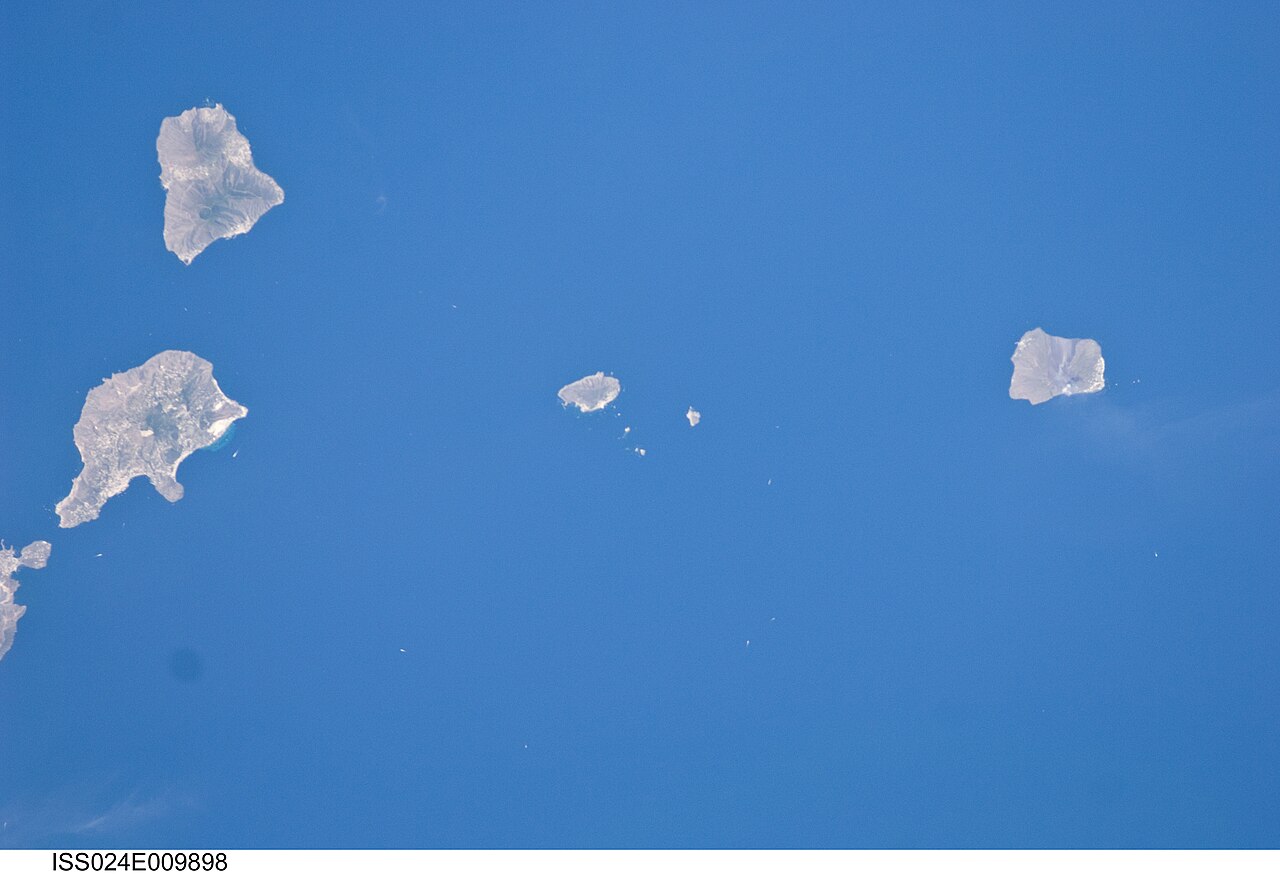
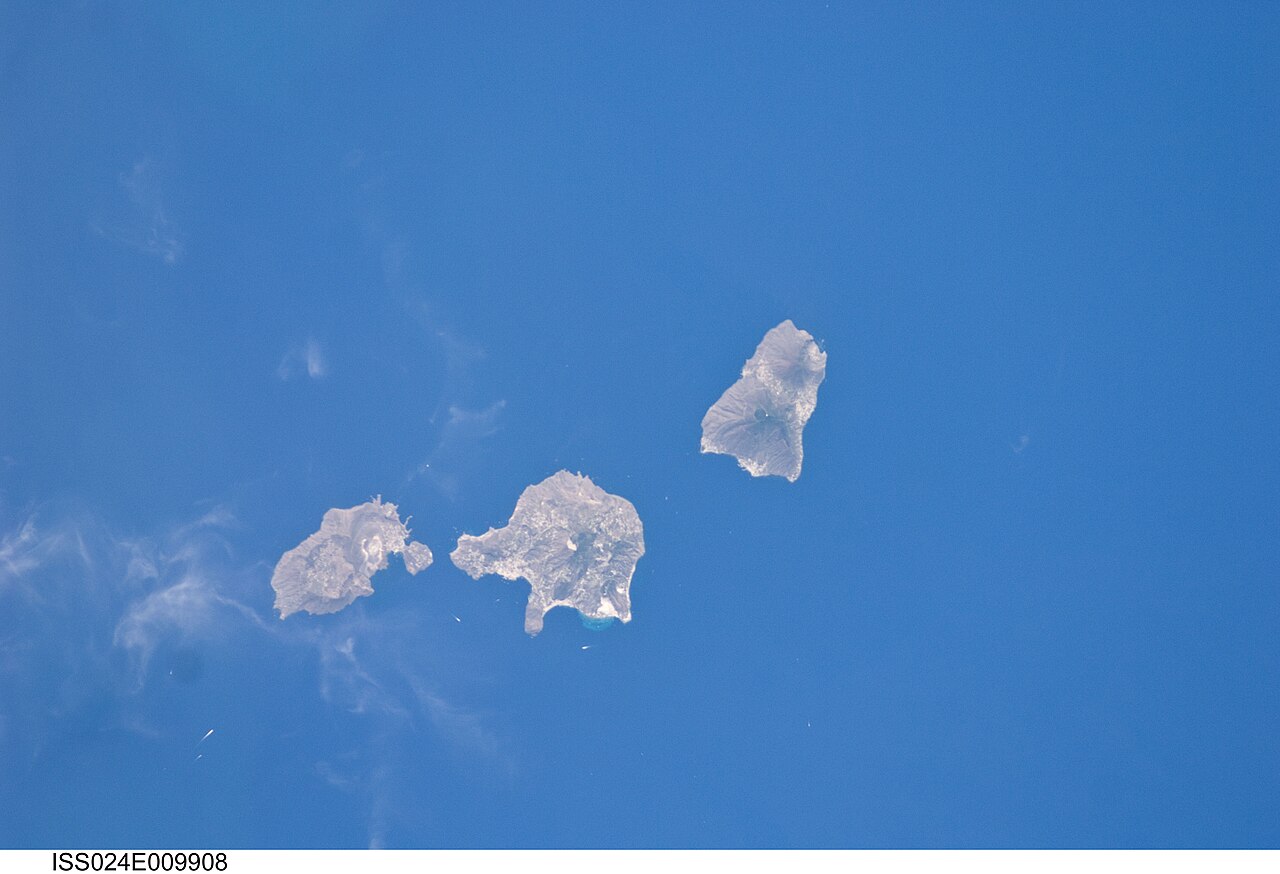
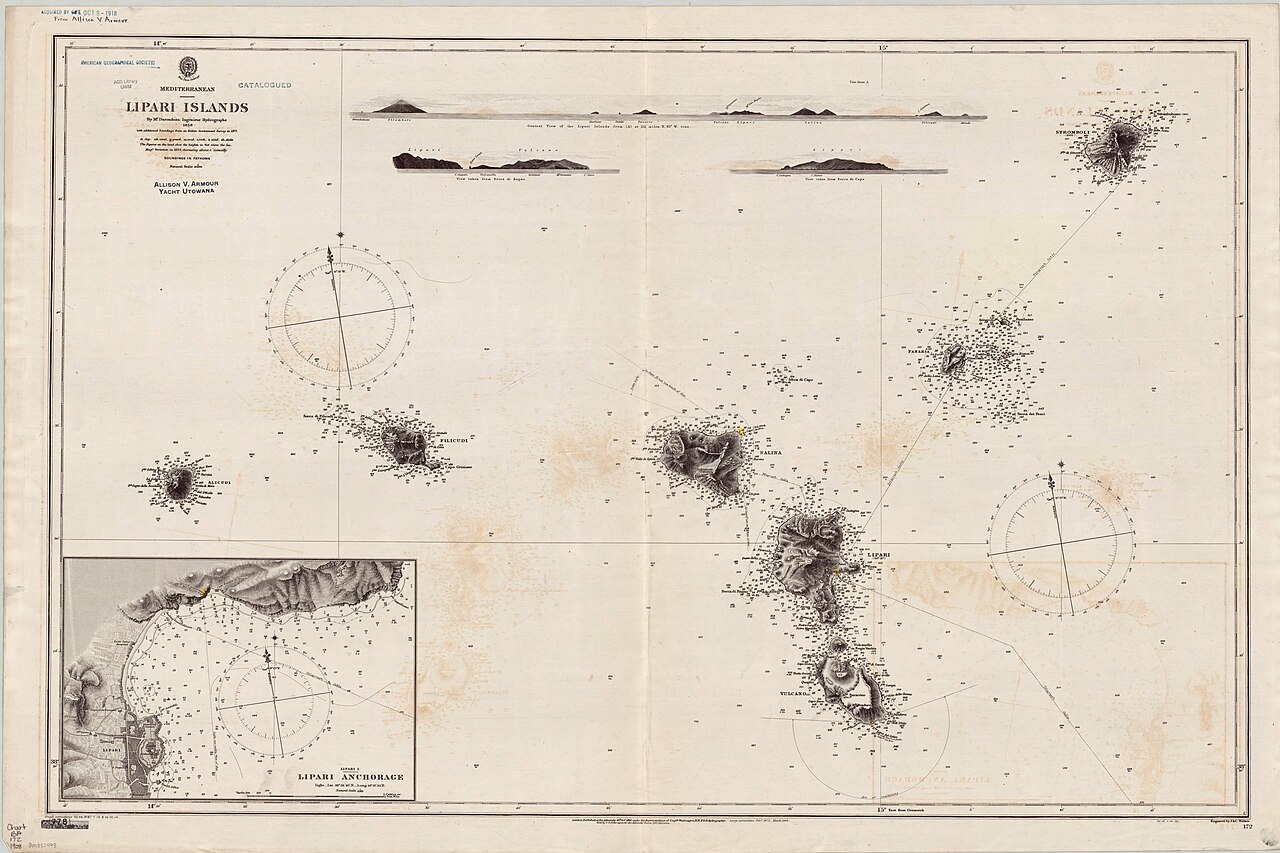
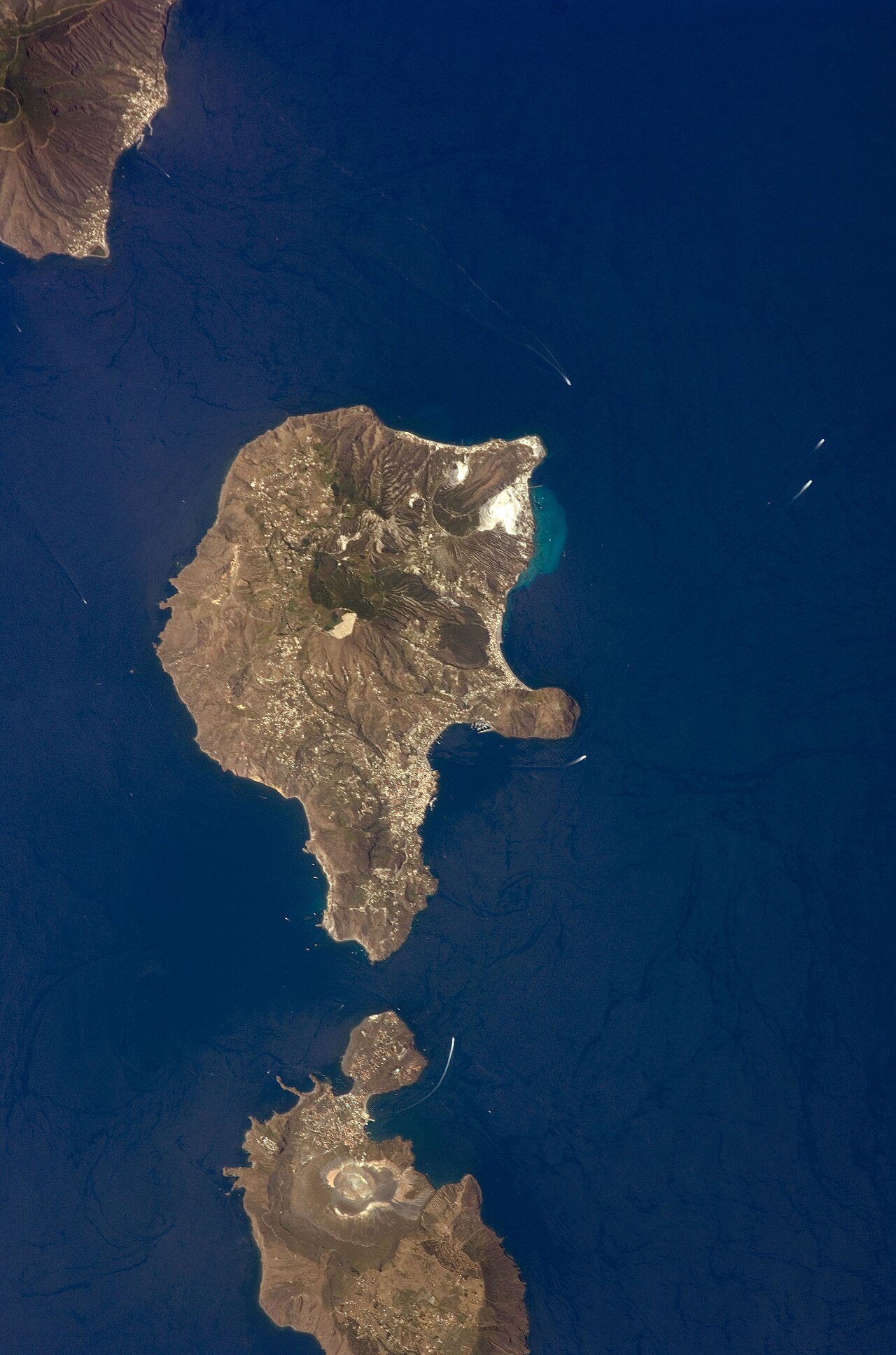
The Aeolian Islands, also known as the Lipari Islands, are a volcanic archipelago in the Tyrrhenian Sea north of Sicily. Named after Aeolus, the mythical ruler of the winds, they consist of seven significant islands—Lipari, Vulcano, Salina, Stromboli, Filicudi, Alicudi, and Panarea—along with minor islands and rocks. The islands are a popular summer tourist destination, attracting up to 600,000 visitors annually, and had a permanent population of 14,224 at the 2011 census, with an official estimate of 15,419 as of 1 January 2019.
Quick Facts
- Native Name
- Isole Eolie, Ìsuli Eoli
- Location
- Tyrrhenian Sea
- Country
- Italy
- Country Admin Divisions Title
- Region
- Country Admin Divisions
- Sicily
- Population
- 15,419
- Population As Of
- 1 January 2019
Facts from the source article.
Lore & Background
The Aeolian Islands originated in the Tyrrhenian Basin from lava emissions at depths up to 3,600 m, forming over 260,000 years of volcanic activity. Two active volcanoes, Stromboli and Vulcano, remain, with steaming fumaroles and thermal waters on most islands. The fertile soil supports natural flora. Geologically, the archipelago is a volcanic arc caused by the African continental shelf subducting under the Eurasian plate, part of a larger zone of instability across the Mediterranean.
In Homer's Odyssey, Aeolus, the divine keeper of the winds, lived on the mythical floating island of Aeolia. Odysseus visited and received a bag containing all the winds, but his companions opened it, blowing the ship back to Aeolus' shore. Historically, the islands saw early Sicilian migration (4000–2500 BC), Bronze Age maritime commerce (1600–1250 BC), and later Greek domination from 580 BC. After the fall of the Western Roman Empire, they were ruled by Visigoths, Vandals, Ostrogoths, and the Byzantine Empire. In 836, the Aghlabids sacked Lipari, massacring most and enslaving survivors. The Norman conquest in 1061 brought Benedictine monks and development. In 1544, Ottoman corsair Hayreddin Barbarossa captured Lipari, enslaving around 9,000 of 10,000 citizens, though some scholars question this number. Spanish authorities later repopulated the islands.
Reader's Guide
The Aeolian Islands hold significance as a volcanic archipelago with a long history of human habitation, trade, and cultural exchange. Their strategic location in the Tyrrhenian Sea made them a crossroads for Mediterranean civilizations, from the Bronze Age Mycenaean trade network to Greek colonization and later domination by Carthaginians, Romans, Byzantines, Arabs, Normans, and Spanish. The islands' volcanic activity, including two active volcanoes, has shaped both their geology and their economy, with fertile soil supporting agriculture such as malvasia grapes and capers. Today, they are a major tourist destination, attracting up to 600,000 visitors annually. Curbing urban development has been key to preserving their natural state; new buildings are severely restricted, and existing residences must be restored to resemble traditional whitewashed houses built from indigenous materials like stone, lava, pumice, and tufo. The islands' mythology, particularly the Homeric story of Aeolus and Odysseus, adds to their cultural legacy. The 1544 Ottoman sack and subsequent repopulation highlight their turbulent history, while the 1693 earthquake, which spared the islands, reinforced local devotion to Saint Bartholomew.
Did You Know?
- The Aeolian Islands are named after Aeolus, the mythical ruler of the winds from Homer's Odyssey.
- Two active volcanoes, Stromboli and Vulcano, are among the seven significant islands.
- In 1544, Ottoman corsair Hayreddin Barbarossa captured Lipari and enslaved around 9,000 of its 10,000 citizens, though some scholars question this number.
- The highest point in the archipelago is Monte Fossa delle Felci on Salina, at 962 m.
Volcanic Genesis & the Aeolian Arc
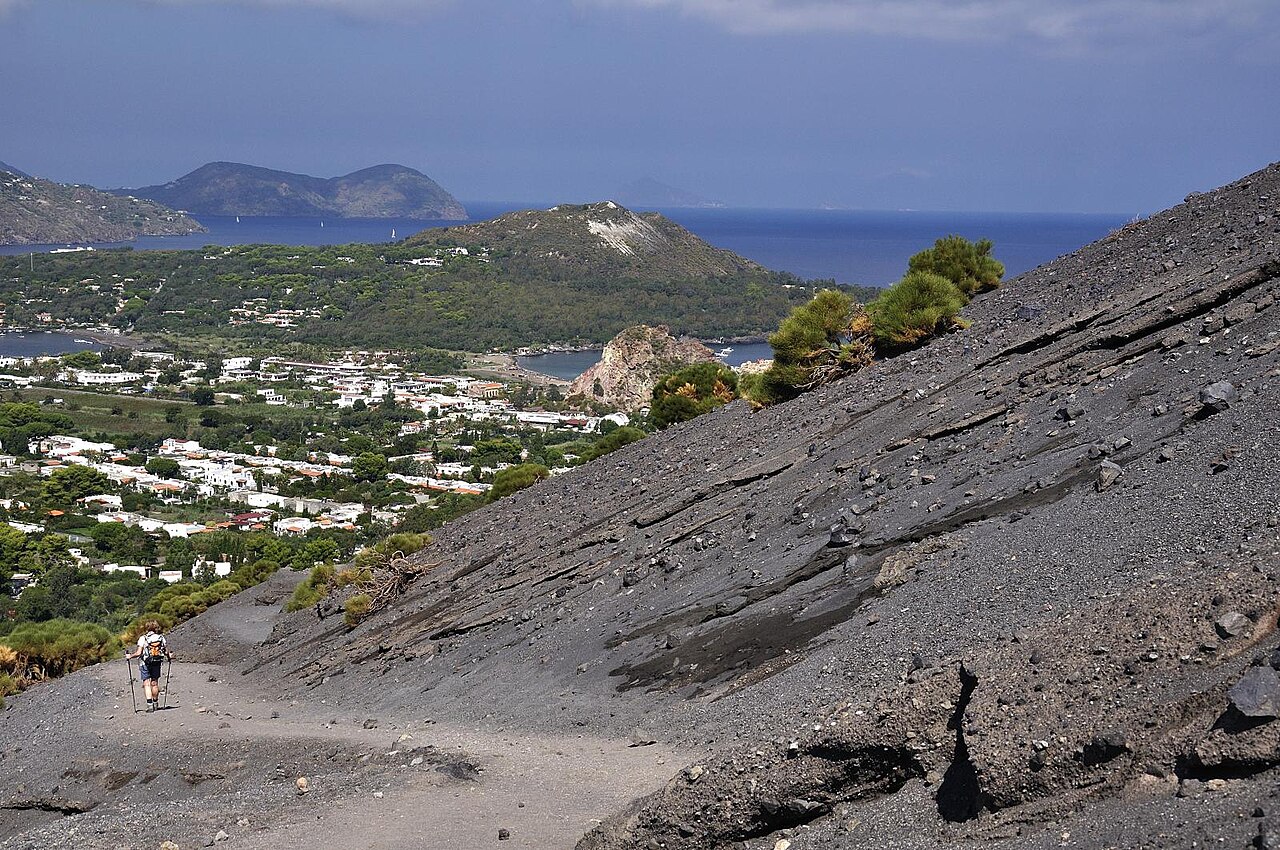
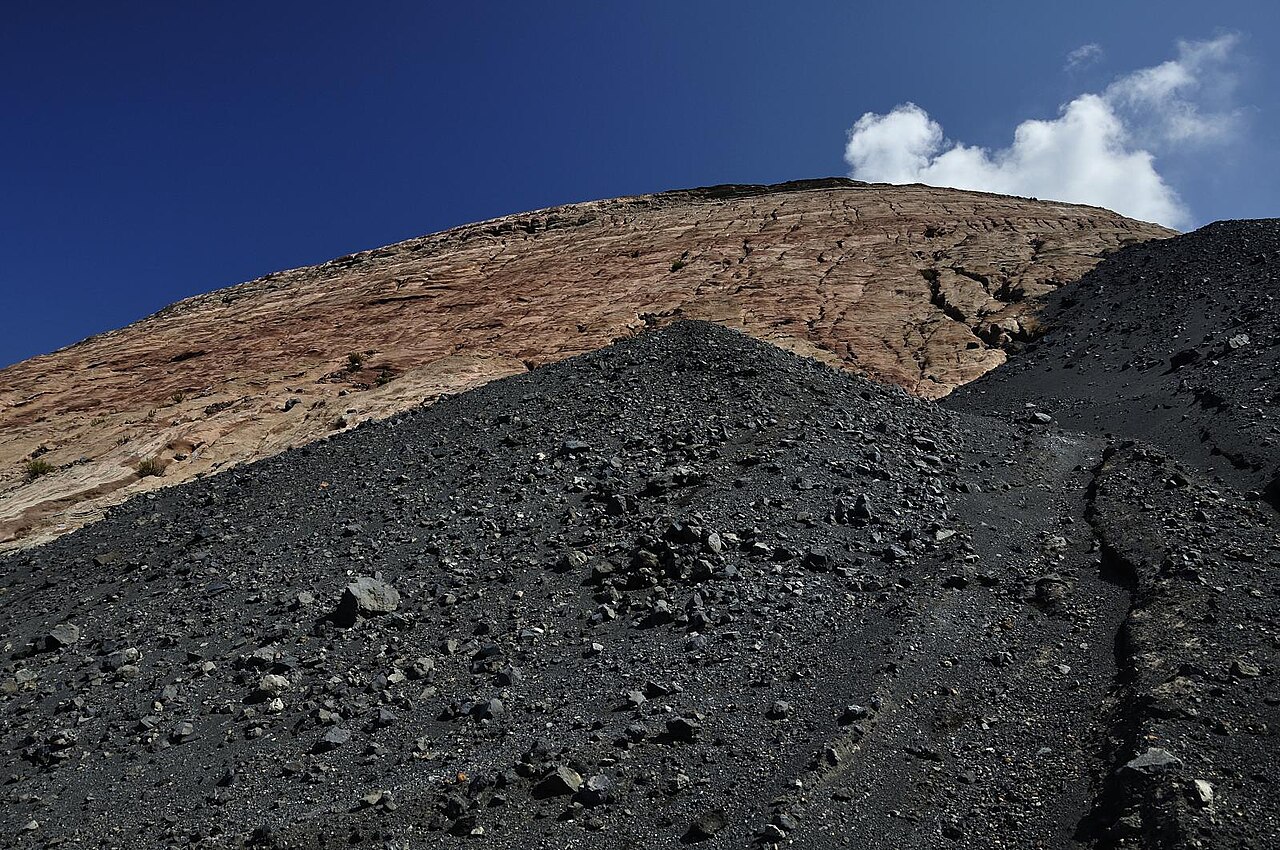
Beneath the Tyrrhenian Sea lies a vast plain known as the Tyrrhenian Basin, from whose depths lava has erupted to build not only the seven inhabited Aeolian Islands but also Ustica and a chain of submarine volcanoes bearing names like Magnani, Vavilov, Marsili, and Palinuro. The process of creation stretched across roughly 260,000 years, with molten rock rising from depths reaching 3,600 metres to sculpt the archipelago's present contours. The driving force is plate tectonics: the African continental shelf grinds steadily toward Europe, and where it subducts beneath the Eurasian plate, magma is generated and forced upward. This mechanism defines what geologists call the Aeolian Arc, a volcanic arc stretching more than 140 kilometres and forming one segment of a broader belt of Mediterranean instability that also encompasses Sicily, Calabria, Campania, Greece, and the Aegean islands. Two of the seven islands—Stromboli and Vulcano—remain active volcanoes to this day, while steaming fumaroles and thermal springs dot most of the others. The volcanic legacy also gifted the islands exceptionally fertile soil, nurturing abundant natural flora across their landscapes.
Ancient Trade, Invasions & Maritime Rivalry
Long before written records, the Aeolian archipelago served as a critical node in Mediterranean exchange networks. The earliest trace of Sicilian migration appears on Lipari in what scholars call the Castellaro Vecchio culture, dating to roughly 4000–2500 BC, when the manufacture and trade of obsidian tools and ornaments was already highly sophisticated. By the Bronze Age (1600–1250 BC), island communities had woven themselves into a vast maritime web stretching from Mycenae to the British Isles, importing tin and exporting goods across the sea. Thriving villages dotted Filicudi's Capo Graziano, Lipari's Castello, Salina's Serro dei Cianfi and Portella, and Panarea's Capo Milazzese. That prosperity was shattered around 1250 BC when new Italic invasions swept through the settlements. Centuries later, Greek exiles from Rhodes and Knidos arrived on Lipari in 580 BC, ushering in an era of Greek cultural dominance marked by ceramic production and, notably, piracy targeting Etruscan and Phoenician shipping lanes. In the Punic Wars the islanders allied with Carthage, winning the Battle of the Lipari Islands in 260 BC, yet Roman forces eventually sacked Lipari, plunging the community into a prolonged period of economic hardship.
Mythology, Homer & the Identity of the Aeolians
The archipelago's very name binds it to one of the most vivid episodes in Western literature. In Homer's Odyssey, Aeolus—son of Hippotes—reigns as the divine custodian of the winds, king of a mythical floating island called Aeolia. He keeps the violent gales sealed within the island's interior, releasing them only when the greater gods decree devastation upon the world. When Odysseus passes through on his long voyage home from Troy, Aeolus entrusts him with a sealed bag containing all the winds to guarantee a safe passage. Tragically, Odysseus's companions pry the bag open, and the escaping tempests hurl the ship all the way back to Aeolus's shore. This Homeric narrative, alongside the historical account by Diodorus Siculus of the Ausones led by Liparus settling the islands, has woven a deep mythic identity into the community; the islanders are still called Aeolians to this day. A later Christian legend adds another layer: in 264 AD, a coffin bearing the body of the apostle Bartholomew reportedly washed ashore on Lipari, and he was immediately proclaimed the patron saint of the entire archipelago.
Whitewashed Cubes & the Discipline of Preservation
Preserving the Aeolian Islands' natural character has been a central concern of local planning, and the result is a remarkably strict regime on urban development. New construction is severely limited; rather than permitting freeform building, authorities allow existing residences to be purchased and restored, provided the work faithfully echoes the traditional aesthetic of whitewashed walls. The classic Aeolian dwelling is a modular cube built entirely from indigenous materials—stone, lava, pumice, and tufo—giving each structure a rough, earthy texture that seems to grow out of the volcanic ground itself. Nearly every home features a large outdoor terrace, typically draped with grapevines and flowering vines that provide shade and a fragrant canopy during the hot summer months. This architectural discipline, combined with the islands' volcanic geology and limited land area, has kept the settlement patterns intimate and organic. The effect is a built environment that feels less like a planned town and more like an extension of the landscape, where every wall, terrace, and vine trellis references the raw materials the sea and the volcanoes have provided for millennia.
Gallery
Frequently Asked Questions
Where exactly are the Aeolian Islands located?
They sit in the Tyrrhenian Sea, just off the northern coast of Sicily. The archipelago is made up of seven main islands plus a handful of smaller rocks and islets.
Why are they called the 'Aeolian' Islands?
The name comes from Aeolus, the figure in Greek mythology who was said to guard and control the winds. The islands are also commonly referred to as the Lipari Islands after their largest member.
How many islands make up the archipelago?
There are seven significant islands: Lipari, Vulcano, Salina, Stromboli, Filicudi, Alicudi, and Panarea. A few minor islets and rocky outcrops round out the group.
Are any of the Aeolian Islands' volcanoes still active?
Yes—Stromboli and Vulcano are both considered active volcanoes. Stromboli in particular is famous for its near-continuous low-level eruptive activity, making it one of the most studied volcanoes in the Mediterranean.
What makes the Aeolian Islands worth a World Heritage listing?
Their outstanding value lies in the dramatic volcanic geology that shaped the archipelago over millions of years, combined with the living cultural landscape of the communities that have settled there. The site showcases a rare concentration of active and dormant volcanic landforms in a single, accessible location.
More in World Heritage Sites in Italy 1-24
Spotted an error? Know more?
Reader corrections go straight into our review queue. Suggest an edit · How this site is sourced