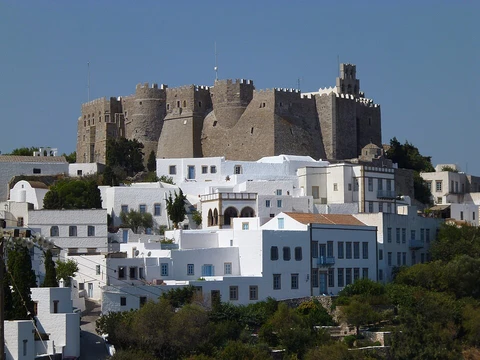
Mystras
Fortified Byzantine city and capital of the Despotate of the Morea.

Mystras, also known as Mistras or Myzethras, is a fortified town in Laconia, Peloponnese, Greece, situated on a slope of the Taygetus mountains above ancient Sparta. It served as the capital of the Byzantine Despotate of the Morea in the 14th and 15th centuries and was a center of the Palaeologan Renaissance, attracting artists, architects, and intellectuals such as Gemistos Plethon. The last Byzantine emperor, Constantine XI Palaiologos, was despot of Mystras before his accession. The site was inscribed on the UNESCO World Heritage List in 1989 as an exceptionally well-preserved example of a Byzantine city.
- Location
- Laconia, Peloponnese, Greece
- Founded
- Late 1248 (fortress built by William II of Villehardouin)
- Byzantine capital
- 1349–1460
- Abandoned
- 1830s
- Unesco inscription
- 1989
- Known for
- Capital of the Despotate of the Morea, Palaeologan Renaissance, frescoed churches
Lore & Background
Mystras was founded as a Frankish fortress in late 1248 by William II of Villehardouin, ruler of the Principality of Achaea, after his conquest of Laconia. In 1262, following William's defeat at the Battle of Pelagonia, the fortress was ceded to the Byzantine Empire as part of his ransom. It became the seat of a Byzantine governor and, after 1349, the residence of a despot ruling the Morea under the emperor. The city flourished under the Despotate, especially during the Palaeologan Renaissance, when its churches were covered in elaborate frescoes and its libraries were renowned. The philosopher Gemistos Plethon lived and taught there until his death in 1452, influencing the Italian Renaissance.
Reader's Guide
Mystras represents the last major center of Byzantine learning and culture before the fall of Constantinople. Its urban layout, shaped by the steep slope of Mount Taygetos, features distinct upper and lower city zones connected by footpaths. The Palace of the Despots, the only surviving Byzantine palace, expanded over the 14th and 15th centuries and includes a three-story main building modeled on the Tekfur Saray in Constantinople. The site's churches, such as Hagia Sophia and the Monastery of Peribleptos, preserve frescoes from the Palaeologan period. After the Ottoman conquest in 1460, Mystras remained inhabited, though it was looted during the Orlov revolt in 1770 and again by Egyptian forces in 1825 during the Greek War of Independence. The town was abandoned in the 1830s when the new town of Sparta was built eight kilometers to the east. Today, the ruins are a UNESCO World Heritage Site, with ongoing restorations including the Palace of the Despots, which reopened in May 2026.
Did You Know?
- Mystras was also known in the Chronicle of the Morea as Myzethras or Myzithras.
- The Palace of the Despots is one of the few surviving Byzantine palaces, though other examples exist such as the Palace of the Porphyrogenitus in Istanbul and the ruins of the Great Palace of Constantinople.
- Foreign travelers in the Ottoman period mistook Mystras for ancient Sparta.
More in World Heritage Sites in Greece 1-24
Spotted an error? Know more?
Reader corrections go straight into our review queue. Suggest an edit · How this site is sourced