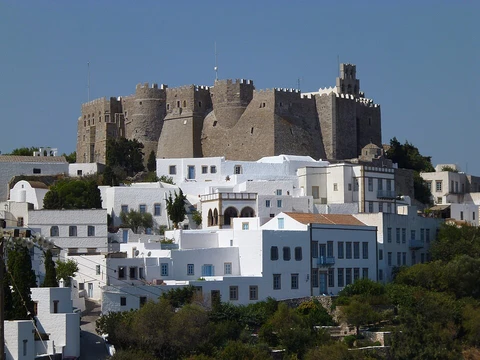
Church of Prophet Elijah, Thessaloniki
14th-century Byzantine church, UNESCO-listed, with rare Athonite architecture.

The Church of Prophet Elijah, also known in Greek as Ναός Προφήτη Ηλία, is a 14th-century Greek Orthodox church from the Byzantine era. It stands in the Ano Poli district of Thessaloniki, in the Central Macedonia region of northern Greece. The church is one of fifteen monuments in the city collectively listed as a UNESCO World Heritage Site under the title "Paleochristian and Byzantine monuments of Thessaloniki." This designation is due to its exceptional Byzantine mosaics and architecture, as well as its role in demonstrating Thessaloniki’s significance in early and medieval Christianity.
Situated in the upper part of the old city, the church dates to the Palaiologan period, though its original name is not known. During Ottoman rule, it was called the Saraylı Mosque (Palace Mosque or Court Mosque), and a later misunderstanding of this name led to its current dedication to the Prophet Elijah. Traditionally, the building was thought to be the katholikon (main church) of the Nea Moni Monastery, built around 1360 to 1370 on the site of a palace destroyed in 1342 during the Zealot uprising—though this identification is speculative and not universally accepted. Recent research has questioned this link, because Nea Moni remained active well into the Ottoman era, while this church was converted into a mosque later in the Ottoman period. Based on its interior decoration, some scholars suggest it may have been the katholikon of the important Akapniou Monastery.
The church’s architectural style is a variation of the cross-in-square plan, known as the "Athonite" type, which is rare in Thessaloniki but also seen in other examples like the Church of the Holy Apostles. Its masonry, featuring alternating courses of bricks and white ashlar stone, is also unusual for the region and was inspired by Constantinopolitan architecture. Several design elements appear intended to control natural light, creating an atmosphere suited to the type of worship practiced there. Fragments of the original decoration survive as wall paintings, which are fine examples of late-Palaiologan art and influenced later Serbian painting.
- Location
- Ano Poli, Thessaloniki, Greece
- Period
- 14th century (Palaiologan period)
- Original dedication
- Unknown
- Ottoman name
- Saraylı Mosque (Palace Mosque or Court Mosque)
- Modern dedication
- Prophet Elijah
- Unesco status
- Part of Paleochristian and Byzantine monuments of Thessaloniki
- Architectural type
- Cross-in-square (Athonite type)
Lore & Background
The church dates to the Palaiologan period, but its original dedication is unknown. In Ottoman times, it was known as the Saraylı Mosque, and through a misinterpretation of this name came about its modern dedication to the Prophet Elijah. The structure was traditionally identified as the katholikon of the Nea Moni Monastery, built c. 1360 – c. 1370 on the site of a former palace destroyed in 1342 by the Zealot uprising—though this identification is speculative and not universally accepted. Modern research has cast doubt on this link, since the Nea Moni continued to operate well into the Ottoman period, while the church of Prophet Elijah was converted into a mosque later in the Ottoman era. On the basis of its internal decoration, it has been suggested that the church was the katholikon of the important Akapniou Monastery.
Reader's Guide
The Church of Prophet Elijah is significant for its architectural style, a variant of cross-in-square church known as the 'Athonite' type, which is unique in Thessaloniki and was always reserved for katholika of monasteries. Its careful masonry, of alternating courses of bricks and white ashlar, is unusual for Thessaloniki and its region, being copied from Constantinopolitan architecture. Several of its architectural features have been interpreted as set to create an ambient atmosphere directly connected with the type of worship, through the way natural light is distributed. Fragments of the church's original decoration survive in the form of wall paintings, fine examples of late-Palaiologan art, which influenced later paintings in Serbia. As one of the fifteen UNESCO-listed Paleochristian and Byzantine monuments of Thessaloniki, the church testifies to the city's importance in early and medieval Christianity. Its disputed identification—whether it was the katholikon of Nea Moni Monastery or of Akapniou Monastery—reflects ongoing scholarly debate about its original monastic affiliation.
Did You Know?
- The church was converted into a mosque during the Ottoman period, though the exact date and patron are not confirmed by standard scholarly sources.
- The Athonite architectural style, while rare in Thessaloniki, also appears in other churches like the Church of the Holy Apostles.
- The identification of this church as the katholikon of the Nea Moni Monastery is speculative and not universally accepted by scholars.
Frequently Asked Questions
What is the Church of Prophet Elijah in Thessaloniki?
It is a 14th-century Greek Orthodox church from the Palaiologan Byzantine period, situated in the Ano Poli quarter of Thessaloniki. The building is recognized for its rare Athonite architectural style and its well-preserved Byzantine mosaics.
Why is the Church of Prophet Elijah included on the UNESCO World Heritage list?
It forms one of fifteen monuments grouped under the title 'Paleochristian and Byzantine monuments of Thessaloniki.' UNESCO granted the designation because the church's mosaics and structural design exemplify Thessaloniki's pivotal role in early and medieval Christian culture.
What was the Church of Prophet Elijah called during Ottoman rule?
Under Ottoman administration the building was converted and referred to as the Saraylı Mosque, meaning the Palace or Court Mosque. Its original pre-Ottoman dedication is actually unknown; the current name honoring the Prophet Elijah is a modern Greek Orthodox re-dedication.
Where exactly can visitors find the Church of Prophet Elijah?
It stands in the Ano Poli (Upper City) district of Thessaloniki, in the Central Macedonia region of northern Greece. The site sits within the broader cluster of Byzantine-era monuments that give the old city its UNESCO listing.
What makes the Church of Prophet Elijah architecturally distinctive among Thessaloniki's Byzantine churches?
Its construction follows the Athonite tradition, a building style more commonly associated with Mount Athos, which makes it a rare example in the city. Combined with its intact 14th-century mosaics, this sets it apart from many of the other structures in the World Heritage ensemble.
More in World Heritage Sites in Greece 1-24
Spotted an error? Know more?
Reader corrections go straight into our review queue. Suggest an edit · How this site is sourced