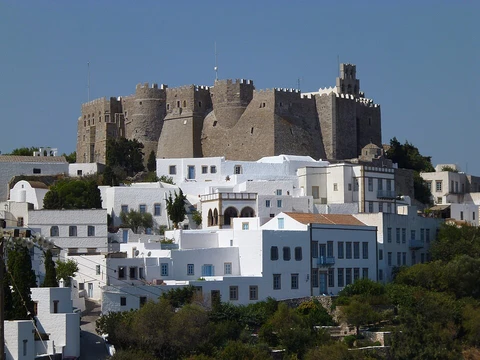
Hagia Sophia, Mystras
Byzantine church in Mystras, once a royal palace church.

Hagia Sophia (Holy Wisdom) is a Byzantine church located in the fortified medieval town of Mystras, Peloponnese, Greece. Built in the fourteenth century within the palace complex, it served as the royal palace church until the Ottoman conquest, when it was converted into a mosque. After Greece achieved independence in the early nineteenth century, it was restored to Christian use. The church is part of the wider archaeological site of Mystras, designated a UNESCO World Heritage Site in 1989.
- Location
- Mystras, Peloponnese, Greece
- Built
- 14th century
- Original dedication
- Jesus Christ the Life Giver (Zoodotes Christos)
- Founder
- Manuel Kantakouzenos, first despot of Mystras
- Architectural type
- Two-style cruciform church inscribed with a dome
- Current status
- Christian church, part of UNESCO World Heritage Site
Lore & Background
Hagia Sophia was built in the fourteenth century by Manuel Kantakouzenos, the first despot of Mystras, whose monograms are preserved on marble plaques of the church. Originally dedicated to Jesus Christ the Life Giver, it was the catholicon of a men's monastery, as confirmed by a seal of Patriarch Philotheus of Constantinople from 1365. After 1429, the bones of Theodora Tocco, wife of Constantine XI Palaiologos, were transferred to the monastery, and Cleopa Malatesta, wife of despot Theodore II Palaiologos, was buried there in 1433. The name 'Hagia Sophia' for this church is a later, possibly post-Byzantine or modern attribution, not a documented renaming after the Fall of Constantinople.
Reader's Guide
Hagia Sophia of Mystras is significant as a well-preserved example of late Byzantine ecclesiastical architecture in southern Greece. Built with the brick-enclosed masonry system common to the region, it features a cruciform plan with a dome, three eastern apses, a narthex, and two arcades. Its interior retains fragmentary frescoes from 1348–1354, including a well-preserved mural of the enthroned Pantocrator in the alcove. The church's history reflects the political and religious transitions of the region: from a royal palace church under the Despotate of the Morea, to a mosque under Ottoman rule, and back to a Christian church after Greek independence. As part of the Mystras archaeological site, it contributes to the UNESCO World Heritage designation, illustrating the cultural and architectural legacy of the Byzantine Empire in the Peloponnese.
Did You Know?
- The church was originally dedicated to Jesus Christ the Life Giver, not Hagia Sophia.
- Manuel Kantakouzenos, the founder, placed his monograms on marble plaques of the church.
- The church was converted into a mosque during the Ottoman period and back into a church after Greek independence in 1830.
Frequently Asked Questions
What is Hagia Sophia in Mystras and where is it located?
It is a fourteenth-century Byzantine church situated within the fortified medieval town of Mystras in the Peloponnese, Greece. The building originally served as the royal palace church for the Despotate of the Morea.
Who founded Hagia Sophia, Mystras, and what was its original dedication?
Manuel Kantakouzenos, the first despot of Mystras, established the church within the palace complex. Its founding dedication was to Jesus Christ the Life Giver, known in Greek as Zoodotes Christos.
What happened to the church during the Ottoman rule and after Greek independence?
Following the Ottoman conquest, the building was repurposed as a mosque. Once Greece secured independence in the early nineteenth century, the structure was restored and returned to active Christian worship.
Why is Hagia Sophia, Mystras part of a UNESCO World Heritage Site?
The church is included within the broader Mystras archaeological site, which UNESCO inscribed in 1989. Together with the surrounding palace and town fortifications, it represents a remarkably preserved example of late Byzantine urban and religious life.
What kind of architectural form does the church take?
Hagia Sophia, Mystras is built as a two-style cruciform plan crowned by a central dome. This layout places it among the most refined examples of fourteenth-century Byzantine ecclesiastical design in the Greek world.
More in World Heritage Sites in Greece 1-24
Spotted an error? Know more?
Reader corrections go straight into our review queue. Suggest an edit · How this site is sourced