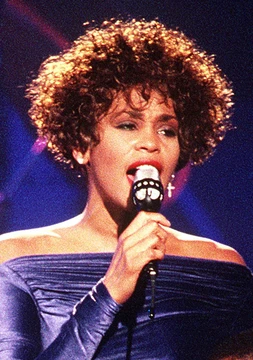
Philanthropy and advocacy of Whitney Houston
Singer and activist for children, education, and anti-apartheid causes.

White House Television crew · via Wikipedia: Philanthropy and advocacy of Whitney Houston · Public domain
Whitney Houston was an American singer and actress whose philanthropic work and public advocacy focused on children's welfare, education, health research (particularly HIV/AIDS), and causes benefiting communities in her native New Jersey. She established the Whitney Houston Foundation for Children in 1989 and donated heavily to multiple charities throughout her career. During the 1980s, she advocated against apartheid in South Africa, refusing modeling and musical engagements in the country as a boycott, while her music made her an icon for feminism and LGBT rights.
- Field
- Singer, actress, philanthropist
- Nationality
- American
- Known for
- Philanthropy for children, education, HIV/AIDS; anti-apartheid advocacy; feminist and LGBT anthems
Lore & Background
Houston's charitable activities particularly focused on the welfare of children, education, health research (especially HIV/AIDS), and causes benefiting communities in her native New Jersey. In 1989, she established the Whitney Houston Foundation for Children, which offered medical assistance to sick and homeless children, fought child abuse, taught children to read, created inner-city parks and playgrounds, and granted college scholarships, including one to the Juilliard School. During the Christmas season, the foundation hosted parties for homeless children. Houston also donated proceeds from major events, including her 1992 wedding to singer Bobby Brown, the Los Angeles premiere of her film The Bodyguard, and the premiere of her film The Preacher's Wife. In 1989, she provided a pair of lion cubs named George and Gracie to the Bronx Zoo after hearing the zoo sought lion cubs, stating at a press conference that she wanted to help ensure creatures of the earth would be protected for future generations.
Reader's Guide
Whitney Houston's significance extends beyond her music to her sustained philanthropic and advocacy work. Her foundation directly addressed children's health, education, and homelessness, while her anti-apartheid activism included refusing modeling and musical engagements in South Africa during the 1980s and performing at the Nelson Mandela 70th Birthday Tribute concert in 1988, which raised $1 million in charities and helped influence Mandela's parole. Her music itself carried social messages: her rendition of 'Greatest Love of All' was praised for its message of self-worth, black pride, and family loyalty; 'Love Will Save the Day' was noted for acknowledging world problems; and 'I'm Every Woman' was regarded as a feminist anthem. Her songs 'I Wanna Dance with Somebody (Who Loves Me)' and 'It's Not Right but It's Okay' became anthems in the LGBT community, with critics noting her house remixes offered liberation for Black queer people. Her performance of 'The Star-Spangled Banner' at Super Bowl XXV was described as a political and social statement that helped change African Americans' feelings about the national anthem, making freedom the emotional high point and cementing her as a voice of the post-civil rights era.
Did You Know?
- She refused modeling and musical engagements in apartheid-era South Africa during the 1980s.
- Her rendition of 'I'm Every Woman' was regarded as a feminist anthem and won the NAACP Image Award for Outstanding Music Video.
- She performed three concerts in South Africa in 1994 to honor President Nelson Mandela, becoming the first major musician to visit the newly unified nation after apartheid.
More in Band Members & Collaborators
Elsewhere in Whitney Houston
Spotted an error? Know more?
Reader corrections go straight into our review queue. Suggest an edit · How this site is sourced