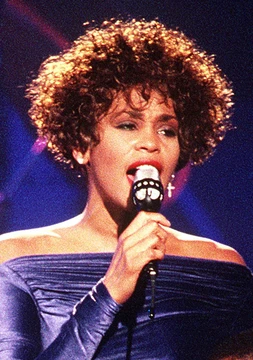
The Preacher's Wife (1996)
When the darkest night tests a family's faith, love and grace become the only light.

The Preacher's Wife (1996) is a faith-based Christmas drama in which Whitney Houston steps into the role of Sharon Williams, a loving church member whose family is thrust into a harrowing trial of belief, temptation, and survival. Adapted from T.A. Barron's novel of the same name and directed by Michael Schultz, the film weaves a spiritual parable with a holiday backdrop, placing Houston at the emotional center of a family that must choose between despair and grace. For fans of Houston's on-screen work, the film occupies a special and somewhat bittersweet place in her filmography. Though it did not replicate the box-office success of her earlier roles, it has grown a devoted following over the years, prized for its sincerity, its ensemble cast (including Denzel Washington and Angela Bassett), and Houston's deeply felt musical performances that punctuate the story's turning points.
Quick Facts
- Artist
- Whitney Houston
- Released
- November 26, 1996
- Recorded
- January – February 1996
- Genre
- Gospel · soul · R&B
- Length
- 62:20
- Label
- Arista · BMG
- Producer
- Whitney Houston · Mervyn Warren · Rickey Minor · Steve Lipson · Babyface · David Foster
- Prev Title
- The Bodyguard: Original Soundtrack Album
- Prev Year
- 1992
- Next Title
- My Love Is Your Love
- Next Year
- 1998
Facts from the source article.
Lore & Background
At its heart, The Preacher's Wife is a story about the architecture of belief. Sharon Williams is not a preacher herself, but she is the wife of one, and her identity is woven into the rhythm of Sunday services, community gatherings, and the quiet devotion of a family that measures its worth by how it serves others. When a catastrophic accident shatters that world, the film asks a question that resonates far beyond the holiday season: what happens to faith when the people you love are taken from you, and a stranger offers a path that looks like salvation but smells like compromise? Houston brings a particular vulnerability to Sharon that distinguishes the role from her more glamorous musical-film personas. The character's strength is not loud or performative; it is the steady, almost stubborn refusal to let bitterness take root, even when every rational impulse points that way. Her musical moments—sung in-character at the piano or in quiet domestic spaces—function less as set pieces and more as prayers made audible, grounding the film's spiritual themes in something deeply personal and human. The supporting cast amplifies the story's moral texture. Denzel Washington's detective Louie Armstrong serves as both a grounded, skeptical outsider and a man who slowly comes to understand the weight of the faith he initially dismisses. Angela Bassett's Gloria adds warmth, humor, and a sisterly anchor that keeps Sharon (and the audience) tethered to the world of love and community the film ultimately champions. Together, the ensemble creates a family constellation that feels both specific and universal, a quality fans often cite when discussing why the film endures despite its modest commercial reception.
Reader's Guide
The story opens in the warm, communal world of a Black church family during the Christmas season. Sharon Williams and her husband are pillars of their congregation, and their household radiates the kind of love that makes the holiday feel earned rather than performative. The ensemble—neighbors, friends, a detective who keeps showing up at the wrong moments—builds a sense of a tight-knit community that the audience is invited to trust. A sudden, violent accident upends everything. The family is left reeling, and in the wreckage a figure appears who offers a seductive alternative: a way out of the pain that requires them to abandon the very beliefs that have sustained them. The temptation is not cartoonish; it is practical, kind, and frighteningly reasonable, which makes the choice to resist it all the more costly. Sharon's arc is the emotional spine. She oscillates between numbness, rage, and a fragile, stubborn hope, and Houston's performance lets each shift land without melodrama. The musical numbers she delivers in-character serve as emotional checkpoints, marking where she is in her grief and where she is heading. By the film's close, the family has not escaped their pain, but they have chosen to carry it together, in the light, in the community, in the faith that asked the most of them and gave them the most in return. The impact on Houston's legacy is complex. The film is often discussed as a turning point in her career, a moment where she chose a smaller, more personal project over blockbuster spectacle. Fans who revisit it tend to do so not for the plot mechanics but for the feeling it leaves: a quiet, aching tenderness that lingers long after the credits roll.
Did You Know?
- The Preacher's Wife was adapted from a novel by T.A. Barron, a writer known for young-adult fantasy, making the film's source material an unlikely fit for a faith-based Christmas drama.
- Denzel Washington and Whitney Houston had previously worked together on the set of the 1994 film The Bodyguard, and their on-screen chemistry in The Preacher's Wife drew on that established rapport.
- Despite its mixed box-office performance at release, the film has maintained a steady presence in holiday television broadcasts, building a dedicated audience of viewers who discover it each Christmas season.
More in Films, TV & Media
Elsewhere in Whitney Houston
Spotted an error? Know more?
Reader corrections go straight into our review queue. Suggest an edit · How this site is sourced