
Deportation
State-ordered expulsion of individuals or groups from sovereign territory.

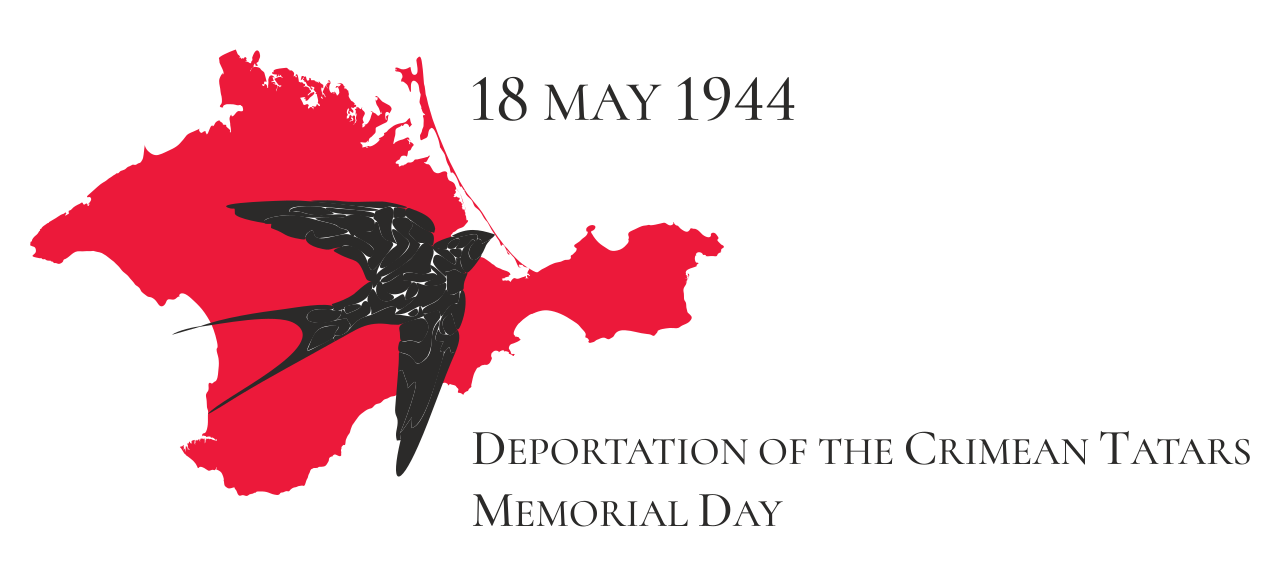
Dgho · CC BY-SA 4.0
Deportation is the expulsion of a person or group of people by a state from its sovereign territory. The definition varies by place, context, and time, with some sources distinguishing between expulsion (the legal order to leave) and deportation (the actual implementation of that order when the person does not comply voluntarily). Deportation has been practiced since antiquity, from the Neo-Assyrian and Neo-Babylonian empires to modern states, and remains a significant tool of migration control and political repression.
Quick Facts
- Modern examples
- British deportation to America (1717–1776) and Australia (1787–1855); US deportations of Mexicans in 1930s and 1954
Facts from the source article.
Lore & Background
Deportation has ancient roots, with well-recorded expulsions in Mesopotamia. The kingdoms of Israel and Judah faced forced expulsions by the Neo-Assyrian and Neo-Babylonian empires. In the Achaemenid Empire, deportation was used against rebellious people, with records of harsh treatment, such as the deportation of the Branchidae by Xerxes I. The Parthian period saw instances such as the deportation of Roman prisoners of war after the Battle of Carrhae. The Sasanian empire widely used deportation during wars with the Romans, settling Roman prisoners in newly founded cities and spreading Christianity in Persia.
Did You Know?
- The Neo-Babylonian Empire deported the elite and craftsmen of Judea in 597 BC, and a larger deportation followed in 587 BC.
- Britain deported around 40,000 convicted criminals to America between 1717 and 1776.
- During the Great Depression, an estimated 40 to 60% of the 355,000 to 2 million Mexicans and Mexican Americans deported or repatriated were U.S. citizens.
- Nazi policies deported homosexuals, Jews, Poles, and Romani to concentration or extermination camps.
Defining the Boundaries of Deportation
The concept of deportation resists a single universal definition. Depending on jurisdiction and era, the term can encompass the mere transfer of people across state borders, or it can specifically denote the physical enforcement of an expulsion order when the affected individual refuses to comply voluntarily. Some legal traditions draw a sharp line between the removal of documented immigrants—labeled "expulsion"—and the removal of undocumented ones, which they reserve the word "deportation" for. The International Organization for Migration, however, treats the two terms as essentially interchangeable in migration contexts, noting a clear tendency: "expulsion" refers to the legal directive to leave, while "removal" or "deportation" describes the act of carrying that directive out against a person's will. A particularly sensitive category is collective expulsion, which the European Court of Human Rights defines as any measure forcing a group of non-nationals to depart without a reasonable, individualized examination of each case. Mass expulsion of ethnic groups regardless of nationality falls under the same prohibition, and multiple instruments of international law explicitly forbid such practices.
Deportation as Imperial Policy in the Ancient World
Long before modern borders, empires wielded forced relocation as a deliberate instrument of governance. In ancient Mesopotamia, the practice was well documented: the Neo-Assyrian Empire expelled populations after the fall of Israel and during Sennacherib's eighth-century BC campaign, while the Neo-Babylonian Empire removed large portions of the Judean population following its conquests in 597 and 587 BC. The Achaemenid Persians employed deportation specifically against rebellious subjects, though the precise legal standing of those displaced remains unclear and no records of mistreatment survive. In the Parthian period, documentation is scarcer, yet notable episodes include Phraates I relocating the Mards near Ray and the apparent transfer of 10,000 Roman prisoners captured at Carrhae in 53 BC to Merv on the eastern frontier, where they reportedly intermarried with locals. The Sasanian dynasty would later escalate the practice to an extraordinary scale, using it as a standard wartime strategy against Rome.
The Sasanian Legacy of Mass Relocation
Under the Sasanian emperors, deportation became one of the most consequential state policies in the ancient world. After Shapur I's victory at Edessa, Roman captives—including the emperor Valerian himself—were dispersed across Persis, Parthia, Khuzestan, and Asorestan. Entire settlements were built around these populations: Shadh-Shapur, Bishapur, Wuzurg-Shapur, and Gundeshapur all trace their origins to Roman prisoners who were also granted agricultural land. This forced migration inadvertently catalyzed the spread of Christianity within the empire, as Roman and Carmanian congregations established churches in places like Rishahr. During Shapur II's reign, defeated Arab tribes were scattered to Bahrain and Kirman, likely to populate inhospitable regions while breaking tribal cohesion. The most massive single event came under Khosrau I, who relocated populations from six Roman cities—including Antioch, Apamea, and Callinicum—to a purpose-built settlement called Wēh-Antiyōk-Khosrow near Ctesiphon, reportedly housing 292,000 people and going so far as to make the residents "want to stay."
Religious Persecution and Colonial Transportation
The medieval and early modern periods saw deportation take on new dimensions tied to religious identity and colonial expansion. In the twelfth and thirteenth centuries, the Almoravid dynasty carried out repeated mass deportations of Christians from Spain to Morocco, with large-scale expulsions recorded in 1109, 1126, 1130, and 1138. The Age of Discovery introduced a transoceanic dimension: by the sixteenth century, degredados—socially marginalized individuals—constituted a significant share of early Portuguese colonial settlers. Britain developed an even more systematic program, transporting roughly 40,000 religious objectors and convicted criminals to the American colonies between 1717 and 1776. The mechanism was commercial: jailers sold convicts to shipping contractors, who in turn sold them to plantation owners, where the "criminals" labored for the remainder of their sentences. This practice effectively ended when Britain lost control of the colonies, marking the close of an era in which sovereign states could legally export unwanted populations across oceans.
Gallery

Frequently Asked Questions
What is Deportation?
Deportation is a government's forced removal of individuals or groups from within its own sovereign borders. It represents a state-ordered action that strips people of their right to remain in a country where they may have resided.
How far back does the practice of Deportation go?
Empires as old as the Neo-Assyrian and Neo-Babylonian kingdoms used forced relocation of conquered populations as a tool of control. The practice has persisted across millennia and remains active in modern state policy.
What are well-known historical examples of Deportation?
Britain transported convicts to American colonies from 1717 to 1776 and later to Australia between 1787 and 1855. The United States carried out large-scale removals of Mexican residents during the 1930s and again in 1954.
Why does Deportation matter in the study of violence and conflict?
It functions simultaneously as a mechanism of migration control and as a tool of political repression against targeted groups. Understanding it helps explain how states use forced displacement to reshape populations and exert power over communities.
More in Violence & Conflict
Spotted an error? Know more?
Reader corrections go straight into our review queue. Suggest an edit · How this site is sourced