Radioplane Company
American drone pioneer from WWII target drones to the BTT series.

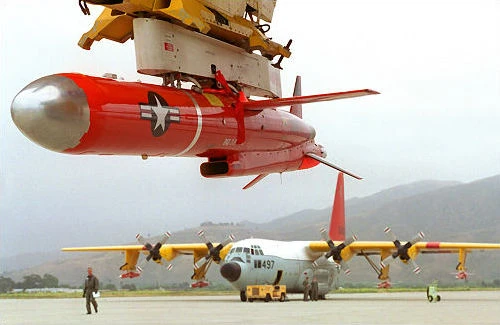
The Radioplane Company was a U.S. aviation firm that built drone aircraft, mainly used as targets for gunnery practice. During World War II, it manufactured more than 9,400 of its Radioplane OQ-3 model, a propeller-driven monoplane that became the most widely used target drone in the United States. After the war, the company introduced the Radioplane BTT series, which remained in production for many years and ultimately totaled nearly 60,000 units. Radioplane also developed several radio-controlled and self-guided missiles, the largest of which was the GAM-67 Crossbow, though it never entered active service. The Northrop Corporation bought the company in 1952, and in 1962 operations moved to one of Northrop’s factories.
- Founded
- 1935 (as Reginald Denny Industries)
- Founders
- Reginald Denny, Nelson Paul Whittier, Kenneth Case
- Key model
- Radioplane OQ-3
- Wartime production
- Over 9,400 OQ-3 units
- Total wwii drones produced
- Nearly fifteen thousand
- Post-war successor
- Radioplane BTT series (almost 60,000 examples)
- Acquired by
- Northrop Corporation (1952)
Lore & Background
Reginald Denny served with the Royal Flying Corps during World War I, and after the war emigrated to the United States to seek his fortunes in Hollywood as an actor. He was successful as a supporting actor in dozens of films and made a good living. Like many actors of the era, he took up flying for sport in the 1920s. But he then lost almost all of his money speculating in oil and mining stocks. Between films, Denny overheard a racket next door and went to investigate. He found the neighbor's son attempting to start one of the earliest radio-control model airplanes. Denny attempted to help, but they instead ended up destroying the model. While attempting to get it fixed, Denny became acquainted with the newly forming model industry, one of whom convinced him to take it up as a hobby. In 1934 he started a small hobby shop with a partner on Hollywood Boulevard, but after two years it went out of business.
Denny approached (or was approached by) Nelson Paul Whittier, grandson of Quaker pioneer John Greenleaf Whittier. The two formed Reginald Denny Industries in 1935 to develop a new radio controlled model, and were joined by electronics engineer Kenneth Case. For the next three years they attempted to produce a design known as the Radioplane One, or RP-1, essentially a greatly enlarged model airplane. The control system was based on a telephone dial: dial 4 for elevator down, and then 2 to stop the motion. Due to the latencies in the system, the aircraft were found to be almost uncontrollable. In 1936, Denny met General W.S. Thiele at Fort MacArthur in Los Angeles, who complained that it cost $300 to have an aircraft tow a target for gunnery practice. Denny suggested that a radio controlled model might be a more cost-effective solution. After a demonstration crash, the Army agreed to purchase three models for $11,000 if they met certain performance requirements. Continued development led to the RP-3, which used welded steel tubing and added a parachute for recovery. Denny and Whittier sought bankers, and one put them in touch with Whitney Collins, a vice-president at Menasco Motors Company. Collins and his partner Harold Powell split the drone program off from Reginald Denny Hobby Shops and formed Radioplane.
Another year of development produced the RP-4, extensively re-designed by aeronautical engineer Ferris Smith. Testing was accomplished by mounting the models to a framework on the front of a Packard Twelve Senior and driving across Muroc Dry Lake at speeds up to 120 mph. The RP-4 featured side-by-side contra-rotating propellers and tricycle landing gear, and used a new joystick-based control system. Three examples were delivered to the Army, who placed an order for an additional 53 units. The production models were known to Radioplane as the RP-5, and to the Army as the Radioplane OQ-2. Delivery of these began in June 1941. Orders began to pour in, and the company expanded into the former Timm Aircraft factories on the northeast corner of the Van Nuys Airport in 1942. By the end of the war the company's factory floor had expanded from 979 square feet in 1940 to 69,500 spread over five buildings, and was delivering 50 drones a day.
Reader's Guide
The Radioplane Company's significance lies in its pioneering role in the development and mass production of radio-controlled target drones for the US military. Its OQ-3 model, with over 9,400 units produced, became the most-used target aircraft in the United States during World War II, providing a cost-effective and realistic alternative to towed targets. The company's post-war BTT series, with nearly 60,000 examples, extended its legacy for decades. The company also ventured into missile development, producing the GAM-67 Crossbow, though it did not enter service. The company's legacy includes a notable cultural footnote: Norma Jeane Dougherty, later known as Marilyn Monroe, was discovered while working at the Radioplane factory in 1944. The company was purchased by Northrop Corporation in 1952 and moved to one of Northrop's factories in 1962. One of the last projects carried out at the original Radioplane factory in Van Nuys, California, was the construction of the Gemini Paraglider.
Did You Know?
- The Radioplane OQ-3 was the most-used target aircraft in the US during World War II, with over 9,400 produced.
- The company's early RP-1 control system used a telephone dial to send commands, making the aircraft almost uncontrollable.
- The post-war Radioplane BTT series eventually reached almost 60,000 examples.
Frequently Asked Questions
Who is Radioplane Company and where did it come from?
Radioplane was an American aviation firm established in 1935 under the name Reginald Denny Industries by Reginald Denny, Nelson Paul Whittier, and Kenneth Case. It specialized in building unmanned target aircraft for military gunnery training.
What is the Radioplane OQ-3 and why is it famous?
The OQ-3 was a propeller-driven monoplane target drone that became the most widely used gunnery target in the United States. During World War II, Radioplane produced over 9,400 of these airframes, making it the company's signature wartime product.
How many target drones did Radioplane build during World War II?
The company rolled out nearly fifteen thousand unmanned aircraft in total across the war years. The vast majority of those were OQ-3 models, though other variants made up the remainder.
What succeeded the OQ-3 after the war?
Radioplane introduced the BTT series of target drones, which stayed in active production for many years. The line ultimately reached close to 60,000 units, far outpacing the wartime OQ-3 output.
Did Radioplane develop anything beyond simple target drones?
Yes, the company also worked on several radio-controlled and self-guided missile projects. The largest of these was the GAM-67 Crossbow, although it never progressed to full service.
More in Unmanned Aerial Vehicles by Country, Part 5 1-24
Spotted an error? Know more?
Reader corrections go straight into our review queue. Suggest an edit · How this site is sourced