Radioplane BTT
The most-produced aircraft type, with over 76,000 built.

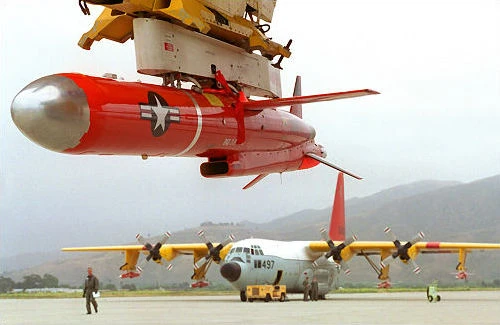
The Radioplane BTT (Basic Training Target) is a family of target drones produced by the Radioplane Company, later a division of Northrop. Known by the company as the RP-71, and by the US Navy as WS-426/2 and the US Air Force as WS-462/2, the BTT family succeeded the earlier OQ-2 target drone and remained in service through the rest of the 20th century.
Quick Facts
- National Origin
- United States
- Manufacturer
- Radioplane, Northrop
- Number Built
- >73,000
Facts from the source article.
Lore & Background
The BTT family began in the late 1940s, evolving through US Army designations OQ-19A through OQ-19D and the US Navy designation KD2R Quail. Early models had a metal fuselage and wooden wings, but production standardized on an all-metal aircraft. An experimental XQ-10 variant made mostly of plastic was evaluated but did not enter production. Radioplane was bought by Northrop in 1952, becoming the Northrop Ventura Division, though the Radioplane name lingered.
In 1963, under a standardized US military designation system, surviving Army variants became MQM-33s and the Navy's KD2R-1 became the MQM-36 Shelduck. The MQM-36 was the most evolved variant, larger and more sophisticated than the earlier OQ-2A series, and carried Luneburg lens radar enhancement devices in its wingtips to generate a larger radar signature. The US Navy did not use the radar reflectors because air search radar interfered with control signals.
The MQM-57 Falconer, a reconnaissance variant designated RP-71 and also known as SD-1 Observer, first flew in 1955. It had a slightly longer and stockier fuselage, an autopilot with radio-control backup, and could carry cameras and illumination flares. Equipment was loaded through a hump in the back between the wings. About 1,500 Falconers were built and used internationally, remaining in service into the 1970s.
Reader's Guide
The Radioplane BTT family is notable for being the most-produced aircraft type in history, with over 76,000 units built. Its longevity—remaining in service for the rest of the 20th century—reflects the effectiveness of its simple, reliable design for target training and reconnaissance roles. The BTT was used by at least 18 nations, including the United States, Australia, Canada, Belgium, the United Kingdom, Mexico, the Netherlands, and Sweden. The MQM-57 Falconer variant extended the family's utility beyond target practice into battlefield reconnaissance, though its limited endurance of just over half an hour restricted its operational value. The BTT's design evolved through multiple designations across US Army, Navy, and Air Force systems, culminating in the MQM-36 Shelduck, which incorporated radar enhancement technology. The family's production run and international adoption underscore its role as a foundational unmanned aerial vehicle platform during the Cold War era.
Did You Know?
- The BTT family includes over 76,000 units, making it the most-produced aircraft type of any kind.
- The MQM-36 Shelduck carried Luneburg lens radar reflectors in its wingtips to mimic a larger aircraft's radar signature.
- The MQM-57 Falconer reconnaissance variant had an endurance of only a little more than half an hour.
- The BTT was used by at least 18 nations, including Australia, Canada, Belgium, Sweden, and the United Kingdom.
More in Unmanned Aerial Vehicles by Country, Part 5 1-24
Spotted an error? Know more?
Reader corrections go straight into our review queue. Suggest an edit · How this site is sourced