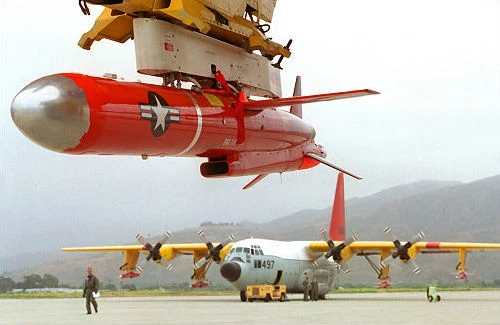
Shahbal
Iranian close-range multi-role UAV with twin tail configuration.

Shahbal is an unmanned aerial vehicle (UAV) designed by a group of aerospace engineers at Sharif University of Technology. It is a close-range multi-role UAV intended for surveillance, reconnaissance, patrols, and pilot training. Shahbal was awarded the Best Design Prize during the first National UAV Design Competition (NUDC-2006) of Iran and was ranked as a top vehicle after passing all flight tests in that contest.
Quick Facts
- Manufacturer
- Shahbal Group, Sharif University of Technology
- First Flight
- 2006
Facts from the source article.
Lore & Background
Shahbal was designed by three newly graduated aerospace engineers from Sharif University of Technology: Alireza, Amirreza Kosari, and Mohammad Rahim. The project originated from a national competition, initially conceived to meet contest requirements, but the development team expanded their goals early in the process. The vehicle earned the Best Design Prize during the first National UAV Design Competition (NUDC-2006) of Iran and was recognized as a top-ranked vehicle after completing all planned flight tests.
The UAV features a twin tail configuration that enables high sharp and fast maneuvers in both civil and military applications. Its structure is primarily composites, giving it a small radar cross section (RCS) that allows it to operate close to enemy radars. Control is available in both manual (radio control) and autopilot (GPS/INS) modes, with the autopilot being a MP2000 from MicroPilot. Shahbal is designed to perform nap-of-the-earth maneuvers such as terrain following and terrain avoidance.
Mission payloads vary by mission type, ranging from small cameras and telemetry systems to heavy munitions and weapons, with a maximum payload weight of 5.5 kg. The powerplant is a 4.5 hp ZDZ engine installed as a pusher at the end of the main body. The landing gear mechanism is a fixed tricycle plus an arresting hook.
Reader's Guide
Shahbal represents an early achievement in Iranian UAV development, emerging from a national competition and designed by a small team of recent graduates from Sharif University of Technology. Its recognition in the first National UAV Design Competition (NUDC-2006) highlights its role in fostering indigenous aerospace engineering talent. The vehicle's design emphasizes versatility as a close-range multi-role platform, capable of surveillance, reconnaissance, patrols, and pilot training. Its twin tail configuration and composite structure, combined with a small radar cross section, allow it to operate near enemy radars while performing sharp maneuvers. The inclusion of both manual and autopilot control, along with nap-of-the-earth capabilities, reflects a focus on operational flexibility. The ability to carry payloads up to 5.5 kg, from cameras to munitions, underscores its adaptability for both civil and military applications. Shahbal's legacy is tied to its origin in a national competition and its role in demonstrating the capabilities of Iranian university-led UAV design, though its broader impact beyond the competition context is not detailed in available records.
Did You Know?
- The UAV uses a MP2000 autopilot from MicroPilot.
- Its maximum payload weight is 5.5 kg (12 lb).
More in Unmanned Aerial Vehicles by Country, Part 3 1-24
Spotted an error? Know more?
Reader corrections go straight into our review queue. Suggest an edit · How this site is sourced