DJI Matrice
A versatile industrial drone series for professional and developer use.

ZLEA · CC BY-SA 4.0
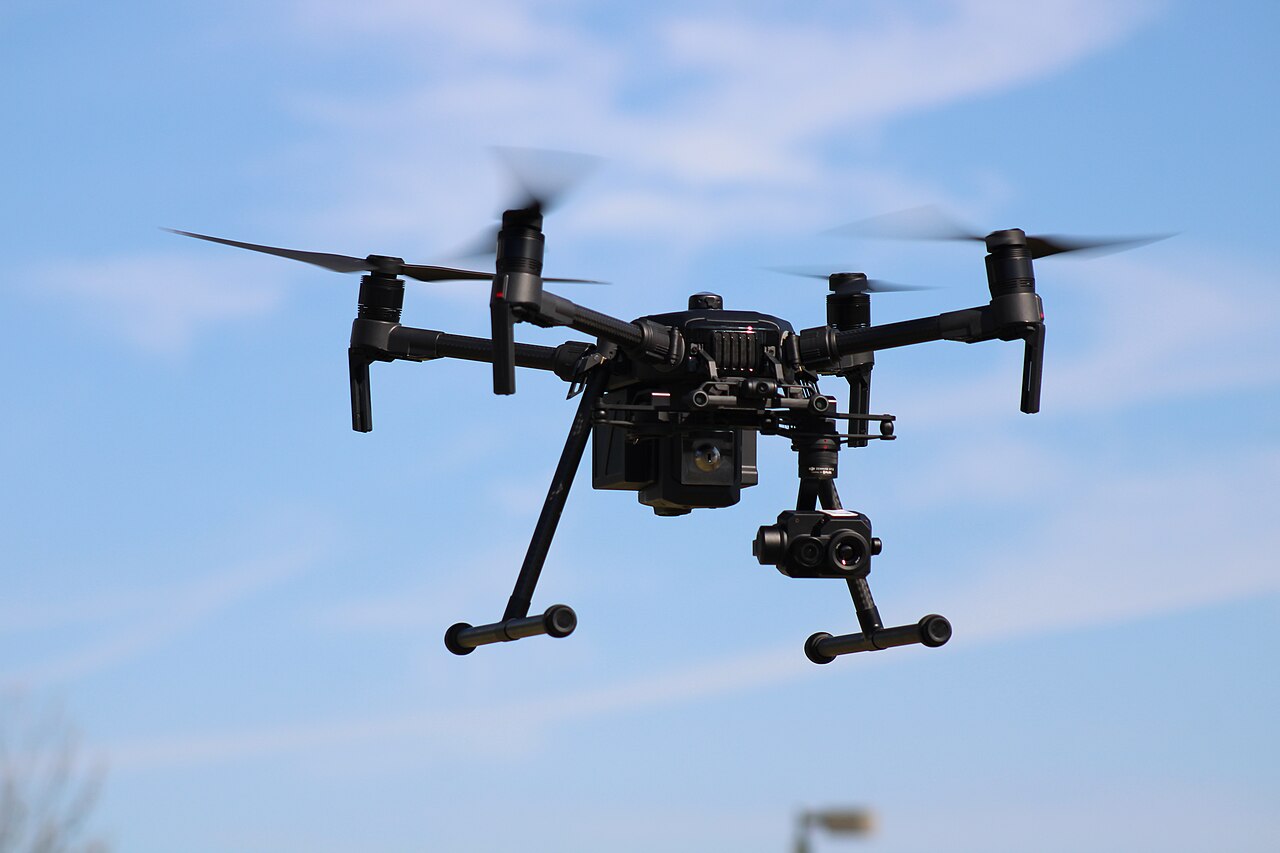
The DJI Matrice is a line of multirotor industrial drones from the Chinese company DJI. The series began with the Matrice 100, announced in June 2015, which was aimed at developers of drone software and hardware. This quadcopter has landing legs at the tips of its four arms and uses a Lightbridge video transmission system, similar to the DJI Phantom. It can fly for 20 minutes with a 1 kg payload on a single battery, or up to 40 minutes with two 5700 mAh TB48D batteries and no payload. The Matrice 100 is compatible with the Zenmuse X3 camera/gimbal from the DJI Inspire 1, as well as any camera with an analog video output or HDMI port. It also works with the DJI Guidance collision avoidance system, which launched alongside it.
In February 2017, DJI introduced the redesigned Matrice 200 series, which originally included three variants: the Matrice 200 with one downward-facing gimbal mount, the Matrice 210 with two downward and one upward-facing mount, and the Matrice 210 RTK with a D-RTK real-time kinematic positioning module. The M200 series has an IP43 protection rating for flying in rain, a built-in first-person view camera, and 20 sensors including an ADS-B receiver and redundant inertial measurement units. It is compatible with Zenmuse X4S, X5S, Z30, XT, and XT2 camera gimbals. Power comes from two 7660 mAh TB55 batteries that are automatically heated for freezing conditions, providing 38 minutes of flight time without a payload. The M200 V2 series, released in February 2019, added an AES-256 encrypted OcuSync 2.0 video transmission system, anti-collision lights for night operations, improved multi-payload performance, and support for the Zenmuse X7 gimbal.
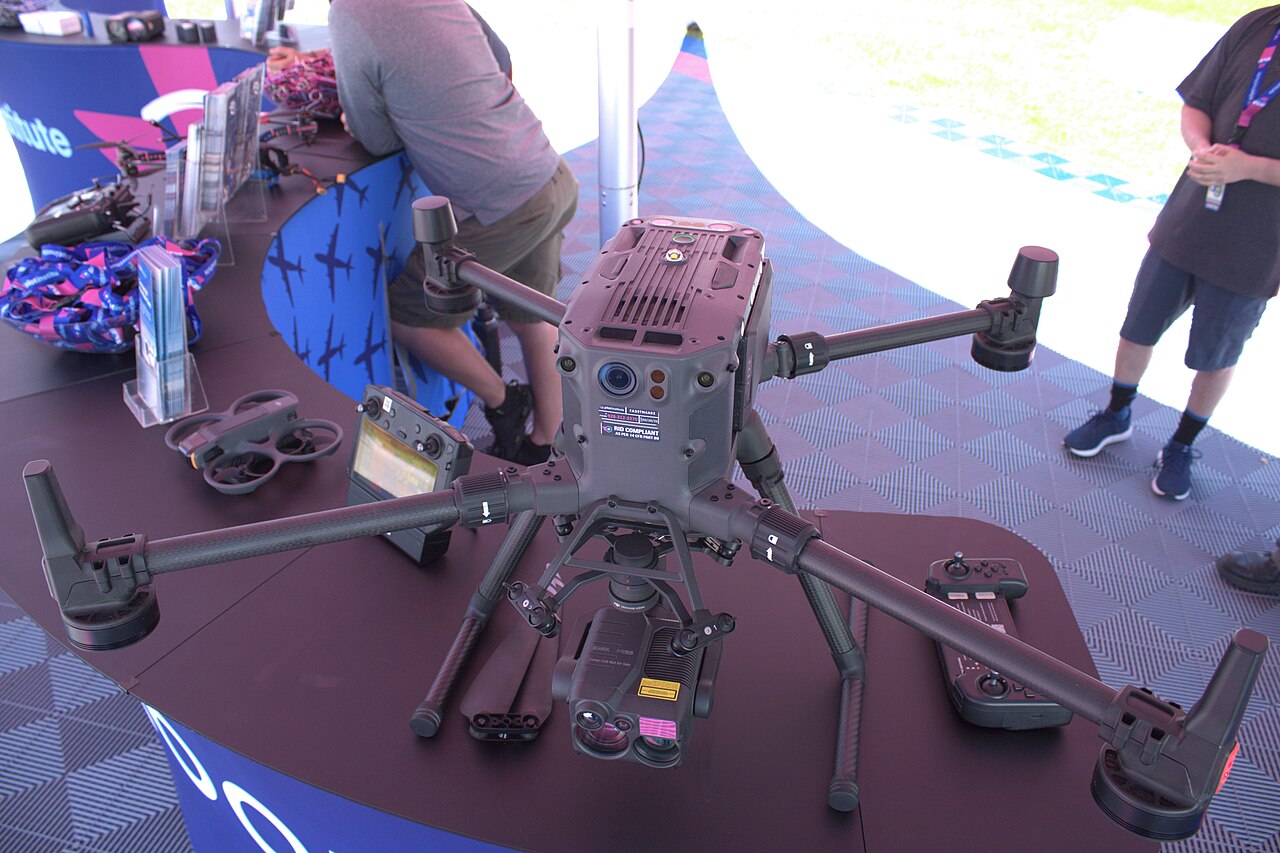
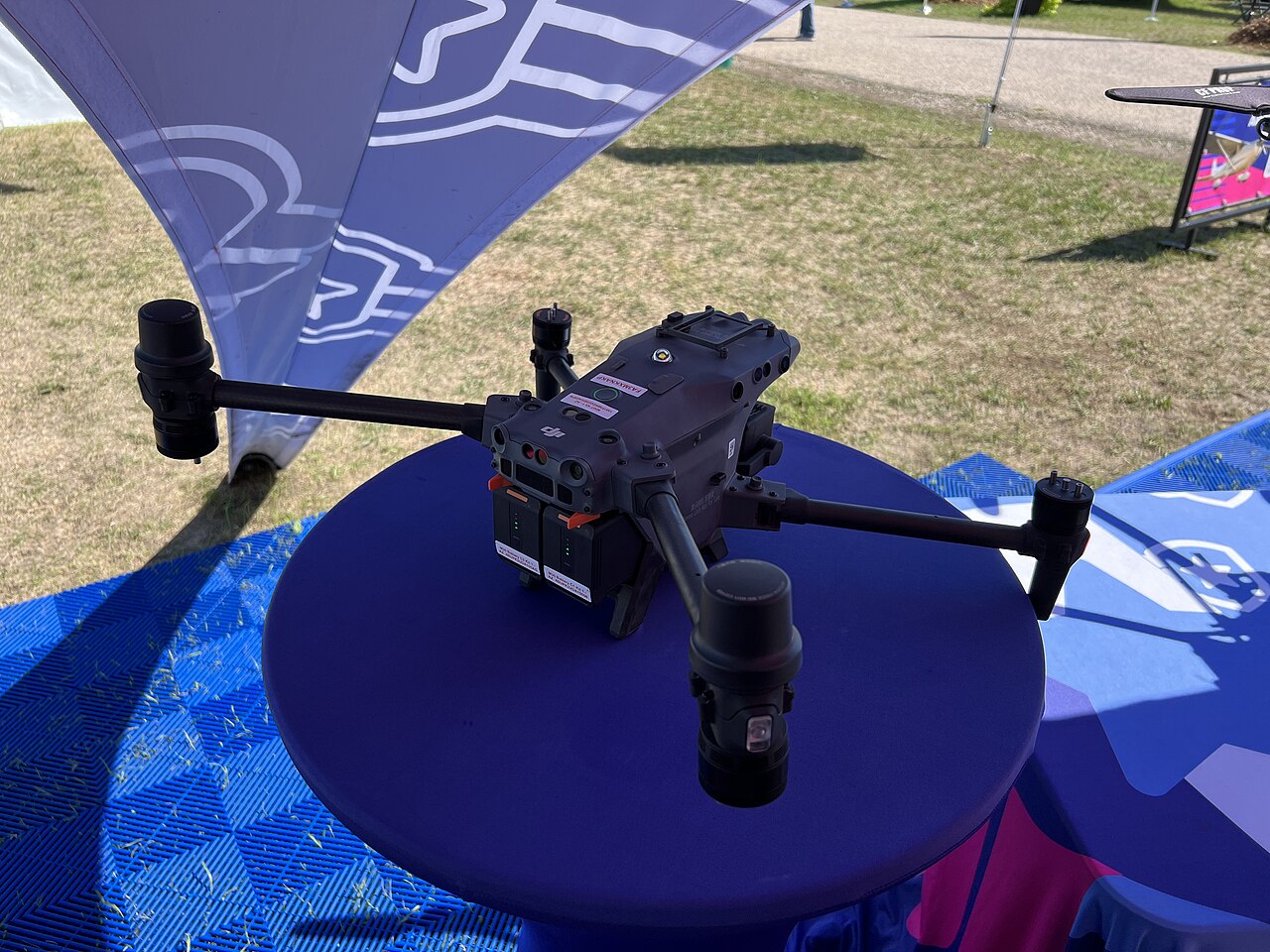
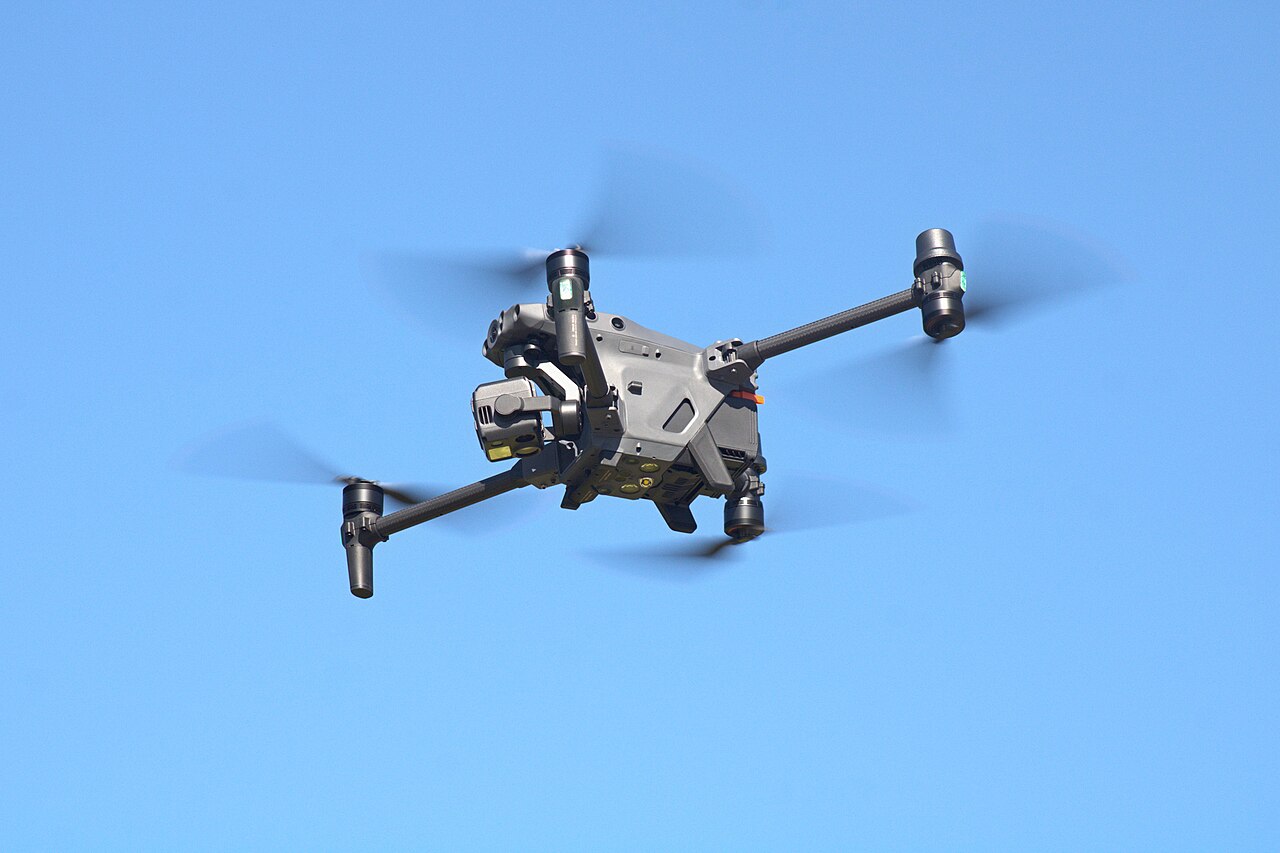
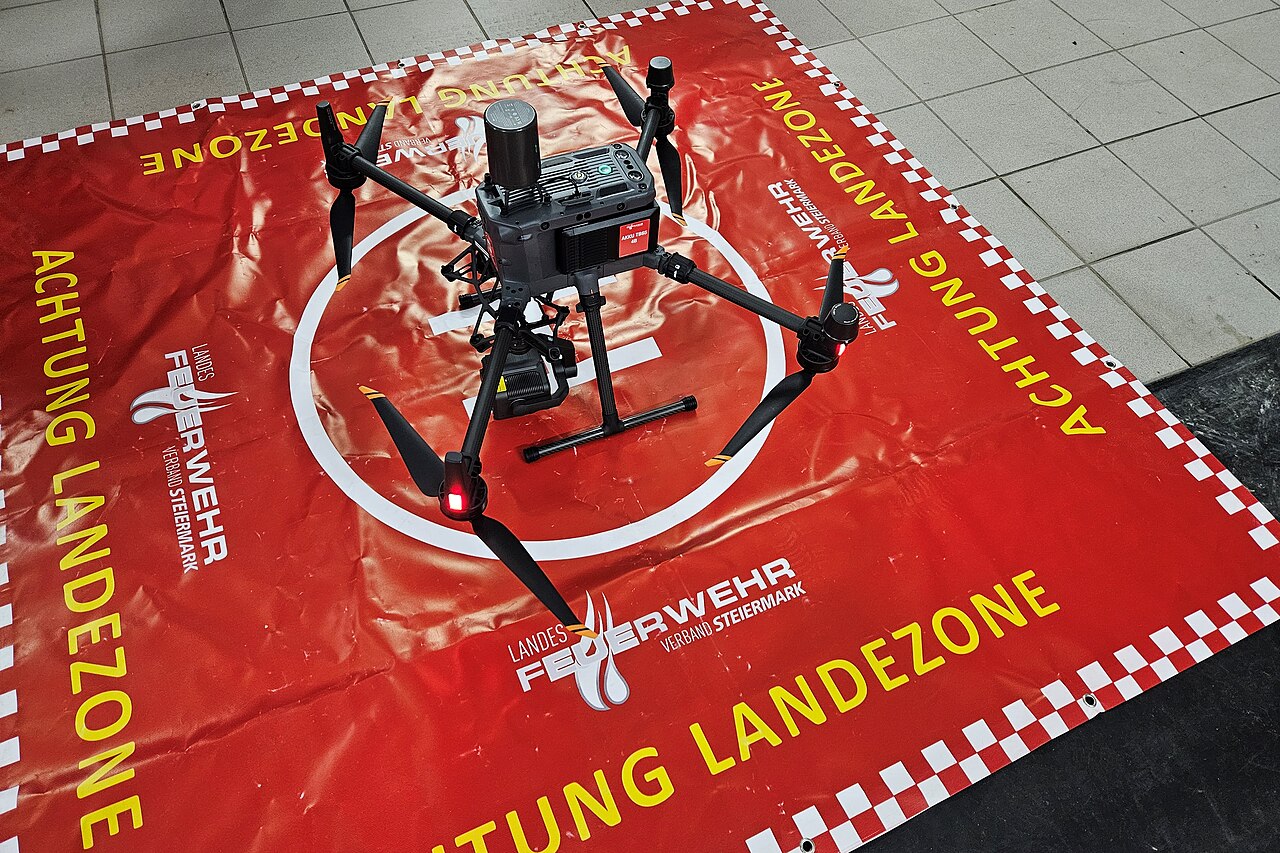
The Matrice 300 RTK, released in July 2020 alongside the Zenmuse H20 hybrid multi-sensor camera gimbal, has a folding design, an IP45 protection rating, downward-facing motors, a built-in six-direction collision avoidance system, an OcuSync Enterprise transmission system, and a D-RTK module. Its 5935 mAh battery provides 45 minutes of flight time with a 700 g payload. The similar Matrice 350 RTK, released in May 2023, includes an O3 Enterprise transmission system, an enhanced FPV camera, an IP55 protection rating, and a TB65 battery for 55 minutes of flight time.
In June 2025, DJI released the Matrice 400 as the successor to the Matrice 350 RTK.
Quick Facts
- Aircraft Type
- Industrial drone
- National Origin
- China
- Manufacturer
- DJI
- Construction Date
- 2015–present
- Introduction
- June 2015
Facts from the source article.
Lore & Background
The Matrice series began with the Matrice 100 in June 2015, a quadcopter intended for developers of drone software and hardware solutions. It featured a Lightbridge video transmission system and compatibility with the Zenmuse X3 camera/gimbal and the DJI Guidance collision avoidance system. In February 2017, the redesigned Matrice 200 series introduced IP43 protection for rain operation, multiple gimbal mounts, and a suite of 20 sensors including an ADS-B receiver and redundant IMUs. The Matrice 300 RTK followed in July 2020 with a folding design, IP45 protection, and a 45-minute flight time with a 700 g payload, while the Matrice 350 RTK in May 2023 upgraded to IP55 protection and a 55-minute flight time.
The Matrice 600 series, released in April 2016, was a hexacopter unrelated to the Matrice 100, featuring retractable landing gear and compatibility with larger cameras via the Ronin MX gimbal. The Matrice 600 Pro followed in November 2016 with an A3 Pro flight controller and a battery management system designed to land safely if one battery fails. In March 2022, the Matrice 30 series introduced folding arms similar to the DJI Mavic, an IP55 rating, and compatibility with the DJI Dock for autonomous operation. The Matrice 3D and 3TD, released in March 2024, were smaller drones with raised arms designed for the Dock 2 ground station. The Matrice 4 series, launched in January 2025, succeeded the Mavic 3 Enterprise series with integrated AI and optional spotlight and speaker attachments, with the Matrice 4D and 4TD added in February 2025 for vehicle-based ground stations.
Reader's Guide
The DJI Matrice series represents a significant evolution in industrial drone technology, offering a range of platforms tailored to diverse professional needs. From the developer-focused Matrice 100 to the high-payload Matrice 400, the series has consistently introduced innovations such as real-time kinematic positioning, collision avoidance systems, and weather-resistant designs. The Matrice 200 series pioneered rain operation with its IP43 rating, while the Matrice 300 RTK and 350 RTK advanced flight times and protection standards. The Matrice 600 series addressed heavy-lift requirements with hexacopter configurations and professional camera support. The Matrice 30 series and Matrice 3/4 series expanded into autonomous operations with ground station compatibility, enabling fully automated missions. The series' legacy is defined by its adaptability, with models supporting multiple payloads, thermal imaging, and enterprise-grade transmission systems, making it a cornerstone of commercial drone applications in inspection, surveying, search and rescue, and public safety.
Did You Know?
- The Matrice 100 was announced in June 2015 and could fly for 40 minutes with two TB48D batteries without payload.
- The Matrice 200 series has an IP43 protection rating, allowing it to fly in rain.
- The Matrice 400, released in June 2025, can mount up to seven payloads simultaneously with a total weight of 6 kg.
- The Matrice 30 series has folding arms similar to the smaller DJI Mavic, allowing it to be carried in a backpack.
From Quadcopter Workhorse to Seven-Payload Platform
When DJI introduced the Matrice 100 in mid-2015, the company was targeting industrial developers with a quadcopter that could carry one kilogram for twenty minutes, using the same Lightbridge video link as the Phantom line. The platform evolved rapidly. The Matrice 200 series of early 2017 brought twenty onboard sensors, an ADS-B receiver, redundant inertial measurement units, and an IP43 weather rating, while its auto-heating 7660 mAh batteries allowed launches in freezing temperatures and stretched unladen flight to thirty-eight minutes. The Matrice 300 RTK of 2020 added a folding airframe, IP45 protection, and six-direction collision avoidance, reaching forty-five minutes with a 700-gram payload. The 2023 Matrice 350 RTK pushed endurance to fifty-five minutes with an IP55 shell. Then in June 2025 the Matrice 400 debuted, pairing lidar-and-radar obstacle sensing with an O4 Enterprise link and the ability to mount seven payloads totalling six kilograms. Its 20254 mAh TB100 battery delivers up to fifty-nine minutes of airtime with a single camera gimbal, or thirty-one minutes at maximum load.
Engineered Around the Payload
The Matrice line has always been defined by what it can carry and how flexibly it can be configured. The original M100 was explicitly designed for developers building drone software and hardware, and it accepted any camera with an analog video output or HDMI port in addition to the Zenmuse X3 gimbal. The 2017 M200 series split into three variants: the M200 with a single downward gimbal mount, the M210 with two downward and one upward mount, and the M210 RTK adding a D-RTK positioning module. All three accepted a range of visual-spectrum and thermal Zenmuse gimbals. The hexacopter Matrice 600 went further, supporting every Zenmuse X-series camera and even the Ronin MX gimbal capable of mounting a Red Epic cinema camera. By the time the Matrice 400 arrived in 2025, the platform could simultaneously mount up to seven payloads weighing a combined six kilograms, making it one of the most versatile industrial airframes DJI has produced.
The Hexacopter Branch: Redundancy as a Design Principle
The Matrice 600, released in April 2016 as a successor to DJI's Spreading Wings line, broke from the quadcopter formula entirely. As a hexacopter with retractable landing gear, it was a different animal from the M100, built around the A3 flight controller and Lightbridge 2 transmission. An optional A3 Pro controller added three GNSS units and three inertial measurement units, and could be paired with an RTK module for centimetre-level positioning. Power came from six batteries—either 4500 mAh TB47S or 5700 mAh TB48S cells—giving forty minutes of unladen flight or eighteen minutes while hauling a 5.5-kilogram payload. The November 2016 Matrice 600 Pro made the A3 Pro standard, added Lightbridge 2 HD, and shipped with pre-installed arms and antennas. Crucially, its battery management system was engineered so that if any one of the six cells failed, the drone could still land safely—a redundancy feature that underscored DJI's commitment to operational safety in industrial settings.
The Dock Ecosystem and the Push Toward Autonomy
The Matrice 30 series, unveiled in March 2022 alongside the Dock ground station, marked a philosophical shift within the lineup. For the first time, a Matrice adopted folding arms reminiscent of the Mavic, making it small enough to fit in a backpack. The built-in Zenmuse H20N gimbal was standard, with the 30T variant adding a thermal sensor. Two 5880 mAh TB30 batteries provided up to forty-one minutes of flight, and operators could choose between standard Model 1671 propellers or Model 1676 high-altitude propellers included as standard in certain regions. Paired with the Dock, the drone could operate fully autonomously and recharge at the ground station without human intervention. European-market variants, the Matrice 30 EU and 30T EU, carried EASA C2 certification. In March 2024, the smaller Matrice 3D and 3TD joined the Dock 2 ecosystem, featuring a 12-megapixel telephoto and a 20-megapixel wide-angle camera with a mechanical shutter, while their raised-arm design let them fit the compact Dock 2 enclosure.
Gallery
Frequently Asked Questions
Who is DJI Matrice?
DJI Matrice is a family of multirotor industrial drones produced by the Chinese company DJI, built for professional operators and software developers rather than casual hobbyists. The line stretches from the original Matrice 100 quadcopter all the way to the Matrice 400, which hit the market in June 2025.
What are DJI Matrice's powers/role?
The Matrice series is engineered to carry heavy industrial payloads, with the Matrice 400 handling up to 6 kg and sustaining a 59-minute flight when fitted with a Zenmuse H30T. Weather resistance has improved across generations, with protection ratings climbing from IP43 on the M200 series to IP55 on the M350 RTK and M30 series.
Why is DJI Matrice important?
The Matrice line carved out DJI's identity in the professional and developer drone segment, giving third-party integrators a standardized platform for cameras, sensors, and custom payloads. By pairing long endurance, substantial payload capacity, and robust weather sealing in one product family, it became a benchmark for industrial multirotor design.
What's DJI Matrice's origin story?
The series kicked off with the Matrice 100, a four-armed quadcopter announced in June 2015 that sported landing legs at each arm tip and used DJI's Lightbridge video link. It accepted the Zenmuse X3 gimbal from the Inspire 1 and could stay aloft for roughly 20 minutes with a 1 kg payload, or stretch to about 40 minutes on dual 5700 mAh TB48D batteries with nothing mounted.
More in Unmanned Aerial Vehicles by Country, Part 3 1-24
Spotted an error? Know more?
Reader corrections go straight into our review queue. Suggest an edit · How this site is sourced