
LTV XQM-93
A turboprop UAV developed for communications relay in Vietnam.
Last updated

Michael Barera · CC BY-SA 4.0
The LTV XQM-93 was a remotely piloted aircraft built for the United States in the late 1960s and early 1970s to serve as a communications relay during the Vietnam War. A prototype took flight in 1970, but the project ended before any aircraft entered service.
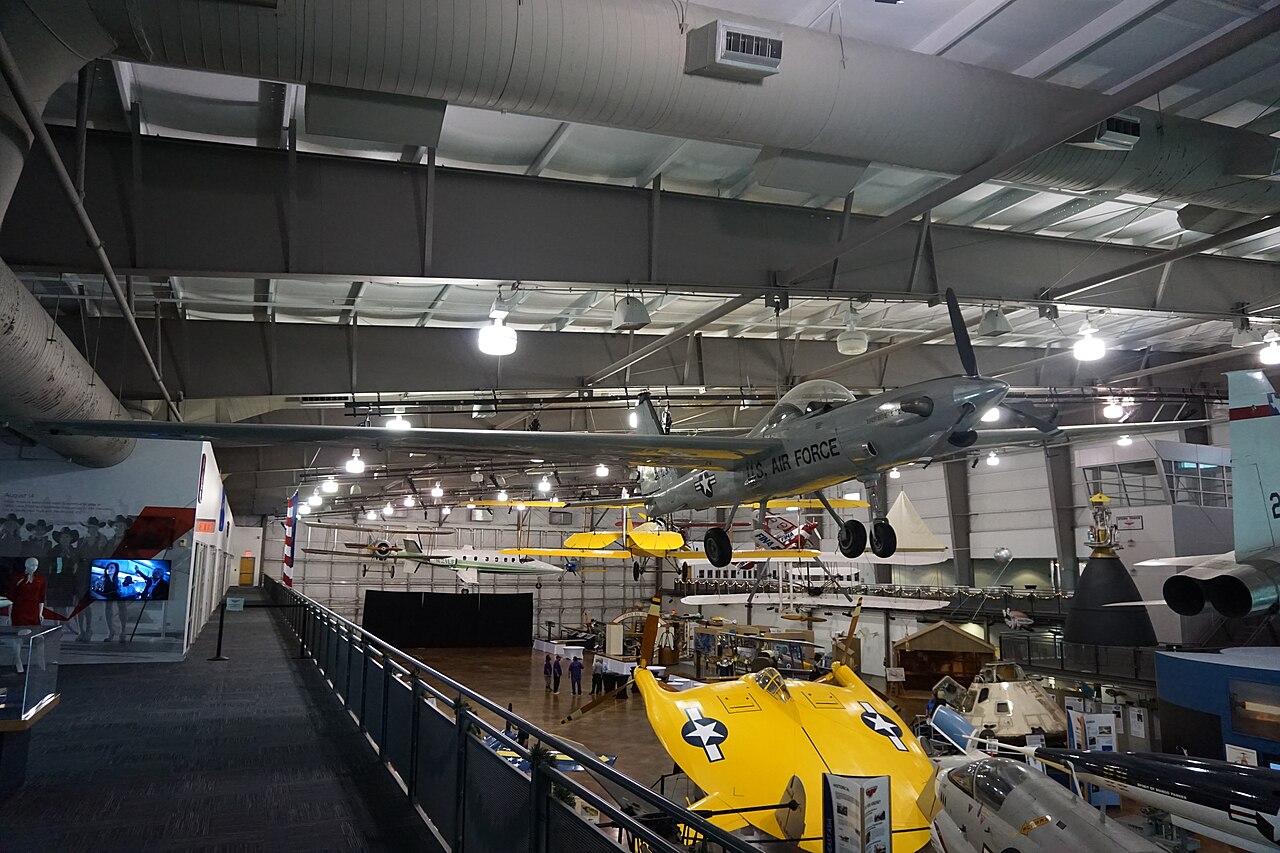
The effort grew out of earlier microwave high-altitude long-endurance studies. The U.S. Air Force partnered with LTV Electrosystems (later E-Systems) under the Compass Dwell program to create an unmanned aerial vehicle powered by a conventional turboprop engine.
The work was partly inspired by the Igloo White program, a multiservice operation aimed at stopping supply movement along the Ho Chi Minh Trail through Cambodia and Laos. Igloo White involved dropping thousands of seismic and acoustic sensors that detected traffic and sent signals to a command center in Thailand, which then directed airstrikes. Because the sensors had limited battery life and range, airborne radio relay aircraft circled overhead to collect and forward the signals.
Initially, Lockheed EC-121 Warning Stars—military versions of the Super Constellation—handled the relay role, but they were expensive to operate. They were replaced by modified Beech Debonaire light aircraft, designated QU-22A, which could be flown as drones. In practice, however, they were never used without a pilot except in experiments.
LTV Electrosystems designed an endurance aircraft that could operate with or without a pilot. Several prototypes were built, both piloted and unpiloted. They were based on a heavily modified Schweizer SGS 2-32 sailplane, fitted with a Pratt & Whitney Canada PT6A-34 turboprop engine, large fuel tanks, and mission payloads. The landing gear was fixed tricycle type.
The first prototype, the L-450F, was piloted and first flew in February 1970. It was lost on its third flight in March 1970, though the pilot ejected safely. A second L-450F completed the flight test program.
The third prototype, the first unmanned version, was designated XQM-93 and flew in early 1972. It had no cockpit or pilot provisions and could carry 320 kilograms (700 pounds) of payload. The Air Force ordered four XQM-93s, but it is unclear if any were delivered, as Compass Dwell was canceled that year.
Surviving airframes
Two airframes survive. One, N2450F (cn 002), is displayed at the Vintage Flying Museum at Fort Worth Meacham International Airport.
Frequently Asked Questions
What airframe did the XQM-93 use?
The design was built around a Schweizer SGS 2-32 sailplane airframe, to which LTV added a Pratt & Whitney Canada PT6A-34 turboprop engine for sustained flight. This combination gave the platform the endurance needed to remain on station for extended relay periods.
Did the XQM-93 ever enter operational service?
No. A piloted prototype first flew in February 1970, and the unmanned variant took to the air in early 1972, but the Compass Dwell program was cancelled before any of the four ordered airframes were delivered to a combat unit.
More in Unmanned Aerial Vehicles by Country
Sources
Compiled from Wikipedia and the sources listed below. Text from Wikipedia is available under CC BY-SA 4.0; this entry is adapted from it.
- Wikipedia: LTV XQM-93 (CC BY-SA 4.0).
Spotted an error? Know more?
Reader corrections go straight into our review queue. Suggest an edit · How this site is sourced