
Lockheed Martin X-56
Modular UAV exploring active flutter suppression for HALE reconnaissance.
Last updated

Stéphane Gallay from Laconnex, Switzerland · CC BY 2.0
The Lockheed Martin X-56 is a modular, unmanned American aircraft built to study technologies for High-Altitude Long Endurance (HALE) flight, with an eye toward future military reconnaissance drones. It was created by Lockheed Martin’s Skunk Works, the company’s advanced projects division.
The vehicle’s purpose is to test methods for actively suppressing flutter and reducing gust loads. The X-56A draws on earlier Lockheed UAVs, including the Polecat, Sentinel, and DarkStar. The program involves two fuselages, each 7.5 feet long, and a wingspan of 27.5 feet, with four different wing sets built for testing.
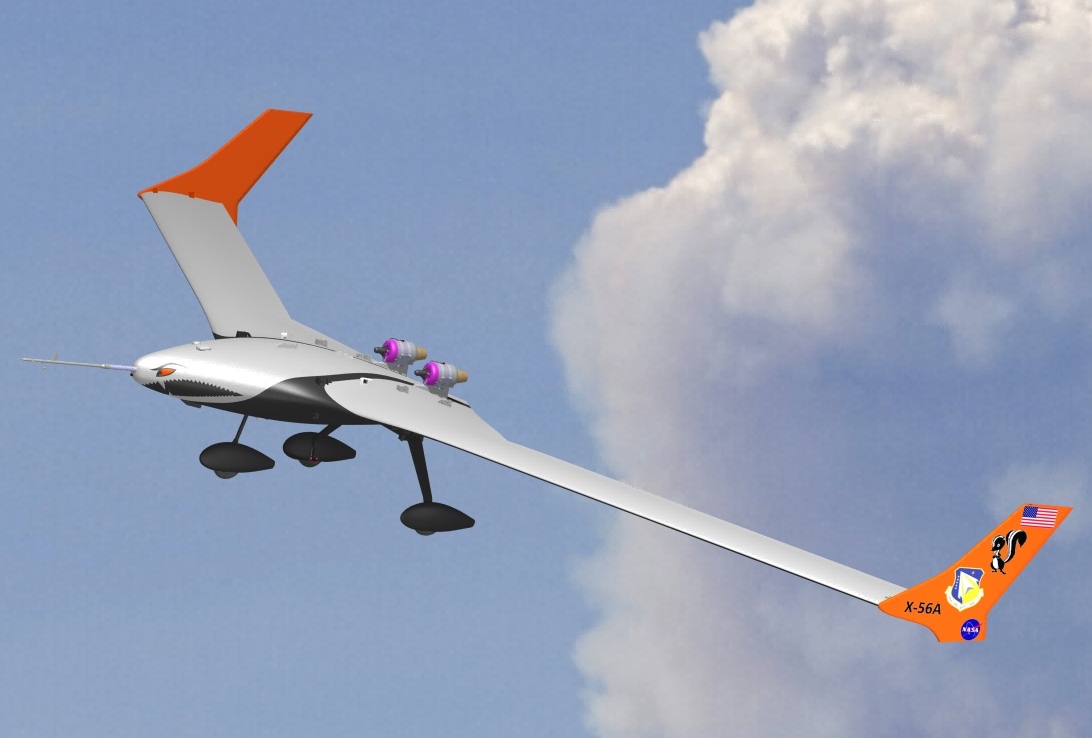
The first X-56A flew on July 26, 2013, from Edwards Air Force Base. It was scheduled for twenty flights for the Air Force Research Laboratory before being handed over to NASA. That aircraft was heavily damaged in a crash on November 19, 2015, shortly after takeoff from the dry lakebed at Edwards, during its first flight with flexible wings to test active flutter suppression. Before that, it had completed sixteen flights with stiff wings to verify its operating limits.
The second X-56A first flew on April 9, 2015, under NASA’s control. It made eight flights with stiff wings to clear its flight envelope, then flew for the first time with highly flexible wings on August 31, 2017. During testing, the digital flight control system successfully suppressed a type of instability called body freedom flutter at 110 knots, within the normal flight envelope. The X-56B was destroyed in a crash on July 9, 2021, after an in-flight anomaly.
Frequently Asked Questions
What is the Lockheed Martin X-56?
The X-56 is a modular unmanned aircraft developed by Lockheed Martin's Skunk Works division to research technologies for high-altitude, long-endurance flight. It was designed to test active flutter suppression and gust load reduction methods aimed at future military reconnaissance drones.
Which earlier Lockheed UAVs influenced the X-56's design?
The program builds on heritage from several prior Lockheed unmanned aircraft, including the Polecat, Sentinel, and DarkStar. Those earlier platforms provided the design lineage and technical groundwork for the X-56's modular approach.
More in Unmanned Aerial Vehicles by Country
Sources
Compiled from Wikipedia and the sources listed below. Text from Wikipedia is available under CC BY-SA 4.0; this entry is adapted from it.
- Wikipedia: Lockheed Martin X-56 (CC BY-SA 4.0).
Spotted an error? Know more?
Reader corrections go straight into our review queue. Suggest an edit · How this site is sourced