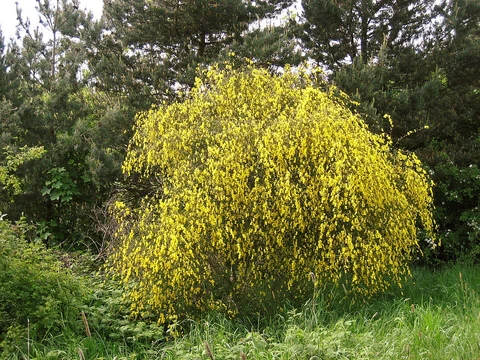
Jujube
A fruit-bearing tree cultivated for millennia across Asia.
Last updated
The jujube (Ziziphus jujuba), also known as Chinese jujube, red date, or Chinese date, is a species in the buckthorn family Rhamnaceae. It is a small deciduous tree or shrub that produces an edible oval drupe, often confused with the Indian jujube (Z. mauritiana). Its origin is thought to be in eastern Asia, but it has been widely dispersed through cultivation and is today grown both as a garden shrub and as a food crop.
Scientific classification
- CladeTracheophytes
- CladeAngiosperms
- CladeEudicots
- CladeRosids
- OrderRosales
- FamilyRhamnaceae
- GenusZiziphus
- SpeciesZiziphus jujuba
Named by Mill.
Sources: Wikipedia taxobox: Jujube (CC BY-SA 4.0)
Conservation status
Least Concern (LC)
- LC▲ this species
- NT
- VU
- EN
- CR
- EW
- EX
Source: IUCN Red List assessment · GBIF copy of the Red List category
Where the jujube has been recorded
Each dot is a place where the species has been observed and reported (13,851 records, half-degree grid) — not a modelled range. 495 inland records left out (institution coordinates).
Map: drawn by Codexery. Data: GBIF occurrence search (records CC0 / CC BY) · Natural Earth basemap (public domain) · place coordinates: Wikipedia (CC BY-SA 4.0)
Quick Facts
- Genus
- Ziziphus
- Species
- jujuba
Facts from the source article.
Lore & Background
The jujube has a complex taxonomic history. Carl Linnaeus first named it Rhamnus zizyphus in 1753.
Philip Miller later placed it in the genus Ziziphus in 1768, using the name Ziziphus jujuba. A later combination, Ziziphus zizyphus, was permitted but was suppressed in 2011 in favor of Ziziphus jujuba. The name derives from Ancient Greek ζίζυφον (zízyphon) through Latin and Romance languages, and is unrelated to jojoba.
Cultivation of Chinese jujubes in parts of Asia dates back thousands of years. Wild jujube kernels have been found at Neolithic sites on the Qi River basin of northern China.
The tree tolerates droughts and flooding and is now most widely grown in China. In Madagascar, it has become an invasive species, and its seeds are spread by zebus that eat the fruit. In Australia, commercial planting began around 2000, with ongoing expansion noted in recent years.
Reader's Guide
The jujube is significant as a versatile food crop and ornamental plant, adapted to a wide range of climates from temperate to tropical. Its fruit is eaten fresh, dried, or candied, and is used in teas, wines, vinegars, pickles, and desserts across Asia. In China and Korea, jujube tea syrup and canned tea are common.
The fruit is also smoked in Vietnam to produce black jujubes. The leaves contain saponin and ziziphin, which suppress the perception of sweet taste. Flavonoids and terpenoids found in the fruit have been studied for their chemical properties.
The tree is largely pest-free in North America, but in Europe, insect larvae, including those of the false codling moth, have destroyed 80–90% of crops in recent years. Witch's broom is the main disease in China and Korea. The jujube's ability to survive cold winters down to −15 °C and its tolerance of diverse habitats make it a resilient species for cultivation.
Did You Know?
- In Madagascar, jujube seeds grow easily in zebu faeces.
- Modern cultivated jujubes often have larger kernels than their wild counterparts.
More in Trees & Shrubs
Sources
Compiled from Wikipedia and the sources listed below. Text from Wikipedia is available under CC BY-SA 4.0; this entry is adapted from it.
- Wikipedia: Jujube (CC BY-SA 4.0).
- Conservation status: IUCN Red List assessment.
- Occurrence records: GBIF (CC0 / CC BY). Basemap: Natural Earth (public domain).
- Word definitions: the Codexery glossary, each quoted from its Wikipedia article.
Spotted an error? Know more?
Reader corrections go straight into our review queue. Suggest an edit · How this site is sourced