TOI-715 b
First TESS planet in the conservative habitable zone.
TOI-715 b is a super-Earth exoplanet orbiting the red dwarf star TOI-715 in the constellation Volans. It is notable as the first exoplanet discovered by the Transiting Exoplanet Survey Satellite (TESS) located within the conservative habitable zone of its star.
Quick Facts
- Discoverer
- Dransfield et al.
- Discovery Site
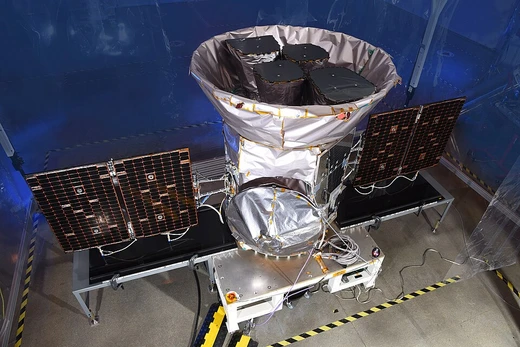
- TESS
- Discovery Method
- transit
- Discovered
- May 10, 2023
- Star
- TOI-715
Facts from the source article.
Lore & Background
TOI-715 b was discovered in 2023 by the Transiting Exoplanet Survey Satellite (TESS). It orbits its parent M-type star, TOI-715, at a distance of 0.083 AU, placing it within the conservative habitable zone as defined by Koparappu et al. in 2014. The planet receives insolation equivalent to that of Earth from the Sun, falling within the range of 0.42 to 0.842 times Earth's insolation. Its equilibrium temperature is 234 K, and it is 1.55 times larger than Earth. The host star, TOI-715, is a red dwarf located 42 parsecs (140 light-years) from Earth in the constellation Volans, near the southern celestial pole. It has an apparent magnitude of 16.7 and is too faint to be seen with the naked eye or a small telescope. There may be a second exoplanet in the same system, designated TIC 271971130.02, which if confirmed would be the smallest known habitable-zone exoplanet.
Reader's Guide
TOI-715 b holds significance as the first TESS discovery in the conservative habitable zone, a region defined by insolation levels between 0.42 and 0.842 times that received by Earth from the Sun. Its location within this zone makes it a key target for future atmospheric studies. NASA has indicated that the James Webb Space Telescope may be used to search for evidence of water or a planetary atmosphere on this exoplanet. The potential second planet in the system, TIC 271971130.02, if confirmed, would represent the smallest known habitable-zone exoplanet, further increasing the scientific interest in the TOI-715 system. The planet's size and temperature suggest it could retain an atmosphere, and its discovery contributes to the understanding of planetary systems around M-type stars, which are common in the galaxy.
Did You Know?
- TOI-715 b is 1.55 times larger than Earth.
- It orbits its star at 0.083 AU.
- The host star TOI-715 is located 42 parsecs from Earth in the constellation Volans.
More in Transiting Exoplanets, Part 5 1-24
Spotted an error? Know more?
Reader corrections go straight into our review queue. Suggest an edit · How this site is sourced