Kepler-421b
First transiting planet found near the snow-line with a 704-day year.
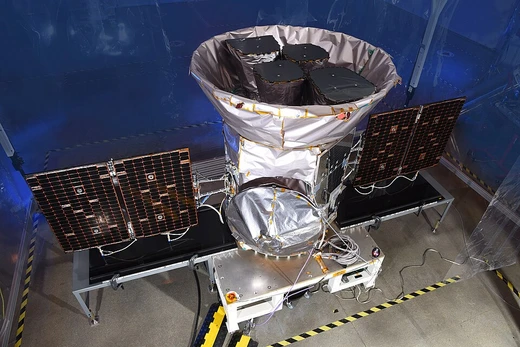
Kepler-421b is a transiting exoplanet discovered by the Kepler mission. As of July 2014, it has the longest known orbital period of any transiting planet, at 704 days, and is the first transiting planet found near the snow-line.
Quick Facts
- Discovery Site
- Kepler telescope
- Discovered
- 2014
- Discovery Method
- Transit
- Apsis
- astron
- Semimajor
- 1.219 AU
- Period
- 704.1984 d
- Inclination
- 89.965
- Star
- Kepler-421
- Mass
- 16.1 M / 🜨
Facts from the source article.
Lore & Background
Kepler-421b was discovered by the Kepler mission and validated using only two transits, rather than the usual three, because of its very high signal-to-noise ratio. This allowed confirmation without additional methods. The planet has a mass 16.1 times that of Earth and is slightly larger than Uranus, placing it in the ice giant category. Its orbital period of 704 days makes it the transiting planet with the longest known year as of July 2014, though longer-period planets have been found via direct imaging and radial-velocity methods, and some transiting candidates listed as planets in the Extrasolar Planets Encyclopaedia have even longer periods. Kepler-421b is notable as the first transiting planet discovered near the snow-line, the region in a planetary system where volatile compounds condense into solid ice.
Reader's Guide
Kepler-421b's significance lies in its record-setting orbital period among transiting planets and its location near the snow-line. The snow-line is a key boundary in planet formation theory, where ice and other volatiles can solidify, potentially facilitating the growth of giant planets. By being the first transiting planet found in this region, Kepler-421b provides a direct observational link between theory and exoplanet demographics. Its validation with only two transits, enabled by an exceptionally high signal-to-noise ratio, demonstrates that robust planet confirmation can sometimes be achieved with fewer than the standard three transits, which may accelerate the discovery of long-period transiting planets. The planet's classification as an ice giant, with a mass and size similar to Uranus, adds to the diversity of known exoplanet types. Its discovery helps refine models of planetary system architecture and the prevalence of planets at larger orbital distances, complementing the population of shorter-period transiting planets found by Kepler.
Did You Know?
- Kepler-421b has the longest known year of any transiting planet as of July 2014, at 704 days.
- Only two transits were needed to validate Kepler-421b due to its very high signal-to-noise ratio.
- The planet is slightly larger than Uranus and has a mass 16.1 times that of Earth.
Frequently Asked Questions
What is Kepler-421b?
Kepler-421b is a transiting exoplanet identified by NASA's Kepler space telescope. It is classified as an ice giant, making it one of the more massive worlds in the Kepler catalog.
How could Kepler-421b be validated after only two transits?
The planet produced an exceptionally strong signal-to-noise ratio in the Kepler photometry, so the team could confirm its existence after just two transit events. Most Kepler candidates require many more transits before they are officially validated.
Why is Kepler-421b considered important in exoplanet science?
It was the first transiting planet located near the snow-line of its host star, the region where volatiles like water and methane can freeze into solid form. As of mid-2014 it also held the record for the longest orbital period among all confirmed transiting planets.
What are Kepler-421b's key physical properties?
The planet has a mass of roughly 16.1 Earth masses and a radius slightly larger than Uranus, placing it firmly in the ice-giant category. Its 704-day orbital period gives it a year about twice as long as Earth's.
What makes Kepler-421b's orbit unique among transiting planets?
With a 704-day year, it was the transiting world with the longest known orbital period at the time of its validation. Its position near the snow-line also makes it a key reference point for understanding how planetary composition shifts with distance from a star.
More in Transiting Exoplanets, Part 5 1-24
Spotted an error? Know more?
Reader corrections go straight into our review queue. Suggest an edit · How this site is sourced