Kepler-124b
Smallest and innermost planet in the Kepler-124 system.
Kepler-124b is an extrasolar planet discovered in 2014, located 359 parsecs from Earth in the constellation Draco. It is the smallest known planet in the Kepler-124 system and orbits closest to its host star, Kepler-124, which is smaller and less massive than the Sun.
Quick Facts
- Discovered
- 20 March 2014
- Discovery Method
- Primary Transit
- Apsis
- astron
- Semimajor
- 0.039 AU
- Period
- 3.4105 ± 0.0000 d
- Star
- Kepler-124
Facts from the source article.
Lore & Background
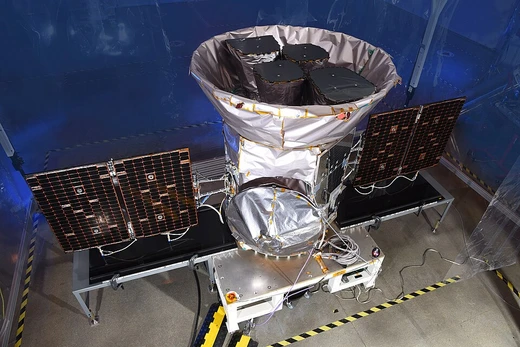
Kepler-124b was discovered using the transit method, which detects slight dips in a star's brightness as a planet passes in front of it. The Kepler telescope's high magnification and instruments enabled this detection. Initially only a planet candidate, Kepler-124b was later confirmed as an exoplanet through statistical analysis by a team at NASA Ames Research Center, which validated its existence with 99% assurance, along with two other planets in the system: Kepler-124c and Kepler-124d. Although scientists are confident about some of Kepler-124b's parameters, many remain unknown. The planet orbits its star inside the inner limit of the star's habitable zone, completing one orbit in about three Earth days.
Reader's Guide
Kepler-124b is notable as the smallest discovered planet in its system and the one with the closest orbit to its parent star. Its discovery contributed to the broader understanding of planetary systems around stars smaller than the Sun, demonstrating that such stars can host multiple planets in compact orbits. The transit method used to find Kepler-124b remains a cornerstone technique for exoplanet detection, and the statistical validation approach employed by the NASA Ames team helped confirm the planet's existence with high confidence. The planet's location inside the inner boundary of the habitable zone highlights the diversity of orbital environments in exoplanetary systems. Although many details about Kepler-124b remain uncharacterized, its confirmed parameters—such as its radius and orbital period—provide a foundation for comparative studies of small, close-in exoplanets. The system's three known planets offer a case study in planetary architecture around a low-mass star, and the 99% assurance level of Kepler-124b's validation underscores the reliability of statistical methods in exoplanet confirmation.
Did You Know?
- Kepler-124b is the smallest of three known planets in the Kepler-124 system.
- It orbits its star 96% closer than Earth orbits the Sun.
- Its orbital period is approximately three Earth days.
- The planet was validated with 99% assurance by a team at NASA Ames Research Center.
Frequently Asked Questions
What is Kepler-124b?
Kepler-124b is a small exoplanet identified in 2014 within the Kepler-124 system, located in the constellation Draco. It is the innermost and smallest confirmed world orbiting that star.
How big is Kepler-124b compared to Earth?
Its measured radius comes in at roughly 0.73 Earth radii, making it noticeably smaller than our planet. In Jovian terms that works out to about 0.065 Jupiter radii.
How far away is Kepler-124b from Earth?
The system sits approximately 359 parsecs out in the direction of Draco. That places it well beyond the reach of any current direct-imaging technology.
How long is a year on Kepler-124b?
The planet completes one full orbit around its host star in roughly three Earth days. Its host, Kepler-124, is a smaller, lower-mass star at about 69% of the Sun's mass.
Why is Kepler-124b considered notable among exoplanets?
It holds the distinction of being the smallest and innermost planet confirmed in the Kepler-124 system. Its compact size and tight orbit make it a useful data point for studying small worlds close to their host stars.
More in Transiting Exoplanets, Part 5 1-24
Spotted an error? Know more?
Reader corrections go straight into our review queue. Suggest an edit · How this site is sourced