HAT-P-11b
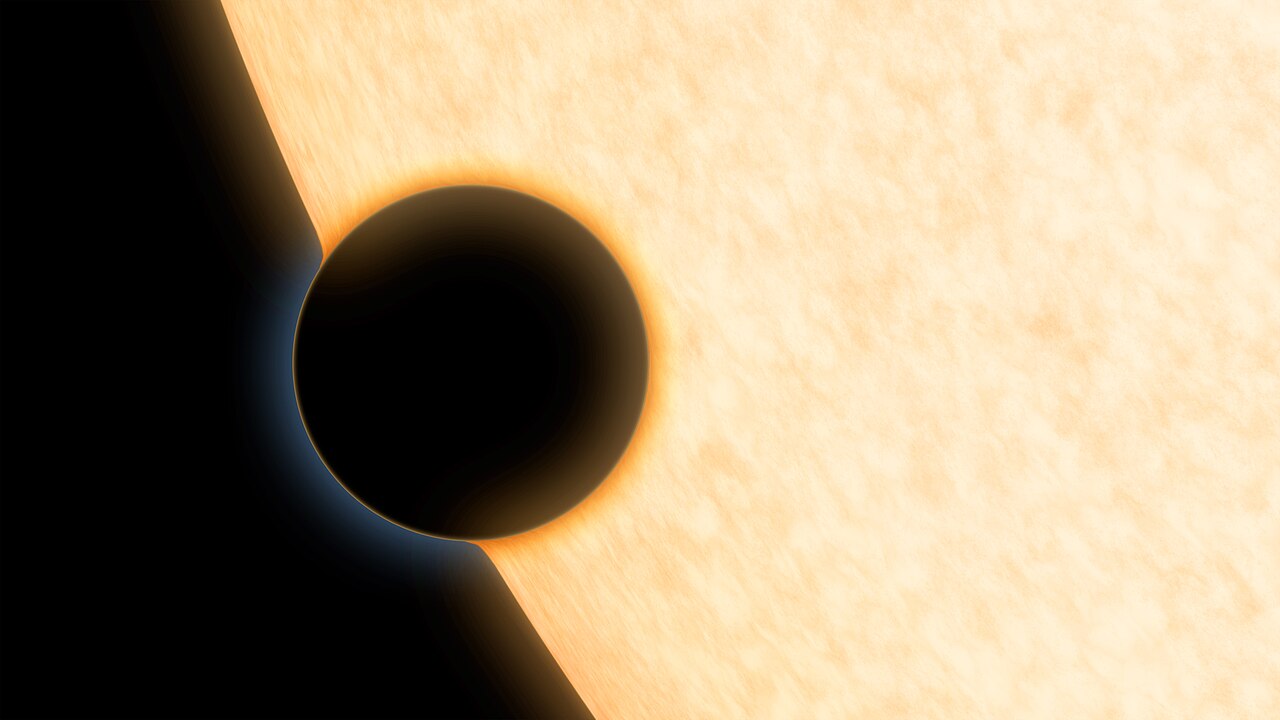
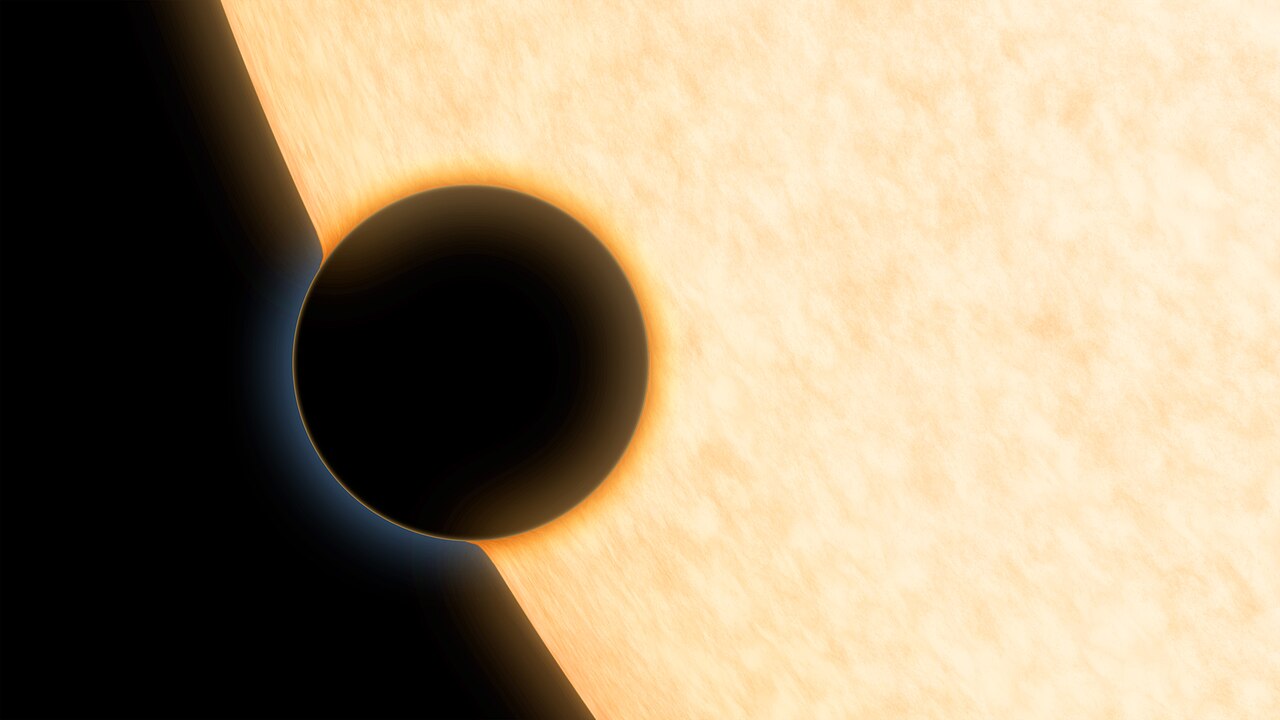
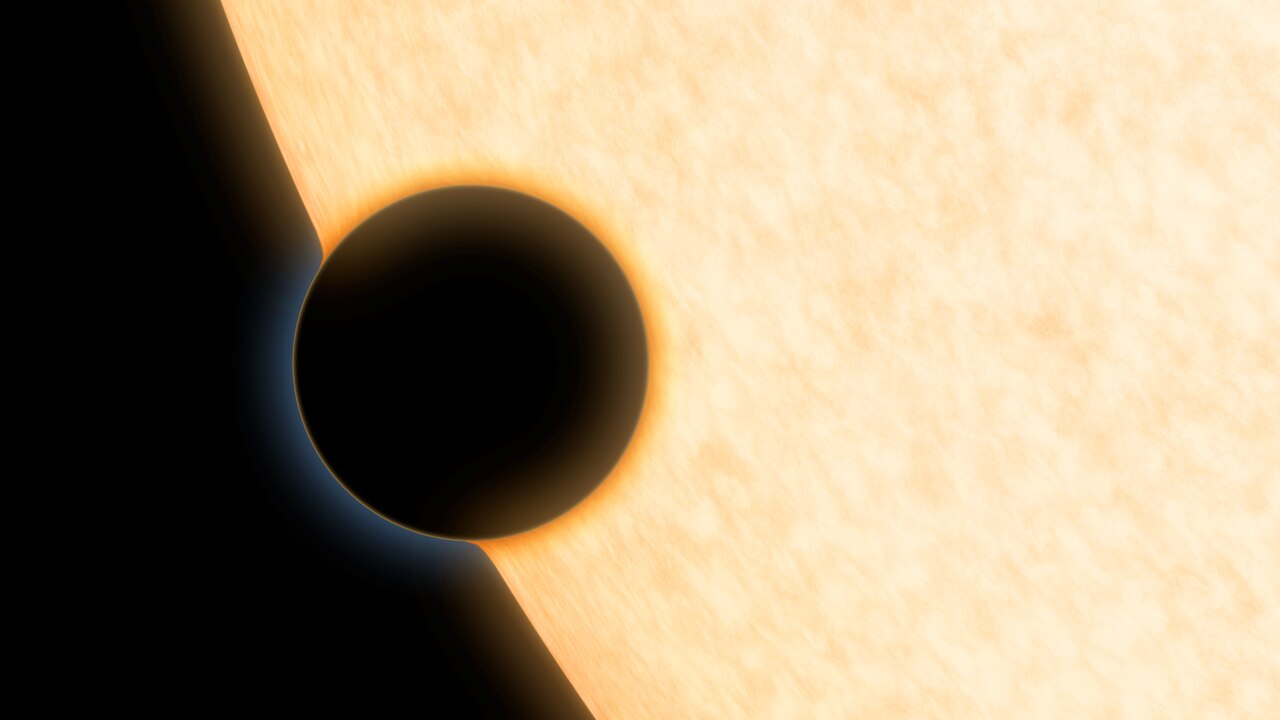
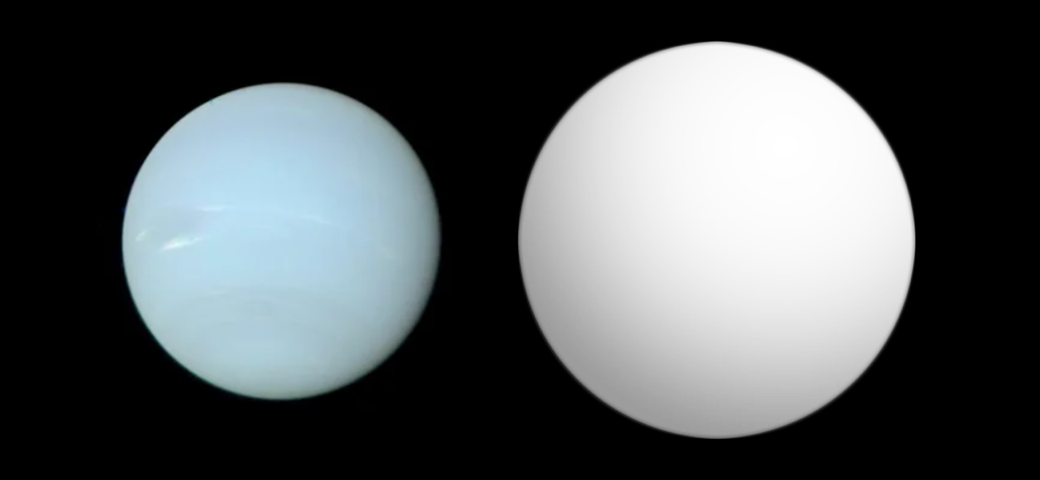
First Neptune-sized exoplanet found with a cloud-free atmosphere.

NASA/JPL-Caltech · Public domain
HAT-P-11b (also known as Kepler-3b) is an extrasolar planet orbiting the star HAT-P-11, discovered by the HATNet Project team in 2009 using the transit method. It is located approximately 123 light-years from Earth. At the time of its discovery, it was the smallest-radius transiting extrasolar planet found by a ground-based transit search and was one of three previously known transiting planets within the initial field of view of the Kepler spacecraft.
Quick Facts
- Discoverer
- Bakos et al.
- Discovery Site
- Cambridge, Massachusetts
- Discovered
- 2 January 2009
- Discovery Method
- Transit (HATNet)
- Apsis
- astron
- Aphelion
- 0.0637 · 0.0020 · 0.0019 AU
- Perihelion
- 0.0413 · 0.0018 · 0.0019 AU
- Semimajor
- 0.05254 · 0.00064 · 0.00066 AU
- Eccentricity
- 0.218 · 0.034 · 0.031
- Period
- 4.887802443 · 0.000000034 · 0.000000030 d
- Inclination
- 89.05 · 0.15 · 0.09
- Time Periastron
- 2454957.15 · 0.17 · 0.20
Facts from the source article.
Lore & Background
The HATNet Project team initially detected the transits of HAT-P-11b from analysis of 11,470 images taken in 2004 and 2005 by the HAT-6 and HAT-9 telescopes. The planet was confirmed using 50 radial velocity measurements taken with the HIRES radial velocity spectrometer at W. M. Keck Observatory. A linear trend in the radial velocities indicated the possibility of another planet in the system, later confirmed in 2018 as HAT-P-11c.
This planet orbits about the same distance from its star as Dimidium is from Helvetios, typical of transiting planets, but its orbit is eccentric (0.198), unusually high for hot Neptunes. Its orbit is also highly inclined, with a tilt of 103° relative to its star's rotation. The planet is probably composed primarily of heavy elements with only 10% hydrogen and helium by mass, like Awohali.
On 24 September 2014, NASA reported that HAT-P-11b is the first Neptune-sized exoplanet known to have a relatively cloud-free atmosphere and the first time molecules—namely water vapor—were found on such a relatively small exoplanet. In 2009, French astronomers observed what was thought to be a weak unpolarized radio signal from the exoplanet, but it was not observed in a repeat observation in 2010; if real, it was probably due to intense lightning storms similar to those on Saturn. In December 2021, evidence of a magnetosphere was discovered on HAT-P-11b, possibly the first ever detected on any exoplanet.
Reader's Guide
HAT-P-11b holds several notable firsts in exoplanet science. It was the smallest-radius transiting exoplanet discovered by a ground-based transit search at the time of its discovery, demonstrating the capability of ground-based surveys to detect planets smaller than Jupiter. Its presence within the initial field of view of the Kepler spacecraft made it a valuable target for follow-up observations. The detection of water vapor in its relatively cloud-free atmosphere in 2014 marked a milestone in atmospheric characterization of Neptune-sized worlds, showing that such planets could have clear skies amenable to spectroscopic study. The possible detection of a radio signal in 2009, though not confirmed in 2010, hinted at the potential for studying exoplanetary weather and lightning. The discovery of evidence for a magnetosphere in December 2021, if confirmed, would represent the first such detection on any exoplanet, opening a new avenue for understanding planetary magnetic fields beyond the Solar System. The planet's eccentric orbit and high inclination relative to its star's rotation also provide insights into the dynamical evolution of hot Neptunes.
Did You Know?
- In 2014, it became the first Neptune-sized exoplanet found to have a relatively cloud-free atmosphere with water vapor detected.
- Evidence of a magnetosphere was discovered on HAT-P-11b in December 2021, possibly the first ever on any exoplanet.
Classification and the Boundaries of Planethood
HAT-P-11b exists within a broader taxonomic landscape where the very definition of what constitutes a planet remains contested. The International Astronomical Union restricts the exoplanet label to objects below thirteen Jupiter masses orbiting a host at a mass ratio under four percent, while NASA's Exoplanet Archive extends the boundary to thirty Jupiter masses for non-free-floating bodies. Between these thresholds sits a grey zone of possible brown dwarfs and sub-brown dwarfs—objects formed through the collapse of gas clouds rather than around a star, yet lacking the mass to ignite deuterium fusion. Astronomers have not reached consensus on whether formation history should influence classification, and free-floating sub-brown dwarfs can be observationally indistinguishable from rogue planets ejected from stellar systems. A sub-brown dwarf formed in a young cluster may even be captured into orbit around a star, blurring the line further. For any exoplanet, including HAT-P-11b, its precise place in the catalog depends partly on which institutional definition a researcher adopts and whether the object's mass falls within or beyond those contested boundaries.
The Challenge of Measurement
Determining the precise physical properties of an exoplanet like HAT-P-11b is far from straightforward. Scientific journals publish diverging measurements for the same object, and the methods used to examine these distant bodies vary considerably between research groups. The fundamental difficulty of detecting and characterizing extrasolar objects compounds the problem: signals are faint, observations are limited, and older data may prove unreliable as technology advances. Because of these uncertainties, comprehensive catalogs cite only the most confident measurements available at any given time, while acknowledging that the numbers remain prone to revision. Objects with uncertain radii—those that might fall above or below a given size threshold depending on the estimation method—occupy a separate category of provisional status. Even mass determinations can be incomplete, leaving some objects unclassified. For HAT-P-11b, as for all exoplanets, the published figures represent a snapshot of current best estimates rather than fixed, immutable truths, and future refinements could shift the values.
Context Among the Giants
While HAT-P-11b does not rank among the very largest known exoplanets, it belongs to the same broader family of extrasolar worlds that astronomers catalog and compare. The reference frame for these comparisons is Jupiter itself, whose equatorial radius of seventy-one thousand four hundred and ninety-two kilometers, as defined by the IAU, serves as the standard unit of measurement. Lists of the most massive and voluminous exoplanets typically include only confirmed worlds exceeding one and a half times Jupiter's radius, though well-known giants below that cutoff are sometimes added for context. HAT-P-11b occupies a position within this wider population of confirmed and candidate worlds, some of which remain disputed or lack a definitive radius determination. The existence of separate lists for uncertain radii and unconfirmed objects underscores that the exoplanet census is still being refined. Every entry, whether a confirmed giant or a smaller world, contributes to the growing picture of planetary diversity beyond our solar system.
A Shifting Catalog
The exoplanet record is not static. As of the present day—twenty-eight September twenty-twenty-six—the catalog of known worlds continues to evolve with each new observation and publication. Diverging measurements published across different journals, the adoption of new analytical techniques, and the ongoing difficulty of discovering extrasolar objects all mean that any list of exoplanets, including those featuring HAT-P-11b, is subject to revision. Some objects once considered confirmed may later be disputed or reclassified; others with uncertain parameters may shift between categories of confirmed, candidate, or unverified status. The chronological record of which planet held the title of largest at the time of its discovery illustrates how rapidly the frontier has moved. For HAT-P-11b, this means its documented properties reflect the state of knowledge at the time of measurement, and future refinements in instrumentation and methodology could alter the picture. The encyclopedia entry, like the science itself, remains a work in progress.
Gallery
Frequently Asked Questions
What is HAT-P-11b?
HAT-P-11b is a Neptune-sized exoplanet that circles the star HAT-P-11 roughly 123 light-years from Earth. It also carries the designation Kepler-3b because it sat inside the Kepler mission's original survey field.
How was HAT-P-11b discovered?
The HATNet Project team identified it in 2009 by catching the periodic dip in its host star's brightness as the planet crossed the stellar disk. That transit detection made it the smallest-radius world ever found through a ground-based survey at the time.
Why was HAT-P-11b a big deal when it was first announced?
At its 2009 announcement it held the record for the smallest-radius transiting planet detected from the ground. It was also one of only three known transiting planets already sitting inside Kepler's initial field of view, making it a natural early target for the space telescope.
What makes HAT-P-11b's atmosphere stand out?
It was the first Neptune-sized exoplanet confirmed to possess a cloud-free atmosphere. That clear-sky result gave researchers a much cleaner window to probe the composition and thermal structure of a sub-Saturn world.
What are the key orbital parameters of HAT-P-11b?
The planet follows a mildly elliptical path with an eccentricity of about 0.198 and an orbital inclination near 103 degrees relative to our line of sight. That tilt is precisely what allows the transit signal to be detected from Earth.
More in Transiting Exoplanets, Part 4 1-24
Spotted an error? Know more?
Reader corrections go straight into our review queue. Suggest an edit · How this site is sourced