Kepler-5b
One of Kepler's first five exoplanets, a hot Jupiter with extreme heat.
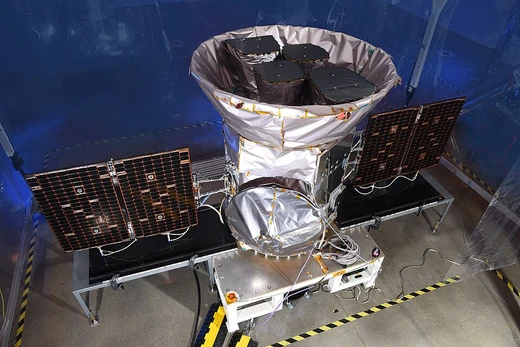
Kepler-5b is a hot Jupiter exoplanet discovered by NASA's Kepler spacecraft, one of the first five planets found by the mission. It orbits a subgiant star in the Cygnus constellation and is notable for its extreme conditions: high temperature, large size, and very short orbital period.
Quick Facts
- Discovered
- 2010-01-04
- Discovery Method
- Transit (Kepler Mission)
- Apsis
- astron
- Semimajor
- 0.05064 ±
- Eccentricity
- 0
- Period
- 3.54846 ± 0.000032 d
- Inclination
- 86.3 ± 0.6
- Star
- Kepler-5
- Albedo
- 0.12±0.04
- Single Temperature
- 216981| · 113 K.
Facts from the source article.
Lore & Background
Kepler-5b was first flagged as a possible transiting planet from Kepler's early science data and reclassified as a Kepler Object of Interest (KOI-18). Follow-up observations, including speckle imaging at the WIYN and Palomar observatories, and radial velocity measurements from the Keck Observatory's HIRES instrument, confirmed its planetary nature. The discovery was announced at the 215th meeting of the American Astronomical Society on January 4, 2010.
The host star, Kepler-5, is a subgiant more massive and larger than the Sun, with a metallicity 1.10 times solar iron levels. The planet is a hot Jupiter with about twice Jupiter's mass and 1.5 times its radius, making it less dense than water. It orbits every 3.5 days at a distance of 0.051 AU, and is likely tidally locked. Its nightside temperature was estimated in 2015 to be 2169 K.
Reader's Guide
Kepler-5b holds significance as one of the first five exoplanets discovered by the Kepler mission, demonstrating the spacecraft's ability to detect transiting planets around distant stars. Its extreme characteristics—high equilibrium temperature of 1868 K, large size, and short orbital period—make it a valuable target for studying planets under extreme conditions. The planet's low density, comparable to Saturn's, and its tidal locking provide insights into the structure and atmospheric behavior of hot Jupiters. The discovery team noted its potential for further study of planetary environments in extreme states. The planet's confirmation involved a multi-observatory effort, including the Nordic Optical Telescope and Keck Observatory, establishing a pattern for validating Kepler candidates. Its inclusion in the initial batch of Kepler discoveries helped set the stage for the mission's broader exoplanet census.
Did You Know?
- Kepler-5b has an equilibrium temperature of 1868 K, about fifteen times hotter than Jupiter.
- The planet's density is 0.894 g/cm³, less than that of pure water.
- It orbits its host star every 3.5485 days at a distance of 0.05064 AU.
Discovery and Initial Characterization
In 2016, Kepler-1638b was confirmed as a real world through a large-scale statistical validation effort that cleared hundreds of candidate planets from the Kepler space telescope's catalog at once. At the time of its announcement, the planet was classified as a super-Earth, with a measured radius of roughly 1.87 Earth radii (with an uncertainty band of plus 0.33 and minus 0.22) and a predicted mass of about 4.16 times that of Earth. It circles its host star at a distance of 0.745 astronomical units, completing one full orbit in approximately 259.3 days. That orbital period places it squarely within the system's habitable zone, the range of distances where liquid water could theoretically persist on a rocky surface. These early parameters painted a picture of a modest, possibly temperate world, and the planet quickly earned a spot on lists of potentially habitable exoplanets. The confirmation was not the product of a single dramatic transit event but rather the cumulative statistical weight of many light curves, a hallmark of the Kepler mission's approach to building a census of distant worlds.
The Gaia Distance Revision
The initial physical parameters for Kepler-1638b were all derived before the first direct parallax measurement of its host star became available. When the European Space Agency's Gaia satellite released its second data release in 2018, the star's distance was pinned down at roughly 1,548 parsecs, equivalent to about 5,050 light-years. That figure was dramatically larger than the pre-Gaia estimate of approximately 764 parsecs, or 2,490 light-years. Because the apparent size of a transiting planet depends on the star's true radius, the corrected distance forced astronomers to recalculate. A 2018 study using the updated stellar parameters found the planet's radius to be closer to 3.23 Earth radii, with an uncertainty of plus 0.20 and minus 0.32. At that size, Kepler-1638b would no longer qualify as a super-Earth. Instead, it would fall into the ice-giant category, comparable in bulk to Neptune. More critically, an ice giant of that scale cannot sustain an Earth-like surface environment, effectively removing the planet from the list of potentially habitable worlds despite its continued residence in the habitable zone.
The Host Star and System Architecture
Kepler-1638 is a G-type subgiant star, meaning it has evolved slightly beyond the main-sequence phase that our own Sun currently occupies. It sits in the constellation Cygnus, the Swan, a familiar summer constellation visible from mid-northern latitudes. At the revised distance of roughly 5,000 light-years, the star is far too dim to be seen without a telescope, and its light has been traveling for five millennia before reaching Earth. The system is known to host a single confirmed planet, Kepler-1638b, which orbits at 0.745 AU with a period of about 259 days. No additional planets have been detected in the system as of the available data. The subgiant classification of the host star is noteworthy because it implies the star is somewhat larger and more luminous than a typical main-sequence G star, a fact that directly influenced the recalculated size of the planet after the Gaia distance correction. The combination of a single known world, a moderately evolved host, and a very large distance makes Kepler-1638 a relatively sparse and remote system by exoplanet standards.
Record-Breaking Distance and Broader Significance
As of January 2021, Kepler-1638 held the distinction of being the most distant star known to harbor a planet within its habitable zone. That record was a direct consequence of the Gaia DR2 distance measurement, which pushed the system out to roughly 5,050 light-years and made it the farthest potentially habitable exoplanet in the catalog at that time. The planet's inclusion on lists of potentially habitable worlds was based on the pre-Gaia parameters, when its smaller estimated radius still allowed for a rocky, super-Earth interpretation. The broader context of its discovery is equally important: Kepler-1638b was not confirmed through a single targeted observation but was validated statistically alongside hundreds of other Kepler candidates in a single 2016 study. This batch-validation approach was central to the Kepler mission's strategy of building a large, statistically robust census of exoplanets rather than confirming one world at a time. Even after the Gaia revision recast the planet as a likely ice giant, the system remains a useful case study in how distance measurements can fundamentally alter our understanding of a world's nature and habitability.
Frequently Asked Questions
What is Kepler-5b?
Kepler-5b is a hot Jupiter exoplanet that was among the very first five worlds catalogued by NASA's Kepler space telescope. It circles a subgiant star located in the Cygnus constellation and is characterized by scorching temperatures and a very brief orbit.
How massive and large is Kepler-5b?
The planet weighs about 2.114 times the mass of Jupiter while stretching to roughly 1.431 Jupiter radii in diameter. Its low density of 0.894 g/cm³ suggests a puffy, inflated structure typical of close-in gas giants.
How fast does Kepler-5b orbit its star?
It completes one full lap around its host star in just 3.55 days, tracing a path at a semi-major axis of about 0.0506 AU. That razor-thin distance is what drives its extreme equilibrium temperature.
Why does Kepler-5b matter in exoplanet science?
As one of the first five planets confirmed by the Kepler mission, it helped validate the transit-detection method on a broader scale. Its combination of a large radius, short period, and measurable density made it an early benchmark for hot-Jupiter modeling.
What is Kepler-5b's orbital inclination?
The orbit is tilted at 86.3 degrees relative to our line of sight, which is just enough for the planet to pass in front of its star during transit. That near-edge-on geometry is precisely what allowed Kepler to spot the periodic dimming.
More in Transiting Exoplanets, Part 2 1-24
Spotted an error? Know more?
Reader corrections go straight into our review queue. Suggest an edit · How this site is sourced