Ayurveda
Knowledge of longevity: an ancient pseudoscientific system of alternative medicine.
Last updated

Gpkp · CC BY-SA 4.0
Ayurveda, an alternative medicine system originating in the Indian subcontinent, is widely used in India and Nepal, with up to 80% of the population reporting its use. Its theories are considered pseudoscientific, and many preparations, especially in the rasashastra tradition, contain dangerous levels of lead, mercury, and arsenic. No evidence supports Ayurveda as a treatment or cure for cancer.
Quick Facts
- Field
- Alternative medicine
- Region
- Indian subcontinent
- Known for
- System of medicine based on dosha balance
- eight components
- and herbal and metal preparations
- Earliest texts
- First centuries CE
- Etymology
- Sanskrit: āyus (life) + veda (knowledge), meaning 'knowledge of longevity'
Facts from the source article.
Lore & Background
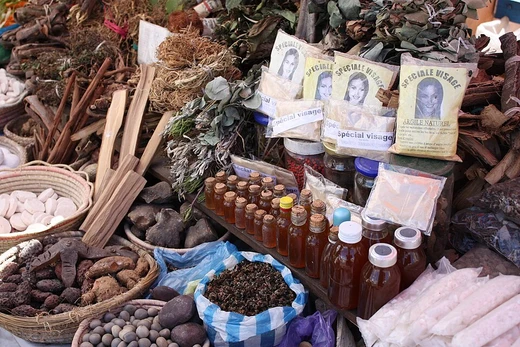
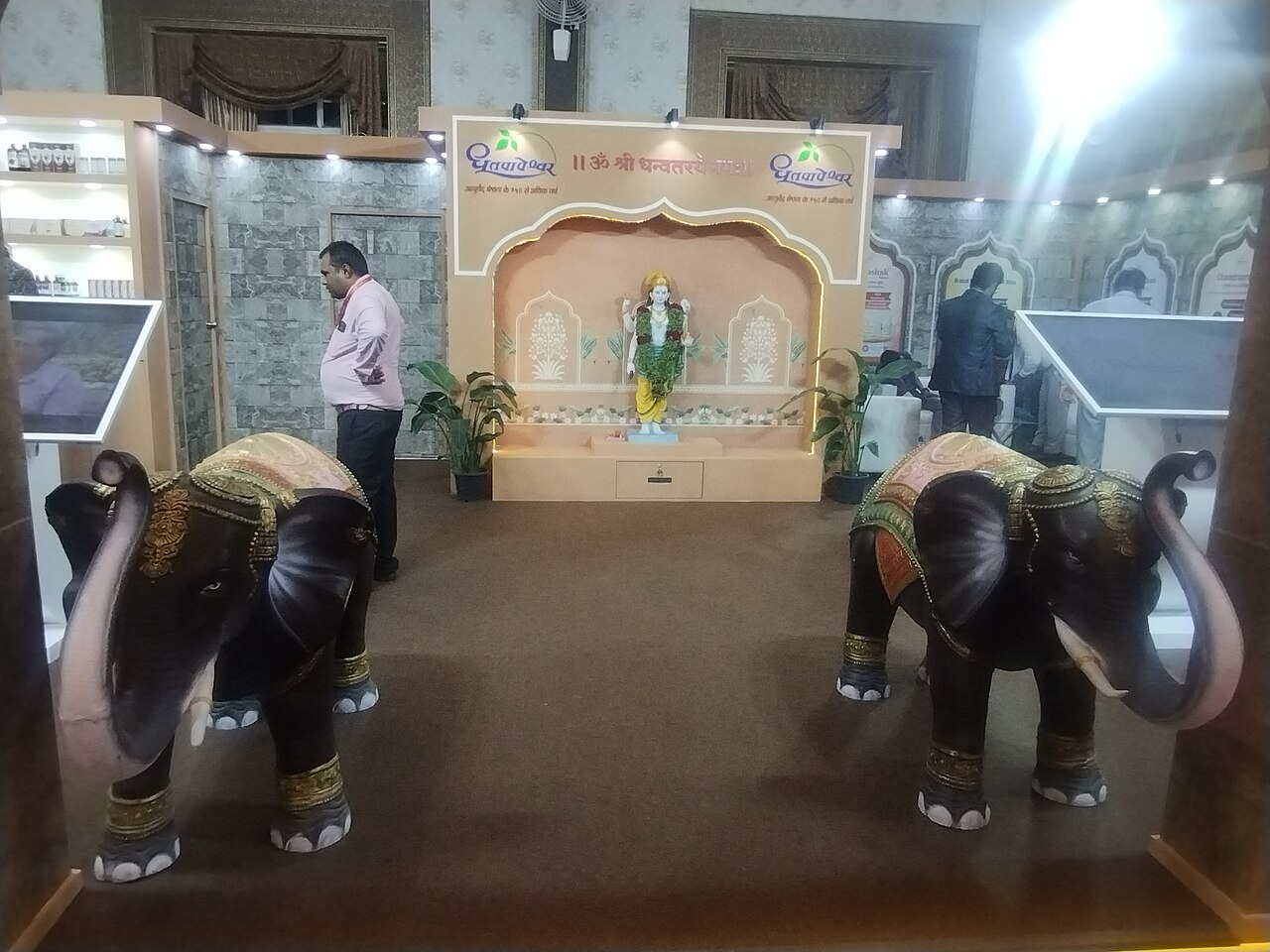
Ayurveda is an alternative medicine system from the Indian subcontinent, associated with the Hindu god Dhanvantari. Its therapies have evolved over more than two thousand years and include herbal medicines, special diets, meditation, yoga, massage, laxatives, enemas, and medical oils.
Early preparations relied almost entirely on complex herbal compounds from South Asian materia medica. After the eleventh century, minerals and metals became more common in the pharmacopoeia, influenced by early Indian alchemy, or rasashastra. Ancient Ayurvedic texts also described surgical techniques such as rhinoplasty, lithotomy, sutures, cataract surgery, and removing foreign objects.
Historical evidence for Ayurvedic terms and concepts appears in the Buddhist Canon from around the middle of the first millennium BCE. The main classical texts date in their present form to the first centuries CE.
Like many ancient texts, they begin with stories of medical knowledge passed from gods to sages to human physicians. Printed editions of the Sushruta Samhita frame the work as teachings of Dhanvantari, incarnated as King Divodāsa of Varanasi, to physicians including Sushruta. However, the oldest manuscripts omit this frame and attribute the work directly to King Divodāsa.
The BAMS Degree and Its Dual Curriculum
The Bachelor of Ayurvedic Medicine and Surgery stands as a professional qualification dedicated to the study and practice of Ayurveda, a system of alternative medicine whose theoretical foundations and clinical applications are widely regarded as pseudoscientific. The degree is available across four South Asian nations—India, Nepal, Bangladesh, and Sri Lanka—each of which maintains its own institutional framework for training practitioners. In India, the syllabus weaves together a substantial body of classical Ayurvedic disciplines, including Rachana Sharira, Kriya Sharira, Dravyuaguna, Svasthavritta and Yoga, Roga Nidana and Vikriti Vijnana, Kāyachikitsā, Kaumara Bhritya, Prasuti Tantra, Shalya Tantra, and Shalakya Tantra.
Alongside these traditional subjects, students must also engage with modern medical sciences such as human anatomy, physiology, pathology, pharmacology, toxicology, forensic medicine, and specialties ranging from ophthalmology to gynecology and surgery. The curriculum further demands engagement with ancient and medieval Ayurvedic texts, occasionally studied in the original Sanskrit. Prominent Indian institutions offering the degree include the National Institute of Ayurveda and the All India Institute of Ayurveda in Delhi.
Legal Boundaries: Who May Prescribe What
India's regulatory landscape for AYUSH practitioners rests on a legal principle: a doctor may practice exclusively within the system of medicine in which they hold qualification and registration. The Supreme Court of India reinforced this boundary in its 1998 judgment in Dr. Mukhtiar Chand & Others v. State of Punjab, ruling that AYUSH practitioners cannot prescribe allopathic medicines.
Yet the court carved out an exception—state governments retain the authority to issue notifications permitting limited prescription of specified modern medicines. In practice, this has produced a patchwork of state-level permissions. More than thirteen states, including Assam, Tamil Nadu, Maharashtra, Himachal Pradesh, and Andhra Pradesh, now allow BAMS graduates to prescribe allopathic drugs. In Maharashtra, following protests by BAMS doctors, practitioners gained the right to prescribe modern medicines and perform minor surgical procedures.
Karnataka takes a narrower approach, permitting BAMS doctors in rural primary health centres to administer modern-medicine treatment strictly in emergencies. Kerala, by contrast, has maintained a restrictive stance; during the COVID-19 pandemic its government barred AYUSH practitioners from prescribing modern drugs for the virus, confining their role to preventive and immunity-related care. The Kerala High Court, while upholding these restrictions, acknowledged that allopathic prescriptions remain permissible in life-threatening emergencies.
WHO Perspectives and Global Standing
The World Health Organization has addressed Ayurveda's place in global health on two notable occasions. A 2001 report confirmed that the system was widely practiced across India, Nepal, Bangladesh, and Sri Lanka—the same four nations that offer the BAMS degree. However, the WHO noted that Ayurveda was generally not integrated into the national health systems of countries outside the Indian subcontinent, underscoring its regional rather than universal character. A subsequent 2020 WHO report acknowledged India's long history of combining allopathic and traditional medicine systems, including through medical education.
Yet the organization drew a sharp structural distinction, describing AYUSH and conventional medical systems as separate and parallel at the levels of governance, organisation, education, and service delivery. This characterization highlights that, despite coexisting within the same national framework, the two systems operate in distinct institutional silos. It is also worth noting that Ayurveda is broadly classified as a form of alternative medicine, with its underlying theory and practice widely regarded as pseudoscientific. The Central Council of Indian Medicine serves as the apex regulatory body in India, overseeing both the education and practice of BAMS-qualified doctors.
Postgraduate Pathways and Educational Gaps
Beyond the BAMS degree, India's academic ecosystem offers a range of advanced qualifications for Ayurveda graduates. Students may pursue a master's degree in the form of MD (Ayurveda) or MS (Ayurveda), progress to a PhD, or earn clinical doctorate degrees in traditional and complementary medicine at the university level. Career opportunities extend into research, hospital and healthcare administration, and health supervision, suggesting a broad professional landscape for qualified practitioners. However, the quality of foundational training has drawn scrutiny.
A 2009 nationwide survey conducted by researchers at Banaras Hindu University, which included a total of 1,022 students and teachers of Ayurveda, revealed that BAMS graduates generally lack the required exposure to essential clinical skills. A companion paper derived from the same study identified multiple global challenges confronting the Ayurveda education sector. These findings raise significant questions about whether the dual curriculum—spanning classical Sanskrit texts and modern medical sciences—equips graduates with the practical competencies needed for safe patient care, particularly in a system whose theoretical foundations are widely considered pseudoscientific.
Reader's Guide
In Ayurveda texts, dosha balance is emphasised, and suppressing natural urges is considered unhealthy and claimed to lead to illness. Ayurveda treatises describe three elemental doshas: vāta, pitta and kapha, and state that balance of the doshas results in health, while imbalance results in disease. Ayurveda treatises divide medicine into eight canonical components. Ayurveda practitioners had developed various medicinal preparations and surgical procedures from at least the beginning of the common era.
The term āyurveda is composed of two words, āyus, 'life' or 'longevity', and veda, 'knowledge', translated as 'knowledge of longevity' or 'knowledge of life and longevity'. The eight components are: Kāyachikitsā (general medicine), Kaumāra-bhṛtya (pediatrics), Śalyatantra (surgical techniques), Śhālākyatantra (treatment of ailments of openings in the upper body), Bhūtavidyā (pacification of possessing spirits), Agadatantra (toxicology), Rasāyantantra (rejuvenation and tonics), and Vājīkaraṇatantra (aphrodisiacs). The central philosophical ideas of Ayurveda show parallels with Samkhya and Vaisheshika philosophies, as well as with Buddhism and Jainism. Moderation is emphasized.
According to Ayurveda, the human body is composed of tissues (dhatus), waste (malas), and humoral fluids (doshas). The seven dhatus are chyle, blood, muscles, fat, bone, marrow, and semen. The classic treatises divided bodily substances into five classical elements: earth, water, fire, air and ether.
There are also twenty gunas (qualities) organized in ten pairs. The three doshas are vata, pitta, and kapha. Ama refers to the concept of anything that exists in a state of incomplete transformation. Ayurveda has eight ways to diagnose illness: nadi (pulse), mootra (urine), mala (stool), jihva (tongue), shabda (speech), sparsha (touch), druk (vision), and aak (not fully specified in the source).
Did You Know?
- Ayurveda has been adapted for Western consumption, notably by Baba Hari Dass in the 1970s and Maharishi Ayurveda in the 1980s.
- The earliest classical Sanskrit works on Ayurveda describe medicine as being divided into eight components, first found in the Mahābhārata, c. 4th century BCE.
- In medieval taxonomies, Ayurveda is assigned a place as a subsidiary Veda (upaveda).
Frequently Asked Questions
What is Ayurveda?
Ayurveda is an alternative medicine system with deep roots in the Indian subcontinent, whose Sanskrit name literally means 'knowledge of longevity.' It organizes health around balancing three constitutional types called doshas and draws on herbal as well as metal-based preparations for treatment.
What are Ayurveda's core principles?
The system centers on diagnosing and restoring equilibrium among the three doshas—Vata, Pitta, and Kapha. Its therapeutic toolkit spans eight distinct components, ranging from dietary guidance to specialized herbal and mineral formulas.
How old is Ayurveda and where does it originate?
The earliest surviving written texts date to the first centuries CE, though oral lineages likely stretch back further. The practice remains most deeply embedded in India and Nepal, where as many as 80 percent of residents report turning to it for their health.
More in Traditional & Alternative Medicine
Sources
Compiled from Wikipedia and the sources listed below. Text from Wikipedia is available under CC BY-SA 4.0; this entry is adapted from it.
- Wikipedia: Ayurveda (CC BY-SA 4.0).
- Word definitions: the Codexery glossary, each quoted from its Wikipedia article.
Spotted an error? Know more?
Reader corrections go straight into our review queue. Suggest an edit · How this site is sourced