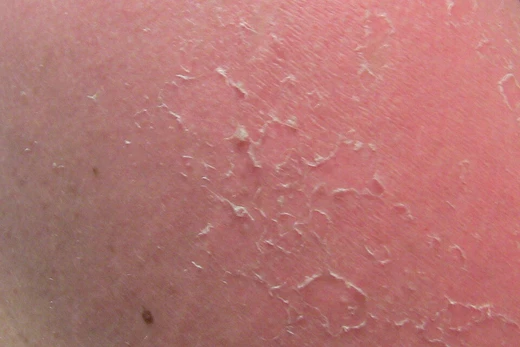
Pallor
Pale skin from reduced oxyhaemoglobin, often clinically significant with general pallor.

Atomsmex · CC BY-SA 4.0
Pallor is a pale coloration of the skin resulting from a reduced amount of oxyhaemoglobin. It can be caused by illness, emotional shock or stress, stimulant use, or anemia, and may also be visible as pallor of the conjunctivae of the eyes on physical examination.
Quick Facts
- Field
- Hematology, Rheumatology, Dermatology
- Differential
- Hypopigmentation
Facts from the source article.
Lore & Background
Pallor is more evident on the face and palms and can develop suddenly or gradually, depending on the cause. It is not usually clinically significant unless accompanied by a general pallor affecting the lips, tongue, palms, mouth, and other mucous membranes. It is distinguished from hypopigmentation or simply a lightly-melanated complexion.
Reader's Guide
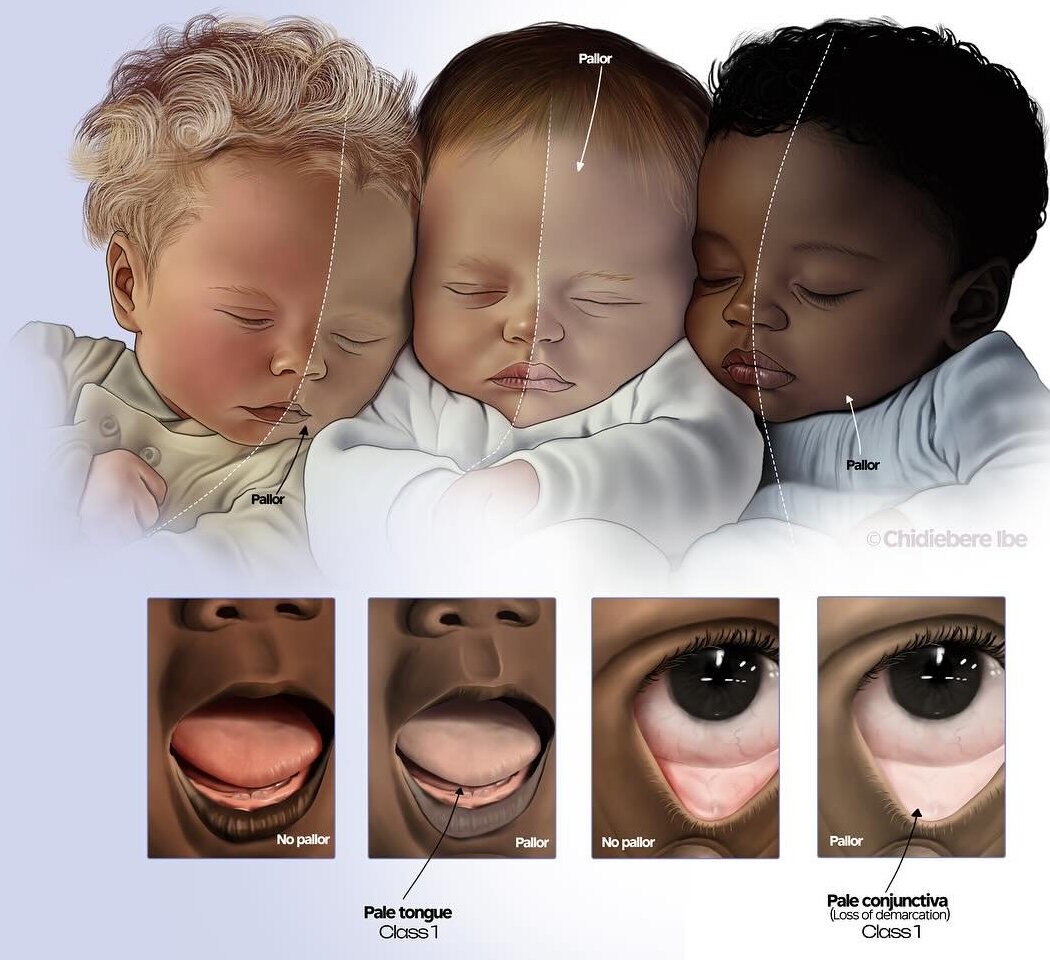
In patients with dark skin, pallor is more subtle and harder to detect, often manifesting as a grayish or ashy tone in very dark brown skin, or a yellowish tone in lighter brown skin. Assessing the palms, soles, and mucous membranes with appropriate lighting may make detection easier. Causes include migraine, excess estradiol, osteoporosis, emotional responses, anorexia, anemia, iron deficiency, vitamin B12 deficiency, shock, acute compartment syndrome, frostbite, common cold, cancer, hypoglycaemia, bradycardia, panic attack, medications, lead poisoning, motion sickness, heart disease, peripheral vascular disease, hypothyroidism, hypopituitarism, scurvy, tuberculosis, sleep deprivation, pheochromocytoma, squeamishness, visceral larva migrans, orthostatic hypotension, methyldopa, loss of appetite, space adaptation syndrome, fibromyalgia, Buerger's disease, hypovolemia, and death.
Did You Know?
- Pallor is caused by a reduced amount of oxyhaemoglobin.
- In dark skin, pallor may appear grayish, ashy, or yellowish.
- Pallor can be caused by emotional shock, stress, stimulant use, or anemia.
What Pallor Is and How It Manifests
Pallor is a visible lightening of the skin that occurs when the concentration of oxyhaemoglobin in the blood drops below its usual level. The discoloration may emerge abruptly or creep in over time, a distinction that often points toward different underlying triggers. The face and the palms of the hands are the areas where the change is most conspicuous, but a clinician performing a physical examination can also spot it in the conjunctivae—the thin membranes lining the eyelids and covering the whites of the eyes. A crucial diagnostic step is separating true pallor from hypopigmentation, which involves an actual absence or loss of melanin, and from a naturally lightly-melanated complexion that has never been pale in a pathological sense. On its own, a mild facial or palmar pallor is rarely a red flag; it becomes clinically meaningful only when it generalizes across the lips, tongue, oral mucosa, and other membrane-rich regions of the body.
The Extraordinary Range of Triggers
The list of conditions and circumstances that can produce pallor reads almost like a catalogue of human vulnerability. At one end sit the everyday: a common cold, motion sickness, a bout of squeamishness, or a night of poor sleep. Emotional states—fear, embarrassment, grief, even rage—can drain color from the face in seconds. At the other end lie life-threatening emergencies such as shock, acute compartment syndrome, and the final stages of death. Between those poles sits a vast middle ground: anemias from blood loss, poor nutrition, or sickle cell disease; iron and vitamin B12 deficiencies; hypoglycaemia; bradycardia; heart disease; peripheral vascular disease; hypothyroidism; hypopituitarism; scurvy; tuberculosis; and cancer. Substances play a role too—amphetamines, ethanol, cannabis, lead poisoning, and even prescribed medications like ketorolac and methyldopa. Hormonal factors such as excess estradiol or estrone, and conditions as varied as osteoporosis, fibromyalgia, Buerger's disease, and space adaptation syndrome round out an impressively wide spectrum.
The Challenge of Detection in Darker Skin
For individuals with darker complexions, pallor presents a genuinely difficult diagnostic problem. The stark contrast that makes paleness obvious in lighter skin simply does not exist here. In people with very dark brown skin, the change may register as a subtle shift toward a grayish or ashy cast. In those with lighter brown skin, the same underlying reduction in oxyhaemoglobin might instead produce a faint yellowish tinge. Neither presentation is as immediately legible as the classic washed-out look described in standard references. Because of this, a clinician examining a patient with darker skin may need to turn to the palms, the soles of the feet, and the mucous membranes, and do so under appropriate lighting, to pick up the change that the face alone may not reveal. The practical consequence is that the warning sign can be overlooked or misread as a natural variation in tone, delaying identification of whatever condition is driving the pallor.
When Pallor Signals Something Serious
A brief flush of paleness across the cheeks after a stressful moment, a panic attack, or a migraine episode is, in most cases, nothing more than the body's transient response to a surge of emotion or a shift in blood flow. The clinical picture changes markedly, however, when the pallor is not confined to the face or hands. Once the lips, tongue, oral mucosa, and other membrane-rich areas join in the lightening, the finding points to a systemic reduction in circulating oxyhaemoglobin that demands further investigation. This generalized pattern is the hallmark that separates a benign, momentary blanch from a sign of anemia, cardiac compromise, hypovolemia, or a medication reaction. Equally important is the need to rule out look-alike presentations: hypopigmentation, a naturally light complexion, or the grayish-ashy shift seen in darker skin can all mimic true pallor. Getting that distinction right is what keeps a routine observation from becoming either a false alarm or a missed diagnosis.
Gallery


Frequently Asked Questions
Who is Pallor?
Pallor is a clinical sign in which the skin takes on an unusually pale or washed-out appearance because there is less oxygenated hemoglobin circulating in the capillaries than normal. It is not a disease itself but a visible cue that something in the body's oxygen-delivery system has shifted.
What are Pallor's powers or role in the body?
Its main 'role' is to act as a visible alarm flag: when a clinician sees pale skin or pale conjunctivae during a physical exam, it signals that oxygen-carrying capacity or peripheral blood flow has dropped below expected levels. In that sense, pallor functions as the body's way of making an internal imbalance externally readable.
What causes Pallor to show up?
A range of triggers can produce the sign, including acute illness, a sudden emotional shock or high stress, use of stimulant substances, and chronic conditions such as anemia. In each case the common thread is a temporary or sustained reduction in the amount of oxyhaemoglobin reaching the superficial vessels.
Why is Pallor important to fans of clinical signs?
It is one of the most immediately recognizable physical findings, making it a staple of bedside assessment and a frequent first clue that prompts further workup. Because it can appear in the conjunctivae as well as the skin, it offers a quick, non-invasive window into a patient's oxygenation status.
How does a Pallor 'story' typically resolve?
Once the underlying cause—whether it is a passing stress episode, an acute illness, or a treatable anemia—is identified and addressed, the skin coloration usually returns to its normal tone as oxyhaemoglobin levels stabilize. Persistent or unexplained pallor, however, warrants ongoing medical evaluation to rule out more serious conditions.
More in Symptoms and signs: Skin and subcutaneous tissue 1-23
Spotted an error? Know more?
Reader corrections go straight into our review queue. Suggest an edit · How this site is sourced