
Defecation
Biological process of eliminating feces from the digestive tract.

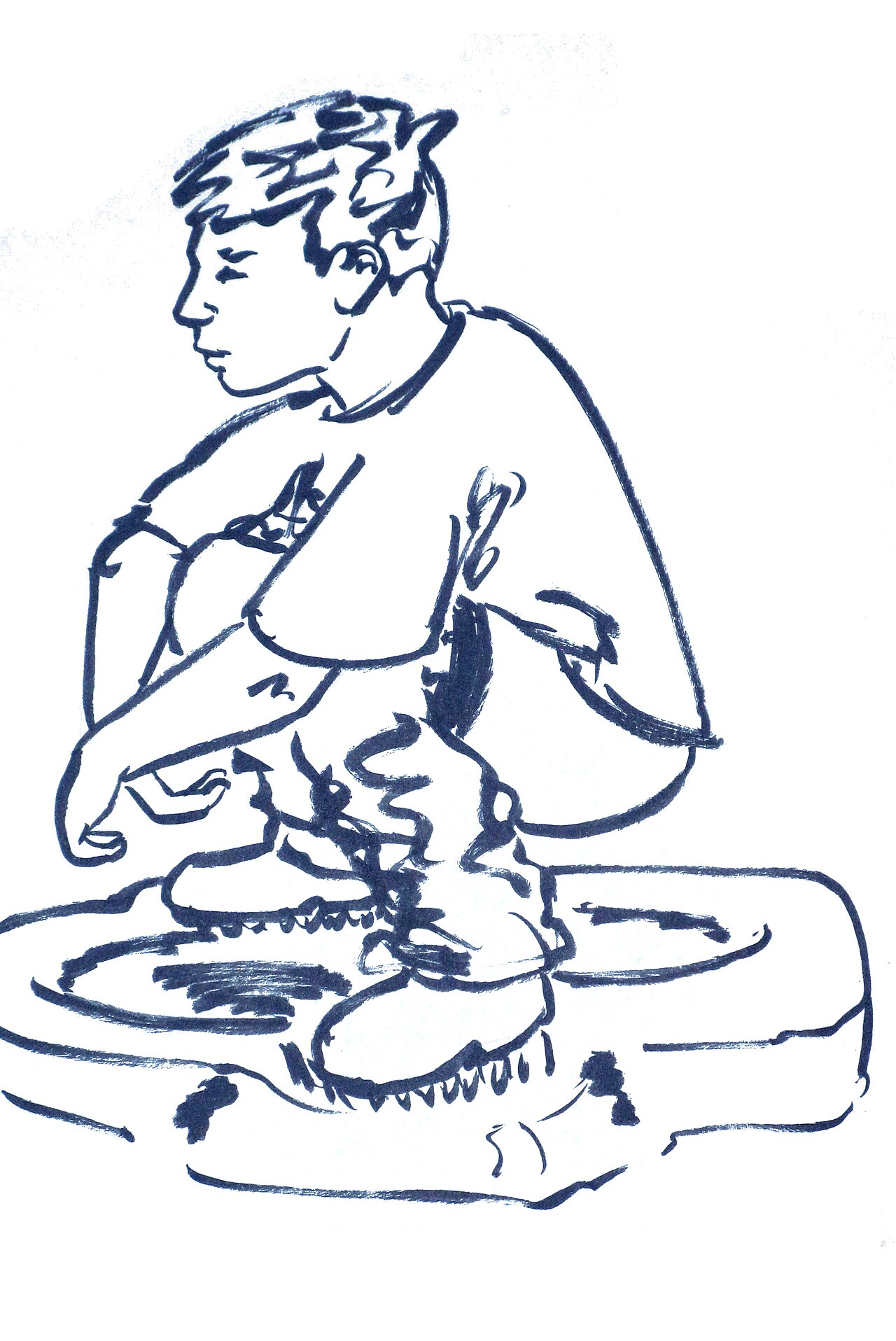
Rama · CC BY-SA 2.0 fr
Defecation (or defaecation) is the biological process by which organisms eliminate solid, semisolid, or liquid waste material known as feces from the digestive tract via the anus or cloaca. It follows digestion and is necessary for life. The act has a variety of names, ranging from technical to obscene to euphemistic, and forms the basis of scatological humor.
- Process
- Elimination of feces
- Frequency
- From a few times daily to a few times weekly
- Control
- Voluntary in adults; involuntary in infants
- Associated conditions
- Diarrhea, constipation, inflammatory bowel diseases, irritable bowel syndrome
- Hygiene concern
- Anal hygiene and disease transmission (e.g., E. coli)
- Cultural variation
- Squat toilets used by most of the world; sit-down toilets in the West since 19th century
Lore & Background
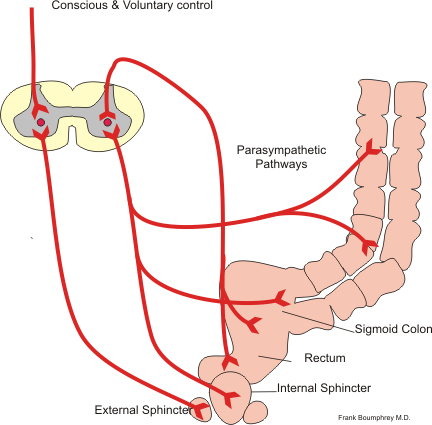
Defecation involves peristaltic waves moving fecal matter through the colon to the rectum. The rectum ampulla stores waste; stretch receptors trigger the urge to defecate. The internal anal sphincter is involuntary, while the external sphincter is under voluntary control in adults. Infants defecate by reflex. If the urge is ignored, reverse peristalsis returns feces to the colon for further water absorption.
Medical conditions associated with defecation include diarrhea and constipation, which can be serious. Inflammatory bowel diseases such as Crohn's disease and ulcerative colitis cause chronic inflammation, with symptoms like abdominal pain, diarrhea, and fatigue. Irritable bowel syndrome is also noted. Open defecation remains widespread in some developing countries, while developed nations use sewage treatment.
Reader's Guide
Defecation is a fundamental biological process with significant implications for health, hygiene, and culture. The frequency of bowel movements varies widely among individuals, influenced by diet, environment, and genetics. Disorders such as constipation and diarrhea can affect quality of life, while inflammatory bowel diseases require medical management. The practice of defecation is culture-dependent: squat toilets are used by the majority of the world, while Western societies adopted sit-down toilets with indoor plumbing in the 19th century. Open defecation persists in some developing regions, posing public health risks due to disease transmission. Understanding defecation is essential for maintaining digestive health and preventing contamination.
Did You Know?
- Birds expel urine and urates in the same mass as feces, while other animals may urinate simultaneously but the processes are spatially separated.
- Babies defecate a unique substance called meconium before eating external foods.
- The external anal sphincter is under voluntary control, while the internal anal sphincter is involuntary.
- Open defecation is still widespread in some developing countries, with some people defecating into the ocean.
What Obstructed Defecation Syndrome Actually Is
Obstructed defecation syndrome sits within the broader category of functional, or primary, constipation—a condition rooted in disrupted neuromuscular regulation of the colon and rectum, as well as impaired brain-to-gut signaling. Unlike the more familiar picture of constipation, which typically involves infrequent bowel movements and hard stools, ODS presents a distinctly different clinical profile. Patients may pass stool frequently and even with soft consistency, yet still experience a persistent sense of incomplete rectal emptying. Colonic transit time can be entirely normal, which sets ODS apart from slow transit constipation; the bottleneck instead localizes to the rectum and sigmoid colon. In 2018, the American Society of Colon and Rectal Surgeons refined the working definition, describing ODS as a subset of functional constipation in which patients report difficulty achieving full rectal evacuation, regardless of whether their weekly bowel movement count has actually dropped. This distinction matters clinically, because it means a patient who goes to the bathroom daily can still suffer from obstructed defecation, making the condition easy to overlook under a simple frequency-and-consistency framework.
A Tangle of Names and Definitions
One of the most persistent challenges in the medical literature surrounding obstructed defecation is the sheer proliferation of terminology. ODS is described as a loose umbrella term encompassing a constellation of symptoms driven by multiple, complex, and still poorly understood disorders that can be either functional or organic in nature. Some authors inappropriately equate ODS with anismus alone, even though anismus is only one major contributor among several. Others restrict the term to purely functional defecatory dysfunction with no identifiable pathological findings. The result is considerable confusion in published research. Neither the ICD-11 coding system nor the Rome-IV diagnostic framework actually uses the phrase 'obstructed defecation syndrome'; both instead employ the broader label 'functional defecation disorders.' At least one publication has criticized these official classifications as ambiguous and overly reliant on symptom descriptions rather than distinct etiopathological entities, proposing instead the descriptive term 'evacuation disorders' with subclassification by contributory factor. The American Society of Colon and Rectal Surgeons, together with the Colorectal Surgical Society of Australia and the Association of Coloproctology of Great Britain and Ireland, first issued a joint consensus statement in 2001, later revised by ASCRS alone in 2018, in an effort to bring some order to the nomenclature.
The Overlap Problem
A complicating factor in understanding obstructed defecation syndrome is that it rarely exists in isolation. ODS may or may not co-occur with other functional bowel disorders such as slow transit constipation or irritable bowel syndrome with constipation, and the overlap is substantial. Among all cases of primary constipation, reported figures show that 58 percent involve dyssynergic defecation, 47 percent involve slow transit constipation, and 58 percent involve irritable bowel syndrome—numbers that clearly cannot represent mutually exclusive categories. Indeed, roughly 60 percent of patients diagnosed with dyssynergic defecation simultaneously meet criteria for slow transit constipation. A study examining 1,411 patients with chronic constipation referred to a tertiary care center found that 68 percent had normal transit constipation, 28 percent had evacuation disorders, and fewer than 1 percent had slow transit constipation without any accompanying evacuation disorder. This pattern underscores that the recognized subtypes of primary constipation—dyssynergic defecation, colonic dysmotility, and IBS-C—frequently blend together in individual patients, making clean diagnostic boundaries difficult to draw and complicating treatment planning.
How Doctors Actually Diagnose It
Because obstructed defecation syndrome does not appear as a standalone entry in either ICD-11 or Rome-IV, clinicians must work through the 'functional defecation disorders' framework. Under Rome-IV criteria, the core feature is impaired evacuation during repeated defecation attempts, and the patient must simultaneously satisfy diagnostic criteria for functional constipation or irritable bowel syndrome with constipation. To confirm the diagnosis, at least two of three specific tests must yield abnormal results: a balloon expulsion test, anorectal manometry or anal surface electromyography, or imaging such as defecography. The category splits into two subtypes. Inadequate defecatory propulsion, coded F3a, reflects insufficient propulsive forces during attempted defecation as measured via manometry, with or without inappropriate contraction of the anal sphincter or pelvic floor. Dyssynergic defecation, coded F3b, involves paradoxical contraction or inadequate relaxation of pelvic floor muscles during the defecation effort. ICD-11 similarly lists these under functional anorectal disorders, with a caveat that distinguishing organic from functional anorectal pathology can be genuinely difficult in individual patients. A separate code, ME07.1, covers incomplete defecation as a sub-entry under fecal incontinence, though it carries no formal definition.
Gallery



Frequently Asked Questions
What is Defecation in the digestive system canon?
Defecation is the biological elimination process through which solid, semisolid, or liquid waste (feces) exits the digestive tract via the anus or cloaca. It is a necessary step that follows digestion and is essential for sustaining life.
How often does Defecation occur in a typical organism?
Frequency ranges from a few times per day down to just a few times per week, depending on the individual. There is no single universal schedule baked into the canon.
Is Defecation voluntary or involuntary?
In adults the act is voluntary and under conscious muscular control, whereas in infants it remains involuntary. This distinction is a key part of its biological profile.
Which medical conditions are canonically linked to Defecation?
The entry ties Defecation to diarrhea, constipation, inflammatory bowel diseases, and irritable bowel syndrome. It also flags anal hygiene and the potential spread of pathogens like E. coli as associated hygiene concerns.
How does Defecation vary across cultures in the canon?
Most of the world traditionally uses squat toilets for this process, while Western societies shifted to sit-down toilets beginning in the 19th century. The act also carries a wide spectrum of names, from clinical terminology to euphemisms and scatological humor.
More in Symptoms and signs: Digestive system and abdomen 1-24
Spotted an error? Know more?
Reader corrections go straight into our review queue. Suggest an edit · How this site is sourced