
Belching
Audible release of gas from the upper gastrointestinal tract.

Moshiree, B et al · CC BY-SA 4.0
Belching, also called burping and eructation, is the audible release of gas from the upper gastrointestinal tract (esophagus and stomach) of humans and other animals into the pharynx, usually out through the mouth. It is a normal physiological process that can be caused by eating, drinking carbonated beverages, or swallowing air, and may also be a symptom of medical conditions such as gastroesophageal reflux disease (GERD) or a belching disorder.
Quick Facts
- Field
- Gastroenterology
Facts from the source article.
Lore & Background
Belching is caused by the belch reflex, which allows swallowed air or gas produced in the stomach to be expelled. Most swallowed air cannot be absorbed and is vented through belching. The expelled gas is mainly atmospheric air (oxygen and nitrogen) or carbon dioxide from carbonated drinks. Factors such as chewing gum, talking while eating, or nervous habits can increase air swallowing and belching. Belching can also be a symptom of disorders like hiatal hernia, gastritis, GERD, ulcers, H. pylori infection, gallbladder disease, and food allergies.
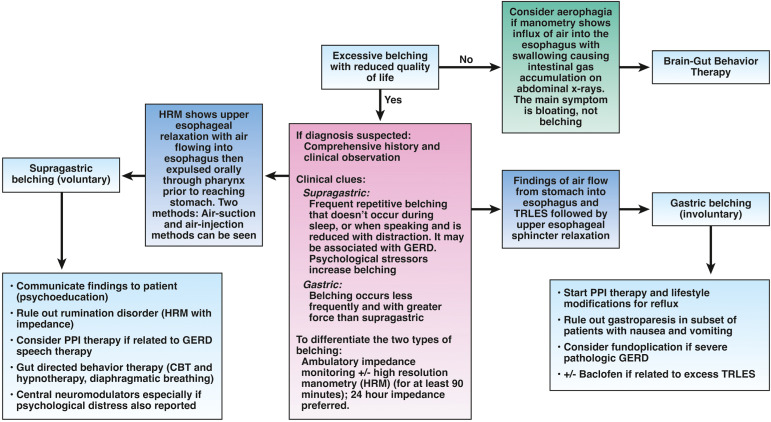
Excessive belching may be classified as a belching disorder, either supragastric (voluntary, often linked to anxiety) or gastric (involuntary, involving a vagovagal reflex). Both types may trigger reflux. An inability to belch, known as retrograde cricopharyngeus dysfunction (R-CPD), was first described and named by Dr. Robert Bastian in 2019 and involves the cricopharyngeus muscle failing to relax. Symptoms include stomach rumbling, bloating, flatulence, and potentially painful hiccups. Treatment with botox has been successful in 80% of patients.
Social acceptance of burping varies widely. In some South Asian cultures, burping after a meal can signal satisfaction, while in Japan and Western cultures it is considered bad manners. Infants often need to be burped to relieve gas. Among other mammals, domesticated ruminants like cows and sheep produce significant methane through burping, contributing to greenhouse gas emissions. Research into mitigation includes dietary modifications such as feeding Asparagopsis taxiformis (red algae).
Reader's Guide
Belching is a universal physiological phenomenon with significance across medicine, culture, and environmental science. Medically, it serves as a diagnostic clue for gastrointestinal disorders such as GERD, gastritis, and belching disorders. The distinction between supragastric and gastric belching informs treatment approaches, as supragastric belching does not respond to acid-reducing medications. The recognition of retrograde cricopharyngeus dysfunction as a distinct condition has opened new avenues for treatment, including botox injections. Culturally, belching carries varied meanings—from a compliment to the host in some South Asian contexts to a breach of etiquette in Western and Japanese settings. Environmentally, ruminant belching is a major source of anthropogenic methane, driving research into dietary interventions like red algae to reduce emissions. The phenomenon also has practical applications, such as esophageal speech for laryngectomy patients and the Guinness World Record for loudest burp. Overall, belching intersects human biology, social norms, and global ecology.
Did You Know?
- The Guinness World Record for the loudest burp is 112.4 dB, set by Neville Sharp in 2021, about as loud as a jet engine at 100 m.
- In microgravity environments, burping is frequently associated with regurgitation, known as wet burping.
- A lactating cow produces about 322g of methane per day through burping and exhalation, contributing to the greenhouse effect.
- There is no documented evidence that birds burp, though ornithologists believe nothing physiologically prevents them from doing so.
Gallery
Frequently Asked Questions
Who is Belching?
Belching (also called burping or eructation) is the body's routine way of expelling trapped gas from the esophagus and stomach up through the throat and out the mouth. It is a normal physiological reflex shared by humans and many other animal species.
What are Belching's powers/role?
Belching operates in two distinct modes: gastric belching, an involuntary release triggered by swallowed air or carbonated drinks, and supragastric belching, a voluntary habit in which air is drawn into the upper esophagus and immediately pushed back out. Together they act as a built-in pressure-release valve for the upper gastrointestinal tract.
Why is Belching important?
In ruminant biology, belching is the principal route by which methane gas exits the animal's body, making it a significant factor in livestock-related emissions. Clinically, persistent or excessive belching serves as a key diagnostic clue for gastroenterologists evaluating reflux and functional GI complaints.
What's Belching's world record?
The loudest burp ever recorded measured 112.4 decibels, achieved by Neville Sharp in 2021. That level of sound is roughly comparable to a full-volume rock concert.
More in Symptoms and signs: Digestive system and abdomen 1-24
Spotted an error? Know more?
Reader corrections go straight into our review queue. Suggest an edit · How this site is sourced