
Bad breath
A symptom of unpleasant breath odour, often from oral sources.

Delapouite · CC BY 3.0
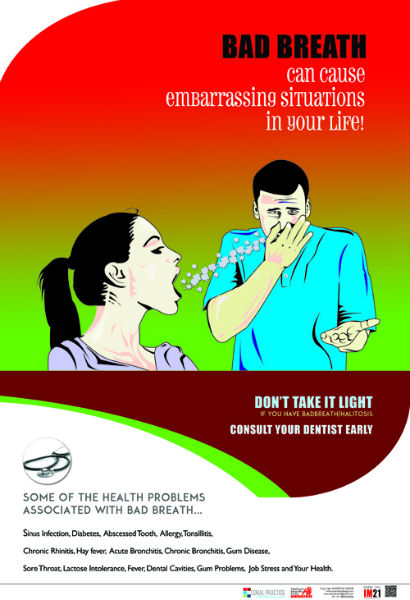
Bad breath, also known as halitosis, fetor oris, oral malodour and putrid breath, is a symptom in which a noticeably unpleasant breath odour is present. It can result in anxiety among those affected and is associated with depression and symptoms of obsessive compulsive disorder. The concerns of bad breath may be divided into genuine and non-genuine cases, with about 85% of genuine cases originating inside the mouth.
Quick Facts
- Field
- Gastroenterology, otorhinolaryngology, dentistry
- Symptoms
- Unpleasant smell present on breath
- Complications
- Anxiety, depression, obsessive compulsive disorder
- Types
- Genuine, non-genuine
- Causes
- Usually from inside the mouth
- Treatment
- Depends on cause, tongue cleaning, mouthwash, flossing
- Medication
- Mouthwash containing chlorhexidine or cetylpyridinium chloride
- Frequency
- ~30% of people
Facts from the source article.
Lore & Background
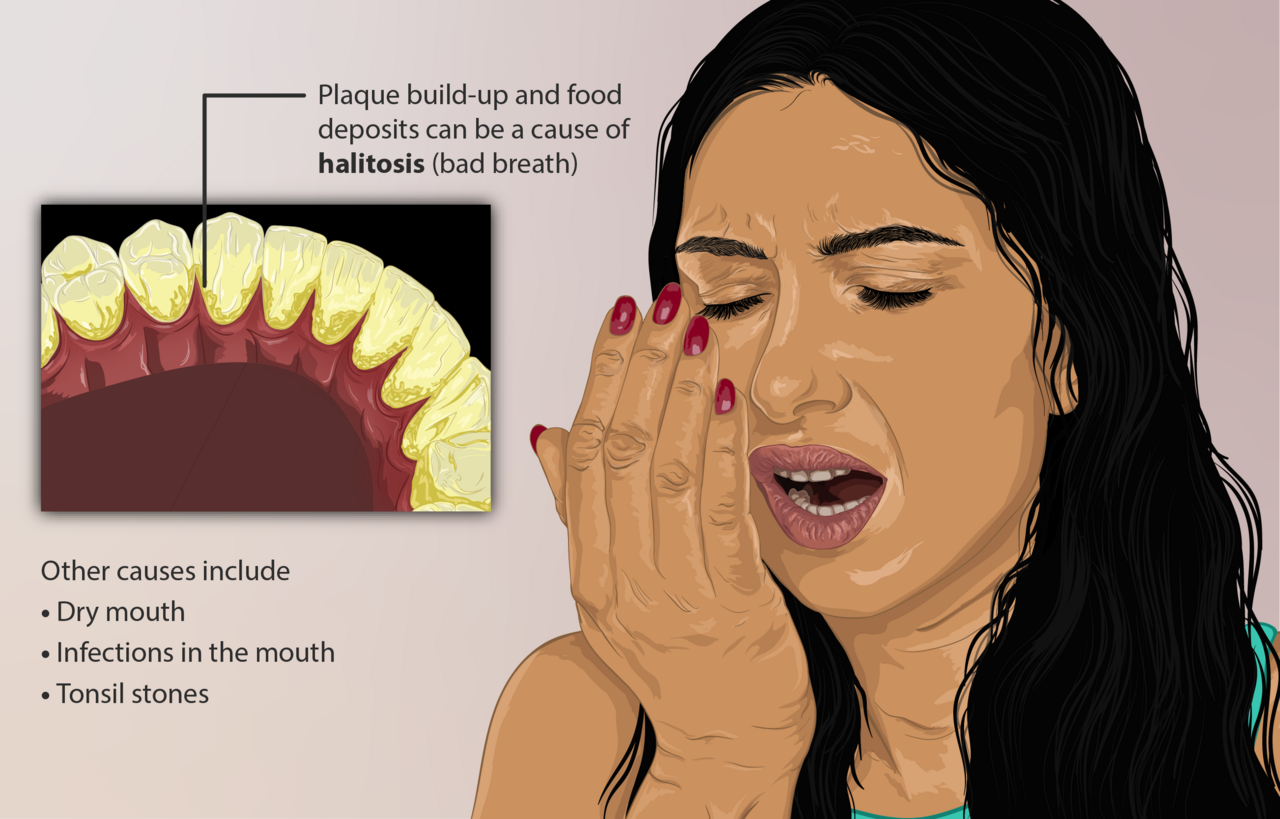
Bad breath is a symptom rather than a disease itself. In about 90% of genuine halitosis cases, the origin is within the mouth, most commonly from bacteria on the posterior dorsum of the tongue. These bacteria break down proteins into amino acids, then further into foul-smelling volatile sulfur compounds such as hydrogen sulfide and methyl mercaptan. Other oral sources include periodontal pockets, faulty dental work, food impaction, and unclean dentures. The remaining cases stem from disorders in the nose, sinuses, throat, lungs, esophagus, or stomach, and rarely from serious conditions like liver failure or ketoacidosis.
Reader's Guide
Bad breath is a widespread concern, ranking as the third most common reason people seek dental care after tooth decay and gum disease. Its social impact is significant, as it is viewed as a taboo and can lead to stigmatization. Treatment depends on the underlying cause, with initial efforts including tongue cleaning, mouthwash, and flossing. Tentative evidence supports mouthwashes containing chlorhexidine or cetylpyridinium chloride. A notable aspect is the existence of non-genuine cases, where individuals perceive bad breath that others cannot detect, estimated to make up between 5% and 72% of cases; counselling may be useful for such individuals. The condition affects an estimated 6% to 50% of the population and is believed to become more common with age.
Did You Know?
- About 85% of genuine bad breath cases come from inside the mouth.
- Non-genuine cases, where only the person complains of bad breath, make up between 5% and 72% of cases.
- People in the United States spend more than $1 billion per year on mouthwash to treat bad breath.
The Microbial Chemistry of Oral Odour
The primary engine behind most bad breath is a complex biochemical process occurring on the posterior surface of the tongue. Anaerobic bacteria colonize the convoluted folds of the tongue dorsum, where they feed on a constantly renewing layer of food debris, shed epithelial cells, and postnasal secretions. Through anaerobic respiration, these microorganisms break down proteins into amino acids and further degrade certain amino acids into detectable foul gases. The resulting volatile sulfur compounds—hydrogen sulfide, methyl mercaptan, allyl methyl sulfide, and dimethyl sulfide—produce the characteristic rotten-egg stench, while other byproducts like indole and skatole contribute a putrescent quality. This tongue-based mechanism accounts for roughly 80 to 90 percent of all mouth-related halitosis cases. Beyond the tongue, inter-dental niches, sub-gingival pockets, faulty dental work, food impaction sites, abscesses, and unclean dentures can each add to the overall odour profile, though they are less prevalent sources. Viral infections such as herpes simplex and HPV can also create oral lesions that contribute to malodour.
Where the Odour Truly Originates
While most people assume bad breath is purely an oral problem, the picture is more layered. Approximately 85 to 90 percent of genuine halitosis cases trace back to the mouth itself, making intra-oral origin the dominant pathway. The remaining fraction is attributed to disorders affecting the nose, sinuses, throat, lungs, esophagus, or stomach. In rare but serious instances, an underlying medical condition such as liver failure, ketoacidosis, or fecal vomiting can manifest as a distinctive breath odour, serving as a clinical warning sign. The prevalence of bad breath across the general population is estimated to range from 6 to 50 percent, with the condition believed to increase in frequency as people grow older. Concern about breath odour ranks as the third most common reason individuals seek dental care, trailing only tooth decay and gum disease. The intensity of the odour fluctuates throughout the day, worsened by consuming garlic, onions, meat, fish, or cheese, by smoking, and by alcohol consumption. Because the mouth is relatively oxygen-deprived and inactive during sleep, the odour is typically most pronounced upon waking, a phenomenon widely recognized as morning breath.
The Psychological and Social Weight
Bad breath carries a psychological burden that extends well beyond the physical sensation. Among those affected, the condition is linked to anxiety, depression, and symptoms of obsessive-compulsive disorder, creating a cycle of self-consciousness that can significantly erode quality of life. The condition is widely regarded as a social taboo, and those who experience it often face stigma in personal and professional interactions. This social pressure is reflected in consumer behaviour: people in the United States alone spend more than one billion dollars annually on mouthwash products aimed at controlling breath odour. A particularly distressing subset of cases involves non-genuine halitosis, in which an individual sincerely believes they have bad breath yet others cannot detect any odour. Estimates for the proportion of complaints that fall into this category range widely, from as low as 5 percent to as high as 72 percent of all reported cases. For these individuals, the psychological distress is real even in the absence of a detectable physical cause, underscoring the importance of empathetic clinical engagement.
Approaches to Management and Relief
Treatment of bad breath is inherently tailored to its underlying cause, and no single intervention fits every situation. For the most common oral-based cases, initial measures typically include regular tongue cleaning, the use of mouthwash, and diligent flossing to disrupt the biofilm responsible for odour production. Tentative clinical evidence supports the use of mouthwashes containing chlorhexidine or cetylpyridinium chloride as antiseptic agents, though the evidence for dedicated tongue scrapers, while suggestive of benefit, remains insufficient to draw definitive conclusions. When the root cause is a specific medical condition—gum disease, tooth decay, tonsil stones, or gastroesophageal reflux disease—targeted treatment of that condition may substantially reduce or eliminate the odour. In cases of advanced periodontal disease, subgingival scaling and root planing to remove tartar and inflamed tissue have been shown to improve mouth odour considerably. For individuals whose concern is non-genuine, counselling and psychological support may prove more effective than any dental or pharmaceutical intervention, addressing the anxiety and obsessive thought patterns that sustain the distress.
Gallery




Frequently Asked Questions
Who is Bad breath?
Bad breath, also called halitosis, fetor oris, or oral malodour, is a clinical symptom defined by a persistently unpleasant odour on exhaled air. It is catalogued under the digestive system and abdomen group of signs and is one of the most socially stigmatizing symptoms a patient can present.
What are Bad breath's powers or role?
Its chief effect is psychological: affected individuals frequently develop anxiety, depressive symptoms, and obsessive-compulsive tendencies centred on their odour. Roughly 85% of genuine cases originate from structures inside the mouth rather than from systemic disease.
Why is Bad breath important?
It affects an estimated 6% to 50% of the general population, making it one of the most prevalent symptoms encountered in everyday clinical practice. Its combination of high prevalence and intense social shame drives a large volume of dental and medical consultations.
What is Bad breath's true form (common cause)?
In the vast majority of oral-origin cases, the underlying culprit is a bacterial biofilm colonising the back of the tongue that releases volatile sulphur compounds. Clinicians must first distinguish genuine halitosis from non-genuine (perceived) cases before selecting a treatment pathway.
More in Symptoms and signs: Digestive system and abdomen 1-24
Spotted an error? Know more?
Reader corrections go straight into our review queue. Suggest an edit · How this site is sourced