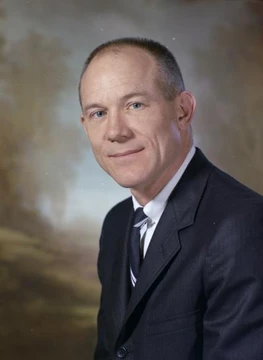
Ned Haig
Butcher and rugby player who invented rugby sevens.

Martino Photos · CC BY-SA 2.0
Ned Haig was a Scottish butcher and rugby union player who is credited with founding the sport of rugby sevens. Born in Jedburgh and later moving to Melrose, he joined Melrose Rugby Football Club in 1880. In 1883, seeking to raise funds for the club, he proposed a tournament with teams of seven players and matches reduced to 15 minutes, creating the format that became rugby sevens.
Quick Facts
- Birth Name
- Edward Haig
- Birth Date
- 1858-12-07
- Birth Place
- Jedburgh, Scottish Borders, Scotland
- Death Date
- 29 March 1939 · 1858 · 12 · 7
- Death Place
- Melrose, Scottish Borders, Scotland
Facts from the source article.
Lore & Background
Ned Haig was born in Jedburgh, Scotland, on 7 December 1858. When he was young, his family moved to Melrose, where he later worked at a butcher's shop. After taking part in the traditional annual Fastern's E'en Ba game, he became interested in rugby union and joined Melrose Rugby Football Club in 1880. He initially played for the club's second team before making the first team and also represented the South of Scotland side.
Reader's Guide
In 1883, with Melrose RFC short of funds, Haig suggested hosting a sports tournament to raise money. Because playing several full 15-a-side matches in one afternoon was impractical, he proposed reducing teams to seven players and match length to 15 minutes. The inaugural Melrose Sports took place on 28 April 1883, featuring foot races, kicking contests, and the rugby sevens tournament with eight teams. Haig played for Melrose, which defeated local rivals Gala in the final and received a cup donated by the ladies of Melrose, now known as The Ladies Cup. The tournament's immediate success led other clubs in the Borders region to establish their own rugby sevens competitions. After retiring from play, Haig continued serving on the club's General and Match committee. He died in Melrose on 29 March 1939 and is buried in Wairds Cemetery. In 2008, Haig and Melrose RFC were inducted into the IRB Hall of Fame for their role in creating rugby sevens. His gravestone, erected by Border Rugby Clubs, identifies him as the originator of seven-a-side rugby.
Did You Know?
- Haig worked as a butcher before and during his rugby career.
- He first became interested in rugby after participating in the traditional Fastern's E'en Ba game.
- The inaugural rugby sevens tournament in 1883 included eight teams and was part of a larger sports day.
- Haig's gravestone was erected by Border Rugby Clubs in memory of his role as originator of seven-a-side rugby.
From Jedburgh to the Melrose Pitch
Ned Haig entered the world on 7 December 1858 in the Scottish Borders town of Jedburgh, but his story truly took shape after he relocated to nearby Melrose as a young man. There, he found steady work in a butcher's shop, a trade that would define his daily life for years to come. His path toward organized rugby began not on a formal pitch but through the traditional annual Fastern's E'en Ba game, a local football tradition whose rough, communal spirit drew him toward the structured world of rugby union. In 1880, he joined the Melrose Rugby Football Club, initially earning his place on the seconds side before working his way up to the first team. His talent and commitment also saw him represent the broader South of Scotland combination. A working-class butcher with no aristocratic connections, Haig nonetheless embedded himself deeply in the social and sporting fabric of his small town, setting the stage for the idea that would eventually reshape an entire sport.
A Financial Problem That Spawned a Sport
By 1883, the Melrose Rugby Football Club was struggling to keep its finances afloat, and it was this very constraint that sparked one of the most consequential ideas in rugby history. Haig proposed that the club host a sports-day tournament to generate much-needed revenue. However, the practical reality of the afternoon presented a problem: fitting multiple full rugby matches, each involving fifteen players per side and lasting eighty minutes, into a single day was simply impossible. Rather than abandon the plan, Haig reimagined the format itself. He proposed cutting each team down to seven players and slashing the match duration to just fifteen minutes. This was not a minor tweak but a fundamental rethinking of how the game could be experienced in a single afternoon. The result was the birth of rugby sevens, a format born not from a desire to innovate for its own sake but from the pragmatic need of a small club trying to pay its bills.
The Day It All Happened
On 28 April 1883, the grounds at Melrose hosted what would become the first Melrose Sports, a full afternoon of athletic competition. The programme was varied, featuring foot races, drop-kick contests, dribbling races, and place-kicking events, but the centrepiece was undeniably the rugby tournament. Eight teams took the field, and Haig himself laced up his boots to play for Melrose. The final pitted the home side against their local rivals Gala, and Melrose emerged victorious. The winning team was presented with a cup donated by the ladies of Melrose, a trophy that would go on to be known as The Ladies Cup. The event's immediate and enthusiastic reception proved that the compressed format resonated with players and spectators alike. Word spread quickly through the Borders region, and other clubs soon followed suit, establishing their own rugby sevens competitions. What had begun as a single afternoon's fundraiser had ignited a movement.
A Life Beyond the Pitch and an Enduring Legacy
After his playing days concluded, Haig did not step away from the game he had helped transform. He remained deeply involved in the day-to-day governance of Melrose RFC, serving for several seasons on both the General and Match committees, ensuring the club continued to thrive long after he had last donned a jersey. He spent his final years in the town he had called home since childhood, passing away on 29 March 1939 in Melrose. He was laid to rest in Wairds Cemetery, where the Border Rugby Clubs erected a gravestone that identifies him not merely as a local figure but as "the originator of seven-a-side Rugby." The recognition did not stop at the headstone. In 2008, both Haig and Melrose RFC were inducted into the IRB Hall of Fame for their foundational role in creating the sevens format. Today, the trophy awarded at the Rugby World Cup Sevens bears the name Melrose Cup, a permanent reminder that a butcher's pragmatic solution to a club's empty coffers gave the world an entirely new way to play rugby.
Gallery

Frequently Asked Questions
Who is Ned Haig?
Ned Haig was a Scottish butcher and rugby union player, best remembered as the man who created the rugby sevens format. He is widely credited as the inventor of this now-global variant of rugby.
How did Ned Haig invent rugby sevens?
In 1883, he proposed a fundraising tournament for Melrose Rugby Football Club featuring teams of seven players with matches shortened to just 15 minutes. That compact format evolved into what we now call rugby sevens.
Why did Ned Haig create rugby sevens?
His original motivation was practical: he needed a way to raise money for his club, Melrose RFC. The shorter, smaller-team format made it easier to organize a tournament and attract spectators.
What was Ned Haig's profession outside of rugby?
He worked as a butcher in Scotland, first in his birthplace of Jedburgh and later in Melrose. His rugby career and his butchering trade ran in parallel during his time at the local club.
When and where was Ned Haig born, and where did he die?
He was born on 7 December 1858 in Jedburgh, Scotland, and passed away on 29 March 1939 in Melrose. He lived most of his adult life in Melrose, where he joined the local rugby club in 1880.
More in Sports inventors and innovators 1-24
Spotted an error? Know more?
Reader corrections go straight into our review queue. Suggest an edit · How this site is sourced