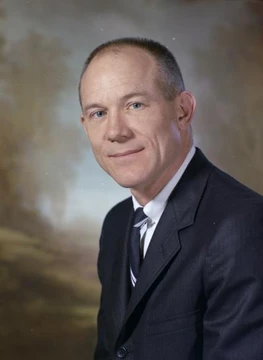
Eddie Cochems
Pioneer of the forward pass in college football.

Unknown author · Public domain
Edward Bulwer Cochems (February 4, 1876 – April 9, 1953) was an American football player and coach. Some regard him as the "father of the forward pass" because, as head coach at Saint Louis University, he was the first to design an offense centered on that play, which became legal in the 1906 college football season. That year, his team went undefeated at 11–0, led the nation in scoring, and outscored opponents 407 to 11.
Cochems was born in Sturgeon Bay, Wisconsin, one of eleven children and the smallest of seven brothers. His younger brother, Henry, was a star football player and shot putter at the University of Wisconsin–Madison.
At the University of Wisconsin, Cochems played football, baseball, and track. He captained the 1901 baseball team but earned his greatest fame in football. He started at left end before moving to left halfback for the 1900 and 1901 seasons. During his four years, the Badgers went 35–4–1. Along with Norsky Larson and Keg Driver, he formed what was called "the most feared backfield trio in the middle west." A classmate, Max Loeb, described him as "one of the most spectacular men of my time ... wonderfully built, handsome and affable." After Cochems died, another classmate, O.G. Erickson, noted that though Cochems never weighed more than 165 pounds, he made excellent use of his size and played four years of 70-minute games without ever being taken out due to injury.
In a 1901 win over Kansas, the Chicago Daily Tribune reported that Cochems and Larson repeatedly gained forty to seventy yards around the ends. In his final game for Wisconsin, on November 28, 1901, against Amos Alonzo Stagg's Chicago Maroons, Cochems returned a kickoff 98 yards for a touchdown. A contemporaneous account said the Maroons were demoralized and made little effort to stop him. Twelve years later, football historian Parke H. Davis wrote that Cochems "dashed and dodged, plunged and writhed through all opponents" in a run that combined speed, skill, and chance. His obituary in the Wisconsin alumnus said that kickoff return "brought him undying fame as a gridder." Cochems also scored two touchdowns in a 39–5 win over Chicago in November 1900 and has been credited with four touchdowns in a 54–0 victory over Notre Dame that same year.
Cochems was also a bicycling enthusiast.
Quick Facts
- Birth Date
- 1877-02-04
- Birth Place
- Sturgeon Bay, Wisconsin, U.S.
- Death Date
- 1953-04-09
- Death Place
- Madison, Wisconsin, U.S.
- Player Positions
- Halfback, end
Facts from the source article.
Lore & Background
Cochems was born in 1876 at Sturgeon Bay, Wisconsin, one of 11 children and the smallest of seven brothers. He attended the University of Wisconsin-Madison, where he played football, baseball, and track. As a football player, he began at left end but moved to left halfback for the 1900 and 1901 seasons. The Badgers posted a 35–4–1 record during his four seasons. He was part of a backfield trio considered the most feared in the middle west. In his final game as a Wisconsin player, on November 28, 1901, he ran back a kickoff 98 yards for a touchdown against Chicago, a run that brought him undying fame.
After a brief stint as assistant coach at Wisconsin, Cochems became head coach at North Dakota Agricultural College (1902–1903), leading the 1902 team to an undefeated, unscored-upon season.
Reader's Guide
Edward Cochems holds a significant place in American football history as an early innovator of the forward pass. While the forward pass was legalized in 1906, Cochems was the first coach to systematically build an offense around it. His work at Saint Louis University, particularly the 1906 season, demonstrated the pass's potential to transform the game. The 1906 team's undefeated record and dominant scoring margin showed that a passing offense could be highly effective. Cochems' methods, developed with players like Bradbury Robinson, laid groundwork for the modern passing game. Though his coaching career spanned several schools, his legacy rests on this single season of innovation. The article notes that he is considered by some to be the "father of the forward pass," reflecting his pioneering role.
Did You Know?
- He ran back a kickoff 98 yards for a touchdown in his final college game in 1901.
- His 1902 North Dakota Agricultural College team was undefeated and unscored upon, outscoring opponents 168 to 0.
- The first legal forward pass was thrown by his player Bradbury Robinson to Jack Schneider on September 5, 1906.
The Badger Backfield and a Defining Kickoff Return
Cochems played at Wisconsin from 1898 to 1901, competing in football, baseball, and track. He began at left end before shifting to left halfback for his final two seasons, during which the Badgers posted a 35-4-1 record. Alongside Norsky Larson and Keg Driver, he formed what contemporaries called the most feared backfield trio in the Midwest. The Chicago Daily Tribune declared that nothing approaching the trio's play had ever been seen on Randall Field. Classmates remembered Cochems as wonderfully built, handsome, and affable, never exceeding 165 pounds yet making extraordinary use of his frame. He played four years of 70-minute games without ever being pulled for injury. His most celebrated moment arrived on November 28, 1901, in his final game, when he caught a kickoff on Wisconsin's own twelve-yard line and sprinted ninety-eight yards for a touchdown against Amos Alonzo Stagg's Chicago Maroons, who made little effort to stop him. That run, as his obituary noted, brought him undying fame as a gridder.
Architect of the Forward Pass Offense
When Cochems accepted the head coaching position at St. Louis University in February 1906, the new rules had just legalized the forward pass. He had long been an enthusiast of the play and immediately structured his entire offensive scheme around it, making him the first football coach to build a program centered on the forward pass. That season, his team went 11-0, led the nation in scoring, and outscored all opponents by a combined 407 to 11. He was reunited with Bradbury Robinson, a former Wisconsin halfback who had already transferred to St. Louis; the two had first connected during a 1905 pre-season workout when Robinson was training with his old Badger teammates. Cochems remained at Saint Louis through 1908, and his three-year tenure cemented his reputation. He is considered by many to be the father of the forward pass in American football, a title reflecting how his pioneering approach fundamentally reshaped the strategic landscape of the sport for generations of players and coaches who followed.
A Winding Coaching Path Across the Country
Cochems began his coaching career at age 25 when he was hired in 1902 to lead North Dakota Agricultural College, now known as North Dakota State University. His first season was remarkable: an undefeated, unscored-upon record with opponents outscored by a combined 168 to 0. The following year brought five wins and one loss. In January 1904, Wisconsin's athletic board selected him as assistant football coach and assistant athletic director at a salary of $800. When a straw vote was held in December 1904 for the head coaching position, Cochems ran against Phil King and two other candidates but lost, with King receiving 215 of 325 votes. Undeterred, Cochems signed with Clemson in February 1905, where he posted shutout victories over Georgia, Alabama, and Auburn before closing the season with consecutive losses to Vanderbilt and Georgia Tech, finishing 3-2-1. He later returned to coaching at the University of Maine in 1914, rounding out a career that spanned multiple institutions across the country.
A Life Beyond the Gridiron
Born on February 4, 1877, in Sturgeon Bay, the county seat of Door County on Wisconsin's Door Peninsula, Cochems was the smallest of seven brothers in a family of eleven children. His older brother Henry was a star football player and shot putter at Wisconsin, while his twin Carl (1877-1954) went on to become a noted opera singer. Cochems himself was a multi-sport athlete at Wisconsin, captaining the 1901 baseball team. Beyond the gridiron, he was a passionate bicyclist. In August 1900, he and classmate George Mowry set off on a cycling tour across Europe, riding through England, Scotland, Belgium, Holland, France, Germany, Austria, Italy, and Spain. After 1,500 miles, their cyclometers were stolen, leaving the full distance unrecorded. The entire trip cost each man $125. They returned to Wisconsin in well-worn knickerbockers that bore clear evidence of hard riding and variable weather. Cochems passed away on April 9, 1953.
Gallery
Frequently Asked Questions
Who is Eddie Cochems?
Edward Bulwer Cochems (1877–1953) was an American football player and coach best remembered for revolutionizing how the game was played offensively. He is widely credited as the "father of the forward pass" in college football.
What made Eddie Cochems's coaching approach groundbreaking?
As head coach at Saint Louis University, he was the first coach to build an entire offensive system around the forward pass once it was legalized for the 1906 season. Rather than treating the pass as a rare trick play, he made it the central pillar of his team's strategy.
How did Cochems's 1906 Saint Louis team perform?
The 1906 squad finished the season with an 11–0 record, led the nation in total points scored, and outscored all opponents combined by a margin of 407 to 11.
Why is Eddie Cochems considered important to football history?
Before his innovation, the forward pass was a novelty; Cochems proved it could be the backbone of a winning offense, fundamentally reshaping how the sport would evolve for decades. His work at Saint Louis University set the template for the passing game that dominates modern football.
Where was Eddie Cochems born and when did he die?
He was born on February 4, 1877, in Sturgeon Bay, Wisconsin, as the youngest of seven brothers in a family of eleven children. He passed away on April 9, 1953.
More in Sports inventors and innovators 1-24
Spotted an error? Know more?
Reader corrections go straight into our review queue. Suggest an edit · How this site is sourced